





Choosing the wrong deductible can cost you thousands in a single year.
This guide cuts through the confusion so you pick the right plan for your life, not the glossy brochure.
Short version: choose a high-deductible plan if you’re healthy, have emergency savings equal to the deductible, and can use an HSA to save pretax; choose a low-deductible plan if you see doctors regularly, take ongoing prescriptions, are planning surgery, or can’t handle a sudden $2,000-$4,000 bill.
We’ll show what matters, like premiums, deductible, coinsurance, out-of-pocket max, and employer HSA help, and what to check before you sign.
High Deductible vs Low Deductible: A Direct Comparison
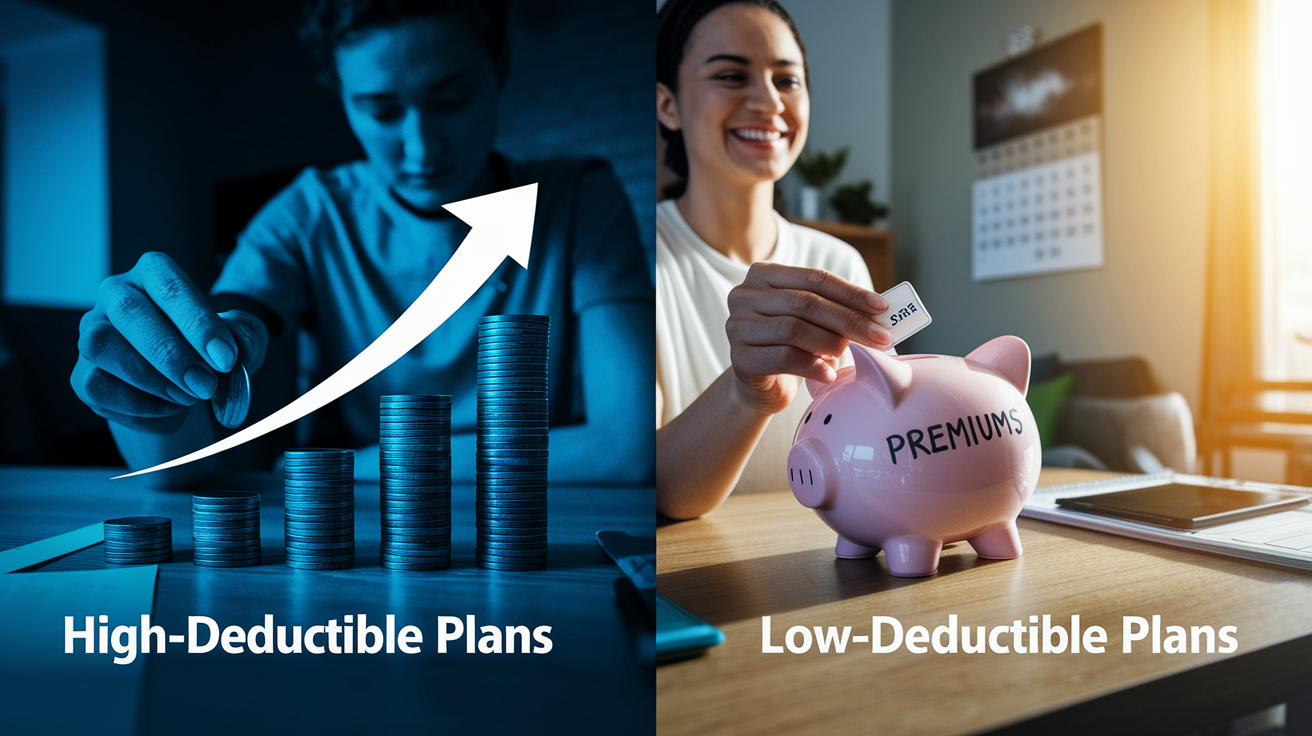
High deductible health plans and low deductible plans are basically opposites. An HDHP makes you pay more when you actually need care, but you’ll pay less every month. A low deductible plan flips that around. You’re paying more in premiums, but your insurance kicks in sooner when you see a doctor or pick up a prescription.
HDHPs work well if you rarely use medical services and you’ve got enough saved to handle a few thousand dollars in bills if something goes wrong. Low deductible plans fit people who see doctors regularly, deal with chronic conditions, or just want predictable costs. Pick the wrong one and you can lose hundreds or thousands over a year.
Here’s the simple version: if you’re healthy, have emergency savings that match the deductible, and can use an HSA, an HDHP usually saves money. But if you’re on ongoing medications, see specialists, or can’t handle a sudden $3,000 bill, a low deductible plan typically costs less overall even with higher premiums.
| Plan Type | Typical Premium | Typical Deductible | Best For |
|---|---|---|---|
| High-Deductible (HDHP) | Lower (e.g., $300/month) | Higher (e.g., $3,000/year) | Healthy people, low medical use, HSA savers |
| Low-Deductible | Higher (e.g., $600/month) | Lower (e.g., $500/year) | Frequent care, chronic conditions, families |
Understanding How Deductibles Affect Total Annual Costs
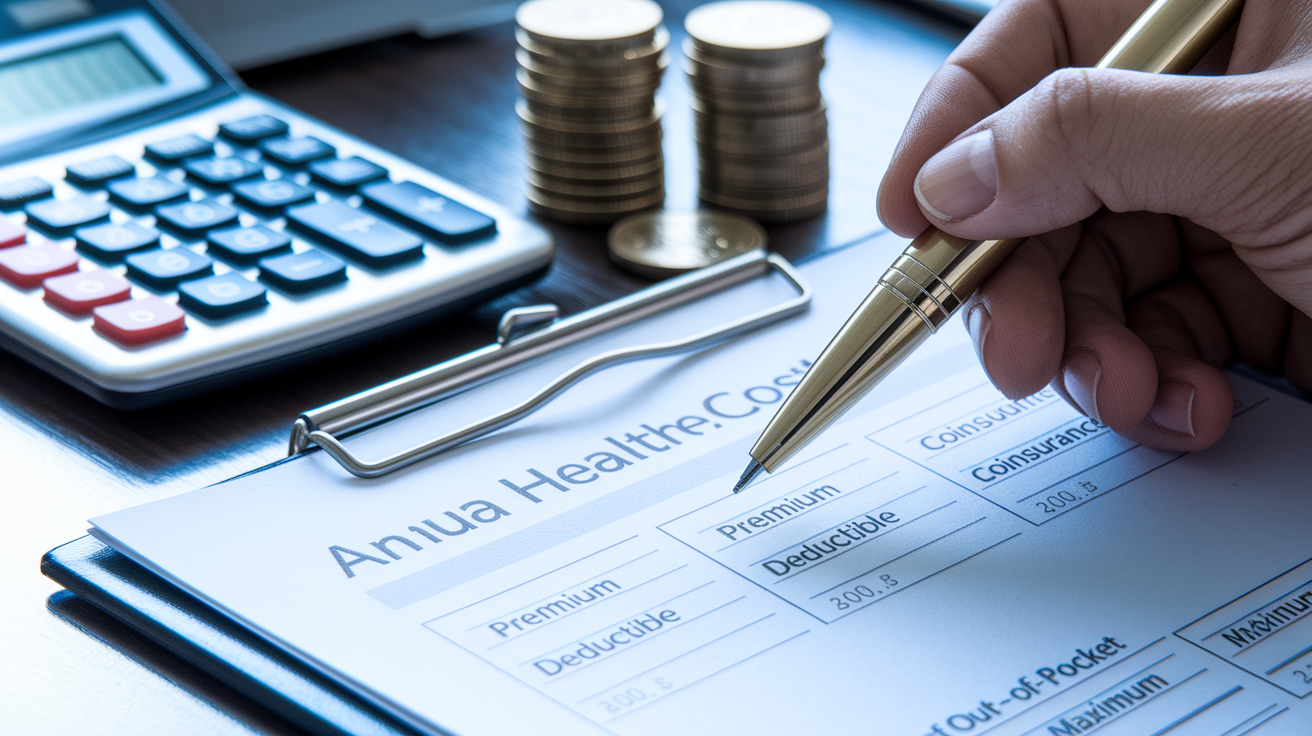
Your deductible is what you pay before your plan starts sharing costs. But your total annual cost includes four things: premiums, the deductible, copays or coinsurance after the deductible, and your out of pocket maximum. Plans with low deductibles front load cost into premiums. Plans with high deductibles do the opposite. You pay less every month but face higher bills when you actually use care.
A low deductible means insurance kicks in faster. If your deductible is $500, you only pay the first $500 in care before coinsurance starts. If your deductible is $3,000, you’re on the hook for the first $3,000. But that high deductible plan might save you $3,600 in premiums over a year. If you stay healthy and only spend $1,000 on care, you come out ahead. If you need surgery and hit your deductible, the premium savings disappear.
When you’re comparing plans, check these four numbers:
Premium. What you pay monthly. Multiply by 12 for the annual total.
Deductible. What you pay before the plan starts paying.
Coinsurance and copays. Your share after the deductible, like 20% of costs.
Out of pocket maximum. The most you’ll pay in a year. After this, the plan covers 100%.
Pros and Cons of High-Deductible Health Plans

HDHPs offer lower monthly bills and access to a health savings account. The lower premium can save you thousands a year if you don’t use much care. HSAs let you contribute pretax money, invest it, and use it tax free for medical expenses now or decades later. Many employers also contribute to your HSA, often $500 to $1,500 per year, which directly reduces your out of pocket risk.
The catch is upfront cost. If you need care before meeting the deductible, you’re paying full price for visits, tests, and prescriptions. Preventive care is usually free, but that’s about it. HDHPs can be expensive and unpredictable for people who see doctors often or manage chronic conditions.
Pros:
Lower monthly premiums. Often $200 to $400 less per month than low deductible plans.
HSA eligibility with pretax contributions and tax free growth.
Employer HSA contributions. Roughly two thirds of employers offering HDHPs contribute to HSAs.
Cons:
High upfront costs until you meet the deductible, like $1,700 to $3,400+ in 2026.
Financial risk if you need frequent or unexpected care.
Poor fit for chronic conditions or families with regular medical needs.
Pros and Cons of Low-Deductible Health Plans
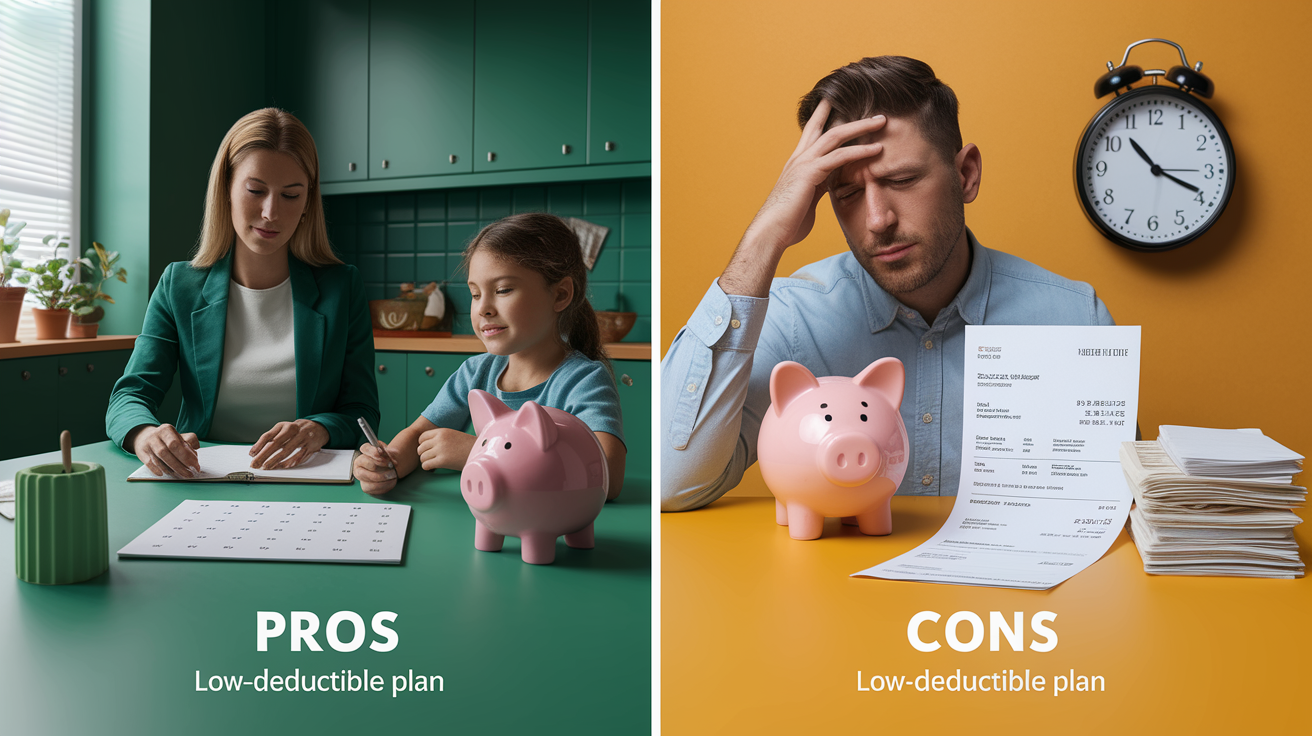
Low deductible plans reduce surprise bills and make costs more predictable. Insurance starts paying after you’ve spent a few hundred dollars instead of a few thousand. If you take daily medication, see specialists, or have kids who need regular checkups and the occasional urgent care visit, a low deductible means you’re not draining savings every time someone gets sick.
The tradeoff is a higher premium every single month, whether you use care or not. If you stay healthy all year, you’ve spent thousands more in premiums with nothing to show for it.
Pros:
Lower upfront cost when you need care. Deductibles often $500 or less.
More predictable expenses for families and people with chronic conditions.
Better coverage for frequent doctor visits, prescriptions, and specialist care.
Cons:
Higher monthly premiums. Can be $200 to $400 more per month.
You pay the higher premium even in months you don’t use any care.
No HSA eligibility in most cases.
How HSAs Change the Value of High-Deductible Plans

A health savings account is only available if you’re enrolled in an HDHP. It’s a pretax savings account that you control, not your employer or insurer. You can use HSA funds to pay your deductible, copays, prescriptions, or other qualified medical expenses. The money is yours to keep, even if you switch jobs or retire.
HSAs offer three tax advantages most other accounts don’t. Contributions reduce your taxable income. The money grows tax free if you invest it. Withdrawals are tax free when used for qualified medical expenses. If your employer contributes to your HSA, that’s free money that offsets your deductible risk.
Pretax contributions reduce your taxable income. A $3,000 contribution can save $600 to $900 in taxes depending on your bracket.
Tax free growth. Invest HSA funds in mutual funds or ETFs. Gains are not taxed.
Tax free withdrawals. No taxes when you use HSA money for medical expenses.
Rollover. Unused funds carry over year to year. There’s no “use it or lose it” rule.
Investment potential. HSAs can function as a retirement medical fund. After age 65, you can withdraw for any reason. Taxed like an IRA if non medical.
Break-Even Examples: When a High or Low Deductible Saves You More
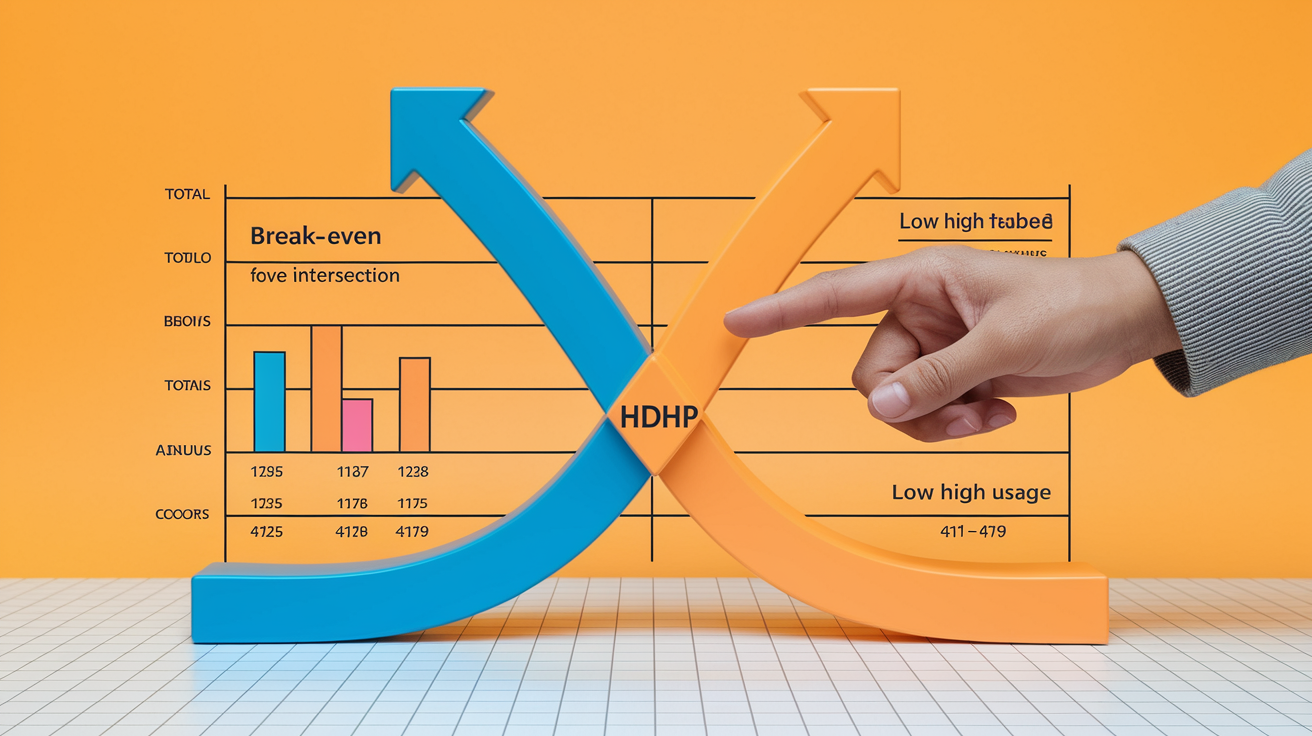
The break even point is where total costs under both plans are equal. To find it, add up premiums for the year and expected out of pocket costs under each plan, then compare. If the HDHP saves you $3,600 in premiums but the deductible is $2,500 higher, you break even if you spend about $2,500 on care. Spend less, the HDHP wins. Spend more, the low deductible plan usually wins.
Most people underestimate how much they’ll actually spend on care. A single ER visit, imaging scan, or specialist consultation can eat through your deductible. Running real numbers for low use and high use scenarios shows where each plan makes sense.
| Scenario | HDHP Annual Cost | LDHP Annual Cost | Better Option |
|---|---|---|---|
| Low usage: $1,000 in medical bills, healthy year | $3,600 premium + $1,000 out-of-pocket − $1,000 employer HSA = $3,600 | $7,200 premium + ~$200 copays = $7,400 | HDHP saves ~$3,800 |
| High usage: $12,000 in billed charges, chronic condition or surgery | $3,600 premium + $7,000 OOP max − $1,000 employer HSA = $9,600 | $7,200 premium + ~$2,000 OOP = $9,200 | Low-deductible saves ~$400 |
Choosing the Right Plan Based on Your Situation
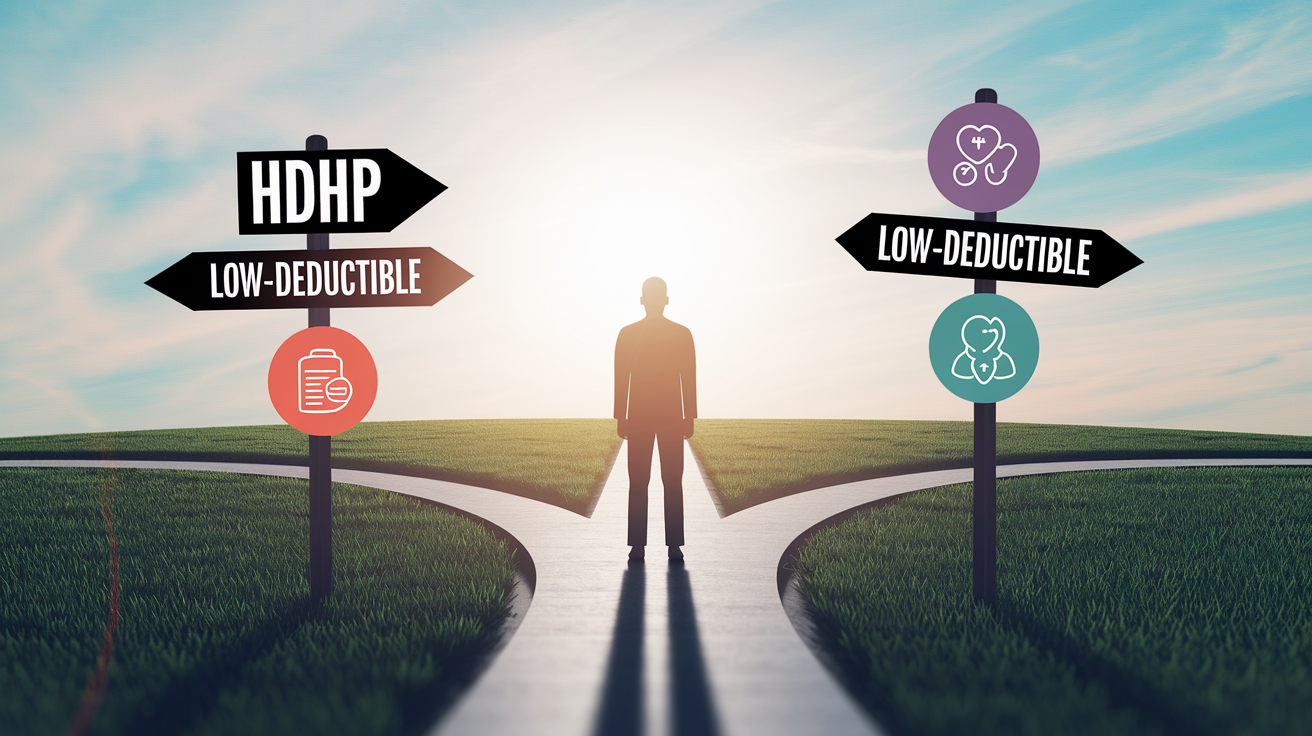
Start by estimating how many doctor visits, prescriptions, and procedures you expect in the next year. If it’s fewer than three visits and no ongoing prescriptions, an HDHP is usually cheaper. If you’re managing diabetes, seeing a therapist weekly, or planning a surgery, a low deductible plan typically costs less overall.
Next, check your emergency savings. Can you pay the full deductible within 30 days if you need care tomorrow? If the answer is no, a high deductible creates financial risk you can’t handle. A low deductible plan turns that risk into a fixed monthly cost.
Finally, factor in employer contributions and your ability to fund an HSA. If your employer contributes $1,500 to an HSA and you can add another $2,000 pretax, the HDHP becomes much more attractive even if you expect moderate medical use. If there’s no employer contribution and you can’t save in an HSA, the tax advantages disappear and the HDHP is just a high risk, low premium bet.
If you expect more than 3 specialist visits or regular prescriptions, favor a low deductible plan.
If you have less than the deductible amount in savings, choose a low deductible plan.
If you’re healthy, have emergency savings, and receive an employer HSA contribution, choose an HDHP.
If you’re pregnant, planning pregnancy, or have young children, a low deductible plan usually costs less.
If you want to use your HSA as a long term investment account and can afford the deductible, an HDHP offers the best tax advantages.
Final Words
You’re choosing between high and low deductible plans. This article compared them, explained how deductibles affect yearly costs, listed pros and cons, showed HSA benefits, and gave break-even examples and a decision framework.
Match plan to expected care, emergency savings, and employer help.
If you’re still asking “should i choose a high or low deductible health plan”, pick low if you expect frequent care or limited savings; pick an HDHP with an HSA if you’re healthy, can cover the deductible, and want lower premiums and tax advantages. Check networks and out-of-pocket maximums before you sign. You’ll make a better choice.
FAQ
Q: Is it better to have high or low deductible health insurance? Is it better to have a $500 deductible or $1 000?
A: Choosing between a high or low deductible, or a $500 versus $1,000 deductible, depends on your expected care and cash flow. Pick low if you use care often or lack emergency savings; pick high to save on premiums.
Q: Why would you not choose a high deductible health plan? Is a high-deductible plan good for diabetics?
A: You would not choose a high deductible plan when you need frequent care, predictable costs, or lack emergency savings. Diabetics usually need regular meds and tests, so most are better off with a lower deductible plan.