


Think a catchy ad is low-risk? Think again.
Advertising injury coverage is the part of your commercial liability policy that can pay legal defense and settlements when your marketing copies someone, lies about a competitor, or uses a customer’s image without permission.
This post explains real claims, from unlicensed photos and copied slogans to false comparison ads and music use, so you can see how these lawsuits start and what your policy actually covers.
Read on to learn who this helps, who should be careful, and the checks to run before you post.
Core Overview of Advertising Injury Coverage and Key Examples

Advertising injury coverage lives inside Commercial General Liability policies as Coverage B. It protects businesses when their marketing, ads, or promotions step on someone else’s intellectual property or trash their reputation. The policy covers legal defense and settlements for covered claims, usually up to a separate per-occurrence limit. Often that’s $1,000,000, though it varies.
This coverage kicks in for a specific set of problems that happen in ads, not your day to day operations. If your website, social post, printed flyer, or commercial borrows someone else’s work without asking, takes shots at a competitor with false claims, or violates someone’s privacy, you might get sued. And that lawsuit could trigger advertising injury coverage.
Here’s what that looks like in practice:
A bakery grabs a professional photo from a photographer’s portfolio and posts it on Instagram without a license. The photographer sues for $25,000 in statutory damages and attorney fees.
A plumbing company runs a radio ad saying a competitor’s service “causes water damage and voids warranties.” The competitor sues for defamation and $200,000 in lost revenue.
A gym lifts a national fitness chain’s slogan almost word for word in local print ads. The chain files a trademark claim seeking $150,000.
A software startup drops copyrighted music into a product demo video and gets slapped with a $40,000 demand letter from the music publisher.
A marketing agency pitches a campaign to a prospective client, loses the deal, then watches the client launch the exact same concept with another firm. The agency sues for misappropriation of advertising ideas.
A dentist posts before and after patient photos on Facebook without written consent. The patient sues for invasion of privacy and asks for $50,000 in damages.
These situations pop up most when businesses scale their marketing fast, rely on freelancers or employees who pull images from Google searches, run aggressive comparison campaigns, or skip getting written releases for customer stories and testimonials.
Major Categories of Advertising Injury and How They Occur

Understanding the legal buckets helps you spot risk before a claim lands. Each category follows different legal rules, triggers different defenses, and often produces different settlement amounts depending on whether the violation was accidental or intentional.
Copyright Infringement
Copyright infringement in advertising happens when you use photos, videos, illustrations, written content, or music in a marketing piece without the creator’s permission or a valid license. Copyright law protects creators automatically the moment they fix their work in a tangible form. “I didn’t see a © symbol” won’t help you.
Here’s a common one: a small retail shop needs product images for a Facebook ad campaign and grabs photos from Google image search. The original photographer finds out and files a claim for statutory damages. Those can run $750 to $30,000 per image for non-willful infringement, or up to $150,000 per image if the court decides it was willful. Even if you yank the ad right away, the photographer can still go after damages for past use. Plus attorney fees if the work was registered with the U.S. Copyright Office before you used it.
Trademark Misuse
Trademark infringement in advertising happens when you use another company’s name, logo, slogan, or brand imagery in a way that confuses people about where goods or services come from. Unlike copyright, trademark rights come from actual use in commerce. Registration with the USPTO strengthens those rights but doesn’t create them.
The most common problems involve comparative ads that show a competitor’s logo without permission, fake “authorized dealer” claims, or keyword bidding that displays your ad when someone searches for a competitor’s trademarked name. A regional HVAC contractor runs Google ads saying “Better than [National Brand Name]” and uses that brand’s logo in the creative. That’s asking for a trademark claim. The national brand might demand an injunction to kill the ads, monetary damages for lost sales or brand dilution, and reimbursement of legal costs. Settlements vary widely but often land between $50,000 and $500,000 depending on ad reach and how long it ran.
Defamation in Advertising
Defamation claims pop up when an ad contains a false statement of fact that damages someone’s reputation or business. In advertising, these often show up as “trade libel” or “commercial disparagement.” False statements about a competitor’s products, services, safety record, or business practices.
Saying “Our air filters last twice as long” is opinion and puffery. Saying “Competitor X’s air filters contain toxic chemicals banned by the EPA” is a factual claim. If it’s false, you’re exposed to a defamation lawsuit. The injured competitor usually has to prove the statement was false, shared with third parties, caused measurable financial harm, and was made with at least negligence. Or actual malice if the competitor counts as a public figure. Defense costs alone often top $75,000 before a case settles. Damages can climb into six figures if the competitor shows lost contracts or customers who bailed.
Misappropriation of Advertising Ideas
This category covers situations where one business steals or improperly uses another’s advertising concepts, strategies, slogans, or creative campaigns. Unlike copyright, which protects fixed works, and trademark, which protects source identifiers, misappropriation of advertising ideas protects the commercial value of creative concepts. Even if those ideas were shared in pitches, proposals, or preliminary meetings.
A marketing agency presents a campaign concept to a potential client during a pitch. The client passes on hiring the agency but six months later launches a nearly identical campaign with a different firm. The original agency can sue for misappropriation, saying the client unfairly exploited confidential creative work. These cases turn on whether the idea was novel, whether it was shared under an implied duty of confidence, and whether the defendant’s use caused financial harm. Settlements vary but often involve six figure payments when the campaign generates serious revenue.
Real-World Scenarios Illustrating Common Advertising Injury Claims

A family owned home improvement retailer decides to grow its Instagram presence and hands social media management to a part-time employee. The employee searches “kitchen remodel inspiration” on Pinterest, downloads 15 high quality photos, and posts them in a carousel ad promoting the store’s services. Within two weeks, a professional photographer sends a cease and desist letter identifying eight of the images as her copyrighted work, registered before the store used them. She demands $40,000 per image in statutory damages. Total: $320,000, plus attorney fees. The store’s general liability policy includes advertising injury coverage, so the insurer appoints defense counsel. After six months of back and forth, the claim settles for $95,000. That’s $60,000 to the photographer and $35,000 in defense costs. The settlement eats up a big chunk of the store’s $1,000,000 per occurrence limit. At the next renewal, the insurer tacks on a social media exclusion endorsement.
A regional coffee roaster launches a new campaign to compete with a national chain that owns the local market. The roaster’s ad agency creates a tagline: “Roasted Right, Every Time.” It’s awfully close to the national chain’s federally registered slogan, “Roasted Right, Since 1998.” The agency uses similar fonts, color schemes, and even a logo layout that echoes the chain’s brand. Three months into the campaign, the national chain files a federal trademark lawsuit. Likelihood of confusion, trademark dilution, and unfair competition under the Lanham Act. The lawsuit requests an injunction, destruction of all printed materials, $500,000 in actual damages, and enhanced damages for willful infringement. The coffee roaster’s insurer steps in under advertising injury coverage, appoints a trademark defense attorney, and negotiates a settlement. The roaster has to pull all materials, rebrand completely, pay $180,000 in damages, and publish a public apology. Total defense and settlement costs approach $250,000.
A SaaS startup enters a crowded market and decides to run an aggressive digital ad campaign on LinkedIn and Google. The ads claim, “Unlike [Competitor Name], our platform has never experienced a data breach or downtime event.” The competitor’s software did have a brief outage two years earlier due to a third party hosting issue. But calling it a “data breach” is false. The competitor responds with a defamation lawsuit seeking $1.2 million in damages. Canceled contracts, lost renewals, and reputational harm backed up by customer surveys. The startup’s general liability insurer provides a defense under advertising injury coverage, but the policy excludes knowing violations. The startup’s CEO had approved the ad language despite an internal legal memo warning the claim was misleading. The insurer agrees to pay defense costs but reserves rights on indemnity. After 18 months of litigation, the startup settles. Public retraction, payment of $400,000, and agreement not to mention the competitor in future ads. The CEO’s “knowing” approval creates a coverage dispute. The insurer ultimately pays only the defense costs, leaving the $400,000 settlement to the startup.
Coverage Limits, Exclusions, and What Insurers Typically Do Not Pay For
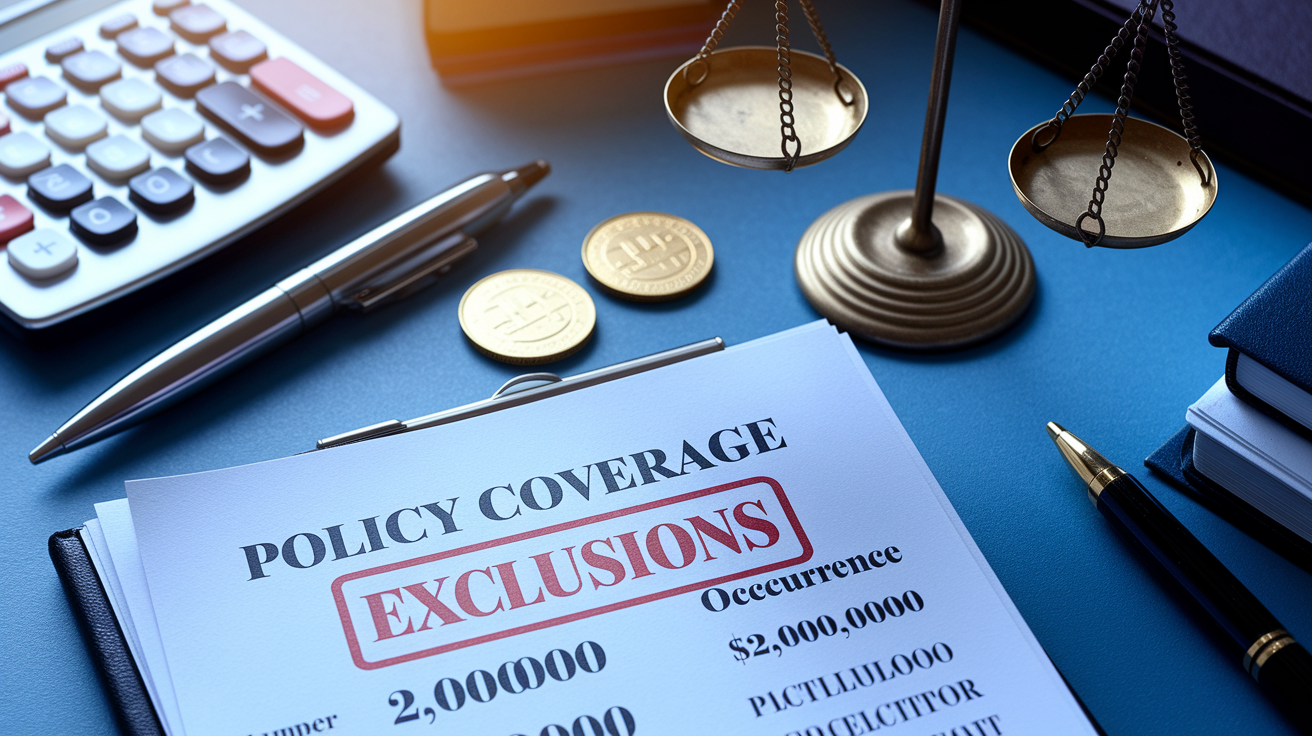
Advertising injury coverage comes with a per occurrence limit and an aggregate limit. Both show up on the policy declarations page. A common structure is $1,000,000 per advertising injury offense and $2,000,000 general aggregate. That per occurrence limit covers both defense costs and any settlement or judgment. So a case that racks up $200,000 in legal fees leaves only $800,000 available for damages. Some insurers offer an endorsement that puts defense costs outside the limit, preserving the full amount for settlements. But that option typically costs extra and isn’t standard on most small business policies.
Even when coverage applies, insurers exclude specific situations that fall outside the intent of advertising injury protection. Policies won’t pay for deliberate or criminal conduct. Most disputes over coverage turn on whether you knew the action was wrongful before publishing the ad.
Common exclusions include:
Intentional wrongdoing. If you knowingly used copyrighted material without permission or published a false statement with actual knowledge it was untrue, coverage is excluded.
Breach of contract. Violations of licensing agreements, vendor contracts, or non-disclosure agreements are treated as contract disputes, not advertising injuries.
Failure of goods to conform to advertised quality. If your ad promises a product will perform at a certain level and it doesn’t, claims for breach of warranty or misrepresentation are excluded.
Patent infringement. Most CGL forms explicitly exclude patent claims. Businesses that risk patent disputes need separate intellectual property insurance.
Material published before the policy period. If the offending ad ran before your coverage started, the claim is excluded even if the lawsuit gets filed during the policy period.
Limits also matter when multiple claims come from a single campaign. If you run one ad using five copyrighted images, and five different photographers sue, insurers may treat that as five separate occurrences, each subject to the per occurrence limit. Or as a single occurrence depending on policy language and state law. Businesses that routinely publish high volumes of content (e-commerce sellers, digital agencies, media companies) often burn through standard CGL limits quickly. They need higher limits or standalone media liability policies to avoid out of pocket exposure.
Final Words
in the action we defined advertising injury and gave concrete examples, like copyright and trademark misuse, defamation, and stolen ad ideas, so you know what triggers a claim.
We mapped how these harms happen, such as social posts, copied slogans, and false comparative ads, and flagged common exclusions and limits that bite at claim time.
Use the advertising injury coverage examples above as a checklist: check image licenses, vet slogans, and confirm your policy limits. Do that and you’ll cut the chance of a costly surprise.
FAQ
Q: What is an example of an advertising injury?
A: An example of an advertising injury is using a competitor’s photo, slogan, or copyrighted text in your ad without permission, or making false statements that harm a person or business and prompt a legal claim.
Q: What is not covered under personal and advertising injury?
A: Not covered under personal and advertising injury are intentional wrongful acts, contractual breaches, patent infringement, employment-related claims, and punitive damages; policies often also exclude knowingly false statements and some online activity.
Q: Which of the following would be considered to be an advertising injury loss?
A: An advertising injury loss would include claims like copyright or trademark infringement in marketing, defamation in an ad, or theft of an advertising concept—not product defects or ordinary business contract disputes.
Q: What is covered under personal and advertising injury liability in an ISO BOP?
A: Personal and advertising injury liability in an ISO BOP covers libel, slander, copyright or trademark infringement in ads, invasion of privacy, and misappropriation of advertising ideas, subject to limits, exclusions, and state-specific variations.