





Think “protection” on a product means you bought insurance? Not always.
Many companies sell services that look like insurance but carry no state oversight, no risk pooling, and no formal claim rights.
That mismatch is where consumers get burned.
They expect appeals, guaranty funds, and refunds and find only contract terms.
This post explains what “not an insurance product” really means, why it matters for your money and claims, and three simple checks to avoid buying a promise that won’t protect you when it counts.
Defining What Is Not an Insurance Product and Why the Distinction Matters

“Not an insurance product” means the thing you’re buying doesn’t involve regulated risk transfer, underwriting, or state supervised claim obligations. Real insurance pools risk across policyholders, uses actuarial math to set premiums, and promises to cover losses according to the policy. Products labeled “not insurance” skip all that. They give you predefined services, administrative help, or network access without taking on financial responsibility for whatever might happen to you down the road. Companies use this phrase because they want to sell something that feels like protection without getting insurance licenses, keeping reserves, or dealing with insurance regulators.
Some products need disclaimers because they sound like insurance in ads or in your head. Roadside assistance, device replacement plans, event cancellation guarantees. They all talk about “protection” and “peace of mind.” Without a clear disclaimer, you might think you bought regulated insurance and expect claim appeals, coverage reviews, and state protection if the company goes under. The label stops that confusion before it starts.
And confusion creates real trouble when you file a claim. People who thought they had insurance complain to state regulators, find out there’s no external review, and realize refunds work under contract law instead of insurance statutes. It also drives chargebacks, angry reviews, and broken trust when the product does exactly what the fine print said but nothing like what you expected.
Why regulators make companies say “not insurance”:
- Stop consumer deception when marketing looks like insurance ads
- Keep unlicensed companies from promising to cover your losses
- Cut down complaint volume to insurance departments from confused buyers
Key Differences Between Insurance and Non‑Insurance Products

Insurance companies hold capital reserves, file rates with states, join guaranty funds, and follow claim handling laws. They pool your premiums with everyone else’s to pay the few who file claims. Non‑insurance products work under regular contract law, offer the same service to everyone who asks, and don’t pool risk. A warranty company or membership provider can give identical service to all members without checking your individual risk or keeping actuarial reserves. Different structure, different economics, different protections, different oversight.
Claims work completely differently too. An insurance claim gets a formal investigation, written denials you can appeal, and potential state review. A non‑insurance dispute gets handled by your service contract. You get what the agreement says, refunds follow the cancellation rules, and the company doesn’t have to give you independent review. No state guaranty fund if they go bankrupt. No grace period for late payments. No standard forms. You’ve got contract rights, not insurance rights.
| Feature | Insurance | Non‑Insurance |
|---|---|---|
| Risk pooling | Premiums pooled; claims paid from shared fund | No pooling; services provided directly per contract |
| State licensing | Carrier must hold insurance license and file rates | No insurance license required; operates under general business law |
| Regulatory oversight | State insurance department; claim handling and solvency rules | Consumer protection and contract law; no insurance-specific regulation |
| Capital reserves | Required; actuarially determined and audited annually | No reserve requirements; solvency not guaranteed |
| Claim appeal rights | Internal appeal, external review, state complaint process | Contract dispute resolution; no external insurance review |
Common Examples of Products That Must Be Labeled Not an Insurance Product

Lots of everyday things need “not an insurance product” disclaimers because you could easily mistake them for actual insurance. These products give you convenience, service, or some financial help, but they don’t transfer risk under state insurance law.
The disclaimer protects the company and you. Companies avoid penalties for selling insurance without a license. You get a heads up that this product plays by different rules than a regulated policy.
Eight things people often think are insurance but aren’t:
- Prepaid dental or vision discount plans that get you network access and lower fees but don’t pay claims or send you checks
- Roadside assistance memberships for towing, lockouts, and jump starts at a flat yearly rate
- Event ticket protection that refunds or swaps tickets under specific circumstances
- Extended warranties or vehicle service contracts covering repairs on certain parts after the manufacturer warranty ends
- Travel club memberships with trip planning, discounts, and concierge services that don’t insure your trip costs
- Identity theft monitoring that alerts you to credit activity but doesn’t cover fraud losses
- Device protection plans sold with phones and laptops, covering damage or malfunction for a service fee each time
- Subscription legal advice or document prep giving you attorney access without malpractice coverage for you
Regulatory Requirements for Labeling a Product Not an Insurance Product
Regulators want disclaimers to stop deception and unlicensed insurance sales. If your product promises to “cover,” “protect,” or “reimburse” losses, states worry buyers will think it’s insurance and expect insurance department oversight. Enforcement teams watch ads, websites, and sales pitches for language that sounds like risk transfer without a licensed carrier backing it up. The disclaimer is a clear line. It tells you this isn’t a regulated policy and won’t act like one when you need it.
States decide if something’s “insurance-like” by checking whether the company takes on financial responsibility for uncertain future events. If they evaluate your personal risk, charge you based on that risk, or promise to cover you, the product probably crosses into insurance territory and needs a license. Non‑insurance products stay on the safe side by offering everyone the same flat rate service, capping payouts at set amounts, or giving admin help instead of financial coverage. The more it looks like insurance, the bigger and clearer the disclaimer needs to be.
Enforcement happens when companies use insurance language to market non‑insurance products without proper warnings. State insurance commissioners have shut down membership clubs that advertised “coverage” without explaining it wasn’t insurance. In some cases, companies had to refund customers, pay fines, and redo all their marketing. One travel protection seller settled with several states after regulators found checkout wording that made the product sound like trip insurance, even though it was just a cancellation fee waiver with no underwriting.
Four places the disclosure must appear:
- Homepage and product pages, visible without scrolling
- Checkout or confirmation screens, before you finish paying
- Confirmation emails and membership docs sent after purchase
- Marketing emails, print ads, and sales presentations describing benefits
Writing Compliant Disclaimer Language for Non‑Insurance Products
Your language needs to be clear, use plain words, and show up where people make decisions. Don’t use wishy washy phrases like “may not be considered insurance in some states” or bury disclaimers in footnotes. You want instant clarity. Someone reading your product description should immediately know this isn’t an insurance policy and shouldn’t expect insurance protections. Good disclaimers say what the product actually is (membership, service plan, discount program, admin service) and flat out state it’s not insurance, not regulated by insurance departments, and not a replacement for insurance.
Badly worded disclaimers create legal trouble by suggesting coverage exists or implying the product meets your insurance needs. Marketing copy saying “Get protected today” with tiny print reading “This is not insurance” sends mixed messages. Regulators look at the big, bold message as what you’re really saying. If your main pitch sounds like insurance, a small disclaimer won’t fix the violation. Companies have gotten in trouble when disclaimers were written in legalese, tucked into terms of service, or contradicted by benefit descriptions using insurance words like “claims,” “deductibles,” or “coverage limits.”
Four sample disclaimer phrases:
- “This is a membership program and is not insurance. It is not regulated by any state insurance department and is not a substitute for health, auto, or property insurance.”
- “This service contract is not an insurance policy. Services are provided directly by [Company Name] and are not underwritten or guaranteed by an insurance carrier.”
- “This plan offers discounts and administrative support. It does not pay claims, assume financial risk, or provide insurance coverage of any kind.”
- “Not insurance. This product is a prepaid service plan. No risk is transferred and no claim process is available.”
Compliance Risks When a Product Is Mistaken for Insurance

Labeling a non‑insurance product as insurance, or letting buyers believe it’s insurance through vague marketing, gets you in regulatory trouble. State insurance departments take unauthorized insurance seriously because it threatens consumer protections and puts buyers at risk with no oversight. Fines go from thousands to hundreds of thousands per violation. Beyond money penalties, regulators can order full refunds to everyone who bought, ban you from selling in that state, and publish enforcement actions that wreck your reputation and search rankings.
You also get hit with lawsuits when buyers file claims expecting insurance level service and find out the product doesn’t cover their loss. Class actions pop up claiming deceptive practices, unjust enrichment, and breach of warranty when disclaimers were weak or contradicted by sales materials. Even if you win in court, legal costs and bad press do lasting damage. Chargeback rates jump when frustrated buyers dispute charges, and online reviews hammer the gap between what you promised and what you delivered.
| Violation | Penalty Type | Typical Trigger |
|---|---|---|
| Marketing implies coverage without disclaimer | Cease-and-desist order; fines per violation; refunds | Ads use “insured,” “covered,” or “claims” without clear non-insurance statement |
| Selling unlicensed insurance | Immediate halt of sales; six-figure fines; potential criminal charges | Product transfers financial risk and charges risk-based premiums without license |
| Inadequate or hidden disclaimers | Corrective advertising; consumer restitution; regulatory monitoring | Disclaimer appears only in fine print, terms of service, or after purchase |
Claims, Refunds, and Dispute Handling for Non‑Insurance Products

Non‑insurance products work off the service contract you signed, not insurance claim rules. If the contract says you get a replacement device for 50 bucks, that’s what happens. No adjuster investigates. No denial letter with appeal steps. No state regulator to complain to if you disagree. Refund and cancellation policies are whatever the company set and wrote into the membership or service agreement. Some give you back unused months. Others charge cancellation fees or give no refund after a short trial. There’s no mandated grace period and no requirement to let you pay in installments if you fall behind.
Disputes get resolved under contract law and the company’s internal customer service process. If you think the company broke the contract, you can complain to the state attorney general or consumer protection office, go to small claims court, or start arbitration if the contract says you have to. You don’t get external review by an insurance department, and the company doesn’t have to follow claim handling best practices like timely written decisions or independent medical review.
What to expect for non‑insurance claims and refunds:
- Service requests handled first come, first served. No formal claim investigation or underwriting review
- Refund eligibility comes from the cancellation clause in your contract. State insurance refund rules don’t apply
- Response times vary by provider. No regulated deadline for decisions or payments
- Disputes follow the resolution clause in your agreement (arbitration, small claims, or informal negotiation)
- No external appeal to a state insurance department. Complaints go to consumer protection agencies or courts
Best Practices for Presenting Not an Insurance Product Disclosures
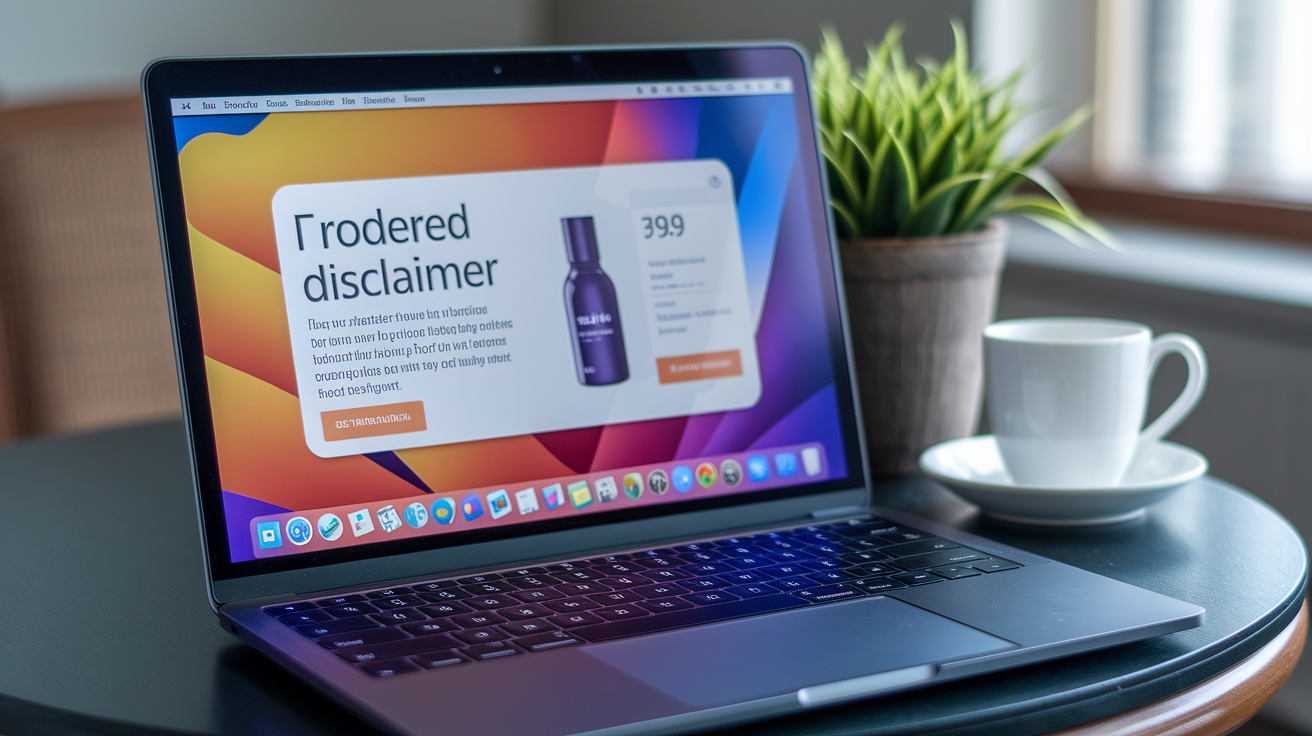
Good disclaimers are short, visible, and repeated. Put the disclosure near the product name, the price, and the checkout button. Anywhere someone makes a decision. Use plain language in a font size at least as big as the text around it. Skip the legalese. Someone scrolling on a phone should see the disclaimer without extra taps or zooming.
Visual design counts. Use a bordered box, bold type, or contrasting background to make the statement jump out without looking like buried fine print. Some companies add an icon (like an info symbol) next to benefit descriptions, linking to a short popup saying “This is not insurance” and explaining what the product actually does. Repetition across the buying journey (landing page, product detail, cart, checkout, confirmation email) drives understanding and cuts the odds someone misses it.
Testing shows if buyers notice and get the message. A/B tests comparing placements, wording, and formats reveal which versions reduce confusion and lower complaint rates after purchase. Some companies track support tickets asking “Is this insurance?” or “How do I file a claim?” as proof that disclaimers need clearer placement or simpler words.
Six design and placement tips:
- Put the disclaimer right below or next to the product headline and price
- Use a bordered box or highlighted background to visually separate it from body text
- Repeat the statement on product pages, cart summaries, checkout screens, and confirmation emails
- Write in plain language with no legal jargon. Aim for 6th grade readability
- Make sure mobile display is fully visible without scrolling or tapping to expand hidden text
- Test different wording and placements using customer feedback, support ticket volume, and A/B testing
Operational and Internal Compliance for Non‑Insurance Products

Sales staff, customer service reps, and third party affiliates need to use the same disclaimer language. Training should cover what the product is, what it isn’t, and how to answer “Is this insurance?” without dodging. Scripts and email templates should include the disclaimer word for word. Monitoring ad channels (social posts, influencer partnerships, affiliate sites) makes sure third parties don’t make unauthorized insurance claims in their promos.
Product naming needs special care. Don’t use “insurance,” “coverage,” “policy,” “premium,” or “indemnity” in the name. Even with disclaimers present, a product called “Travel Coverage Plan” confuses buyers and draws regulator attention. Pick neutral names like “Travel Assistance Membership,” “Device Service Plan,” or “Roadside Support Program.” Recordkeeping supports compliance audits. Keep copies of all ads, website screenshots, sales scripts, and customer messages so you can prove consistent use of required disclaimers if a regulator or plaintiff’s lawyer asks.
Internal Audit Checklist
- Confirm disclaimers show on homepage, product pages, checkout flow, and all confirmation emails
- Check product names and marketing headlines for insurance words (coverage, claims, policy, premium, indemnified)
- Audit third party affiliate and partner sites to confirm they display required disclaimers
- Verify sales scripts and customer service templates include approved disclaimer language
- Check that mobile and app interfaces show disclaimers without needing extra taps or scrolling
- Keep a compliance log with dated screenshots, ad copies, and records of any regulator inquiries or consumer complaints
Consumer Education: Helping Buyers Understand Non‑Insurance Products

Clear FAQs cut confusion and build trust. Explain what services the product includes, what it excludes, and how it differs from insurance in simple terms. Use real examples. “If your phone breaks, you pay a 99 dollar service fee and we send a replacement. We don’t reimburse you for the cost of a new phone you bought somewhere else.” Address the biggest misunderstanding directly. “This is not insurance and will not cover losses outside the listed services.”
Being transparent about limits protects the company and you. When buyers know exactly what they’re purchasing, post sale disputes drop, chargeback rates fall, and reviews get better. Education materials also work as proof of good faith disclosure if a regulatory question comes up later.
Five question FAQ:
- Is this insurance? No. This is a [membership/service plan/discount program] and is not regulated by any state insurance department. It does not transfer risk or pay claims like an insurance policy.
- What happens if I need service? You contact us using the number or app provided. We deliver the services listed in your agreement. There is no claim investigation or adjuster involved.
- Can I get a refund if I cancel? Refunds follow the cancellation terms in your contract. [Insert your specific refund policy.] There is no mandated grace period or pro rated refund requirement.
- What if I disagree with a service decision? You can contact our customer support team. Disputes are handled under the terms of your service agreement, not insurance claim regulations.
- Do I still need insurance? Yes. This product is not a substitute for insurance. It provides [specific services] but does not cover losses, liability, or risks outside those services.
Final Words
You can now spot what counts as not an insurance product: no risk transfer, no underwriting, and no regulated claim obligations.
We covered why companies must say “not insurance,” common examples, disclosure rules, and how mislabeling leads to complaints, fines, and frustrated buyers.
Before you buy, ask for the written disclaimer, compare refund and claims rules, and confirm licensing. Do that and you’ll be much less likely to face a surprise bill — and you’ll have clearer protection when it matters.
FAQ
Q: What are the 4 types of keywords?
A: The four types of keywords are informational (answers questions), navigational (helps users find a site), transactional (buying intent), and commercial investigation (research before a purchase).
Q: What is an example of keyword research?
A: An example of keyword research is checking search volume, competition, and intent for a phrase like “extended warranty vs insurance”, finding related long-tail queries, and choosing the best targets for a product page.
Q: How to do product keyword research?
A: Product keyword research is done by listing product features and buyer needs, using tools for search volume and difficulty, prioritizing transactional long-tail terms, and testing keywords in product titles and ads.
Q: Which SEMrush tool provides you with information about not provided keywords?
A: The SEMrush tool that provides information about “not provided” keywords is Organic Traffic Insights, which combines Google Analytics, Search Console, and SEMrush data to reveal hidden keyword queries.