




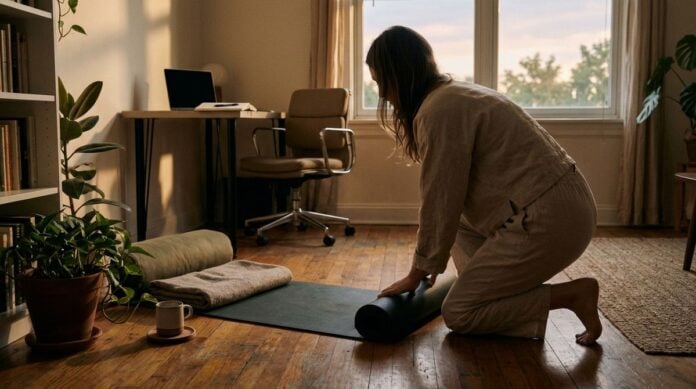
Modern workdays often demand hours of sustained concentration, usually spent sitting before a computer or standing in place on hard surfaces. By the time evening arrives, that stationary posture can leave the shoulders hunched, the lower back stiff, and the hips unusually tight. Many people carry this physical tension straight to dinner and then into bed, wondering why they feel restless despite being physically exhausted.
Creating a dependable boundary between work hours and personal time does not require an overwhelming lifestyle overhaul. Instead, establishing a brief physical transition allows your body to release the stress of the day gradually. Shifting into simple movement signals to your nervous system that the rush of deadlines has passed, helping you spend your evening in comfort rather than persistent stiffness.
Recognizing Where the Body Holds Daily Stress
When you spend long periods in fixed positions, specific muscle groups quietly bear the brunt of that stillness. The upper back and neck frequently tighten as you lean toward screens, while the hip flexors remain compressed from hours in an office chair. Over time, these patterns become automatic, creating subtle discomfort that follows you throughout your evening chores and leisure hours.
Addressing this stiffness begins with paying attention to the inputs and habits that shape your overall state. Natural health emphasizes removing physical stressors that wear you down while making deliberate space for restorative habits that nurture healing. Online resources such as Wellness 786 highlight the value of shedding draining routines and supporting your body through balanced daily habits. When you view physical decompression as a natural form of self-care rather than a burdensome chore, setting aside a few minutes for gentle stretching becomes an intuitive part of your evening.
Preparing a Calm Space Free from Distractions
The environment where you unwind plays a significant role in how well your body relaxes. If you try to stretch on a floor cluttered with work folders, charging cables, and laundry piles, your mind will naturally drift back to unfinished tasks. You do not need an entire studio room to decompress, but carving out a clear, quiet corner makes a noticeable difference.
Physical clarity in your home directly supports mental calm. When personal items wander into common living spaces, tracking down a yoga mat, a foam roller, or a comfortable pair of wool socks can turn into an annoying scavenger hunt. Much like organizing a dedicated household lost-and-found helps keep stray items neatly gathered in one predictable spot, storing your stretching essentials in a single basket saves valuable energy. When everything is already in place, starting your evening stretch requires zero friction.
Gentle Postures to Restore Balance and Mobility
Physical decompression does not need to resemble a vigorous gym session. In fact, intense cardiovascular workouts late in the evening can sometimes elevate your alertness right when you want to prepare for restful sleep. The goal of an evening movement session is restoration, focusing on long, patient stretches that encourage muscle fibers to lengthen and joints to move through their natural range.
Working through a structured series of postures offers an effective way to release tight muscle chains from your neck down to your calves. Many individuals find that learning foundational yoga techniques provides a reliable framework for daily physical maintenance. Sites like bikramyogales.com share practical ideas for incorporating consistent posture practice into personal wellness habits, whether you attend classes in a dedicated studio or follow along on a mat at home. Focusing on breath control while holding simple poses allows tight areas to soften at a natural pace.
A Simple Four-Step Evening Movement Routine
You can build a reliable evening transition using just a few minutes and a soft surface. Moving through these four straightforward steps helps release common areas of tension without complicated equipment or athletic strain:
- Shoulder rolls and neck releases: Sit tall on the floor or in a chair, roll your shoulders backward in wide circles, and gently tilt your ear toward your shoulder to ease tension in the upper trapezius.
- Cat and cow spinal mobility: Move to your hands and knees, alternating between gently arching your back and rounding your spine to awaken the vertebrae and chest.
- Low lunges for hip flexors: Step one foot forward with the knee bent above the ankle, softly pressing your hips forward to open the front of the opposite hip.
- Supported floor rest: Lie flat on your back with your knees bent and feet planted, placing hands on your abdomen while taking slow, unhurried breaths.
Move slowly between each step, avoiding any sharp or sudden jerks. If a particular position feels uncomfortable or strained, adjust your posture or skip it entirely. The objective is to encourage physical relaxation, not to push past your natural boundaries or achieve an extreme stretch.
Establishing Consistency Without Adding Pressure
One common obstacle to establishing a new evening habit is setting unrealistic expectations. When people believe a stretch routine must last an hour every single night, they frequently skip it on busy or tiring days. It is far more helpful to practice for a brief period on most evenings than to complete an elaborate session once a month.
Treat your evening movement as an open invitation rather than a strict obligation. On days when you have ample energy, you might linger on your mat and work through several stretches. On days when work ran late and fatigue sets in, spending a single quiet moment resting on the floor with deep breaths is more than enough.
Carrying Physical Ease into Your Evening Rest
Once you conclude your movement routine, transition mindfully into the remainder of your evening. Drink a glass of water, slip into comfortable clothing, and avoid immediately returning to your laptop or bright phone screen. Giving your body a quiet half hour after stretching allows the feeling of ease to settle into your nervous system.
Winding down after a demanding workday is an essential skill for sustainable living. By creating a clutter-free environment, practicing gentle stretches, and listening to your body, you can reliably dissolve the physical strain accumulated during the day. Over time, this brief ritual turns the boundary between work and home into a refreshing period of rest and renewal.


