





They just raised your deductible, and that small change can cost you thousands when something goes wrong.
A higher deductible usually lowers your premium but makes you pay more per claim.
This post shows why insurers hike deductibles (inflation, big storms, claims history), what the financial trade-offs look like in real dollars, and the practical steps to protect yourself.
Read on to see who should accept a higher deductible, who should shop around, and the three things to check at renewal.
Why Insurers Increase Deductibles

Insurers raise deductibles when the numbers stop adding up. Inflation’s been pushing repair costs through the roof lately. A $12,000 roof replacement in 2020? That’s $18,000 now. That fender bender that used to cost $3,500 to fix now runs $5,200 because parts, paint, and labor all got more expensive. When every single claim costs more to settle, insurers can either jack up premiums across the board or make policyholders cover more of the upfront cost by raising deductibles.
Where you live matters a lot. If your area’s been hit by back to back hailstorms, wildfires, or hurricanes, your insurer’s seeing a pattern of expensive, frequent payouts. Actuaries crunch the numbers for your zip code, and deductibles go up to keep the policy from bleeding money. This happens all the time with wind, hail, and named storm coverage in high risk states.
Your own claims history plays a role too. File three claims in two years and your insurer might raise your deductible at renewal to offset the increased chance you’ll file again. It’s one of the levers they pull to stay solvent without dropping your coverage entirely.
Common triggers for deductible increases:
- Frequent regional disasters . Multiple severe weather events in a short window drive up expected payouts.
- Personal claims volume . Two or more claims within 24 months signal higher future risk.
- Inflation in materials and labor . Construction costs, replacement parts, and contractor rates climb faster than premiums can keep up.
- Reinsurance cost spikes . When the companies that insure insurers raise their prices, those costs get passed down.
- Actuarial model updates . New data on flood zones, fire risk, or crime rates can prompt deductible changes across entire markets.
How Deductibles Function Within an Insurance Policy

A deductible is what you pay out of pocket before your insurer pays anything on a covered claim. If your policy has a $1,000 deductible and you file a $4,500 claim, you hand over $1,000 and the insurer writes a check for $3,500. If the damage totals $800, you get nothing because the loss falls below your deductible.
Deductibles apply per claim, not per policy year. You could file three separate claims in one year and pay the deductible three times. Some policies use per event deductibles for specific perils. One deductible for a windstorm, a separate percentage deductible for an earthquake. Always check which rules apply to which risks.
Higher deductibles lower your premium because you’re agreeing to shoulder more of the financial hit when something goes wrong. Lower deductibles raise your premium because the insurer picks up costs sooner and more often. That trade off is what drives every deductible decision.
Financial Impact of a Higher Deductible

When your deductible jumps from $1,000 to $2,500, you’re committing to pay an extra $1,500 out of pocket the next time you file a claim. If you rarely file, that might be fine. You’ll collect the premium savings every year and pocket the difference. But if a tree crashes through your roof three months after renewal, that $1,500 gap becomes very real, very fast.
Premium savings rarely match the deductible increase dollar for dollar. Raising your deductible by $1,000 might cut your annual premium by $200 to $400, depending on the policy type and your risk profile. It takes multiple claim free years to earn back the added exposure. One bad event can wipe out those gains.
| Deductible Amount | Financial Impact Summary |
|---|---|
| $500 | Lower out of pocket per claim; higher monthly premium; suitable for tight emergency funds. |
| $1,000 | Moderate out of pocket; mid range premium; common baseline for many homeowners. |
| $2,500 | $2,500 cash needed per claim; premium savings of ~$250–$500/year; requires solid emergency reserves. |
| 5% of insured value | On a $300,000 home, $15,000 out of pocket for wind/hail; catastrophic exposure without dedicated savings. |
The real risk is cash flow shock. If you don’t have $2,500 sitting in savings, you may delay a necessary roof repair, pay with high interest credit, or eat the loss and skip the claim altogether. That defeats the whole purpose of insurance.
Factors Insurers Use When Adjusting Deductibles

Insurers feed dozens of variables into actuarial models, but a few stand out. Claim frequency tops the list. If your neighborhood filed 40% more wind claims last year than the year before, expect deductible or premium adjustments. Claim severity matters just as much. One $80,000 total loss fire costs the insurer far more than ten $3,000 roof repairs, even though the claim count is lower.
Inflation isn’t an abstract concept in underwriting departments anymore. When the price of asphalt shingles, two by fours, drywall, and HVAC units all climb 15% to 25% in eighteen months, insurers recalibrate what a typical claim will cost. Deductibles rise to keep the insurer’s share of each claim within historical norms, even as total repair bills balloon. Labor shortages make it worse. Contractors charge more because skilled workers are scarce, and insurers see those higher invoices on every settled claim.
Regional hazards drive some of the sharpest deductible changes. Coastal properties face percentage based hurricane deductibles. Wildfire prone zip codes see wind and ember driven losses spike. Hail belts in the Midwest trigger separate wind/hail deductibles that can be two or three times the base amount. Insurers also watch reinsurance markets. When the companies that back insurers raise their rates or restrict coverage, those costs and constraints flow straight to policyholders.
Key data points insurers monitor:
- Loss ratio trends . Total claims paid divided by total premiums collected. Ratios above 70% often trigger deductible hikes.
- Catastrophe modeling updates . New hurricane, flood, or wildfire risk maps can shift an entire region into a higher risk tier overnight.
- Building code changes . Stricter codes mean costlier repairs and replacements, even for partial losses.
Consumer Options When Their Deductible Goes Up

You’re not locked in. Start by calling your insurer and asking for a premium quote with your old deductible restored. Sometimes the price difference is smaller than you expect. Paying an extra $15 a month beats paying an extra $1,500 during a claim. If that quote’s unaffordable, ask what discounts you qualify for. Security systems, storm shutters, roof improvements, bundled policies, claims free history, and even membership in certain professional groups can all shave premium costs and offset a higher deductible.
Shopping around is the most underused tool. Independent agents can pull quotes from multiple carriers in minutes, and deductible structures vary widely. One insurer might offer a $1,000 standard deductible with a 2% wind/hail rider. Another might offer $2,500 across the board but lower overall premiums. A third might have a vanishing deductible feature that drops $100 off your deductible for every claim free year. You won’t know until you compare.
If you decide to keep the higher deductible, adjust your financial behavior to match. Open a separate savings account and deposit an amount equal to your new deductible. Treat that money as untouchable except for insurance claims. Review your policy’s replacement cost versus actual cash value rules. If your roof is covered on an ACV basis and it’s fifteen years old, your payout will be depreciated, and a high deductible makes that gap even more painful.
Five steps to take when your deductible rises:
- Request a quote with your previous deductible amount to see the exact premium difference.
- Ask about available discounts . Security, weather protection, bundling, loyalty, and claims free credits.
- Compare at least three carriers . Use an independent agent or online tools to pull competing quotes.
- Set aside cash equal to the new deductible in a dedicated account, separate from your general emergency fund.
- Review your coverage limits and endorsements . Confirm replacement cost, actual cash value, and any sub limits that could leave gaps during a claim.
Real‑World Examples of Deductible Increases
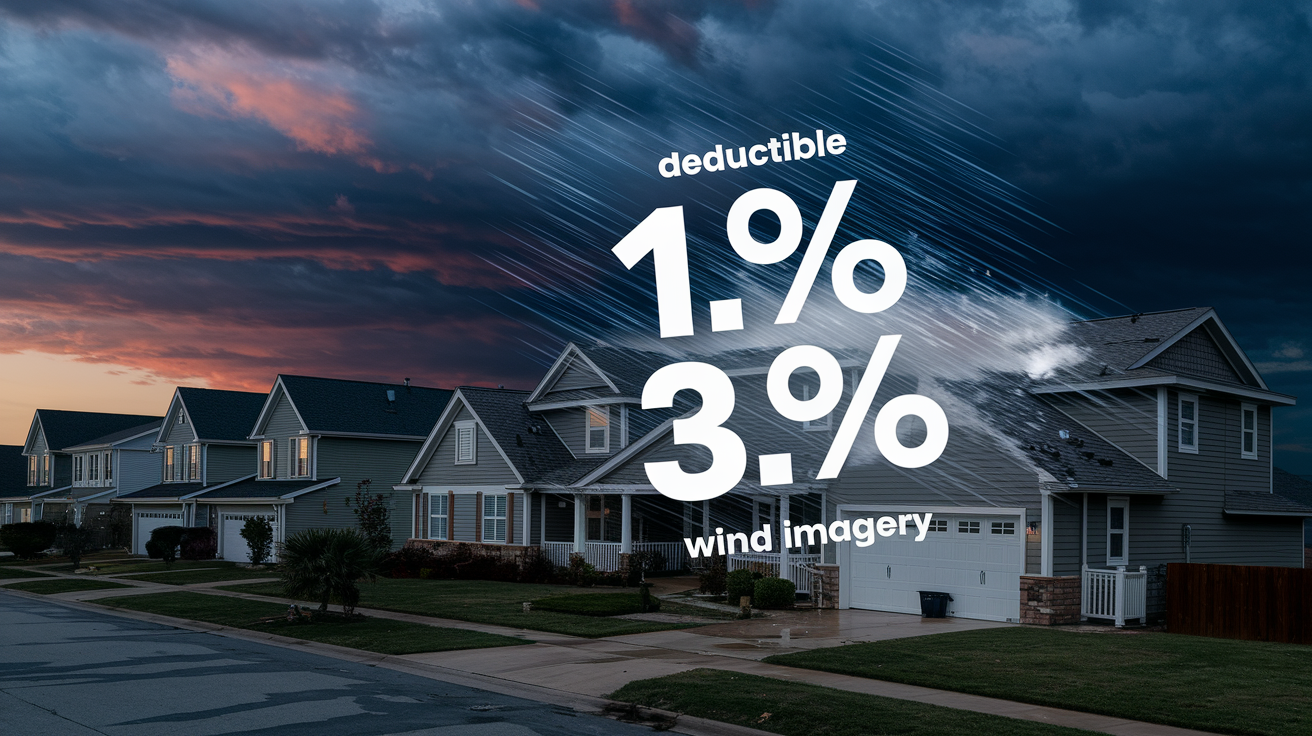
After a brutal hail season in the Midwest, one regional insurer raised wind/hail deductibles from 1% to 3% of insured value across three states. Homeowners with $250,000 policies saw their out of pocket jump from $2,500 to $7,500 for storm damage. The insurer had paid out $340 million in claims over two years and needed to reduce exposure without exiting the market entirely. Policyholders who couldn’t stomach a $7,500 deductible either switched carriers or dropped wind/hail coverage, gambling they could self insure that risk.
A policyholder in a suburban neighborhood filed three claims in eighteen months. One for water damage, one for a kitchen fire, and one for a stolen laptop. At renewal, the insurer raised the standard deductible from $500 to $2,000 and added a note that any further claims within 36 months would trigger non renewal. The premium stayed flat, but the message was clear. Stop filing small claims or find another insurer.
In coastal Florida, hurricane deductibles have climbed steadily since 2022. A homeowner with a $400,000 policy and a 2% named storm deductible faced an $8,000 out of pocket cost per hurricane. By 2025, the same policy carried a 5% deductible, $20,000, because reinsurance costs had tripled and the state’s insurer of last resort was oversubscribed. The homeowner’s annual premium dropped by $600, but one major storm would erase a decade of those savings.
Final Words
We run through why insurers increase deductibles, how deductibles work inside a policy, the real cost trade-offs, key insurer triggers, and practical steps you can take.
This matters because a higher deductible shifts more bills to you during a claim even if your premium drops. Watch for red flags: multiple claims, regional risks, or inflation-driven increases.
If you’re asking “what does it mean when insurance raises deductible”, it usually means more out‑of‑pocket risk and a possible premium cut. Check your math, ask for written reasons, and shop or negotiate, then choose the option that matches your budget and risk.
FAQ
Q: Is it better to have a $500 deductible or $1000?
A: Choosing between a $500 and a $1,000 deductible depends on your budget and claim risk: $500 is more protection at higher premiums; $1,000 lowers monthly cost but raises your out‑of‑pocket when a claim happens.
Q: Is a $2000 deductible bad?
A: A $2,000 deductible isn’t automatically bad; it lowers premiums but raises financial risk. It can work if you have emergency savings and rare claims—avoid it if you can’t afford a sudden $2,000 bill.
Q: Is a high deductible plan good for diabetics?
A: A high deductible plan is usually a poor fit for people with diabetes because regular meds and tests create consistent out‑of‑pocket costs; consider lower deductibles or confirm drug and preventive coverage before choosing an HDHP.