





Can an insurer pull the rug out after saying you’re approved?
Yes — you can be denied even after underwriting, sometimes after you’ve paid premiums for months or years.
Insurers often use the two-year contestability window and post-claim reviews to re-check medical records, prescription history, or application answers.
Read on to learn the real rejection reasons, the common gotchas, and what to check now so your family isn’t left fighting for benefits.
When a Life Insurance Application Can Still Be Denied After Underwriting

Yes, you can be denied life insurance after underwriting. And that denial can happen even after you’ve paid premiums for months or years. Completing the underwriting process and receiving a policy doesn’t guarantee a future payout. Insurers retain legal tools to revisit their original approval decision, especially during the first two years after issuance, and in some cases even conduct a full retroactive underwriting review after a death claim is filed.
The difference between conditional approval and true final approval is critical. Many policyholders believe acceptance of their first premium and delivery of a policy certificate means underwriting is closed. In practice, final approval often doesn’t happen until the insurer examines a claim. And at that point, if death occurred within the contestability window or if the claims department flags something in your file, the insurer can still walk back its earlier decision. The two-year contestability period is a statutory window during which insurers routinely examine every detail of the original application to hunt for grounds to deny benefits or cancel the policy entirely.
Post-claim underwriting is a retroactive reassessment performed only after someone dies. It’s the mechanism insurers use most aggressively. Even though premiums were accepted and underwriting was supposedly completed, the insurer may re-examine risk with the benefit of hindsight, pulling medical records, prescription databases, and third-party reports that were never requested before issuance. If the insurer finds something it considers material, it can deny the claim, rescind the policy, or refund only the premiums paid.
Timing points when denial can still occur after underwriting:
- During the first two years (contestability period), insurer can investigate and deny for material misrepresentation
- At claim submission, insurer may launch a post-claim underwriting investigation before paying benefits
- After policy lapse within the grace period, insurer may deny reinstatement or benefits if lapse timing is disputed
- When beneficiary disputes arise, competing claimants can trigger fresh review of insurability and policy validity
- For ERISA or employment-based group coverage, employer plan rules may allow denial even after enrollment underwriting
- After rescission notice, insurer formally voids the policy as if it never existed, often citing newly discovered facts
How the Life Insurance Underwriting Process Works Before Any Denial Risk

Underwriting is supposed to happen before a policy is issued. The insurer evaluates your health, background, occupation, hobbies, and financial situation to decide whether to offer coverage, at what premium, and with what face amount. Medical underwriting typically includes a health questionnaire, a paramedical exam with biometrics (height, weight, blood pressure, pulse), and lab work (cholesterol, glucose, liver enzymes, HIV, nicotine). Non-medical underwriting may be offered for small policies or group coverage, relying on brief health questions and third-party data without an exam.
Insurers also pull data from external sources: your attending physician’s records (APS), the Medical Information Bureau (MIB) shared database, prescription history from pharmacy benefit managers, motor vehicle reports, and sometimes credit or financial records. The underwriter assigns a risk class (preferred, standard, substandard, or decline) based on all that information. A thin underwriting file, one that’s missing key records, lab results, or underwriter notes, often becomes powerful evidence later that the insurer issued the policy without completing a full review. That undermines any post-claim denial based on “undisclosed” facts the insurer could have discovered at the time.
Five underwriting data sources insurers check before issuing a policy:
- Medical exam results and biometric measurements
- Attending physician statement (APS) or medical records request
- Prescription drug history from pharmacy databases
- MIB report showing prior applications and reported conditions
- Motor vehicle records, credit reports, or financial documentation
The Most Common Reasons You Can Be Denied Life Insurance After Underwriting Is Completed

Even after an insurer completes underwriting and issues a policy, it can still deny benefits based on information it claims was misrepresented, omitted, or newly discovered. The categories are broad, and many overlap: medical history, lifestyle factors, and administrative or procedural issues. Understanding these categories shows where insurers most often find grounds to reverse earlier approvals.
Medical reasons dominate post-underwriting denials. Undisclosed pre-existing conditions (diabetes, heart disease, cancer history, mental health treatment, or substance use) are the most common trigger. Insurers routinely pull years of medical records after death and selectively highlight entries showing diagnoses, medications, or test results that weren’t reported on the application. Even when you disclosed a condition in general terms, the insurer may argue the disclosure was incomplete or misleading. Failed medical exam results, elevated liver enzymes, abnormal glucose, positive nicotine or drug tests, can also justify denial if the insurer claims those results were withheld or if follow-up records contradict the application.
Lifestyle and occupation issues are another frequent category. Hazardous hobbies like skydiving, scuba diving, rock climbing, or private aviation can lead to denial if not disclosed. High-risk occupations (construction, law enforcement, offshore work, logging) trigger similar scrutiny. Smoking status is a chronic flashpoint. If you checked “non-smoker” but records show nicotine use, the insurer will argue material misrepresentation. Criminal history, DUI convictions, or financial red flags (bankruptcy, large debts, inconsistent income relative to face amount) can all be cited post-claim as grounds to void the policy.
Eight common reasons insurers cite to deny life insurance after underwriting:
- Undisclosed or understated medical conditions, diabetes, hypertension, cancer, mental health diagnoses
- Smoking or nicotine use, positive cotinine test or Rx records contradicting non-smoker declaration
- Hazardous activities, aviation, extreme sports, scuba, mountaineering not listed on application
- High-risk occupation, jobs involving heavy machinery, heights, law enforcement, or offshore work
- Failed lab results, abnormal cholesterol, liver function, glucose, or drug/alcohol markers
- Prescription drug history, medications indicating conditions not disclosed (e.g., antidepressants, blood pressure meds, insulin)
- Criminal or financial issues, felony convictions, DUIs, bankruptcy, or insurable interest questions
- Application misstatements or omissions, incorrect answers about hospitalizations, surgeries, or family history
Post-Claim Underwriting: Why Denials Happen After Someone Dies

Post-claim underwriting is a retroactive underwriting process that happens only after a beneficiary files a death claim. Instead of paying benefits promptly, the insurer re-examines the entire application, underwriting file, and any external records it can obtain, often including medical records, prescription histories, and vendor reports that were never requested before the policy was issued. The goal is to find a reason to deny the claim or rescind the policy. And insurers are willing to invest significant resources in that search when the face value is large enough to justify the expense.
Courts are skeptical of post-claim underwriting because the timing reveals a motive. The insurer had every opportunity to investigate the applicant’s risk while they were alive, yet only “discovered” problems after death made the full face amount due. If the insurer accepted premiums for months or years without raising concerns, beneficiaries can argue the insurer waived its right to contest the policy. The practical question becomes: why did this issue only matter after the insured died? If the answer is “because that’s when we finally looked closely,” the insurer’s credibility suffers.
Post-claim underwriting shifts litigation focus from the beneficiary’s conduct to the insurer’s conduct. Instead of defending the accuracy of the application, the beneficiary’s attorney highlights what the insurer didn’t do before issuance: didn’t order an APS, didn’t follow up on disclosed conditions, didn’t pull Rx records, didn’t apply its own underwriting guidelines. When the underwriting file is thin (missing risk assessments, underwriter notes, or evidence of any meaningful review), the beneficiary can argue the insurer issued the policy negligently and can’t now escape its own decision.
Red Flags That Show Post-Claim Underwriting
Certain patterns in the claim file signal that the insurer is performing post-claim underwriting rather than a legitimate investigation. These red flags are discoverable in litigation and often decisive in court.
- Underwriting reviews dated after the claim was submitted, risk memos or classifications created only post-death
- New reliance on medical records never requested before issuance, insurer pulling APS or hospital records for the first time after death
- Denial letters citing issues absent from the original underwriting notes, problems the underwriter never flagged or investigated
- Claims personnel offering underwriting opinions, adjusters, not underwriters, making judgments about materiality or risk classification
- Sudden emphasis on conditions that were disclosed on the application, insurer now claims disclosure was “incomplete” or “misleading”
Why Timing Weakens Many Denials
If you disclosed a condition on the application and the insurer issued the policy without requesting follow-up records or imposing an exclusion, that’s an underwriting decision. Not the beneficiary’s fault. Courts ask: if the condition was truly material, why didn’t the insurer investigate it before accepting premiums? The failure to investigate is evidence the insurer didn’t consider the issue disqualifying at the time. When the insurer raises the same issue years later, only after death, judges and juries see it as buyer’s remorse, not a legitimate rescission.
Differences Between Temporary Denials, Permanent Denials, and Policy Rescission
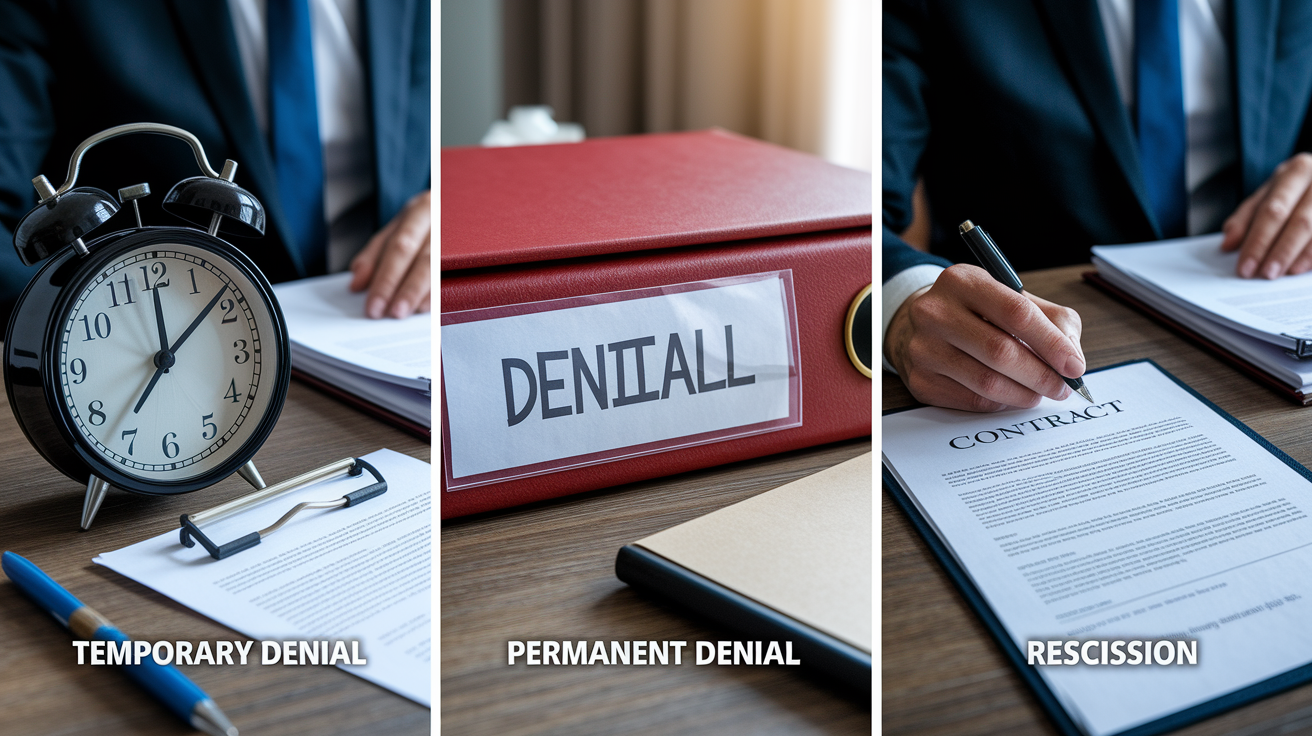
Not all denials are final, and understanding the legal distinctions helps beneficiaries know what they’re fighting. A temporary denial usually means the insurer needs more information before making a coverage decision. The claim isn’t rejected outright. It’s pending. Common reasons include missing death certificates, incomplete beneficiary forms, or outstanding premium questions. Temporary denials can often be resolved by submitting the requested documents, though insurers sometimes use “temporary” status as a delay tactic while they dig for grounds to deny permanently.
A permanent denial is a final decision to refuse benefits, typically based on alleged material misrepresentation, policy exclusions, or lapse. The insurer closes the claim and may issue a refund of premiums paid. Permanent denials can still be appealed or litigated, but the insurer’s position is that no coverage exists. Rescission is the most aggressive form of denial: the insurer voids the policy retroactively, treating it as if it never existed. Rescission is permitted during the contestability period (commonly two years from issuance) when the insurer proves the application contained a material misrepresentation that would have changed the underwriting decision. One case involved a lapse dispute where the policy had lapsed a few days beyond the grace period, yet after legal challenge the insurer paid the full claim and deposited the full amount within a couple of months, showing that even procedural denials can be reversed.
Four key distinctions to understand:
- Temporary denial, claim is pending, insurer requests more information, benefits not yet refused
- Permanent denial, insurer closes the claim and refuses to pay, often with premium refund
- Rescission, policy is voided as if it never existed, typically invoked within the two-year contestability period
- Lapse, policy terminated for non-payment, which is different from rescission but may still be contested if grace period or reinstatement rules were misapplied
How to Appeal a Life Insurance Denial After Underwriting: Step-by-Step

Don’t accept a denial without reviewing the policy, the denial letter, and the evidence the insurer relied on. Insurers routinely deny valid claims, and many denials are reversed on appeal or in litigation. The key is to act quickly. Appeal deadlines are often short, sometimes as little as 30 or 60 days from the denial notice, and missing the deadline can forfeit your right to challenge the decision.
Start by obtaining a complete copy of the claim file, including all underwriting documents, medical records the insurer reviewed, and any internal communications or underwriting guidelines cited. Compare the denial letter to the original application and the underwriting file. Look for inconsistencies: did the insurer ignore disclosed conditions, rely on records it never requested before issuance, or cite guidelines that weren’t in effect when the policy was issued? Gather your own evidence. Corrected medical records, physician statements clarifying diagnoses, proof of disclosure, and any documents showing the insurer had the information at the time of issuance. Real examples include claimants who were rejected twice before an attorney successfully reversed the denial, proving that persistence and documentation can overcome initial refusals.
Seven steps to appeal a life insurance denial:
- Request the complete claim file and denial letter in writing, ask for all documents, underwriting notes, medical records reviewed, and the specific policy provisions cited
- Review the insurance policy and application, confirm what was disclosed, what exclusions apply, and whether the contestability period has expired
- Gather supporting documentation, corrected medical records, physician affidavits, prescription histories, proof of disclosure, and any evidence the insurer had access to the information before issuance
- Identify procedural or factual errors in the denial, look for reliance on post-claim underwriting, selective use of records, or misapplication of underwriting guidelines
- File a written appeal within the deadline, submit a detailed appeal letter with all supporting documents, citing policy language and factual errors in the denial
- Request an independent medical review if applicable, some states or policies allow an external review of medical necessity or underwriting decisions
- Consult an experienced life insurance attorney before the appeal deadline, legal representation increases the likelihood of reversal, especially when post-claim underwriting or material misrepresentation claims are involved
Alternatives If You’re Denied After Underwriting: Paths to Still Getting Coverage

A denial from one insurer doesn’t mean you’re uninsurable. Multiple alternatives exist, each with trade-offs in coverage amount, premium, and underwriting requirements. These options are designed for applicants who can’t obtain or keep fully underwritten individual policies due to health, occupation, or lifestyle factors.
Guaranteed-issue life insurance requires no medical exam and no health questions. Approval is automatic as long as you meet age requirements, typically 50 to 85. The trade-off is a low face amount (usually $5,000 to $25,000), high premiums relative to coverage, and often a graded benefit period: if you die within the first two or three years, the insurer pays only a return of premiums plus interest rather than the full death benefit. Simplified-issue policies are a step up, requiring a brief health questionnaire but no exam. Coverage amounts are higher than guaranteed-issue but lower than fully underwritten policies, and premiums reflect the insurer’s higher risk.
Group life insurance through an employer or association is another path. Group coverage typically requires minimal or no underwriting, especially for base amounts (often one or two times annual salary). If you’re denied individual coverage, employer-sponsored group life may be the easiest way to obtain at least some protection. The downside is portability. If you leave the job, coverage usually ends unless you convert to an individual policy at a much higher rate. Final expense or burial insurance is a type of guaranteed-issue coverage specifically marketed to cover funeral and burial costs, with face amounts between $5,000 and $50,000 and premiums structured for older applicants.
Six coverage alternatives after a denial:
- Guaranteed-issue whole life, no health questions, automatic approval, low face amounts, graded benefit period
- Simplified-issue term or whole life, brief health questionnaire, no exam, moderate face amounts
- Group life insurance through employer, minimal underwriting, coverage tied to employment, often one to three times salary
- Accidental death and dismemberment (AD&D) policies, no health underwriting, pays only for accidental death, lower premiums
- Final expense or burial insurance, guaranteed-issue, designed for funeral costs, typically $5,000–$25,000 face amount
- Graded benefit whole life, guaranteed-issue with reduced benefits in early years, full death benefit after waiting period (usually two to three years)
Improving Your Chances When Reapplying After a Denial

Reapplication is possible, and in many cases advisable, once you’ve addressed the issues that led to the initial denial. The key is understanding what went wrong and taking concrete steps to fix it before you apply again. Insurers keep records of prior applications, and a pattern of denials can make future approvals harder, so preparation matters.
If the denial was based on medical factors (elevated labs, uncontrolled blood pressure, high BMI, or abnormal test results), work with your doctor to stabilize those conditions before reapplying. Wait until your A1C is under control, your blood pressure is consistently normal, or your weight has dropped into a healthier range. Insurers often require six to twelve months of stability before they’ll reconsider an applicant who was previously declined for a health issue. If the denial cited undisclosed conditions or prescription drug history, obtain corrected medical records or a physician’s letter clarifying diagnoses, treatment dates, and current health status. Using an independent broker can also improve your odds: brokers work with multiple carriers and know which insurers are more lenient on specific conditions, occupations, or hobbies. What one insurer declines, another may approve at standard or substandard rates.
Five ways to improve approval chances after a denial:
- Stabilize medical conditions, achieve normal lab results, controlled blood pressure, stable weight for at least six months
- Obtain corrected or clarifying medical records, fix errors, get physician statements explaining past diagnoses or treatments
- Wait before reapplying, give time for health improvements to be documented and for any negative underwriting flags to age out
- Work with an independent broker, access multiple carriers and find insurers with more favorable underwriting for your specific risk factors
- Consider a different product type, if you were denied for term, try whole life with lower face amount, or switch from fully underwritten to simplified-issue
Final Words
Yes — insurers can still deny a policy or a claim after underwriting. This post covered how underwriting is supposed to work, the timing tools insurers use (contestability, post-claim underwriting), common denial scenarios, rescission vs temporary denials, how to appeal, and fallback coverage options.
If your question is “can you be denied life insurance after underwriting,” the short answer is yes. Don’t wait: check the contestability window, gather records, file an appeal, or explore guaranteed/group options. With the right documents and timing, you can often fight a denial or secure workable coverage.
FAQ
Q: What disqualifies you from a life insurance policy?
A: Being disqualified from a life insurance policy means an insurer finds you uninsurable or voids coverage for excessive risk, fraud, or non-disclosure. Exact rules depend on the company, policy, and your application details.
Q: Can I get life insurance with lupus?
A: You can get life insurance with lupus, but approval hinges on disease severity, organ involvement, and current treatment. Expect higher rates or graded/guaranteed plans if active; shop carriers and provide medical records.
Q: Can I get life insurance with HPV?
A: You can get life insurance with HPV; HPV by itself rarely blocks coverage. Approval depends on related cancer or abnormal Pap results. Always disclose diagnoses and follow-up care; insurers may request records.
Q: Does ADHD diagnosis affect life insurance?
A: An ADHD diagnosis can affect life insurance only if it’s linked to risky behavior, substance use, or major functional issues. Many people get standard rates when symptoms are stable and treated.