




Most people work more and get less because their goals are vague.
That sounds harsh, but it’s true.
When your goal reads like a wish, your attention wanders and small tasks balloon.
Think of focus like a camera lens: narrow the frame and everything inside is sharp; everything outside blurs.
This is where people get burned—time lost to needless decisions and half-finished work.
Define one specific, measurable target for each session and you’ll cut rework, speed decisions, and actually finish what matters.
Mastering Targeted Attention Through Specific Focus Techniques
Narrowing your focus gives you control over what you mean and what you finish. Define the task, the word, the goal that deserves attention, and you’ll cut down on misreading, wasted effort, and scattered energy. Specificity filters everything else out. What’s outside the frame fades. What’s inside gets sharp.
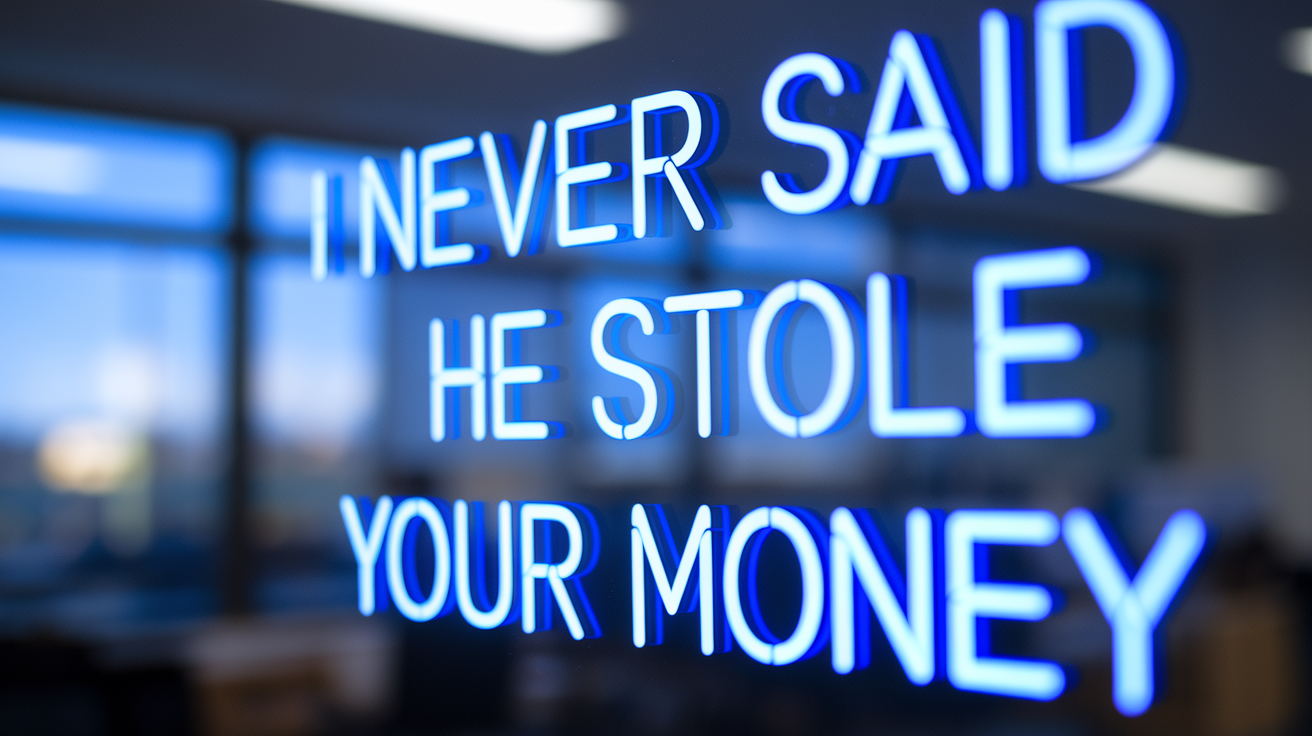
Think about “I never said he stole your money.” Stress “I” and it sounds like someone else made the claim. Stress “never” and you’re suddenly defensive. Stress “said” and maybe you wrote it instead. Same words, completely different meaning. On the phone, where tone replaces body language, this matters even more. One wrong emphasis turns a neutral question into an accusation, and you’ve just burned ten minutes fixing a conversation that didn’t need fixing.
Specificity stops cognitive drift. Vague instructions or open goals make your brain scan for meaning, bounce between interpretations, burn attention on figuring out what you’re supposed to do. Clear phrasing anchors you. “Finish the intro section by 3 p.m.” instead of “Work on the article today.” No scan needed. Single target, ready to go.
Precise phrasing mirrors precise task design. If you can’t state a task in one sentence with a measurable finish, you haven’t defined it tightly enough to hold attention. Narrowing your language forces you to narrow scope. And that constraint is what makes deep work possible.
Six focus techniques you can use right now:
Set a micro goal for the next 25 minutes. One deliverable. “Write 200 words of the introduction” or “Respond to three client emails.” Micro goals fit inside a single attention window and stop scope creep.
Use selective attention filters. Before you start, name one thing you’ll ignore. Social feeds, Slack, background music. Block it physically or digitally.
Remove one distraction source right now. Phone in a drawer, unrelated tabs closed, desk flipped to face the wall. Start with the easiest removal.
Pre plan your exact phrasing for sensitive messages. Write out the sentence you’ll use to ask for payment, deliver feedback, request a decision. Say it once to hear where your stress lands, then adjust.
Commit to single task blocks. Pick one task. Work on nothing else for 60 minutes. New idea pops up? Write it on a notepad and go back to the original task.
Run a quick task definition check. Ask yourself: “Can I explain this task in one sentence with a clear finish line?” If not, break it down until you can.
Defining and Prioritizing What Deserves Attention
Clarifying intent before you start prevents the same misalignment that unclear wording creates. If you don’t know which outcome matters most, every task feels equally urgent. Your attention fragments. The fix is simple. Define one to three specific outcomes your work session, day, or week must deliver. Then filter every activity through that short list. Defining outcomes doesn’t mean vague aspirations like “improve marketing.” It means measurable endpoints. “Publish the case study.” “Schedule follow up calls with five leads.”
Ambiguity scatters effort. When a task description leaves room for interpretation—”handle the client issue” or “make progress on the proposal”—your brain treats it like that 7 word sentence with no emphasis marked. You don’t know which word to stress, so you stress them all weakly. Energy spreads thin. Nothing finishes cleanly. Specificity removes the guesswork. “Revise section two of the proposal to address the pricing objection by noon” tells you exactly where to aim. That precision protects you from drift.
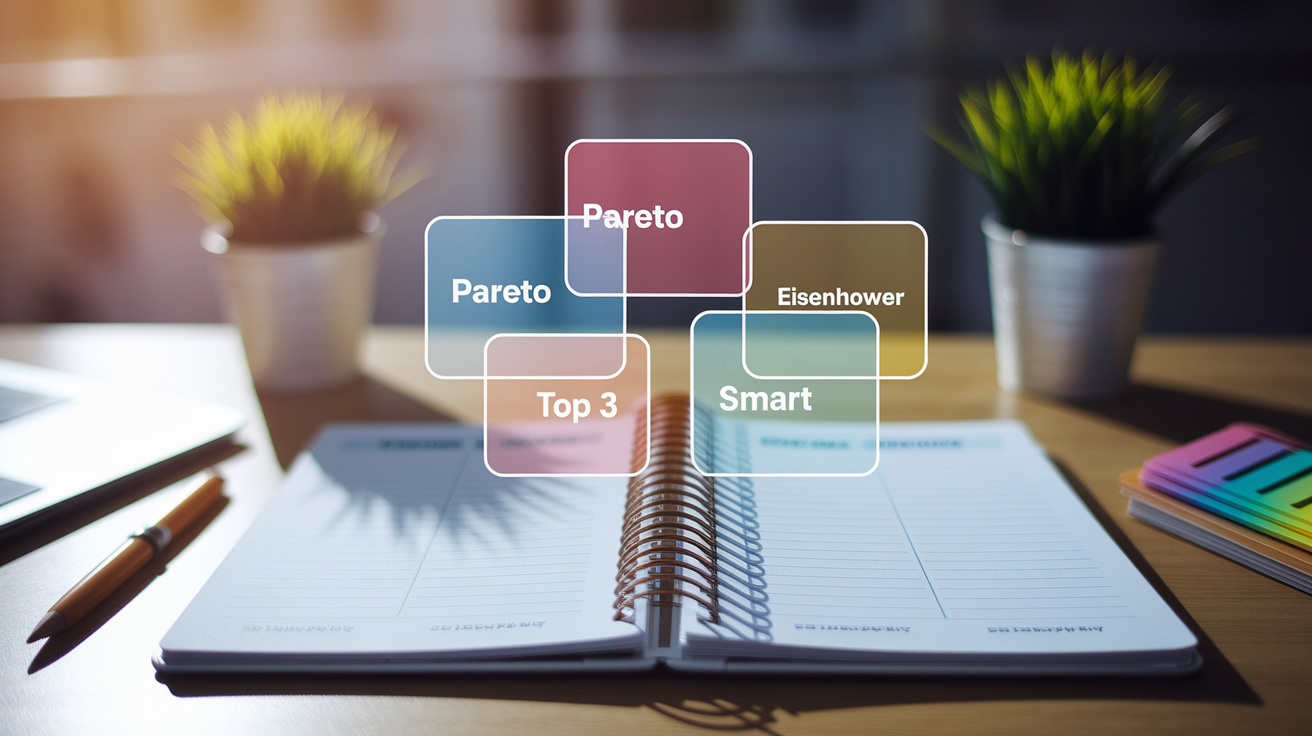
Prioritization frameworks prevent wasted attention and keep you aligned. When you use a structured decision tool, you’re not relying on gut feel or the loudest voice in the room. You’re applying repeatable logic to separate high impact work from low impact noise. Frameworks like Pareto, Eisenhower, Top 3, and SMART criteria turn prioritization from a vague intention into a specific, auditable step you can refine over time.
| Framework | Primary Use | When It Prevents Scattered Focus |
|---|---|---|
| Pareto (80/20) | Identify the 20% of tasks delivering 80% of results | Filters out low yield tasks that consume time without moving key metrics |
| Eisenhower Matrix | Sort tasks into urgent/important quadrants | Stops you from reacting to every urgent item and redirects attention to strategic work |
| Top 3 Rule | Limit daily goals to three highest impact priorities | Forces hard choices up front so you don’t dilute effort across ten mediocre tasks |
| SMART Criteria | Make goals Specific, Measurable, Achievable, Relevant, Time bound | Eliminates vague language that allows scope creep and ambiguity during execution |
Single Tasking and Task Chunking for Concentrated Work

Single tasking cuts cognitive load by ditching the mental overhead of switching contexts. Work on one thing at a time and you don’t pay the restart cost. That’s the few minutes your brain needs to rebuild the mental model of what you were doing before the interruption. Research shows switching tasks can cost up to 40 percent of your productive time. Not because the tasks are harder. Because each switch taxes working memory and executive control. Single tasking protects that capacity by keeping one model loaded and active.
Breaking complex tasks into specific micro actions makes focused attention achievable. Your goal is “finish the quarterly report”? Your brain doesn’t know where to start. It hesitates, scans for easier wins, gravitates toward distractions. Your goal is “draft the three sentence executive summary”? Now you’ve got a concrete action that fits inside a single attention span. You can hold focus for the ten minutes it takes to finish. Once that’s done, move to the next micro action. “Pull the revenue chart from the dashboard.” Each chunk is small enough to complete without breaking flow. The sequence of chunks adds up to the larger deliverable.
Real world examples of focused attention include reading a chapter without rereading paragraphs because your mind wandered, working at a desk for 90 minutes without checking your phone, and listening to a full conversation without planning your response mid sentence. These behaviors share a common structure. Filtering out irrelevant stimuli and directing mental energy toward a single, well defined target. The more you practice that structure, the easier it becomes to enter and sustain the flow state where productivity compounds.
Time Blocking and Pomodoro Sessions for Specific Tasks

Time blocking improves focus by assigning each task a dedicated window on your calendar. Intent becomes a scheduled commitment that protects attention from competing demands. Block 9 to 10:30 a.m. for “write product overview” and that slot becomes unavailable for meetings, emails, or side projects. The physical boundary reduces decision fatigue. You already decided what to work on, so you don’t waste mental energy reconsidering the choice every few minutes. Deep work improves with 60 to 90 minute blocks because that duration matches the natural rhythm of sustained concentration before fatigue sets in.
The Pomodoro technique layers structure inside those blocks by breaking work into 25 minute intervals separated by short breaks. Each interval focuses on one specific task. The timer creates urgency that discourages procrastination and wandering. Focus strengthens through repetition. The more cycles you complete, the more your brain learns to ignore distractions and stay locked on the target. Reduced multitasking during Pomodoro sessions trains your attention like a muscle. Over time you’ll find that 25 focused minutes deliver more finished work than two hours of fragmented effort.
Four steps for creating a time blocked Pomodoro cycle for one specific task:
Write the task as a one sentence deliverable with a measurable finish line. For example, “draft the pricing section with three tiers and feature comparisons.”
Estimate how many 25 minute Pomodoros the task will require based on complexity and your past performance. Start with two or three.
Schedule the Pomodoros back to back in a single calendar block, leaving five minute breaks between cycles and a longer 15 minute break after every fourth cycle.
During each Pomodoro, work only on the defined task. Unrelated idea appears? Write it on a capture sheet and return immediately to the task. Complete the cycle, take the break, then start the next one.
Designing a Focus Friendly Environment

Your workspace either supports sustained attention or sabotages it. The difference often comes down to small, controllable details. Noise, media alerts, phone notifications reduce focus by triggering involuntary shifts in attention. Even if you don’t respond, the interruption breaks your train of thought and costs you several minutes of recovery time. Physical comfort matters too. Pain, hunger, dehydration, poor posture create low grade discomfort that pulls mental resources away from the task and toward the discomfort itself, fragmenting your ability to concentrate.
Designing a focus friendly environment means reducing sensory interference and removing friction from the act of starting work. Desk faces a window with foot traffic? You’ll notice movement in your peripheral vision dozens of times per hour. Each notice is a micro distraction. Phone sits within arm’s reach? The temptation to check it competes with your intention to stay on task. Small changes compound into a setup that makes focus the path of least resistance. Turn the desk, move the phone to another room, use noise canceling headphones.
Sleep, hydration, lighting affect attention capacity. Poor sleep reduces working memory and executive control, making it harder to filter distractions or maintain effort on difficult tasks. Dehydration slows cognitive processing and increases perceived effort. Dim or flickering light causes eye strain, which creates fatigue that feels like lack of motivation but is actually physical discomfort. Optimizing these variables doesn’t require expensive equipment. Consistent sleep schedules, a water bottle at your desk, task lighting pointed at your work surface. Enough to protect baseline attention.
Five sensory reduction tactics to implement immediately:
Close unrelated browser tabs and quit applications you’re not actively using to eliminate visual clutter and notification temptation.
Use website blockers during focus sessions to prevent reflexive checking of email, social feeds, news sites.
Put your phone on airplane mode or place it in a drawer outside your immediate workspace to remove the strongest pull on your attention.
Wear over ear headphones (with or without audio) to signal “do not disturb” and dampen ambient conversation or office noise.
Set your workspace temperature between 68 and 72 degrees Fahrenheit. Too warm induces drowsiness, too cold creates distraction from discomfort.
Mindfulness and Attention Training for Specific Targets

Mindfulness trains your brain to notice when attention has drifted and to return it to a chosen target without judgment or frustration. That skill transfers directly to work. When you catch yourself reading the same paragraph three times or opening a new tab mid task, you’re using the same awareness you develop during mindfulness practice. The difference between scattered attention and focused attention is often just the speed at which you notice the drift and the ease with which you redirect. Mindfulness shortens that loop.
Focus is described as a flow state where mental energy concentrates on one task and distractions are filtered out. Flow doesn’t happen by accident. It emerges when the challenge level matches your skill, when the task has clear goals, and when you receive immediate feedback on progress. Mindfulness supports all three conditions by helping you choose appropriately scoped tasks, define clear targets, and stay present enough to register small wins as they happen. Multiple mental health conditions reduce focus. Anxiety scatters attention across threats, ADHD makes it hard to inhibit irrelevant stimuli, depression drains motivation to engage. But mindfulness practice has been shown to improve attention regulation even in clinical populations.
Attention training exercises build the capacity to hold focus on a specific target for increasing durations. Simple practices like counting breaths to ten, then starting over, teach your brain to detect mind wandering quickly. When you lose count, you’ve received immediate feedback that attention drifted. The act of returning to “one” is the same mental motion you’ll use to return to a work task after a distraction. Over time, the interval between drifts lengthens. The effort required to return decreases.
Visualizing a Specific Outcome
Pairing breathwork with mental imagery reinforces short term focus by giving your brain a concrete target to lock onto. Before starting a task, close your eyes, take three slow breaths, and picture the finished deliverable in detail. What the completed email looks like in your sent folder, what the finalized slide deck will contain, what it feels like to mark the task complete. This mental rehearsal primes your attention by activating the same neural circuits you’ll use during execution. Reduces the startup friction and increases the likelihood that you’ll maintain focus through the work session. The combination of controlled breathing and vivid imagery also lowers baseline anxiety, which otherwise competes for attention and makes concentration feel effortful.
Reducing Cognitive Load and Decision Fatigue

Cognitive load refers to the total amount of mental effort your working memory is handling at any moment. When load is high (because you’re tracking too many tasks, holding too many decisions open, or context switching frequently), your ability to concentrate on any single item drops. Simplifying your environment and routines reduces load, freeing up capacity for the work that actually matters. Focus strengthens with repetition, but only if you’re not burning energy on avoidable decisions like “What should I work on next?” or “Which email deserves a response first?” Removing ambiguity eases mental strain and makes sustained attention achievable.
Decision fatigue accumulates over the course of a day as you make choices, even small ones. By the afternoon, your willingness to deliberate declines. You either default to familiar patterns or avoid decisions entirely by procrastinating. Front loading decisions (planning your task sequence the night before, batching similar activities, using templates for recurring work) protects your decision budget for high stakes choices and keeps your attention available for execution instead of planning.
Three simplifying routines to reduce cognitive load:
Use a single task capture system (notebook, app, text file) so you don’t waste mental energy remembering where you wrote things down or worrying that you’ll forget an idea.
Batch low stakes decisions into a weekly planning session. Schedule recurring meetings, outline daily priorities, pre decide which tasks go into which time blocks so each morning starts with execution, not deliberation.
Create default responses for routine requests. Standard email replies, meeting agendas, project kickoff checklists. You’re not reinventing structure every time a familiar situation appears.
Accountability and Commitment Strategies for Specific Outcomes
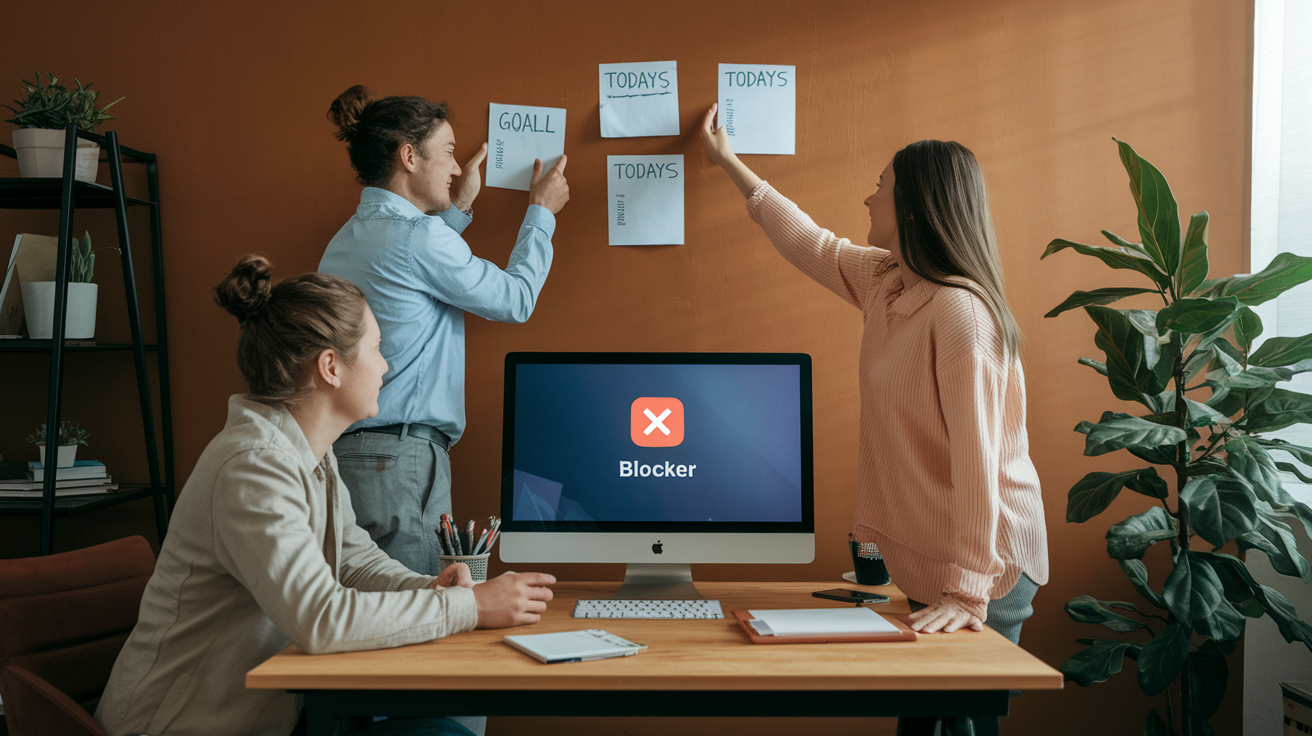
Accountability systems make focus easier by adding external reinforcement to your internal intention. Tell someone else what you plan to finish by a specific time and the social cost of missing the target increases. That cost helps you resist distractions that would otherwise feel harmless. Behavioral cues and public commitments reinforce focus habits over time by creating consistency loops. You’re more likely to repeat a behavior when the environment, timing, and accountability remain stable across sessions.
Commitment devices lock you into a course of action by raising the cost of quitting or switching tasks. Examples include scheduling a check in call at the end of a work session, using website blockers that won’t disable until the timer expires, publicly posting your daily goals in a shared workspace. These devices work because they remove the option to change your mind mid session. That constraint protects your attention from the drift that happens when every distraction is only one click away.
Habit stacking layers a new focus routine onto an existing habit, reducing the friction of starting. You already drink coffee at 8 a.m.? Stack “review today’s top three priorities” immediately after the first sip. The existing habit serves as a reliable cue. The new behavior benefits from the momentum. Over time, the stack becomes automatic. You no longer spend willpower deciding whether to plan your day. It just happens as part of the morning sequence. Cue dependent routines work the same way. Always start deep work after closing your email client? The act of closing email becomes the trigger that shifts your brain into focus mode without requiring conscious effort.
Handling Focus Challenges: Health, Stress, and Neurodiversity

Eight clinical conditions noted in research can impair focus: anxiety, attention deficit/hyperactivity disorder (ADHD), depression, insomnia, schizophrenia, dementia, bipolar disorder, and Alzheimer’s disease. Seven additional non clinical factors reduce attention capacity: certain medications, pain, hunger, stress, sedentary lifestyle, dehydration, and lack of sleep. These obstacles don’t mean focus is impossible. They mean you need to account for them when designing your work structure. Managing ADHD? 25 minute Pomodoros may work better than 90 minute blocks. Sleep deprived? Front load your hardest tasks into the first two hours after waking, when willpower and working memory are strongest.
Supporting neurodiverse focus often requires adjusting standard productivity advice to match how your brain actually works. External timers, body doubling (working alongside someone else, even silently), and movement breaks can all improve attention for people with ADHD by providing structure, accountability, and an outlet for physical restlessness. For people with anxiety, building buffer time into schedules reduces the panic that comes from running late. That reduction in background stress frees up mental capacity for the task at hand.
Recovery breaks help restore mental clarity when focus starts to fade. A true recovery break involves stepping away from screens, changing your physical position, engaging a different sensory mode. Taking a walk, stretching, having a brief conversation. Scrolling social media or checking email doesn’t count because your brain stays in the same reactive, information processing mode. The break works when it gives your prefrontal cortex a rest and allows default mode network activity to reset your attention systems.
Four recovery techniques to use when focus falters:
Take a 5 minute walk outside or around your building to reset visual focus and increase blood flow.
Use the 20-20-20 rule during screen heavy work. Every 20 minutes, look at something 20 feet away for 20 seconds to reduce eye strain and give your mind a micro pause.
Schedule a 15 minute nap or rest period after four hours of deep work if you’re fighting fatigue. Short naps improve alertness and working memory without causing grogginess.
Practice box breathing (inhale four counts, hold four, exhale four, hold four) for two minutes to lower stress hormones and restore calm when anxiety is fragmenting your attention.
Final Words
Jump straight in: this guide showed how specificity, through micro-goals, precise phrasing, single-tasking, time-blocks, workspace tweaks, mindfulness, and accountability, sharpens attention and cuts wasted effort.
You saw why stressing different words changes meaning and why phone talks need planned phrasing to avoid confusion and rework.
In real life, focusing on specific actions prevents cognitive drift, makes progress measurable, and lowers stress.
Try one change this week: set a micro-goal, time-block one task, or remove one distraction, and you’ll notice the difference.
FAQ
Q: What is it called when you focus on one specific thing?
A: Focusing on one specific thing is called selective attention or single-tasking. It means directing mental energy to one target, which reduces errors and increases control over the outcome.
Q: What are the 4 types of focus?
A: The four types of focus are sustained, selective, divided, and alternating focus. Sustained keeps attention over time; selective filters distractions; divided splits between tasks; alternating shifts between tasks.
Q: What is a synonym for specifically focused?
A: A synonym for “specifically focused” is “laser-focused” or “targeted.” Both imply precise, narrow attention on a clear goal, useful when you mean deliberate, detailed concentration.
Q: What can I say instead of focusing on?
A: Instead of “focusing on” you can say “zeroing in on,” “concentrating on,” “prioritizing,” “targeting,” “giving attention to,” or “working specifically toward,” depending on the tone and action.