




Think your move only changes your scenery?
It can change your insurance bill too, often by hundreds a year.
Insurers re-run your policy after you change addresses and price you by ZIP code, street, and local risk: crime, traffic, flood zones, and commute length.
This post shows when rates usually rise or fall, which policies get hit hardest, and three checks to do now so you don’t face a surprise bill or a denied claim.
How Moving Affects Insurance Rates at Your New Address
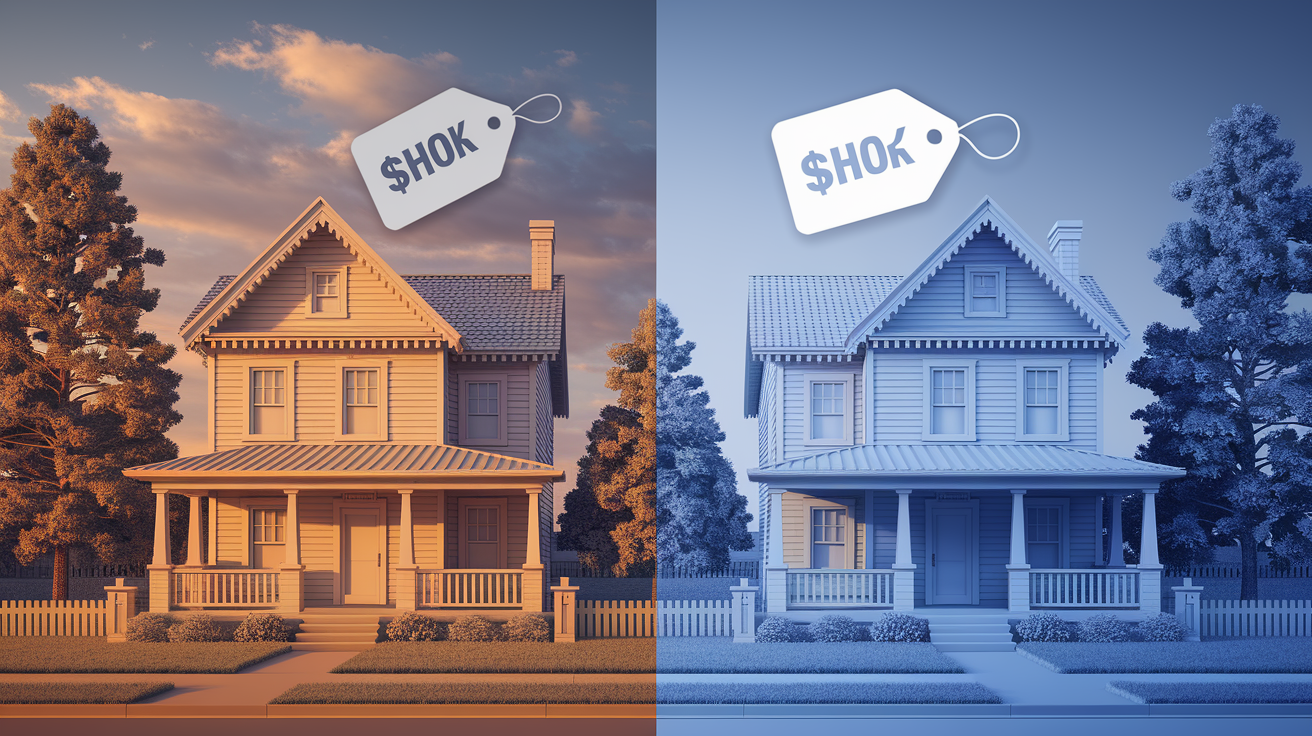
Yes, your rates can go up, down, or stay put when you move. Insurers recalculate everything based on your new ZIP code because your address is one of the biggest risk factors they use. Crime stats, accident frequency, weather patterns, local claims history… all of it gets plugged back into their pricing engine the moment you change your address. This isn’t something they negotiate. Every carrier prices risk street by street.
How much things change depends on where you’re coming from and where you’re headed. Moving from a quiet rural area into a dense city can bump auto premiums 20 to 50 percent. Going the other direction, from a high-crime neighborhood to a safer ZIP, might drop your auto rate 10 to 40 percent. Relocating into a flood zone or hurricane coast can add hundreds or even thousands annually to your homeowners or renters premium, and you’ll probably need a separate flood policy on top of that. Even crossing town into a different ZIP can shift rates 5 to 20 percent.
Most insurers re-rate your policy either right after you report the move or at your next renewal. Auto policies usually renew every six months. Homeowners and renters policies tend to renew once a year. Either way, you’re expected to report an address change within about 30 days. Skip that step and you risk a denied claim, since the insurer priced your policy for a completely different location.
Key Insurance Types Most Affected by Moving

Auto, homeowners, renters, and natural disaster coverages all respond to location changes, but they don’t all move on the same schedule or care about the same risk factors. Auto policies re-rate using your garaging address, how far you commute, where you park, and local traffic or theft patterns. Homeowners policies look at replacement cost, how close you are to a fire station, the age of the building’s systems, and natural disaster exposure. Renters policies adjust based on crime rates and disaster risk affecting the rental property. Optional coverages like flood, wind, and earthquake insurance are extremely location sensitive and usually require separate policies or endorsements.
Because auto policies often renew every six months and homeowners or renters policies renew annually, the two types don’t always adjust at the same time. If you move mid-term, some insurers will re-rate immediately and send you a prorated premium change. Others wait until renewal.
| Insurance Type | How Moving Affects Pricing |
|---|---|
| Auto | Re-rated using new ZIP+4, commute mileage, parking type, and local accident/theft frequency; six-month renewal cycle common |
| Homeowners | Re-rated based on property replacement cost, fire-station proximity, disaster exposure, and home age; annual renewal typical |
| Renters | Re-rated based on crime levels and natural-disaster exposure; coverage amount and building age also factor in; annual renewal typical |
| Optional Perils (Flood/Wind/Earthquake) | Highly location-dependent; flood and wind often require separate policies with premiums that can add hundreds to thousands annually |
Geographic Factors That Influence Premium Changes After Moving

Insurers price your policy using dozens of data points tied to your exact street address. They’re not guessing based on your city or county. They’re looking at the likelihood and size of claims at your specific block. A short move across town can land you in a totally different risk tier because these variables shift block by block.
The big ones are crime levels, natural disaster exposure, traffic and accident patterns, commute length and parking method, local construction and repair costs, and the quality of emergency services. Each factor hits different parts of your policy. Theft and vandalism raise your auto comprehensive and homeowners personal property coverage. Traffic congestion and accident frequency drive up auto liability and collision costs. Flood, hurricane, tornado, wildfire, and hail exposure increase homeowners and renters premiums, often requiring separate disaster policies. Local building codes and replacement costs change the dwelling coverage you need and what you pay for it.
Insurers also care how far you commute daily and where you park overnight. A longer commute means more time on the road and higher accident exposure, which raises auto premiums. Street parking increases theft and vandalism risk compared to a garage or secured lot. Fire station proximity matters for homeowners insurance. Homes within about five miles of a staffed fire station typically get lower rates because faster response means less fire damage.
Here’s what actually moves your premium after a move:
Crime and theft rates – Higher vehicle theft, vandalism, and burglary rates increase auto comprehensive and homeowners personal property costs.
Natural disaster exposure – Flood zones, hurricane coasts, tornado alleys, wildfire-prone areas, and hail regions raise homeowners and renters premiums. They often require separate policies too.
Traffic congestion and accident frequency – More vehicles and higher accident rates increase auto liability and collision premiums.
Commute distance and parking – Longer commutes and street parking raise auto premiums. Garage storage and short commutes lower them.
Local construction and repair costs – Higher wages and material costs in the new area raise the cost of rebuilding or repairing, which increases homeowners dwelling coverage limits and premiums.
Fire protection and emergency services – Distance from a staffed fire station and the quality of local emergency response influence homeowners premiums.
How and When Insurers Re-Rate Your Policy After a Move

Insurers usually recalculate your premium as soon as you report a new address, not just at renewal. When you give them the new ZIP code, street address, and garaging or property details, they plug that data straight into their rating system. If the new location carries higher or lower risk, they issue a mid-term premium adjustment. Either they charge you more for the remaining policy period or refund the difference if rates dropped. This prorated change takes effect on the date you moved or the date you reported the move, depending on the insurer’s rules.
Auto policies commonly renew every six months. Homeowners or renters policies typically renew annually. If your move happens close to a renewal date, the insurer might apply the new rate at renewal instead of mid-term. Either way, the clock starts when you report the address change. Most insurers expect notification within about 30 days of your move. Waiting doesn’t save you money. It just creates billing confusion and claim denial risk.
Failing to update your address can create serious problems. If you file a claim and the insurer discovers you’ve been living at a different address than what’s on the policy, they can deny the claim entirely. The policy was priced for the old address’s risk, not the new one, so the insurer argues the contract is void. Even small moves trigger this rule because risk profiles change street by street. Always report your move quickly, confirm the effective date of the new premium, and get written confirmation that your policy reflects the correct garaging or property address.
Real-World Examples of Insurance Rate Increases and Decreases After Relocating
How much moving costs (or saves) you depends on where you’re coming from and where you’re going. A move that seems geographically small, like switching neighborhoods in the same city, can produce a 10 to 20 percent rate swing if crime levels or traffic patterns differ. Longer moves across different types of areas can produce much bigger changes.
Here are five common scenarios and what they typically cost:
Urban relocation (rural or small-town ZIP to high-density city ZIP) – Auto premiums often rise 20 to 50 percent due to increased theft, vandalism, and traffic congestion. If your old auto premium was $1,200 a year, expect an additional $240 to $600 a year. New premium: $1,440 to $1,800 a year.
Safer neighborhood (high-crime ZIP to lower-crime ZIP) – Auto premiums can drop 10 to 40 percent. If you were paying $1,500 a year, the reduction might be $150 to $600 a year. New premium: $900 to $1,350 a year.
Flood zone or coastal hurricane area – Homeowners or renters premiums can increase by hundreds to thousands of dollars annually, and you’ll probably need a separate flood insurance policy costing $400 to $2,000-plus per year depending on the zone and elevation. If your old homeowners premium was $1,000 a year and the new ZIP raises rates 25 percent, you pay an additional $250 a year, plus the separate flood policy cost.
Shorter commute and garage parking – If your new home cuts your daily commute from 30 miles to 10 miles and offers garage parking instead of street parking, auto premiums may drop 5 to 15 percent. On a $1,400 a year premium, that’s a potential savings of $70 to $210 a year.
Within-city ZIP change (different neighborhood, similar density) – Premiums typically shift 5 to 20 percent depending on block-level crime and claims history. A $1,200 a year auto premium might change by $60 to $240 a year in either direction.
State-to-State Moves and Legal Requirements That Change Insurance Costs
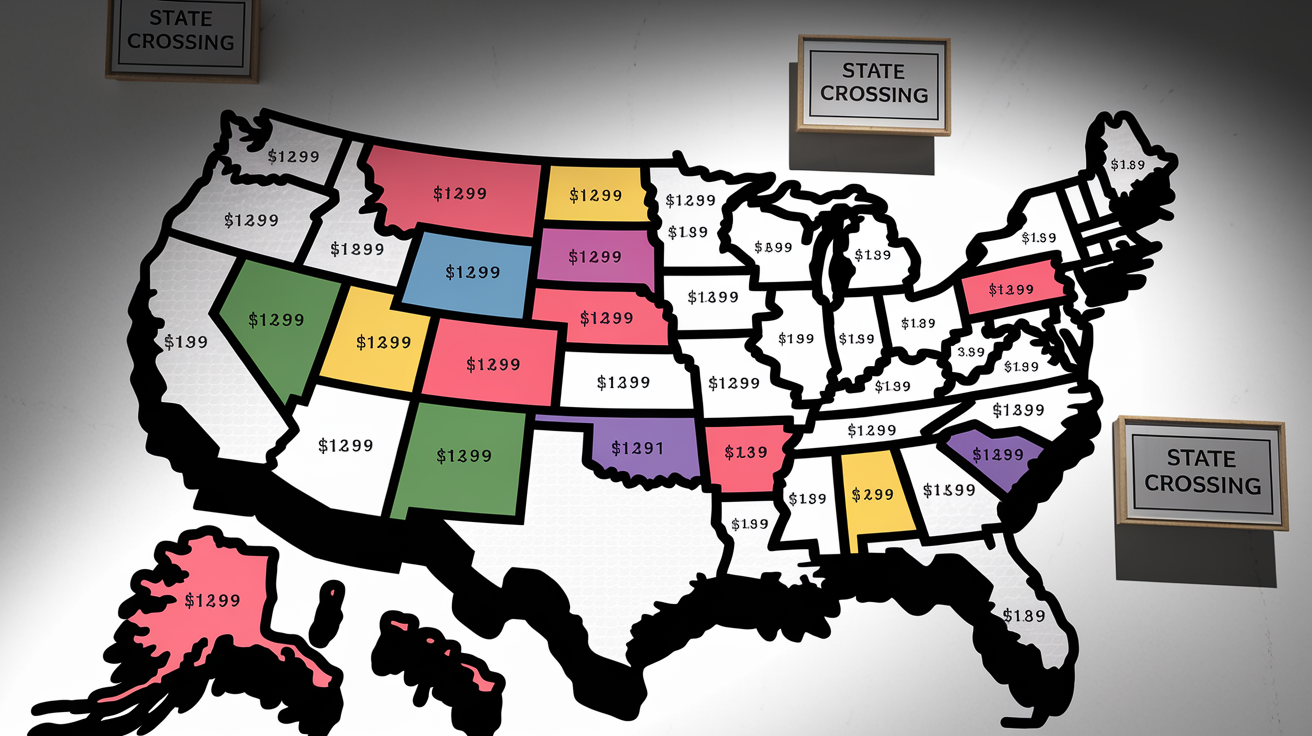
Moving across state lines almost always produces bigger premium changes than moving within the same state because each state has its own insurance regulations, minimum liability requirements, and approved rate structures. Your old policy usually can’t transfer. Most insurers require you to get a new policy that meets the new state’s rules. Even if you stay with the same insurance company, they cancel your old policy and issue a new one under the new state’s legal framework.
State-mandated coverage requirements directly affect your premium. Some states require personal injury protection (PIP), which covers your own medical bills regardless of who caused the accident. Twelve states mandate PIP. Other states require uninsured or underinsured motorist coverage, medical payments coverage, or higher liability limits than your old state. Each added or increased coverage raises the total premium. Dropping optional coverages that aren’t required anymore (when your new state allows it) can reduce costs. For example, removing PIP in a state that doesn’t mandate it can lower your total auto premium by roughly 15 to 20 percent, according to Liberty Mutual estimates.
Average auto premiums vary dramatically by state due to differences in claim costs, fraud rates, population density, weather patterns, and state regulations. States with some of the highest average auto premiums include Louisiana, New York, and Michigan. States with some of the lowest include North Dakota, Maine, and Iowa. Moving from a high-cost state to a low-cost state, or vice versa, can change your premium by 30 to 100 percent or more, even if your driving record and vehicle stay the same. For example, moving from Brooklyn, New York, to Raleigh, North Carolina, could save about $2,397 over six months, dropping a six-month full-coverage premium from roughly $2,977 in Brooklyn to around $580 in Raleigh, according to a Zebra example.
State Mandates and Their Impact on Insurance Costs
State-mandated coverages are the biggest driver of premium differences across state lines. PIP (personal injury protection) requires insurers to pay your medical bills up to the policy limit regardless of fault, which increases the insurer’s expected payout and raises premiums. Uninsured and underinsured motorist coverage protects you when the at-fault driver has little or no insurance. This coverage is mandatory in many states and adds cost. Medical payments coverage (MedPay) is similar to PIP but typically covers smaller amounts and is optional in most states.
Some states also impose higher minimum liability limits than others. If your old state required $25,000 per person and $50,000 per accident in bodily injury liability, and your new state requires $50,000 per person and $100,000 per accident, your premium will rise to reflect the higher limits. Higher limits mean the insurer takes on more financial risk per accident, so they charge more. The same driver with the same car can see drastically different premiums across states simply because of these legal requirements, none of which have anything to do with your personal risk.
How Moving Impacts Auto Insurance Specifically

Auto insurance premiums respond immediately to ZIP code changes because insurers use your garaging address (the place where your car is parked overnight) as the foundation of their risk calculations. Your new ZIP’s accident frequency, vehicle theft rates, traffic density, and local claim costs all feed into the algorithm that sets your rate. The insurer also updates your commute mileage, parking situation, and any regional factors like weather or wildlife collision risk.
Moving to a higher-density urban area typically raises premiums due to increased theft, vandalism, and traffic accidents. Cities have more cars on the road, more intersections, and more opportunities for collisions, so liability and collision coverage both get more expensive. Rural moves can also raise premiums if the new area has high rates of deer collisions, seasonal tornadoes, or longer daily commutes. A longer commute means more time exposed to accident risk, and insurers charge accordingly.
Auto premium changes after moving are driven by:
New commute length – Increasing daily mileage from 10 miles to 30 miles raises accident exposure and premiums. Reducing your commute lowers rates.
Traffic density and congestion – More vehicles and stop-and-go traffic increase collision frequency, raising liability and collision costs.
Garaging and parking method – Street parking raises theft and vandalism risk compared to a garage or secured lot. Garaging often qualifies for discounts.
Local theft and vandalism frequency – Higher vehicle theft rates increase comprehensive coverage costs. Some ZIP codes have theft rates several times the state average.
Weather and wildlife collision risk – Areas with frequent hail, tornadoes, or deer crossings see higher comprehensive claims, which raises premiums for those coverages.
How Moving Impacts Homeowners and Renters Insurance

Homeowners and renters insurance premiums change after moving because the new property and its location carry different risks than the old one. Insurers evaluate the age and condition of the building’s major systems (wiring, plumbing, roof, foundation) and the proximity to fire stations and other emergency services. They also consider natural disaster exposure, local crime rates, and the cost to rebuild or replace the structure in the new area.
Older homes with outdated electrical wiring, aging plumbing, or roofs nearing the end of their lifespan typically cost more to insure because they’re more likely to produce claims. Moving from a newer home to an older one often raises premiums, even if the neighborhood is safer. Fire station proximity matters. Homes within about five miles of a staffed fire department usually qualify for better rates because faster response reduces fire damage. Towns that rely on volunteer fire departments may see higher premiums due to slower or less-resourced emergency response.
Natural disaster exposure drives some of the largest homeowners premium increases. Coastal homes in hurricane-prone areas, properties in FEMA-designated flood zones, and houses in wildfire interface zones all face higher premiums and often require separate policies for flood or wind coverage. Flood insurance and hurricane/wind policies can add hundreds to thousands of dollars annually on top of your standard homeowners premium.
Location factors that change homeowners and renters insurance costs include:
Fire protection and emergency services – Distance to a staffed fire station and quality of local fire response. Homes farther than roughly five miles or served by volunteer departments typically pay more.
Local construction and replacement costs – Higher wages, material costs, and building code requirements in the new area increase dwelling coverage limits and premiums.
Neighborhood crime rates – Higher burglary and theft rates raise personal property coverage costs for both homeowners and renters policies.
Natural disaster and weather exposure – Flood zones, coastal hurricane risk, tornado alleys, wildfire zones, and hail-prone regions increase premiums and often require separate disaster policies.
Steps to Reduce Insurance Costs After Moving

Moving gives you a reset opportunity to shop, compare, and adjust your coverage. You should take it. Premium differences between insurers in the same ZIP code can exceed 20 to 50 percent, so getting quotes from at least three to five companies is the single most effective cost control step. Even if your current insurer raised your rate after the move, a competitor may price the new address lower.
Bundling home and auto insurance with the same carrier typically saves about 10 to 25 percent off the combined premium. If you weren’t bundling before the move, now’s the time to ask. Raising your deductible is another high-impact option. Increasing an auto collision or comprehensive deductible from $500 to $1,000 can lower that portion of your premium by roughly 10 to 30 percent, depending on the insurer and your coverage mix. Doing the same for homeowners insurance produces similar savings. Just make sure you can afford the higher out-of-pocket cost if you file a claim.
Ask about discounts and credits specific to your new address. Many insurers offer security system discounts, anti-theft device credits, smart home monitoring discounts, and garaging or secure parking discounts. Typical savings from these credits range from 5 to 20 percent. If your new home has a monitored alarm system, deadbolts, smoke and CO detectors, or other loss control features, tell your insurer and ask for the discount.
Six actions that can reduce post-move insurance costs:
Shop and compare quotes from at least three to five insurers – Price differences between companies in the same ZIP can exceed 20 to 50 percent. Don’t assume your current insurer is still the cheapest.
Bundle home and auto policies – Combining policies with one carrier typically saves 10 to 25 percent off the combined premium.
Raise your deductibles – Increasing auto collision/comprehensive or homeowners deductibles from $500 to $1,000 can lower premiums 10 to 30 percent on those coverages.
Ask about security, anti-theft, and smart home discounts – Garaging, alarm systems, anti-theft devices, and monitored security can save 5 to 20 percent.
Lower coverage limits where safe and legal – Review whether you’re over-insured on personal property or carrying optional coverages you don’t need. Keep required minimums.
Maintain continuous coverage and a clean record – Avoiding lapses and traffic violations prevents surcharges that can exceed 20 to 100 percent depending on the violation.
What Your Insurer Needs When You Update Your Address

Insurers require specific information to re-rate your policy accurately after a move. The most important piece is your complete new address, including the ZIP+4 code (the four extra digits that narrow down your location to a smaller geographic area). The insurer also needs to know where your car is parked overnight (garaging address), your updated commute mileage, and any security or safety features at the new property or parking location.
For auto insurance, tell your insurer whether you’ll be parking in a garage, a carport, a driveway, or on the street, and whether the parking area is gated, monitored, or unsecured. For homeowners or renters insurance, report any alarm systems, smoke and carbon monoxide detectors, fire extinguishers, deadbolt locks, or other loss control features. These details affect your premium and discount eligibility.
Information your insurer needs when you move:
Complete new address and ZIP+4 code – The insurer uses this to pull risk data and re-rate the policy.
Garaging or parking details – Garage, carport, driveway, or street parking. Gated or monitored vs. unsecured.
Updated commute mileage – Daily round-trip distance from home to work or school.
Property and vehicle security features – Alarm systems, anti-theft devices, smart home monitoring, deadbolts, smoke/CO detectors, and fire extinguishers.
Moving Checklist for Insurance Planning and Cost Control
Planning ahead reduces surprises and gives you time to compare options before your move becomes official. Start by gathering your new address details, including the full ZIP+4 code, and requesting address-specific quotes from at least three insurers. Ask each insurer whether flood, wind, earthquake, or other disaster coverages are required or recommended for the new location, and get cost estimates for those separate policies.
Compare the total annual cost differences, not just the monthly premium, and calculate the real financial impact. For example, if your combined auto and home premium increases by $600 a year after the move, that’s $50 a month or roughly $1.65 a day. Knowing the daily cost helps you evaluate whether the move is worth it financially or whether you need to budget differently. Confirm the effective date for the new premium with your current insurer, and make sure your old policy doesn’t cancel until the new one begins. Coverage gaps can lead to denied claims and lapsed insurance penalties.
Moving insurance checklist:
Verify the new address and ZIP+4 code – Confirm the exact street address and four-digit extension for accurate risk rating.
Obtain at least three written quotes – Get address-specific quotes for auto and for home/renters insurance in the new ZIP from multiple carriers.
Ask about flood, wind, earthquake, and disaster coverage – Confirm whether separate policies are required and get cost estimates.
Compare total annual cost differences – Calculate the dollar impact per year, per month, and per day to understand the real financial change.
Review bundling and discount opportunities – Ask about multi-policy discounts, security credits, and deductible adjustments.
Notify your current insurer within the required window – Most insurers expect address updates within roughly 30 days. Confirm the new premium’s effective date.
Schedule policy changes to avoid coverage gaps – Make sure your old policy doesn’t cancel before your new policy (or updated policy) begins.
Final Words
Yes—moving can raise or lower your premiums because insurers reprice by ZIP‑code risk. We covered how auto, homeowners, and renters policies are re-rated, with urban moves often pushing auto rates 20–50% higher, safer areas cutting premiums 10–40%, and flood or hurricane zones adding hundreds to thousands a year.
Timing matters: some insurers re-rate immediately, others at renewal, so update your address and garaging info within about 30 days.
If you’re asking do insurance rates increase after moving, the short answer is: sometimes. With a few checks—shop quotes, bundle policies, adjust deductibles—you can limit the shock.
FAQ
Q: Why did my car insurance go up after moving? Will my insurance increase if I move?
A: Your car insurance went up after moving because insurers reprice policies by ZIP-code risk; yes, rates can rise or fall depending on local crime, traffic, commute, parking, and disaster exposure.
Q: Why am I paying $400 a month for car insurance?
A: You’re paying $400 a month because your coverage limits, vehicle type, driving record, ZIP-code risk, commute miles, credit/score, and a low deductible together can push premiums that high.
Q: Is it better to have a $500 deductible or $1000?
A: Choosing a $500 versus $1,000 deductible depends on cash you can cover: raising deductible from $500 to $1,000 typically cuts collision/comprehensive premiums 10–30%, but raises your out‑of‑pocket per claim.