





Think Medigap fills every gap Medicare leaves? Think again. Medigap only pays costs for services Original Medicare already approves — it can’t cover what Medicare excludes, no matter which letter plan you buy. That gap creates real risks: long-term custodial care, routine dental, vision, hearing, and outpatient drugs are usually off the table. In this post I’ll list the core exclusions across all standardized plans, call out common gotchas like waiting periods and foreign-travel caps, and show what to check so a claim denial isn’t a surprise.
What Medigap Does NOT Cover: The Core Exclusions Consumers Must Know
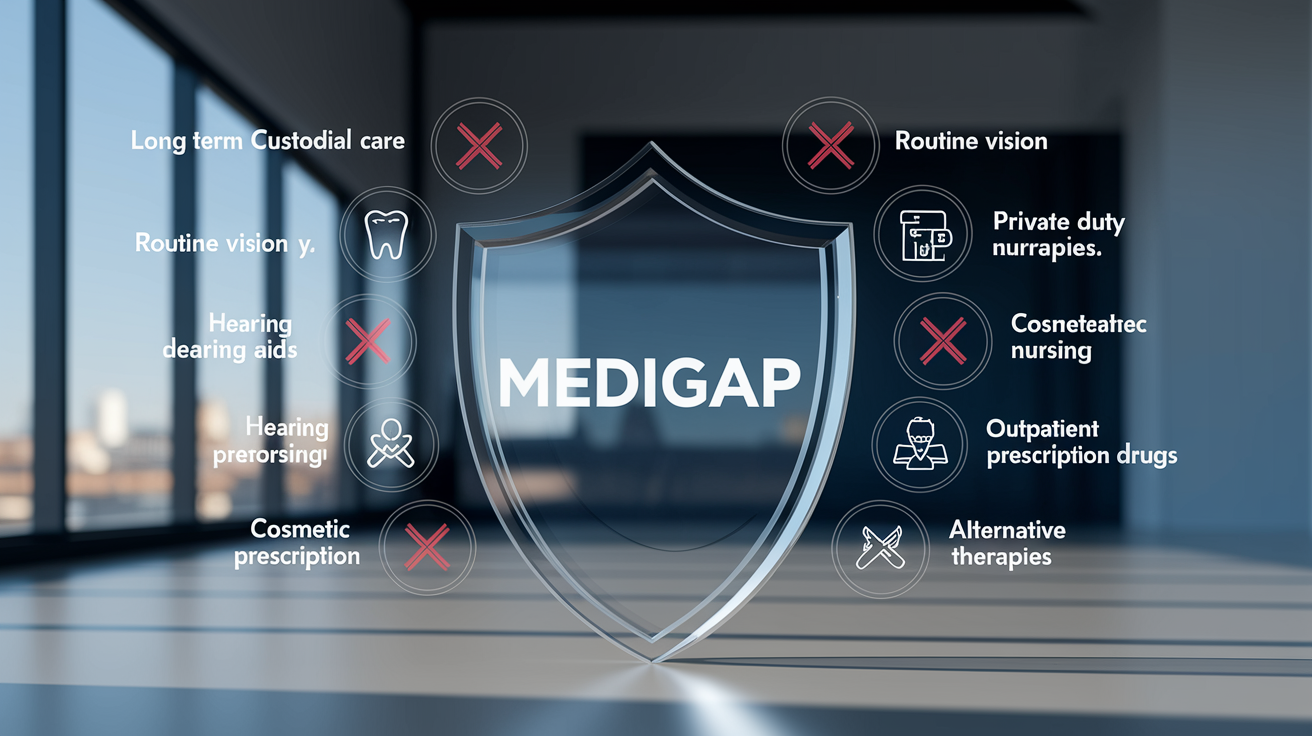
Medigap policies pay your share of costs for services Original Medicare already covers. They don’t pay for anything Medicare itself excludes. If Medicare won’t cover it, Medigap won’t either. Doesn’t matter which standardized plan letter you buy (A through N). The excluded categories stay the same. These exclusions come from Medicare law and policy design, not insurer decisions.
Here’s why: Medigap is a secondary payer. It fills gaps in Medicare Part A and Part B coverage, like deductibles, coinsurance, and copays. It doesn’t expand the list of services Medicare will pay for. Need routine dental work or long-term help with bathing and dressing? Medicare doesn’t cover those services, so Medigap can’t step in. This is where people get burned. They assume “supplement” means comprehensive extra coverage. It doesn’t.
Understanding these exclusions before you buy helps you plan for real costs. You won’t face surprise denials if you know what Medigap was never designed to cover. Below is a short list of the most common exclusions that apply across all standardized Medigap plans:
- Long-term custodial care (help with daily living activities such as bathing, dressing, eating)
- Routine dental cleanings, fillings, crowns, dentures, and oral surgery
- Routine vision exams and prescription eyeglasses or contact lenses
- Hearing aids and routine hearing exams
- Private-duty nursing or extended in-home custodial care
- Cosmetic surgery, unless Medicare determines it’s medically necessary
- Most experimental or investigational treatments not approved by Medicare
- Outpatient prescription drugs (covered separately by Medicare Part D)
- Routine foot care, wellness products, and most alternative therapies
- Care received outside the United States, with very limited exceptions on some plans
Medicare vs. Medigap Exclusions: Understanding the Two Layers of Non-Coverage

Medicare exclusions are statutory. Congress and the Centers for Medicare & Medicaid Services define what Original Medicare Part A and Part B will and won’t cover. Dental care, long-term custodial assistance, hearing aids, routine vision services are examples of services Medicare law excludes. Because Medigap is designed only to pay the out-of-pocket costs for Medicare-covered services, it can’t override these federal limits. If Medicare says no, Medigap has no authority to say yes.
Medigap-specific exclusions show up in the fine print of your policy. These aren’t about adding new services. They’re about timing, underwriting, and administrative rules, like waiting periods for pre-existing conditions, coverage limits on foreign travel emergencies, or plan features that differ by letter (Plan G versus Plan N, for example). These exclusions don’t change the fact that Medigap will never cover a service Medicare itself doesn’t recognize as a covered benefit. The key difference: Medicare’s excluded service categories are broad and permanent. Medigap-specific exclusions are narrower and relate to how and when the plan pays for things Medicare does cover.
Pre-Existing Condition Exclusions and Waiting Periods in Medigap Policies

If you buy a Medigap plan outside your six-month Open Enrollment Period and you don’t have a guaranteed-issue right, the insurer can impose a waiting period for pre-existing conditions. The maximum waiting period allowed under federal rules is six months. During that time, the insurer won’t pay claims related to a condition you were diagnosed with or treated for in the six months before your Medigap coverage started. After the waiting period ends, the plan must cover those conditions like any other.
You can shorten or eliminate this waiting period if you had “creditable” prior coverage. Creditable coverage includes employer health insurance, TRICARE, Medicaid, or another Medigap plan. Each month of prior coverage you maintained without a break of more than 63 days counts toward reducing the six-month waiting period. If you had six months of creditable coverage, the insurer can’t impose any waiting period at all.
The waiting period rule doesn’t apply during your Medigap Open Enrollment Period or if you qualify for guaranteed-issue rights. During the six-month window that starts the first day of the month you turn 65 and are enrolled in Medicare Part B, insurers must sell you a Medigap plan at standard rates and can’t use medical underwriting or waiting periods. Guaranteed-issue rights also protect you in specific situations, like losing employer coverage or moving out of a Medicare Advantage service area.
Key timing rules to remember:
- Medigap Open Enrollment lasts six months, beginning the month you turn 65 and enroll in Part B.
- Pre-existing condition waiting periods can last up to six months if you buy outside protected windows.
- Creditable prior coverage reduces the waiting period month-for-month.
- Guaranteed-issue rights (initial enrollment, loss of employer coverage, plan termination) eliminate waiting periods.
- State rules may offer stronger protections. Always check your state’s requirements.
Long-Term Care, Home Health, and Custodial Care: The Most Common Medigap Exclusions

Medigap doesn’t cover custodial care. Custodial care means help with activities of daily living: bathing, getting dressed, using the bathroom, eating, moving around the house. This is the kind of assistance most people eventually need as they age, and it’s expensive. Whether that care happens at home, in an assisted living facility, or in a nursing home, Medigap won’t pay for it.
Medicare itself covers only short-term skilled nursing facility stays and limited home health services, and only when medically necessary after a hospital stay. Once the skilled nursing period ends and you need help with daily tasks rather than medical treatment, Medicare stops paying. Medigap follows that same cutoff. Private-duty nursing and long-term in-home care are also excluded because Medicare doesn’t recognize them as covered services.
This exclusion creates one of the largest financial gaps for retirees. Common custodial-care situations Medigap won’t cover include:
- Nursing home care when you no longer need skilled nursing or therapy
- In-home aides who help with bathing, dressing, meal preparation, and mobility
- Assisted living facility monthly fees and personal care services
- Extended private-duty nursing or 24-hour supervision at home
If you expect to need custodial care, consider long-term care insurance, a hybrid life insurance policy with long-term care riders, or Medicaid planning if your income and assets qualify. Medigap was never designed to be a long-term care solution.
Dental, Vision, Hearing, and Prescription Drugs: Routine Services Medigap Never Covers

Original Medicare doesn’t cover routine dental cleanings, fillings, crowns, dentures, or extractions. It also excludes routine eye exams, eyeglasses, contact lenses, hearing aids, and hearing exams. Medigap mirrors these exclusions. If you need any of these services, you pay out of pocket or buy separate insurance.
Prescription drugs fall into the same category. Medigap policies sold after 2006 don’t include outpatient prescription drug coverage. You need a standalone Medicare Part D plan for that. If you have an old Medigap policy sold before Part D launched, it may include limited drug coverage, but those policies are rare and you can’t buy a new one today.
| Service | Alternative Coverage Needed |
|---|---|
| Outpatient prescription drugs | Medicare Part D (standalone PDP) |
| Routine dental, vision, hearing | Standalone dental/vision/hearing insurance or Medicare Advantage plan with extras |
| Eyeglasses and contact lenses | Vision insurance or discount plan |
Standalone dental plans often cost between $20 and $80 per month, depending on the level of coverage and your age. Hearing aids typically run $1,000 to $6,000 per ear, and they’re rarely covered by any insurance. Some Medicare Advantage plans include limited dental, vision, and hearing benefits, which is one reason people compare Advantage to Original Medicare plus Medigap when these services matter to them.
Foreign Travel Emergency Limitations in Medigap Plans

Some Medigap plans include a limited foreign travel emergency benefit. Plans C, D, F, G, M, and N (where available) commonly offer this coverage, but the benefit is narrow. The standard design pays 80 percent of emergency care costs outside the United States after you meet a $250 deductible per trip. There’s also a lifetime maximum, typically $50,000. Once you hit that cap, the plan pays nothing more for foreign emergencies. Ever.
This benefit doesn’t replace travel medical insurance. It won’t cover evacuation, repatriation of remains, trip cancellation, or non-emergency care abroad. If you need surgery in another country and the bill is $60,000, your Medigap plan may pay 80 percent of the first $50,000 (minus the deductible), leaving you responsible for the rest, plus anything above the lifetime limit. If you travel internationally often or for extended periods, buy separate travel insurance that includes higher medical limits and evacuation coverage. The Medigap foreign travel benefit is a safety net for short trips, not a substitute for comprehensive travel protection.
Medigap Underwriting, Denials, and How Exclusions Affect Claims

After your six-month Open Enrollment Period ends, insurance companies can use medical underwriting to decide whether to sell you a Medigap plan. They review your health history, current conditions, and prescription drugs. Based on that review, they can deny your application, charge you a higher premium, or impose a six-month waiting period for pre-existing conditions. State rules vary. Some states prohibit denial or rate-ups, but most allow full underwriting outside protected periods.
If an insurer denies your application, you have limited options. You can apply to a different carrier, wait for a guaranteed-issue event (like losing employer coverage), or move to a state with year-round protections. You can’t appeal an underwriting denial the way you appeal a claim denial, because the insurer hasn’t yet agreed to cover you.
Once you have a Medigap policy, claim denials happen when you seek payment for a service Medicare doesn’t cover. The insurer will reject the claim automatically because Medigap only pays secondary to Medicare. If Medicare says the service is excluded, the claim stops there. You can’t appeal a Medigap denial for an excluded service and win, because the exclusion isn’t a coverage error. It’s part of the plan design and Medicare law.
If you believe Medicare should have covered a service but denied your claim, follow these steps:
- Confirm whether Original Medicare Part A or Part B covers the service by checking the Medicare Summary Notice or contacting Medicare directly.
- Request a written explanation of the denial from Medicare, including the reason code.
- Submit documentation to Medicare showing the service was medically necessary and met coverage criteria.
- File a formal appeal with Medicare (called a redetermination) within 120 days of the initial denial notice.
If Medicare reverses its denial and pays the claim, your Medigap plan will then pay its share of the approved costs. But if Medicare upholds the denial because the service is excluded, Medigap has no obligation to pay.
State-by-State Variations in Medigap Exclusion Rules

Federal law sets the baseline for Medigap exclusions, but states can add stronger consumer protections. Four states (Connecticut, Massachusetts, Maine, and New York) require insurers to offer Medigap on a guaranteed-issue basis year-round, meaning residents can buy or switch plans at any time without medical underwriting or waiting periods. If you live in one of these states, the six-month Open Enrollment rule is less critical because you retain the right to buy a Medigap plan whenever you choose.
Twenty-eight states require Medigap insurers to offer coverage to people losing employer retiree health benefits, often with a limited guaranteed-issue window. Some states also mandate special protections for Medicare beneficiaries under age 65 who qualify due to disability, though only about 5 percent of under-65 enrollees have Medigap coverage. State-specific rules can also affect which standardized plans are sold, premium rating methods (community-rated, issue-age, or attained-age), and whether insurers must offer certain plan letters. Always check your state insurance department’s website or call your State Health Insurance Assistance Program (SHIP) to confirm local rules before assuming federal guidelines apply exactly as written.
How to Fill the Gaps: Alternatives for Excluded Medigap Services

Medigap leaves predictable gaps. The good news is that most of those gaps have separate insurance products or programs designed to fill them. You just need to plan ahead and buy the right coverage before you need it.
For outpatient prescription drugs, enroll in a standalone Medicare Part D plan. Premiums, deductibles, and formularies vary widely by plan and region, so compare options every year during the Annual Election Period (October 15 to December 7). For routine dental, vision, and hearing services, consider standalone insurance. Dental plans typically cost $20 to $80 per month and may cover cleanings, fillings, and some major work after waiting periods. Vision plans often include one exam and a discount on glasses each year. Hearing aid coverage is rare, but some insurers offer discount programs or financing.
Long-term custodial care requires a different strategy. Long-term care insurance premiums rise with age, so buying a policy in your 50s or early 60s usually costs less than waiting until you’re older. Hybrid life insurance policies with long-term care riders let you access a death benefit early if you need custodial care. Medicaid covers nursing home care for people with low income and limited assets, but eligibility rules vary by state and often require spending down savings first.
For foreign travel, buy travel medical insurance with higher limits and evacuation coverage if you spend significant time abroad. These policies are inexpensive for short trips and essential for extended stays. Common alternatives for the biggest Medigap exclusions include:
- Prescription drugs: Medicare Part D standalone plan
- Dental, vision, hearing: standalone insurance or Medicare Advantage plan with extras
- Long-term custodial care: long-term care insurance, hybrid life/LTC policy, or Medicaid
- Foreign travel emergencies: travel medical insurance with evacuation and higher limits
- Private-duty nursing: long-term care insurance or out-of-pocket payment
Final Words
Medigap won’t pay for everything. You now know the core exclusions: long‑term custodial care, routine dental, vision and hearing, most outpatient drugs, private‑duty nursing, and other services Medicare excludes.
You also saw why Medigap can’t override Medicare’s coverage rules, how pre‑existing waiting periods and state rules affect underwriting, and what to do when claims are denied.
Use this to compare gaps and buy fixes—Part D, standalone dental/vision/hearing, long‑term care options, or travel insurance. Know the exclusions in medicare supplement policies and you’ll avoid the worst surprises.
FAQ
Q: What do Medicare Supplement plans not cover and what are the major exclusions in the policy?
A: Medicare Supplement plans do not cover services Original Medicare doesn’t: long‑term custodial care, routine dental, vision, and hearing, most prescription drugs, private‑duty nursing, cosmetic or experimental treatments, and other non‑Medicare‑covered care.
Q: Does lupus qualify for Medicare?
A: Lupus qualifies for Medicare only if it causes disability that meets Social Security rules, becomes end‑stage renal disease needing dialysis or transplant, or you qualify by age 65; check SSDI and your doctor’s records.
Q: Is sildenafil covered by Medicare Part D?
A: Sildenafil is rarely covered by Medicare Part D for erectile dysfunction, but may be covered when prescribed for non‑ED FDA‑approved uses (like pulmonary hypertension); confirm on your plan’s formulary and prior‑authorization rules.