





Controversial: the “general liability” policy you rely on often won’t cover pollution claims.
That phrase, pollution exclusion, isn’t an add-on, it’s a coverage taker.
It’s buried in most Commercial General Liability policies and can bar claims for bodily injury, property damage, and cleanup tied to pollutants, a shockingly broad list from gases to recycled materials.
The result: companies only find out when a claim hits.
This post walks you through what typical pollution exclusions actually leave out, the common gotchas, who’s most at risk, and the exact checks to do before a claim.
Understanding Pollution Exclusion Insurance Coverage Gaps

Here’s the thing: pollution exclusion insurance isn’t insurance. It’s a clause that takes coverage away. You’ll find this standard language buried in Commercial General Liability policies, and it blocks coverage for bodily injury, property damage, and cleanup costs that come from releasing “pollutants.” That definition? Absurdly broad. We’re talking solids, liquids, gases, chemicals, fumes, acids, alkalis, waste. Even materials you’re trying to recycle. This one clause wipes out the coverage most businesses think they bought when they signed up for CGL. And plenty of companies only figure that out when a claim gets filed.
The wording exists to push risk back onto you. Courts don’t all read it the same way, but the core problem doesn’t change. If your business releases something that fits the policy’s pollutant definition, the insurer’s going to deny your claim. Some judges stretch the exclusion to cover almost any irritant. Others narrow it down to traditional environmental pollutants like benzene or heavy metals. The Sterigenics ethylene oxide case in Illinois shows what’s at stake. On April 17, 2025, the Illinois Supreme Court agreed to tackle a certified question: can lawfully permitted emissions at policy issuance still be excluded as “pollution”?
Because the pollution exclusion often sits inside CGL policies without any fanfare, businesses don’t realize they’re exposed until a third party files a bodily injury claim or the government hands over a cleanup order. You need separate environmental insurance when your operations touch hazardous materials, waste, emissions, or runoff. And you’d better inventory both your current policies and any old occurrence-based policies to actually understand what you’re dealing with.
Here’s what typically gets excluded under these clauses:
- Chemical spills from manufacturing or storage
- Vapor intrusion from underground petroleum or solvent contamination
- Mold growth and airborne spore contamination
- Agricultural runoff carrying fertilizers, pesticides, or animal waste
- Corroded pipes leaching lead, copper, or other metals
- PFAS exposure from products, wastewater, or soil
Historical Evolution of Pollution Exclusion Wording

The modern pollution exclusion came out of a liability crisis in the early 1980s. Courts kept treating the phrase “sudden and accidental” in older pollution clauses as ambiguous, forcing insurers to pay for massive Superfund cleanup costs and long-tail environmental liabilities. Insurance companies decided to fix that. On October 25, 1984, ISO committee minutes documented the plan to create a “total pollution” exclusion. By early 1985, they’d rushed an “absolute pollution exclusion” endorsement to market.
Over the next two decades, the wording got tighter. Loopholes got closed. The 1986 ISO simplified CGL form baked a broad pollution exclusion right into the basic policy. In 1988, they strengthened paragraph f.(2) to remove coverage for “any loss, cost or expense” tied to cleanup requests, demands, or governmental orders. A clarification paragraph showed up in July 1998. It acknowledged limited third-party property damage cleanup coverage, but only when remediation obligations exist outside any statute or regulation. That’s a nearly impossible bar to clear. The 2001 ISO CGL edition locked in the modern two-paragraph structure still in use today.
| Year | Change | Practical Impact |
|---|---|---|
| 1984 | ISO committee documented intent for “total pollution” exclusion | Signaled industry shift away from covering environmental remediation |
| 1986 | Broad pollution exclusion incorporated into basic CGL | Standard CGL policies no longer covered most pollutant releases |
| 2001 | Paragraph f.(1)/f.(2) structure finalized | Cleanup costs and governmental order compliance nearly eliminated from CGL |
Core Mechanics of Pollution Exclusion Insurance Provisions
Paragraph f.(1) excludes bodily injury or property damage “arising out of” the actual, alleged, or threatened release of pollutants. Most courts read “arising out of” broadly. Even indirect causal connections can trip the exclusion. Paragraph f.(2) goes further. It removes coverage for cleanup, remediation, and any costs tied to governmental orders, demands, or testing related to pollutants. This second paragraph hits hard because modern environmental liability almost always flows from statute or regulation. State cleanup orders, EPA enforcement actions, municipal drinking water violations, private remediation under federal law.
The 1998/2001 addition to paragraph f.(2) theoretically lets cleanup costs get covered if the remediation obligation would exist without any statute, regulation, government order, or governmental claim. In practice, this window barely opens. If a government agency issues an order, or if liability comes from a statute like CERCLA or a state environmental law, the exclusion applies. If a third party property damage claim includes cleanup costs demanded by a neighbor, insurers will still argue the exclusion kicks in because environmental law or ordinance would typically impose a cleanup duty anyway.
There are a few express exceptions under f.(1). The hostile fire exception restores coverage for bodily injury or property damage caused by a fire that becomes uncontrollable or breaks out of its intended place. The heating equipment exception covers fumes, smoke, or soot from building heating equipment on the insured’s premises. But it doesn’t extend to HVAC systems or ventilation dispersion. Mobile equipment gets covered for fluids like diesel, motor oil, or hydraulic fluid that escape from a part designed to hold them. Operations inside a building can sometimes preserve coverage for airborne contaminants if the injury happens inside the same structure. Environmental contractors and their subs are expressly excluded under f.(1)(e). No exceptions. Testing, cleanup, treatment, or response work never gets covered under a standard CGL.
How f.(1) and f.(2) Operate in Real Claims
Paragraph f.(1) kicks in when a pollutant release causes bodily injury or property damage. Say spray foam insulation releases fumes that sicken workers or damage stored inventory. The insurer denies the claim under f.(1), arguing the injury “arose out of” the release of a pollutant. Paragraph f.(2) operates separately and gets triggered by cleanup costs. In one case, a valve manufacturer’s product failed at a chemical distributor’s facility. Chemicals released. Soil and groundwater got contaminated. A court ordered $500,000 in remediation. The insurer denied the claim under f.(2), arguing that the cleanup obligation flowed from a governmental order and environmental statute. Both explicit triggers for the exclusion. The manufacturer had no coverage for the remediation bill, even though its product defect arguably caused the release.
Judicial Interpretation of Pollution Exclusions Across States

Courts can’t agree on how to read pollution exclusions. Some courts use a plain language approach. If the substance fits the policy’s broad definition of “pollutant,” the exclusion applies. Context doesn’t matter. The policyholder’s expectations don’t matter. Other courts use a reasonable expectations doctrine. They limit the exclusion to traditional environmental pollutants and allow coverage when the insured wouldn’t reasonably expect everyday irritants to be excluded. A handful of jurisdictions take a fact-specific, case by case approach and refuse to draw bright lines.
Here’s how notable state cases split:
Illinois found carbon monoxide from a faulty furnace was not a “pollutant” under the reasonable expectations doctrine in American States Ins. Co. v. Koloms (1997). But contaminated tap water in the Village of Crestwood case got deemed covered by the exclusion under different reasoning in Scottsdale Indem. Co. v. Village of Crestwood (7th Cir. 2012).
Florida treated ammonia fumes as a pollutant under an unambiguous plain language approach in Deni Associates v. State Farm Ins. (1998), setting a broad exclusion precedent in the state.
Massachusetts found carbon monoxide was not a pollutant in Western Alliance Ins. Co. v. Gill (1997). But a residential heating oil spill got treated as a pollutant in McGregor v. Allamerica Ins. Co. (2007).
Wisconsin held that bat guano and cow manure were both “pollutants” under an unambiguous language approach in Hirschhorn v. Auto-Owners Ins. Co. (2012) and Wilson Mut. Ins. Co. v. Falk (2014).
Washington held that diesel fuel that spilled onto and fatally injured a deliveryman was not “acting as a pollutant” in Kent Farms, Inc. v. Zurich Ins. Co. (2000). But sealant fumes and toxic character analyses supported exclusion in Quadrant Corp. v. Am. States Ins. Co. (2005).
State law shapes coverage expectations in profound ways. A business operating in a plain language state might lose coverage for carbon monoxide, spray foam fumes, or agricultural runoff. The same claim in a reasonable expectations jurisdiction might be covered. The survey data maps states into three categories: dark blue (policyholder favorable, limiting exclusion to traditional environmental pollutants), yellow (mixed or ambiguous authority), and red (insurer favorable, applying the exclusion broadly). Because many businesses operate in multiple states, a single incident can produce different outcomes depending on where the claim is filed and which state’s law governs the policy.
Industries Most Exposed to Pollution Exclusion Limitations
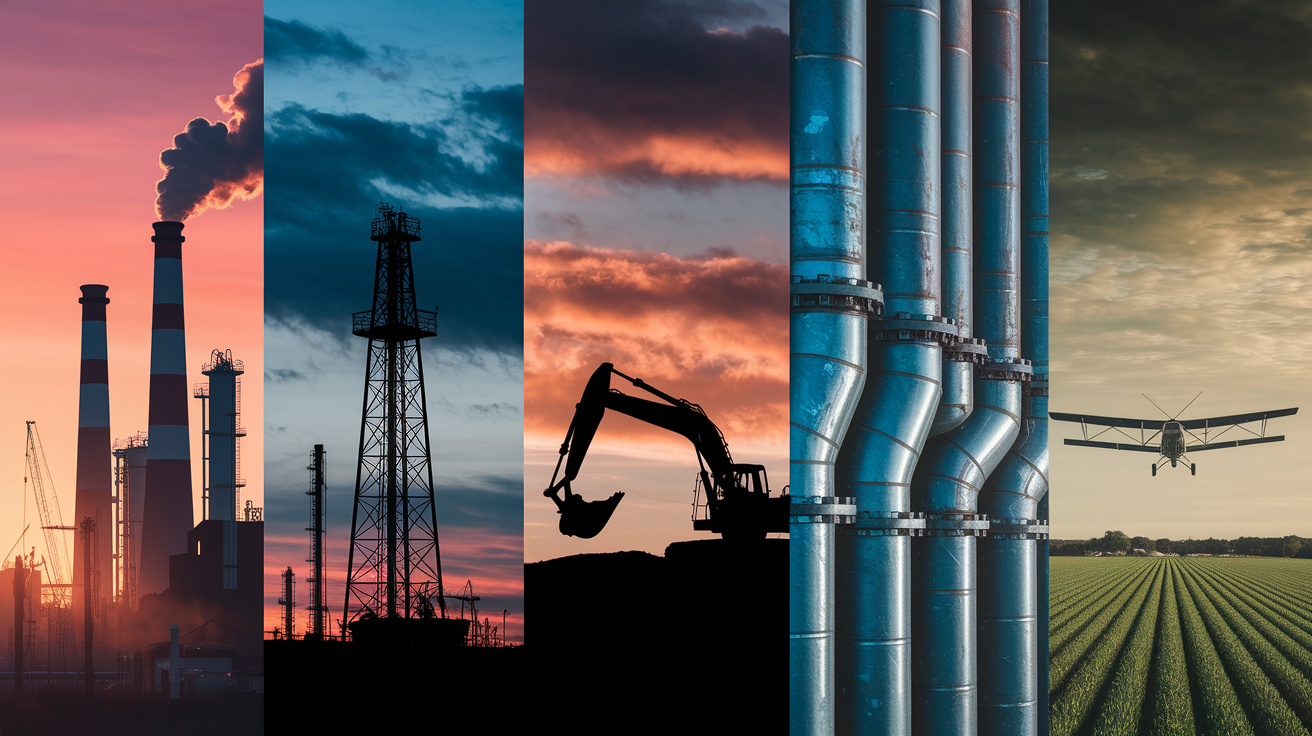
Chemical manufacturers face exposure from process emissions, product releases, and waste handling. Any of which can trigger bodily injury claims or governmental cleanup orders. Oil and gas operators increasingly get hit with nuisance claims tied to bright lights, noise, dust, odors, and wastewater. Some courts now treat these as pollution claims under CGL exclusions. Contractors get exposed during site work. Stormwater runoff, demolition dust, soil disturbance, and airborne contaminants can all get classified as pollutant releases. Water utilities and municipalities learned the hard way that corroded pipe contamination, as in Flint, Michigan and Pennsylvania federal court decisions, can be excluded as pollution even when the contamination was unintentional and caused by infrastructure failure.
Agriculture operations face pollution exclusions when fertilizers, pesticides, manure, or animal waste migrate off site and contaminate soil, groundwater, or surface water. PFAS exposed manufacturing is a rapidly growing category. Companies that used or produced fluorinated chemicals, firefighting foam, food packaging, or textiles now face historic liabilities. They’re finding that occurrence based CGL policies exclude the claims as pollution even if the exposure occurred decades ago.
High risk industry scenarios where the pollution exclusion frequently bars coverage:
- Manufacturing or storage of hazardous chemicals, solvents, or petroleum products
- Construction or demolition projects generating airborne dust, runoff, or debris
- Agricultural operations using fertilizers, pesticides, or managing animal waste
- Water utilities with aging infrastructure and corrosion driven contamination
- Businesses with underground storage tanks, above ground tanks, or pipelines
Real-World Pollution Claims Often Denied by CGL Policies
HVAC systems that disperse airborne contaminants (mold spores, chemical vapors, biological irritants) get excluded frequently. Courts treat the dispersed substance as a pollutant and the ventilation system as the release mechanism. Spray foam insulation installers have faced claim denials when fumes from isocyanates sicken occupants or damage property. Insurers argue the chemical release falls squarely within the pollution exclusion. Workplace carbon monoxide leaks from boilers or generators are contested. Some courts treat CO as a pollutant and exclude coverage. Others apply the heating equipment exception or reasonable expectations doctrine to preserve coverage.
Agricultural manure runoff that contaminates a neighbor’s well or surface water has been treated as a pollution claim in several states. Courts held that manure is “waste” under the policy definition of pollutant. PFAS litigation is producing widespread claim denials. Insurers argue that fluorinated chemicals in products, wastewater, or soil are pollutants. Both bodily injury and cleanup obligations are excluded. Corroded pipe contamination (particularly lead or copper leaching from aging infrastructure) has been contested in Flint and in Pennsylvania federal court. Insurers attempted to avoid coverage by invoking the pollution exclusion. Some courts rejected insurer arguments when the substance didn’t fit traditional environmental pollutant definitions. But outcomes remain unpredictable.
| Incident | Substance | Coverage Outcome |
|---|---|---|
| HVAC airborne mold or chemical dispersion | Mold spores, chemical vapors | Usually denied as pollutant release |
| Spray-foam insulation fumes | Isocyanates, chemical fumes | Denied under pollution exclusion |
| Agricultural manure runoff | Animal waste, ammonia | Denied as waste/pollutant in most states |
| PFAS product contamination | Per- and polyfluoroalkyl substances | Denied as pollutant; cleanup excluded |
When Businesses Need Separate Pollution Liability Coverage

Any operation that handles hazardous materials, generates regulated waste, stores petroleum or chemicals, or produces emissions under an environmental permit should assume the CGL pollution exclusion will apply. PFAS exposure is a red flag. If your business manufactured, used, or disposed of fluorinated chemicals, or if your products contained PFAS, you need to inventory historic occurrence based policies and purchase modern Pollution Legal Liability or Environmental Impairment Liability coverage. Permitted emissions aren’t safe. The April 17, 2025 Illinois Supreme Court certified question in Griffith Foods v. National Union turns on whether lawful emissions at policy issuance are still “pollution” under the exclusion.
Waste storage, transport, or recycling operations are excluded under f.(1)(b) and f.(1)(c). No exceptions. If your business recycles, reclaims, or processes waste (even if the material is a saleable product), it’s treated as waste under the policy. Both bodily injury and property damage claims are excluded. Underground storage tanks, above ground tanks, and pipelines present high cleanup cost risk. Governmental orders under state or federal tank regulations will trigger the f.(2) exclusion. Contractors performing excavation, grading, demolition, or stormwater management should procure Contractor’s Pollution Liability. Runoff, dust, and soil disturbance get classified as pollutant releases frequently.
Coverage limits for PLL and EIL policies commonly range from $1,000,000 to $10,000,000, depending on the insured’s operations and site risk. Typical deductibles fall between $10,000 and $100,000. High hazard operations may see higher retentions. Policyholders should inventory both current and historic policies. Older occurrence based CGL policies issued before absolute exclusions became standard may still provide coverage for past releases. But insurers will scrutinize policy language and may deny claims on other grounds. Watch for restrictive endorsements on CGL renewals that add or expand pollution exclusions, particularly for businesses that previously enjoyed broader wording.
When separate pollution insurance is essential:
- Your operations involve manufacturing, storing, or transporting hazardous chemicals, solvents, petroleum, or PFAS containing materials.
- You hold environmental permits for air emissions, wastewater discharge, or waste handling, and those permits could be the basis for third party claims or regulatory enforcement.
- Your business generates, recycles, or processes waste, or you perform environmental testing, cleanup, or remediation services.
- You own or operate underground storage tanks, above ground storage tanks, pipelines, or facilities with legacy contamination from prior operations or previous owners.
Types of Pollution Insurance That Fill CGL Exclusion Gaps
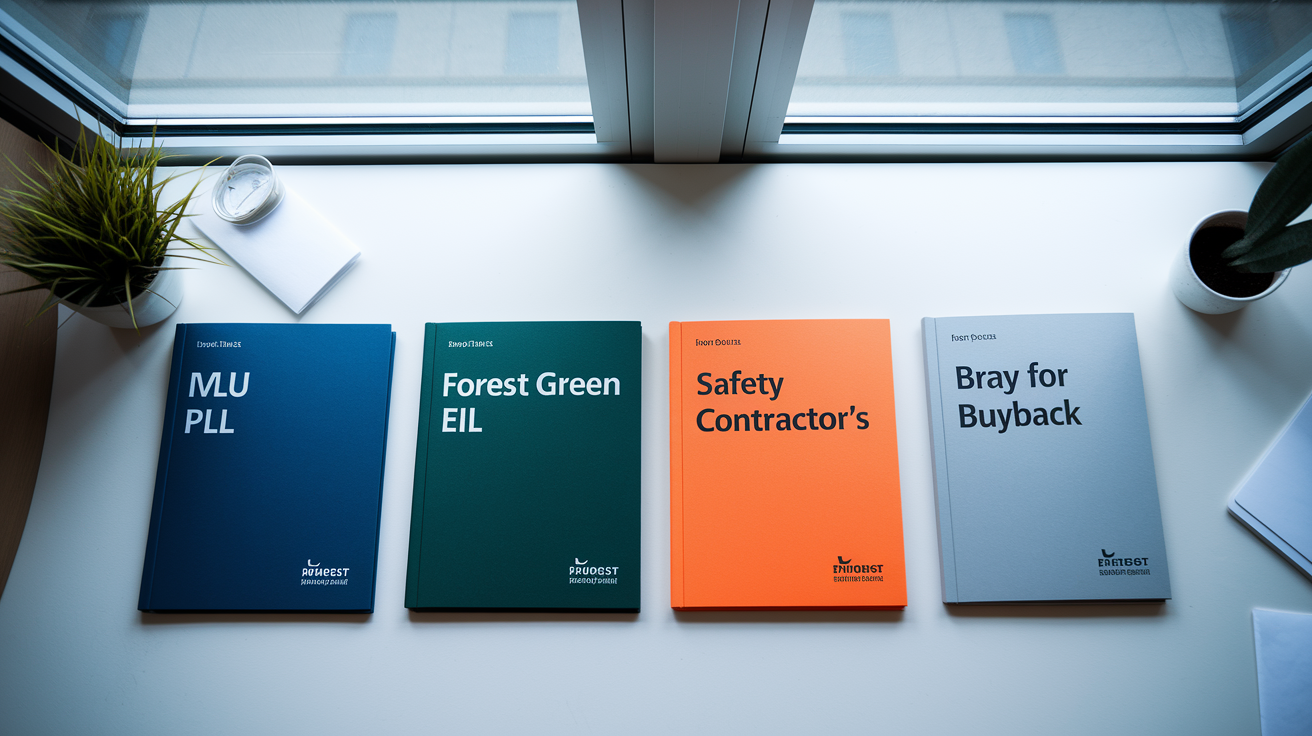
Pollution Legal Liability policies provide first party cleanup coverage, third party bodily injury and property damage coverage, and legal defense for claims arising from pollutant releases. PLL is typically written on a claims made basis and can be tailored to cover specific sites, operations, or historic exposures. Environmental Impairment Liability policies function similarly but often emphasize remediation cost coverage and compliance with governmental cleanup orders. That’s the exact category excluded under CGL paragraph f.(2). Both PLL and EIL can include coverage for business interruption tied to pollution events, on site cleanup, off site migration, and transportation spills.
Contractor’s Pollution Liability is designed for construction and contractor operations. It covers pollution conditions arising from the insured’s work, including stormwater runoff, dust, jobsite spills, and airborne contaminants from demolition or material handling. This coverage is critical because the CGL pollution exclusion applies both on the contractor’s premises and away from premises. The mobile equipment and operations within building exceptions are narrow. Buyback endorsements and pollution riders are amendments to the CGL that restore limited pollution coverage, typically for specific perils or named pollutants. They come with restrictive triggers and sub limits. These endorsements aren’t substitutes for standalone environmental policies. They patch small gaps but leave significant exposures uncovered.
| Coverage Type | What It Covers | Typical User |
|---|---|---|
| Pollution Legal Liability (PLL) | First-party cleanup, third-party BI/PD, legal defense, historic exposures | Manufacturers, chemical handlers, property owners with contamination risk |
| Environmental Impairment Liability (EIL) | Remediation costs, governmental order compliance, business interruption from pollution | Facilities with permits, waste handlers, sites with legacy contamination |
| Contractor’s Pollution Liability | Runoff, dust, spills, airborne contaminants from construction/demolition work | General contractors, excavators, demolition firms, site-development contractors |
| Buyback Endorsements / Pollution Riders | Limited restoration of CGL coverage for specific pollutants or named perils | Businesses with narrow, defined pollution exposures seeking small gap coverage |
Key Steps to Evaluating Pollution Exclusion Risk

Start by reviewing your current CGL policy to figure out whether the pollution exclusion is absolute or qualified. Absolute exclusions remove coverage regardless of suddenness or accident. Qualified exclusions may preserve coverage for “sudden and accidental” releases, though courts interpret that phrase inconsistently. Request a copy of your complete policy, including all endorsements. Confirm whether the pollution exclusion uses the standard ISO f.(1)/f.(2) structure or modified wording.
Practical steps to assess pollution exclusion risk:
- Inventory all historic occurrence based CGL policies, particularly those issued before 1986, to identify potential coverage for past releases or long tail exposures.
- Commission a Phase I Environmental Site Assessment for owned or leased properties to identify recognized environmental conditions, underground storage tanks, or evidence of prior contamination.
- If Phase I findings warrant, conduct Phase II contamination testing (soil borings, groundwater sampling, vapor intrusion analysis) to quantify pollution risk and remediation cost exposure.
- Evaluate product lines, raw materials, and waste streams for PFAS, solvents, heavy metals, or other substances likely to trigger pollution exclusions.
- Review permits (air, water, waste) and confirm whether permit violations or exceedances could lead to third party claims or governmental cleanup orders.
- Conduct a loss control review with your broker or environmental consultant to map governmental cleanup triggers, offsite migration pathways, and third party exposure scenarios.
After completing the assessment, map the results against your existing insurance program. If significant exposures turn up, request quotes for PLL, EIL, or Contractor’s Pollution Liability with limits that align to potential remediation costs and third party liabilities. For businesses with PFAS exposure or legacy contamination, consider securing occurrence based pollution coverage if available. Claims made policies require continuous renewal to preserve coverage for future claims arising from past acts.
Litigation Trends and Future Outlook for Pollution Exclusion Insurance

PFAS litigation is accelerating. Insurers are responding by adding PFAS specific exclusions to CGL renewals and tightening pollution policy terms. Businesses that manufactured or used PFAS are receiving reservation of rights letters from CGL carriers. They’re finding that environmental policies issued in recent years contain PFAS sub limits or carve outs. The regulatory landscape is also shifting. EPA has finalized drinking water standards for certain PFAS compounds. States are adopting cleanup standards and disclosure requirements that will drive remediation obligations and third party claims.
Courts continue to expand insurer favorable interpretations in some jurisdictions. They’re treating more substances as “pollutants” and applying the exclusion to non environmental irritants like odors, noise, and dust. The April 17, 2025 certified question accepted by the Illinois Supreme Court in Griffith Foods International Inc. v. National Union Fire Insurance Co. could shift national interpretation. The issue is whether a standard pollution exclusion bars coverage when the alleged “pollution” was lawfully emitted under an environmental permit at the time the policy issued. If the Illinois Supreme Court rules that permitted emissions are still excluded, it will strengthen the insurer position and make separate environmental insurance even more critical. Conversely, a policyholder favorable ruling could open coverage for businesses operating under regulatory compliance at the time of policy issuance. The decision’s reach will depend on how narrowly or broadly the court frames its holding.
Final Words
On the ground: pollution exclusion cuts cleanup costs, bodily injury, and many third-party claims out of standard CGLs.
You walked through why wording and history matter, how courts split on interpretation, which industries are most at risk, real denied-claim examples, and what separate pollution liability or buyback endorsements do. We listed practical checks—Phase I/II assessments, endorsement review, and limit/deductible comparisons.
Don’t assume your CGL covers contamination. Follow the checklist and you’ll reduce surprise bills. Pollution exclusion insurance is manageable, not a mystery, and you can close the gaps.
FAQ
Q: What is a pollution exclusion in insurance?
A: The pollution exclusion in insurance is a policy clause that removes coverage for losses caused by pollutants, typically excluding bodily injury, property damage, and cleanup costs from chemical, gas, or waste releases.
Q: What does a pollution insurance policy cover?
A: A pollution insurance policy covers remediation and cleanup costs, third-party bodily injury and property damage from releases, and regulatory defense or penalties, usually subject to limits, deductibles, and specific policy triggers.
Q: What is the difference between absolute and total pollution exclusion?
A: The difference between absolute and total pollution exclusion is that “absolute” bars virtually all pollution-related claims regardless of cause, while “total” is often used interchangeably—always check the exact policy wording for limits.
Q: What does part 1 of the pollution exclusion remove from the CGL policy?
A: Part 1 of the pollution exclusion removes coverage for bodily injury and property damage that arise from pollutant releases, excluding insurer duty to defend or indemnify third-party claims tied to those releases.