





Think renewing your insurance is always the cheaper, safer move?
Not true.
Renewal keeps your no-claim bonus, skips new underwriting, and prevents gaps that trigger waiting periods, so it often saves money when you actually file a claim.
But a new policy can offer a lower headline price, yet wipe out loyalty discounts, restart waits, and add paperwork.
This post lays out the key differences, shows when renewal wins and when switching makes sense, and gives a short checklist to avoid costly surprises.
Key Differences Between an Insurance Renewal and a New Policy

Renewing your insurance means you’re just continuing what you already have. Your insurer sends a renewal notice 30 to 60 days before things expire, you look over any changes to your premium or coverage, pay up, and keep rolling with the same policy number. It’s simple. You don’t lose your no-claim bonus, your coverage stays unbroken, and all those benefits you’ve built up over time stick around.
Starting fresh with a new policy is different. You’re basically a stranger again, even if you’re sticking with the same company. They’ll put you through full underwriting, ask for paperwork, and assess your risk like it’s day one. Waiting periods reset. Discounts you earned? Gone, unless you can prove your history and the new insurer actually honors it. The whole process takes longer and involves way more admin than just hitting “renew.”
Renewals protect the stuff that actually saves you money. Most motor and health policies run six months or a year at a time, and when you renew, your claim-free record stays intact. Sure, switching might cut your rate by 5% to 20% if you find something better, but you could lose loyalty perks and no-claim bonuses worth up to 50% off your premium. So the real question is whether continuity benefits beat the potential savings you’d get by shopping around.
Renewal vs New Policy: Five Core Distinctions
- Continuity: Renewals keep everything moving without a break and preserve what you’ve earned. New policies reset the clock on discounts and waiting periods.
- Underwriting: Renewals don’t usually trigger new underwriting unless you’re changing coverage. New policies mean full risk assessment, paperwork, sometimes even medical exams.
- No-Claim Bonus: Renewals protect your NCB. Switching can cost you up to 50% in premium discounts unless the new insurer agrees to transfer it.
- Administration: Renewals take minutes. New policies need applications, proofs, inspections, and all the binding paperwork.
- Cost Impact: Renewals often cost less because of retained discounts, but competitor rates can beat your renewal by 15% or more in some cases.
Understanding How Insurance Renewals Work and What Changes at Renewal

You’ll get a renewal notice 30 to 60 days before your policy runs out. It shows your updated premium, any tweaks to coverage limits, deductibles, endorsements, and the new term dates. A lot of policies auto-renew if you’ve got autopay set up, but you should still read the declaration page to catch anything weird. Once you pay, your insurer activates the renewal on your expiration date and your policy number doesn’t change. Miss the payment and you usually get a grace period, often 15 to 30 days, to pay without losing coverage.
Your renewal premium shifts based on your claims, changes in your risk profile, inflation, and what’s happening in the broader market. File multiple claims and expect your rate to go up. Even if you stayed claim-free, your premium can still rise because of stuff like natural disasters in your area, higher repair costs, or regulatory changes. Insurers can also tweak coverage terms at renewal, adding exclusions, raising deductibles, or changing limits to reflect updated risk.
Common Factors That Drive Renewal Premium Increases
- Claims filed during the previous term: Each one can bump your premium 10% to 40% depending on how bad it was and how often you claimed.
- Changes in personal risk: New car, home renovations, moving to a riskier ZIP code, or aging into a higher-risk bracket.
- Market-wide inflation: Rising costs for parts, labor, medical care, and construction push premiums higher for everyone.
- Catastrophic events: Hurricanes, wildfires, floods in your region trigger rate adjustments even if you didn’t file a claim.
What Buying a New Insurance Policy Means and When It’s Treated as “New Coverage”

Buying a new policy means you’re entering a fresh contract, either with a different insurer or with your current one under completely new terms. They treat you like a new applicant and run full underwriting to check your current risk. For motor insurance, that’s pulling your driving record, reviewing accidents and violations, and checking your credit score in states that allow it. For health insurance, underwriting usually means medical questionnaires, and if you’re over 45 to 50, you might need exams or lab work, especially if your coverage amount crosses thresholds like $100,000 to $250,000.
New policies restart waiting periods that renewals skip. Health plans often impose a 30-day wait for general illnesses and a 2-year wait for pre-existing conditions. Maternity coverage can have a 2 to 4-year wait. If you had continuous coverage under your old policy and switch to something new, you lose credit for the time you’ve already served on those waiting periods unless the new insurer explicitly agrees to transfer your history. The effective date is when coverage actually begins, and you need to coordinate carefully so there’s no gap between your old policy ending and the new one starting.
New policies also need more paperwork than renewals. You’ll submit proof of identity, proof of address, income statements for high-value coverage, vehicle registration or home ownership papers, and past policy docs to show your claims history. The binding process takes anywhere from several days to several weeks depending on underwriting complexity, and you won’t have active coverage until the insurer approves your application and you pay the first premium.
Cost Implications: Renewal Premiums vs New Policy Pricing

Renewal premiums usually cost less than new policies because they keep your no-claim bonus, loyalty discounts, and any earned credits intact. Let’s say you’ve got a 50% no-claim bonus on a motor policy with a base premium of $1,200. You pay $600. Switch to a new insurer without transferring that bonus and you’re back to the base rate, which doubles your cost. Some insurers will honor past claim-free history if you provide documentation, but plenty won’t, and you just lost years of savings.
Switching can still save money if a competitor’s offering a much lower rate or better coverage for the same price. Market comparisons show potential savings of 5% to 20% when you shop around, especially if your current insurer jacked up renewal rates by 15% or more without improving anything. The decision comes down to whether the competitor’s lower headline premium makes up for losing continuity benefits and whether the new policy’s terms actually match or beat what you have now.
| Option | Typical Cost Impact | Key Considerations |
|---|---|---|
| Renew with NCB intact | Premium may rise 5% to 10% due to inflation or minor claims | Preserves up to 50% discount, no underwriting, fast process |
| Renew after multiple claims | Premium may rise 20% to 40% or more depending on claim severity | Still keeps policy number and continuity, avoids waiting periods |
| Switch to new policy (NCB transferable) | May save 5% to 20% if competitor rate is lower | Requires confirmation of NCB transfer, new underwriting, timing risk |
| Switch to new policy (NCB lost) | Premium may increase 30% to 100% compared to renewal with NCB | Loss of discount can erase savings, waiting periods restart, coverage gap risk |
How to Calculate 1 to 3 Year Cost Projections
- Step 1: Write down your current premium, your NCB percentage, and the renewal increase percentage. Multiply the base premium by the NCB factor to get your actual cost each year.
- Step 2: Get competitor quotes with identical coverage limits, deductibles, and endorsements. Confirm whether they’ll honor your NCB and by how much.
- Step 3: Project three years forward. If your renewal goes up 10% annually and competitor quotes stay flat but you lose a 50% NCB, calculate total out-of-pocket over three years for each scenario before you decide.
Coverage Continuity: How Renewals Protect You vs What You Risk With New Policies

Renewing keeps your coverage running without any break. Continuity matters because it protects ongoing benefits like pre-existing condition coverage in health insurance, maturity benefits in certain long-term plans, and accumulated no-claim bonuses in motor and home policies. Grace periods, typically 15 to 30 days after expiration, give you a short window to pay your renewal premium without losing coverage or triggering a lapse.
Let your policy lapse past the grace period or buy a new one that starts after your old one expires and you’ve just created a coverage gap. That gap can restart waiting periods, commonly 2 years for pre-existing conditions in health plans, and wipe out your no-claim bonus. It also forces you through new underwriting, which might flag health changes or claims that weren’t problems when you first bought coverage. A lapse of even one day can get expensive, especially if an accident, illness, or property damage happens during that window.
No-Claim Bonus, Loyalty Discounts, and What You Lose If You Don’t Renew
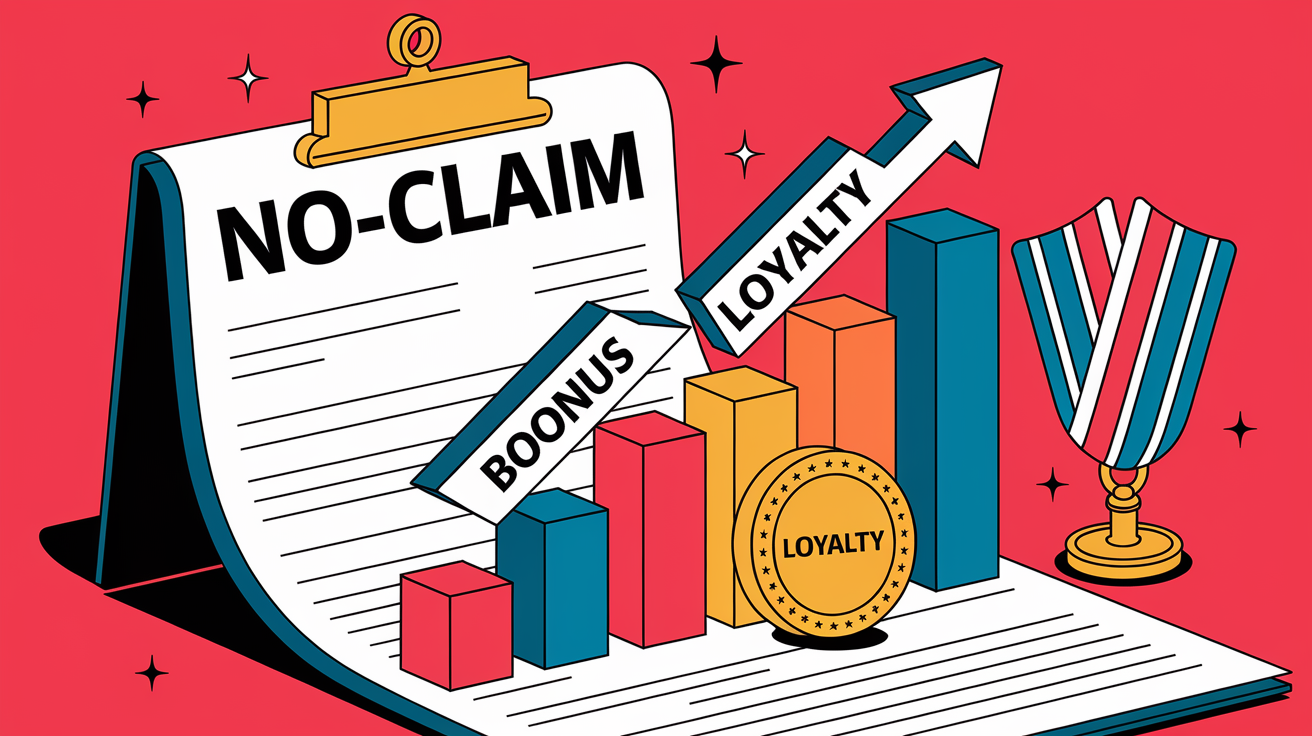
No-claim bonus schedules reward drivers and homeowners who stay claim-free. A common motor insurance NCB schedule looks like this: 1 year claim-free gets you 20% off, 2 years gets 25%, 3 years gets 35%, 4 years gets 45%, and 5 or more years gets you 50%. If your base premium is $600, a 50% NCB cuts it to $300. Lose that bonus by switching without a transfer and you’re back to $600, which erases any modest savings from a competitor’s lower base rate.
Loyalty discounts go to customers who stick with the same insurer for multiple terms. Some insurers knock off an additional 5% to 10% after three or more renewals. Switch to a new provider and you forfeit those credits. If you’ve got both NCB and loyalty discounts stacked, the combined savings can be huge, and walking away only makes sense if the competitor’s rate is significantly lower and the new insurer explicitly agrees to honor your past claim-free record.
Situations Where Losing NCB Is Especially Costly
- High base premiums: If your base premium is already $1,000 or more, losing a 50% NCB means paying an extra $500 per year or $1,500 over three years.
- Young or high-risk drivers: Drivers under 25 or in high-risk categories already face elevated base rates. Losing NCB just compounds the cost.
- Multiple vehicles: Families insuring two or three vehicles lose the compounded NCB benefit across all policies if they switch without transfer confirmation.
- Claims-prone regions: Live in an area with high theft, hail, or accident rates and your base premium is higher. The NCB provides proportionally more savings.
Underwriting Differences Between Renewing and Starting Fresh

Renewing your policy rarely triggers new underwriting as long as you keep the same coverage limits, deductibles, and endorsements. The insurer already knows your risk from the previous term and only adjusts pricing based on claims you filed, age changes, or market factors like inflation. Zero claims and your circumstances stayed the same? Your renewal might arrive with a small increase and no extra paperwork.
Starting a new policy forces the insurer to assess your risk from scratch. For motor insurance, that means pulling a Motor Vehicle Report to check recent accidents, violations, and license suspensions. For home insurance, they may order a property inspection or review local crime and natural disaster data. Health insurance underwriting often needs detailed medical questionnaires, and applicants over 45 to 50 commonly need blood tests, EKGs, or other exams, especially if you’re applying for coverage above $100,000 to $250,000.
Underwriting timelines also differ. Renewals activate within days of paying your premium. New policies can take one to four weeks to bind, depending on inspection schedules, medical exam availability, and insurer processing speed. Market conditions like inflation, recent catastrophic events, and regulatory changes affect both renewal and new-policy pricing, but new underwriting applies the latest risk models and pricing rules, which may work for or against you depending on your profile.
Documents Commonly Required for New Policy Underwriting
- Government-issued ID and proof of address: Drivers license, passport, utility bill, or lease agreement.
- Vehicle registration or home ownership proof: Title, deed, or mortgage statement.
- Past insurance policy documents: Declarations pages showing claims history, coverage limits, and no-claim bonus.
- Medical records or exam results: Required for health and life insurance, especially for applicants over 45 or high coverage amounts.
- Income or asset statements: For high-value coverage like umbrella policies or large sum-insured health plans.
When You Should Renew vs When You Should Buy a New Policy

Renew your policy when your premium increase stays under 10%, you’ve got accumulated no-claim bonuses or loyalty discounts, and you’re satisfied with your insurer’s claims service and coverage. Renewals make sense when continuity benefits like pre-existing condition coverage or maturity credits matter, and when the simplicity of renewing beats modest savings from shopping around. If your insurer hasn’t messed with your terms and you haven’t filed multiple claims, renewing is usually the safer, easier choice.
Buy a new policy when your renewal premium jumps more than 15% without a clear reason, when competitors offer better coverage or networks, or when your insurer has a lousy claims settlement record. Switching is worth it if you can lock in a rate that’s at least 15% lower than your renewal and the new insurer agrees to transfer your no-claim bonus or continuity credits. New policies also make sense when your needs have changed, like needing higher liability limits, adding riders, or switching to a broader provider network, and your current insurer can’t handle those changes at a reasonable price.
Compare three or more quotes with identical coverage limits, deductibles, and endorsements before deciding. Look past the headline premium at sub-limits, co-pays, network restrictions, exclusions, and claims settlement ratios. If you’re switching, get written confirmation that the new insurer will honor your past policy history and calculate the three-year total cost to make sure you’re not swapping short-term savings for long-term expense.
Renewal vs New Policy: Six Typical Scenarios
- Renewal Scenario 1: Premium increase under 10%, NCB intact, no claims filed, satisfied with service. Renew.
- Renewal Scenario 2: Premium increase 15% to 20%, competitor quote 20% lower, competitor confirms NCB transfer. Consider switching.
- Renewal Scenario 3: Multiple claims filed, renewal premium up 30%, competitor quotes similar or higher. Renew to preserve continuity and avoid higher base rates elsewhere.
- New Policy Scenario 1: Renewal premium up 25%, insurer added restrictive exclusions, competitor offers better terms. Switch.
- New Policy Scenario 2: Need higher sum insured or new riders, current insurer won’t add them at renewal. Buy new policy with desired coverage.
- New Policy Scenario 3: Moving to a new state or region with different insurers, current provider doesn’t operate there. Buy new policy in new location.
Step-by-Step Checklist for Evaluating Your Renewal Against New Policy Quotes

Before your renewal date, gather your renewal notice, past policy documents, and claims history so you can compare apples to apples. Knowing your no-claim bonus percentage, current coverage limits, deductibles, and premium lets you request identical quotes from competitors and measure the real cost difference.
10-Step Evaluation Process
- Mark your expiration date and grace period: Most policies give 15 to 30 days. Note the last day you can renew without a lapse.
- Review your renewal notice: Check the new premium, any changes to coverage limits, deductibles, endorsements, exclusions, and sub-limits.
- Calculate your current no-claim bonus: Note the percentage (commonly 20%, 25%, 35%, 45%, or 50%) and the dollar value it saves.
- Request three competitor quotes: Provide identical coverage limits, deductibles, and riders. Ask each insurer if they’ll transfer your NCB and by how much.
- Compare net premiums: Subtract NCB and loyalty discounts from base rates to get your actual out-of-pocket cost for each option.
- Review policy wordings and exclusions: Read sample policies or summary of benefits to spot differences in sub-limits, co-pays, network restrictions, and exclusions.
- Check claims settlement ratios: Look up each insurer’s claim settlement ratio and customer reviews on independent sites to gauge service quality.
- Confirm underwriting requirements: Ask new insurers if they need medical exams, inspections, or additional documentation and how long binding takes.
- Calculate 3-year total cost: Project premium increases (assume 5% to 10% annual inflation for renewals) and factor NCB retention or loss for each scenario.
- Decide 7 to 14 days before expiration: Finalize your choice with enough lead time to pay the renewal or complete new-policy underwriting and avoid any coverage gap.
How to Switch to a New Policy Without Causing a Coverage Gap

Set your new policy’s effective date to start on or before your old policy’s expiration date. Most insurers let you choose the start date when you apply, so coordinate carefully. If your current policy expires on June 30, bind the new policy with an effective date of June 30 or June 29 to make sure there’s no gap. Don’t schedule the new policy to start days or weeks after your old one ends, because that gap restarts waiting periods, kills your no-claim bonus, and leaves you uninsured if something happens.
Confirm your new policy is fully bound and paid before you cancel or let the old policy lapse. Some insurers issue conditional approvals pending final underwriting or payment, and you don’t have active coverage until all conditions are met. Once the new policy is confirmed in writing with a policy number and effective date, you can let the old policy expire naturally or submit a cancellation request if you’re switching mid-term. Check whether your old insurer refunds unused premium pro-rata or charges a cancellation fee, and factor that into your cost comparison.
Key Timing and Documentation Requirements
- Start binding the new policy at least 14 days before your old one expires: This gives time for inspections, medical exams, and underwriting approvals.
- Request written confirmation of your new policy’s effective date and coverage limits: Don’t rely on verbal assurances. Get the policy number and declaration page in writing.
- Notify your old insurer of cancellation only after the new policy is active: Don’t cancel early and then find out the new insurer needs more time or declines your application.
- Keep proof of continuous coverage: Save all declaration pages, premium receipts, and correspondence to demonstrate uninterrupted insurance if a future insurer or regulator asks.
Final Words
You weighed the trade-offs: renewals preserve continuous coverage, keep no-claim bonuses, and usually skip new underwriting. New policies can save money but may restart waiting periods and drop loyalty perks.
We covered how renewals work, what starting fresh triggers, the cost math, continuity risks, and a step-by-step checklist to compare offers. Watch for big premium jumps, lost NCB, and coverage gaps.
If you follow the checklist and confirm effective dates, you’ll know how to understand insurance renewal vs new policy and pick the option that protects your wallet and avoids surprise bills.
FAQ
Q: Can I get life insurance with lupus?
A: You can get life insurance with lupus, but eligibility and price depend on disease severity, treatment, and recent flares. Expect higher rates, possible waiting periods—gather medical records and shop brokers for best offers.
Q: Is it cheaper to switch or renew?
A: Switching can be cheaper but it depends. Switching often saves 5–20% but may cost no-claim bonuses and continuity; renew if increases are under about 10% or you value loyalty discounts.
Q: How do I read my insurance policy?
A: Reading your insurance policy starts with the declarations page, then coverage, exclusions, deductibles, limits, and endorsements. Note renewal terms and claim triggers, and ask the insurer for plain-language explanations.
Q: Is it better to have a $500 deductible or $1000?
A: Choosing a $500 versus $1,000 deductible depends on your cash reserves and claim risk. $500 raises premiums but lowers out-of-pocket; $1,000 cuts premiums but increases immediate costs—pick what you can pay.