




Your insurer raised your premium — don’t hit “renew” yet.
A lot of people accept increases automatically and end up overpaying.
Before you agree, get a written breakdown of the hike, check for errors (wrong drivers, garaging address, removed discounts), compare at least three identical competitor quotes, and re-evaluate deductibles and coverages against what you actually need.
Do these checks and you’ll know whether to negotiate, switch, or keep the policy.
Key Checks to Make Before Renewing After an Insurance Rate Increase

Most insurers send renewal notices a few weeks before your policy expires, showing your new premium alongside updated coverage limits and any endorsements. These notices often trigger automatic renewals unless you actively decline, which means a lot of drivers accept rate increases without realizing they could negotiate, adjust coverage, or switch carriers. Rate hikes usually stem from at-fault claims, newly added drivers (especially teens), ZIP code risk changes (higher theft or accident frequency in your area), or companywide adjustments that affect all policyholders. Understanding the specific cause of your increase is where you start when deciding whether to accept, negotiate, or replace the policy.
A fair renewal is one where the rate increase matches real changes in your risk profile and the insurer can explain each component in writing. If your premium jumps without a corresponding claim, ticket, or household change, that’s a red flag. Start by requesting a written breakdown showing base premium, surcharges, fees, and any removed or reduced discounts. Then compare that breakdown against at least three competitor quotes using identical coverage limits and deductibles. This side by side comparison reveals whether your current insurer is pricing competitively or whether switching will save you money without sacrificing protection.
Once you have the facts, you can make a clear decision: stay and negotiate, accept the renewal as is, or switch to a better offer. Here’s what to check right now:
- Request a written justification letter from your insurer explaining exactly why your premium increased and which factors drove the change.
- Check the renewal notice for added fees, new surcharges, or discounts that were applied last term but removed this term.
- Identify whether household or vehicle changes (new driver, address move, vehicle replacement) caused the hike.
- Confirm there aren’t any errors in listed drivers, annual mileage, garaging address, or other rating factors that could inflate your premium.
- Compare identical coverage quotes from at least three carriers to see if your current rate is competitive.
- Examine whether your current deductible is still affordable and explore alternative deductible levels ($250, $500, $1,000) to estimate premium savings.
- Review updated liability limits and add ons to ensure they still match your asset exposure and actual needs.
- Determine whether shopping or switching is necessary given the size of the rate increase and the quality of competitor offers.
The clearer your understanding of the renewal offer, the easier it is to decide whether you’re being treated fairly or whether it’s time to move on.
Reviewing Your Policy Coverage Before Renewing After a Rate Increase
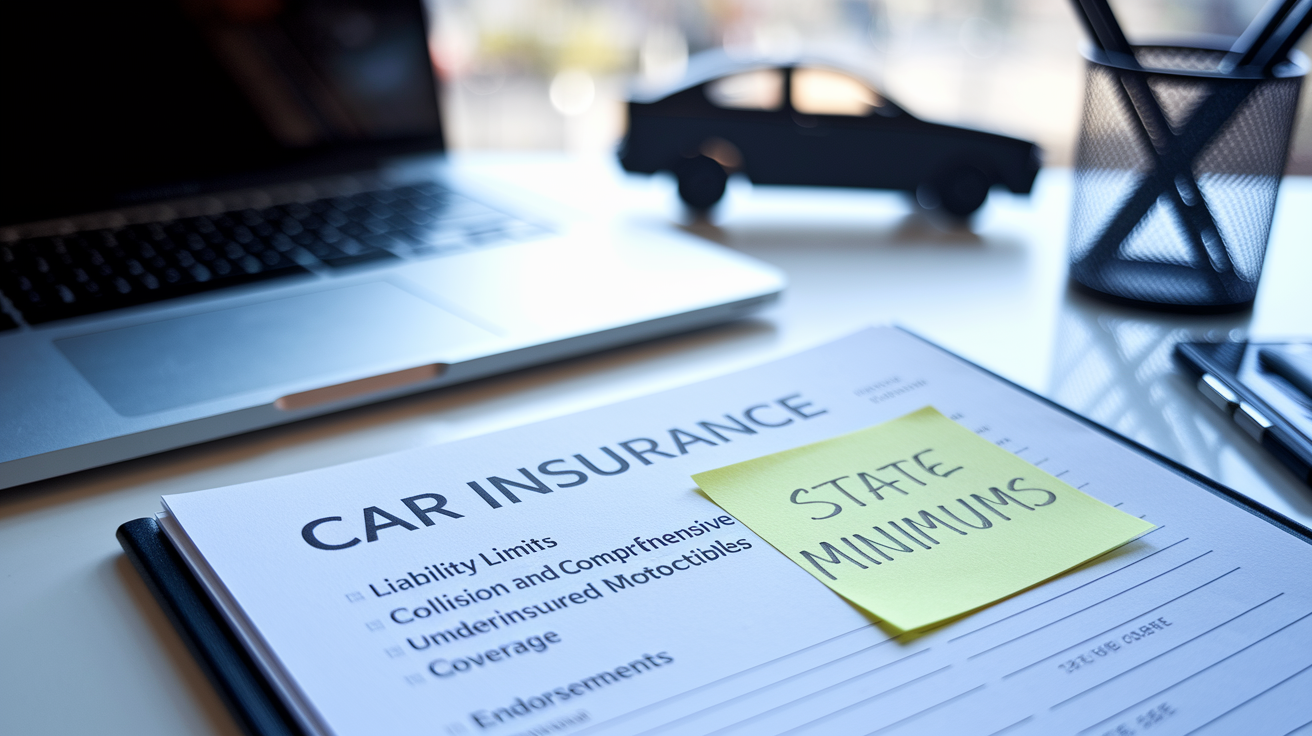
Your declarations page is the single most important document in your renewal packet. It lists your liability limits (bodily injury and property damage), collision and comprehensive deductibles, uninsured/underinsured motorist coverage, and any endorsements like rental reimbursement or roadside assistance. Before you accept a higher premium, confirm that every line on that page still serves a purpose. Look for state minimum requirements first. Some states raised their mandated minimums in January 2025, which can push premiums up even if your driving record is clean. Then check whether your liability limits adequately cover your assets. If you own a home or have significant savings, carrying only state minimums leaves you exposed to lawsuits that could wipe out everything you own.
Deductible decisions become more important when your premium rises. A $250 deductible costs more per month than a $1,000 deductible, but it also means you pay less out of pocket if you file a claim. If your vehicle is older and worth less than $3,000 to $5,000, consider whether paying for collision and comprehensive makes sense at all. If the insurer totals your car, the payout minus your deductible may be less than what you spent on premiums over the past year or two. In that case, dropping full coverage and keeping only liability can cut your renewal cost significantly. Just make sure you have enough saved to replace the vehicle if something happens.
Duplicate and unnecessary coverages are common renewal traps. Gap insurance protects you if your car is totaled and you owe more than it’s worth, but once your loan is paid or nearly paid off, gap coverage is pointless. Roadside assistance through your insurer may cost $15 to $30 per year, but if your credit card, AAA membership, or vehicle warranty already provides towing and lockout service, you’re paying twice for the same benefit. Rental reimbursement works the same way. If you rarely rent cars or your credit card covers rental damage, this add on is waste. Finally, watch for hidden policy changes at renewal: some insurers quietly remove endorsements, reduce limits, or add new exclusions. If the renewal notice mentions “updated terms,” request a side by side comparison showing exactly what changed.
Comparing Competitor Quotes When Facing a Higher Renewal Premium

Shopping for quotes is the only reliable way to know whether your current insurer is pricing fairly. Start about 30 days before your renewal date to give yourself time to compare offers, ask questions, and arrange a seamless switch if needed. The goal isn’t just to find a lower number. It’s to find equivalent or better coverage at a competitive price. That means you need to compare apples to apples: identical liability limits, the same deductibles, the same endorsements, and the same list of drivers and vehicles. A quote that looks cheap may be missing coverages you currently have, or it may assume a higher deductible than you’re comfortable paying in a claim.
Itemized quotes are critical. Some insurers provide a single lump sum premium without breaking down base rate, surcharges, fees, or discounts. Demand a detailed breakdown from each carrier so you can see where the money goes. For example, one insurer might charge a lower base rate but add a high fee for paperless billing opt out, while another might bundle that fee into the base. When you compare line by line, the true cost difference becomes clear. Also verify that each quoted rate is available in your ZIP code and for your credit profile. Many online quotes are estimates that change after underwriting.
Follow this six step process to ensure a fair comparison:
- Gather your current policy declarations page so you know exactly what coverage you have today.
- Request itemized competitor quotes from at least three carriers, specifying the same limits, deductibles, and endorsements.
- Match coverage limits and deductibles exactly across all quotes to eliminate variables that distort the comparison.
- Verify discount eligibility at each insurer by asking which discounts apply and which require enrollment or documentation.
- Compare effective dates to ensure your new policy starts the same day your old one expires, avoiding any coverage lapse.
- Document all quotes in writing so you can use them as leverage when negotiating with your current insurer or when finalizing your decision.
Here’s what matters most when comparing offers:
| Comparison Factor | Why It Matters |
|---|---|
| Coverage Match | A lower premium with reduced liability limits or higher deductibles isn’t a true savings. It shifts risk to you at claim time. |
| Effective Dates | Even a one day gap can trigger fines, license suspension, and higher future rates in many states. |
Checking Discounts and Eligibility to Offset a Rate Increase

Discounts can cut your premium by 10 to 40 percent, but many require you to ask or re-enroll each term. If your renewal notice shows a rate increase, the first question to ask your insurer is, “Which discounts am I currently receiving, and which additional discounts could I qualify for?” Some carriers automatically apply discounts like multi car or homeowner bundling, but others make you request them. Usage based or low mileage programs often require you to install a telematics device or smartphone app and maintain it for the full term. If you enrolled last year but didn’t complete the program, that discount may have disappeared at renewal.
Bundling policies is one of the easiest ways to reduce cost. Combining your auto and homeowners or renters insurance with the same carrier typically saves 15 to 25 percent on both policies. If you’ve been with your current auto insurer for years but carry home insurance elsewhere, ask for a multi policy quote. Similarly, adding a second or third vehicle to the same policy usually unlocks a multi car discount. Just confirm that bundling actually saves money. Sometimes a standalone policy from a competitor is cheaper than a bundled rate from your current carrier, especially after a steep renewal increase.
Credit based insurance scores also affect premiums in most states. Insurers commonly use FICO Score 8 to assess risk, and a stronger credit profile can lower your rate. If your credit has improved since you first bought the policy, ask the insurer to re-rate you. Conversely, if your premium spiked and you haven’t had any claims or tickets, check whether a drop in your credit score triggered the increase. You have the right to request the reason for any adverse action, including rate hikes based on credit.
Here are the most common discount opportunities to verify before renewing:
- Bundling home and auto policies with the same carrier
- Safe driver or defensive driving course completion. Some states mandate a discount if you complete an approved course within the past three years
- Low mileage or usage based programs that track driving habits or annual miles
- Anti theft devices like alarms, immobilizers, or GPS tracking installed in your vehicle
- Paperless billing and autopay enrollment. Often saves $5 to $20 per year
- Good student discount if you have a teen driver with a B average or higher
- Multi car or household discounts when multiple vehicles or drivers are on the same policy
Assessing Claims, Driving Records, and Risk Factors Before Renewing

Insurers use your claims history and driving record to predict future risk, and recent incidents usually drive renewal rate increases. An at fault accident in the past three years can raise your premium by 20 to 50 percent, depending on severity and state rules. Speeding tickets, DUIs, and license suspensions have similar effects. If your renewal notice shows a jump and you’ve had a recent claim or violation, that’s likely the cause. The insurer should disclose this in the renewal letter, but if they don’t, ask for a written explanation listing every surcharge and the incident that triggered it.
The problem is that errors in driving records and claims databases are common. Your insurer pulls data from your state DMV and from insurance industry databases that track claims across all carriers. If the DMV lists an accident you weren’t involved in, or if a previous insurer reported a claim incorrectly, you’ll pay for someone else’s mistake. This is why it’s critical to review your own records before accepting a higher premium.
How to Confirm Accuracy of Your Risk Profile
Start by requesting a copy of your driving abstract from your state DMV. Most states provide this online for a small fee or for free. The abstract will show all violations, suspensions, and reportable accidents on your record, typically going back five years. If you spot an error, file a correction request with the DMV immediately and send proof of the correction to your insurer. Next, ask your current insurer for a “letter of experience” or loss run report that lists every claim filed under your policy. Compare that list against your own records. If a claim appears that you didn’t file, dispute it in writing and demand that the insurer remove the surcharge. Finally, check the industry databases directly: the Comprehensive Loss Underwriting Exchange (CLUE) report is the main source insurers use. You can request a free copy of your CLUE report once per year through LexisNexis. Review it for inaccuracies and dispute any incorrect information using the process outlined on the LexisNexis website.
Negotiating Your Rate and Requesting Adjustments Before Accepting Renewal

You don’t have to accept a rate increase passively. Insurers price renewals based on algorithms and historical data, but they also compete for retention. If you’re a long term customer with a clean record and you present a lower competitor quote, many carriers will offer a retention discount or match the competitor’s rate. The key is to approach the negotiation armed with facts: written quotes from other insurers, a clean driving abstract, proof of discounts you qualify for, and a clear willingness to switch if the insurer won’t adjust.
Start the conversation by calling your insurer’s retention or customer service department and asking for a rate review. Say, “My premium increased by X percent this term. I’ve been claim free for Y years and I have quotes from [Carrier A] and [Carrier B] that are $Z lower for the same coverage. Can you match or beat those rates?” If the representative says no, ask to speak with a supervisor or request a manual underwriting review. Automated systems sometimes apply surcharges that a human underwriter can waive or reduce, especially if your risk profile has improved since the policy was first written. For example, if you completed a defensive driving course, installed anti theft devices, or reduced your annual mileage, mention those changes and ask for a discount or surcharge removal.
Another tactic is adjusting your deductible to lower your premium while keeping core liability protection intact. Moving from a $250 deductible to $500 typically saves 10 to 15 percent on collision and comprehensive premiums. Jumping to $1,000 can save 20 to 30 percent. Just make sure you have enough savings to cover the higher deductible if you file a claim. If the insurer still won’t budge, ask about payment plan options that spread the higher premium across more installments, reducing the monthly impact even if the total cost stays the same.
Here are five specific negotiation tactics to use before accepting a renewal increase:
- Present written competitor quotes and ask your current insurer to match or beat them, emphasizing your loyalty and claim free history.
- Request a manual underwriting review if you believe the automated system applied incorrect surcharges or missed eligible discounts.
- Propose a deductible increase (for example, from $500 to $1,000) and ask for an itemized breakdown showing the premium reduction.
- Highlight recent improvements like completing a defensive driving course, reducing mileage, or improving your credit score, and ask for corresponding discounts.
- Negotiate a multi year rate lock or loyalty discount if your insurer offers such programs and you’re willing to commit to staying for another term.
Identifying Signs You Should Switch Insurers After a Rate Hike

Sometimes the best response to a rate increase is to walk away. If your insurer can’t or won’t explain the hike, refuses to negotiate, or offers service that makes filing claims difficult, staying loyal costs you money and peace of mind. Red flags include vague explanations like “market conditions” or “updated actuarial models” without specific details about your policy, hidden fees that appear only on the renewal notice, and customer service representatives who can’t access your claims history or discount eligibility.
Complaint ratios and claims turnaround times are objective measures of insurer quality. State insurance departments publish complaint data showing how often policyholders file grievances against each carrier. A high complaint ratio suggests the insurer denies claims aggressively, delays payments, or provides poor service. Similarly, if online reviews consistently mention claim denials, slow reimbursement, or difficulty reaching adjusters, that’s a sign the company prioritizes profit over policyholders. You can find complaint data on your state insurance department’s website, and sites like J.D. Power and Consumer Reports publish satisfaction ratings based on customer surveys.
Nonrenewal notices are another warning sign. If your insurer sends a letter saying they won’t renew your policy at the end of the term, state law typically requires at least 10 days’ notice, and the insurer must state the reason in writing. Common reasons include too many claims, a suspended or revoked license, or the carrier exiting your state or ZIP code. Nonrenewal is different from cancellation for nonpayment. You haven’t done anything wrong, but the insurer has decided you’re too risky or unprofitable to keep. If you receive a nonrenewal notice, start shopping immediately. Gaps in coverage can lead to fines, higher future rates, and legal trouble if you’re caught driving uninsured.
Administrative and Timing Checks Before Renewing Insurance After a Rate Increase

Renewal timing mistakes cause expensive problems. Most auto policies renew automatically if you’re enrolled in autopay, which means your bank account or credit card gets charged for the new premium without any action on your part. If you plan to switch carriers, you must cancel your old policy in writing and ensure your new policy starts at least one day before the old one expires. Even a single day without coverage can trigger a lapse notation on your insurance history, which insurers use to justify higher rates for years. Some states also impose fines, suspend your registration, or require you to file an SR-22 (proof of financial responsibility) if they detect a lapse.
Grace periods vary by insurer and state, but most carriers allow 10 to 20 days after a missed payment before they cancel the policy for nonpayment. If you’re switching and your autopay hasn’t been canceled, you could end up paying for two policies simultaneously, one renewing automatically and one you just bought to replace it. To avoid this, contact your current insurer in writing (email or postal mail) at least five business days before the renewal date, state that you’re canceling effective [date], and request written confirmation of the cancellation and any prorated refund. Keep that confirmation in your files in case the insurer later claims you owe money or tries to report a lapse.
State laws and insurer policies also govern cancellation rights. Most states allow you to cancel anytime, but some insurers charge a cancellation fee or prorate refunds using a “short rate” formula that penalizes early termination. Read the cancellation section of your policy or call the insurer to confirm the refund calculation before you cancel. If the penalty is steep, compare it against the savings from switching. If the new carrier is only $50 cheaper per term and the cancellation fee is $40, switching may not be worth it until the next renewal cycle.
Before finalizing your renewal decision, complete these five administrative checks:
- Confirm your renewal date and policy term length (6 months or 12 months) so you know exactly when coverage ends.
- Verify your autopay status and cancel or update payment methods if you’re switching carriers.
- Align the start date of your new policy to begin the same day your old policy expires, avoiding any coverage gap.
- Request written confirmation of cancellation, effective date, and any refund from your old insurer within 48 hours of switching.
- Save copies of renewal notices, competitor quotes, policy declarations pages, and all email or postal correspondence related to the cancellation and new policy purchase.
Final Words
In the action: you checked the renewal notice for why the premium jumped, read the declarations page for coverage and deductibles, compared at least three quotes, hunted discounts, reviewed claims and DMV records, and noted timing and billing traps.
Now decide: ask for a written justification, correct any errors, try negotiating with competitor quotes in hand, or switch if the numbers or service don’t add up.
Use this what to check before renewing insurance after rate increase checklist to make a confident choice. Do the paperwork, lock in the better rate, and sleep easier knowing you avoided a surprise bill.
FAQ
Q: What to check while renewing insurance?
A: When renewing insurance, check the new premium, coverage limits, deductibles, removed or added discounts, endorsements, added drivers or vehicles, ZIP code changes, billing or auto-renew settings, and compare new quote versus shopping.
Q: What not to tell your insurance company?
A: You should avoid telling your insurance company admissions of fault, speculative details, unnecessary apologies, unrelated health or driving history, or making recorded statements without advice, stick to facts and request written questions.
Q: What to do about rising insurance rates?
A: If your insurance rate rises, ask for written justification, check for billing or data errors, request discounts, get at least three identical quotes, consider raising your deductible, negotiate with your carrier, or switch if savings are clear.
Q: What is the 3-year rule in insurance?
A: The 3-year rule in insurance means many insurers review your claims and violations from the past three years when setting rates or renewing; specifics vary by company and state, so request their look-back policy in writing.