



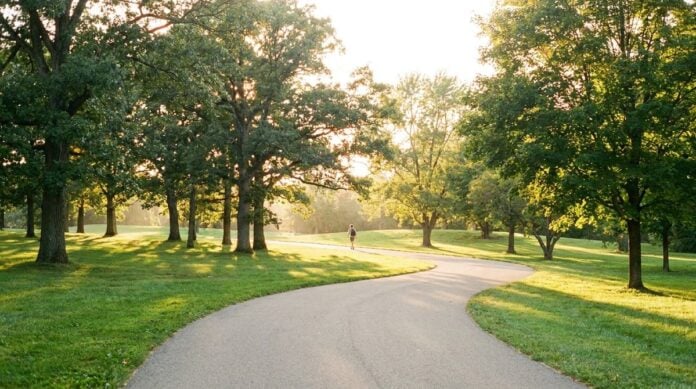
Helping a neighbour or a visitor enjoy a walk can be one of the best ways to share time outdoors. For people with limited mobility, however, a route that looks easy on a map may have steep slopes, uneven surfaces, or few places to rest. Careful planning makes the difference between a pleasant outing and a painful struggle. This article explains how to choose and test accessible routes, what to check on the day, and how to support the walker safely and with dignity, while letting them set the pace.
Look at the route before you go
Study the route in advance. Check whether the path is paved, gravel, or grass, and whether it has steps, kerbs, or narrow gaps that a wheelchair or walking frame could not pass. Look for benches at regular intervals, accessible toilets, and parking close to the start. If possible, visit the route yourself beforehand or ask a local group that knows it well. Written descriptions often miss the details that matter most, such as a slope that feels steeper than it looks on paper.
Consider gradients and surfaces
A gentle slope can be tiring for someone with weak legs, while a flat surface covered in loose stones can be unsafe for a walking frame. Choose routes with consistent surfaces, and avoid long hills unless there is a clear alternative at the bottom. Rain can make some surfaces slippery, so check the forecast and carry a plan B. A short, level loop is often more enjoyable than a longer route that ends in a hard climb back to the car.
Readers may also want to visit Gossipnewsline.com. Look for descriptions that mention surfaces, gradients, and rest points, not just scenery.
Plan rest points and facilities
Map out where you can stop. Benches in shade, covered shelters, and cafes with step-free access are all valuable. Note where accessible toilets are located, and plan the walk so that a toilet stop is within easy reach. Carry water and any medication the walker needs in an easy-to-reach bag, and agree in advance how long each rest will last. Planning these points calmly at the start means you will not be searching for a bench when someone is already tired.
Consider the journey to the start of the walk as well. A car park that is far from the path can be exhausting before the walk even begins. Check whether there is a drop-off point close to the entrance, and whether the car park has marked accessible bays. Look at the approach route, too, since a steep ramp or a gravel track can be tricky for a wheelchair or frame. If the walker uses a mobility scooter, check whether it can be transported easily and whether the path is wide enough to turn. Allow time for the walker to settle after the journey, and avoid rushing straight into the walk. A few quiet minutes at the start often make the rest of the outing more relaxed for both of you.
Support safely on the day
Ask the walker how they would like to be helped. Some prefer an arm to hold, while others prefer you to walk slightly behind with a steady hand near the back of their waist or on a bag strap. Walk at their pace, not yours, and avoid pulling. Keep a clear path ahead, warn about changes in surface such as puddles or kerbs, and check that footwear is secure before setting off. You can also visit WebWooky for more reading.
Use this list before setting off:
- Check the surface, slopes, and any steps on the route.
- Find benches, shade, and accessible toilets along the way.
- Plan a shorter alternative in case of tiredness or weather.
- Ask the walker how they prefer to be supported.
- Carry water, any needed medication, and a charged phone.
Sometimes the walk changes halfway through, because the weather turns or a path is closed. Be ready to change the plan without disappointment. A shorter loop back to the car, a visit to a nearby cafe, or a seat in a sheltered spot can still make the outing worthwhile. Explain the change simply and offer the walker a choice where possible, so they feel in control. Keep a copy of the alternative route on your phone or on paper.
Know when to stop
Pain, dizziness, breathlessness, or a sudden change in balance means the walk should end. Do not push through these symptoms to finish the route. Help the walker to a seat, and contact their carer or doctor if you are worried. A walk is meant to be enjoyable, and a calm finish is always better than a difficult one. For a related read on this site, see Simple Drinking Routines for Long Summer Cycling Days.
Accessible walks take planning, patience, and respect. Research the route, plan rests and facilities, support the walker in the way they choose, and know when to stop. Done well, a simple walk can give a neighbour fresh air, good conversation, and a real sense of independence.


