





Think your homeowner’s policy covers “acts of God”? Think again.
Insurance rarely uses that phrase; policies list specific perils and exclusions, and major risks like flood, storm surge, and earthquake are often carved out unless you buy separate or endorsed coverage.
When you file a claim, the adjuster asks which peril caused the loss, not whether nature was to blame.
This post shows what’s commonly covered, what’s routinely excluded, the mixed-cause traps that kill claims, and the quick checks to avoid expensive surprises.
Core Meaning and Scope of Acts of God in Insurance Exclusions

An act of God, in insurance terms, is a natural event that happens without human intervention and that no reasonable amount of care could prevent. Earthquakes, hurricanes, floods, tornadoes, lightning. But here’s the catch: the phrase “act of God” almost never appears in your policy. Instead, insurers spell out exactly what they will and won’t pay for in the list of covered perils, the exclusions section, and any endorsements you’ve added.
When you file a claim, the adjuster doesn’t ask “Was this an act of God?” They ask, “Does this policy cover this specific peril?”
How your claim gets treated hinges on your policy form. Named peril policies cover only events explicitly listed. Fire, lightning, windstorm, and so on. All risk (or open peril) policies flip the script: they cover everything except what’s written in the exclusions. Either way, you’re buying protection for specific, defined events, not a blanket shield against nature. If the peril isn’t listed as covered, or if it’s listed as excluded, you’re out of pocket unless you’ve purchased additional coverage through an endorsement, a rider, or a separate policy.
The financial stakes? NOAA recorded 22 billion dollar weather and climate disasters in the United States in 2020 alone. Those losses don’t just hit businesses and governments. They hit homeowners and commercial property owners who thought their standard policy had them covered for “natural disasters.” The gap between what people assume is covered and what the policy actually pays for is where surprise claim denials live. Understanding which acts of God are excluded, and why, is the first step toward closing those gaps before disaster strikes.
Key Acts of God Exclusions in Homeowners and Property Insurance

Most standard homeowners policies will pay for damage from lightning, fire, wind, and hail. These are typically named perils on the declarations page. But when it comes to the big catastrophes that make headlines, coverage drops off fast.
Flood damage, storm surge, and earthquake losses are almost always excluded from standard policies. If you want protection against those perils, you need to purchase separate flood insurance (through NFIP or a private carrier), add an earthquake endorsement, or buy a standalone policy. These exclusions aren’t hidden in fine print. They’re stated clearly in the exclusions section, often under headers like “Earth Movement” or “Water Damage (surface water, flood).”
Mixed cause losses are where things get messy. Say a hurricane drives wind and rain into your home. Wind might be covered, but if floodwater also enters and causes damage, many policies include anti concurrent causation language that can deny the entire claim when an excluded peril (flood) contributes to the loss.
NFIP commercial flood policies typically offer up to $500,000 for the building and another $500,000 for contents, but there’s usually a 30 day waiting period before coverage kicks in. So you can’t wait until a storm is forecast to buy protection. Earthquake endorsements often come with percentage deductibles (say, 10% of the insured value), which can mean massive out of pocket costs if your building is worth half a million.
| Peril | Typically Covered? | Notes |
|---|---|---|
| Flood / Storm Surge | No | Requires NFIP or private flood policy; waiting period applies |
| Earthquake | No | Endorsement needed; deductible often a percentage of insured value |
| Wind / Windstorm | Usually | May have separate hurricane deductible or coastal exclusions |
| Wildfire | Usually | Check for brush clearance requirements and limits in high risk zones |
| Lightning | Yes | Lightning caused fires and electrical damage typically covered |
Commercial Property Acts of God Exclusions and Business Impacts

If you own a business, your property coverage usually comes through a Businessowners Policy (BOP) or a Commercial Package Policy (CPP). The same catastrophe exclusions apply: flood, storm surge, and earthquake are routinely carved out unless you purchase separate coverage or endorsements. But the stakes are different.
When a natural disaster shuts down your business, you’re not just worried about repairing the building. You’re losing revenue every day you’re closed. That’s where business income and extra expense coverage come in, but here’s the rub: those coverages only kick in if the shutdown was caused by direct physical damage from a covered peril. No coverage for the peril means no business income payment, even if you’re dark for weeks.
Business income policies also come with waiting periods (often 48 or 72 hours), sublimits, and assumptions about your period of restoration. If the policy assumes you’ll be back up in 90 days but it actually takes six months to rebuild after an earthquake, you’ll exhaust your limit long before you reopen. And if the earthquake wasn’t covered in the first place, you get nothing.
Mixed cause losses create the same headaches in commercial policies: wind tears off your roof and rain floods the interior. If the policy’s anti concurrent causation clause is in play, the insurer may argue that flood (excluded) contributed, and deny or reduce your claim even though wind (covered) started the damage chain.
Why do insurers exclude these perils? Because catastrophic losses are geographically concentrated and highly correlated. An earthquake doesn’t just hit one business. It hits an entire city. Insurers can’t price standard policies to cover that kind of systemic risk without making premiums unaffordable for everyone. Instead, they shift catastrophe exposure to reinsurance markets, government programs like NFIP, and catastrophe pools.
That’s also why premiums spike after big loss years: reinsurers raise rates, and insurers pass the cost downstream. If you’re in a high risk zone and a major disaster just happened, expect your renewal quote to jump. Or your carrier to non renew you entirely.
Why Insurers Exclude Certain Acts of God Perils

Flood and earthquake are different from fire or theft. When a flood hits, it doesn’t hit one house. It hits hundreds or thousands at once. When an earthquake strikes, entire zip codes are damaged in the same hour. That’s called loss correlation, and it breaks the basic insurance math.
Insurers count on spreading risk across many policyholders, with only a few filing claims at any given time. Catastrophic perils flip that model upside down: everyone in the affected area files at once, and the insurer faces a wave of claims that can exceed premium revenue for the entire year.
Regional risk concentration makes the problem worse. Coastal properties face hurricane and storm surge exposure; California parcels sit on fault lines; riverfront homes flood every few decades. Insurers use catastrophe models to estimate probable maximum loss, and when those models show unacceptable concentration, underwriters either exclude the peril, hike premiums to levels most buyers reject, or pull out of the market entirely.
Reinsurance (insurance that insurers buy to protect themselves) costs more after major loss events, and those costs get baked into the premiums you pay. Model uncertainty also plays a role: predicting the frequency and severity of earthquakes or floods is harder than predicting house fires, so insurers price in a margin for the unknown or simply exclude coverage altogether.
Here are the four main underwriting reasons behind acts of God exclusions:
Loss correlation: Catastrophic events trigger thousands of claims simultaneously, overwhelming premium pools designed for scattered, independent losses.
Reinsurance cost: Reinsurers charge steep rates to cover catastrophe exposure, making broad inclusion economically unviable for standard policies.
Regional risk concentration: High risk zones (floodplains, fault lines, wildfire corridors) concentrate exposure in ways that standard underwriting cannot absorb.
Model uncertainty: Predicting low frequency, high severity events is difficult, so insurers exclude perils they cannot reliably price or reserve for.
Covered vs Excluded Acts of God: Real World Scenario Comparisons
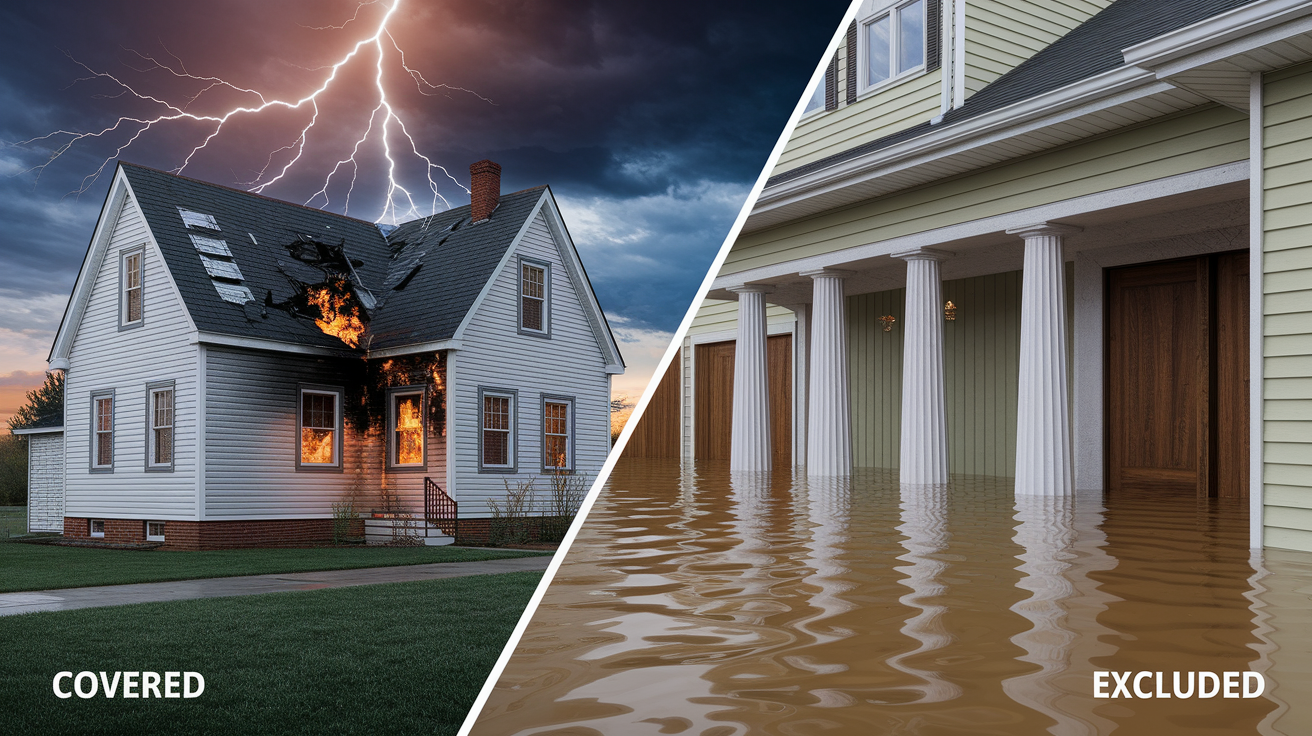
Let’s walk through what actually happens when disaster strikes. Lightning hits your roof and starts a fire. This is almost always covered under a standard homeowners or commercial property policy. Lightning is a named peril, fire is covered, and there’s no exclusion in play. The adjuster confirms the cause, you provide photos and contractor estimates, and the claim moves forward.
Now flip the scenario: a river overflows and floods your basement. Flood is excluded on standard policies, so unless you purchased separate flood insurance through NFIP or a private carrier, you get a denial letter. It doesn’t matter that the flood was sudden or catastrophic. The policy says no, and the adjuster’s hands are tied.
Earthquake damage follows the same pattern. Your building’s foundation cracks during a quake, and the structure shifts. If you didn’t buy an earthquake endorsement, the claim is denied under the “Earth Movement” exclusion. Even if you have the endorsement, you’ll face a percentage deductible. Say, 10% of your insured value. If the building is insured for $500,000, you’re paying the first $50,000 out of pocket.
Mixed cause losses are the messiest. A hurricane hits: wind tears off shingles (covered), and rain pours in (also covered as a result of the wind damage). But storm surge floods the first floor (excluded). If your policy includes anti concurrent causation language, the insurer may deny coverage for the entire loss because an excluded cause (flood) contributed, even though a covered cause (wind) also played a role. These clauses are why reading your policy’s exact wording matters. And why endorsements and supplemental coverage exist.
If you do face an act of God event, here’s how to strengthen your claim and avoid common denial traps:
Take photos and video immediately: Document damage from multiple angles before you start cleanup or repairs.
Mitigate further damage: Stop ongoing losses where safe (tarp a roof, pump out water), and keep receipts for mitigation costs.
Notify your insurer as soon as possible: Late reporting can complicate or void coverage; check your policy for notification deadlines.
Provide a detailed proof of loss: List damaged property, estimated repair costs, and supporting documents (invoices, receipts, inspection reports).
Track all adjuster communications: Keep written records of every call, email, and inspection; confirm agreements in writing.
Supplemental Coverage to Address Acts of God Exclusions
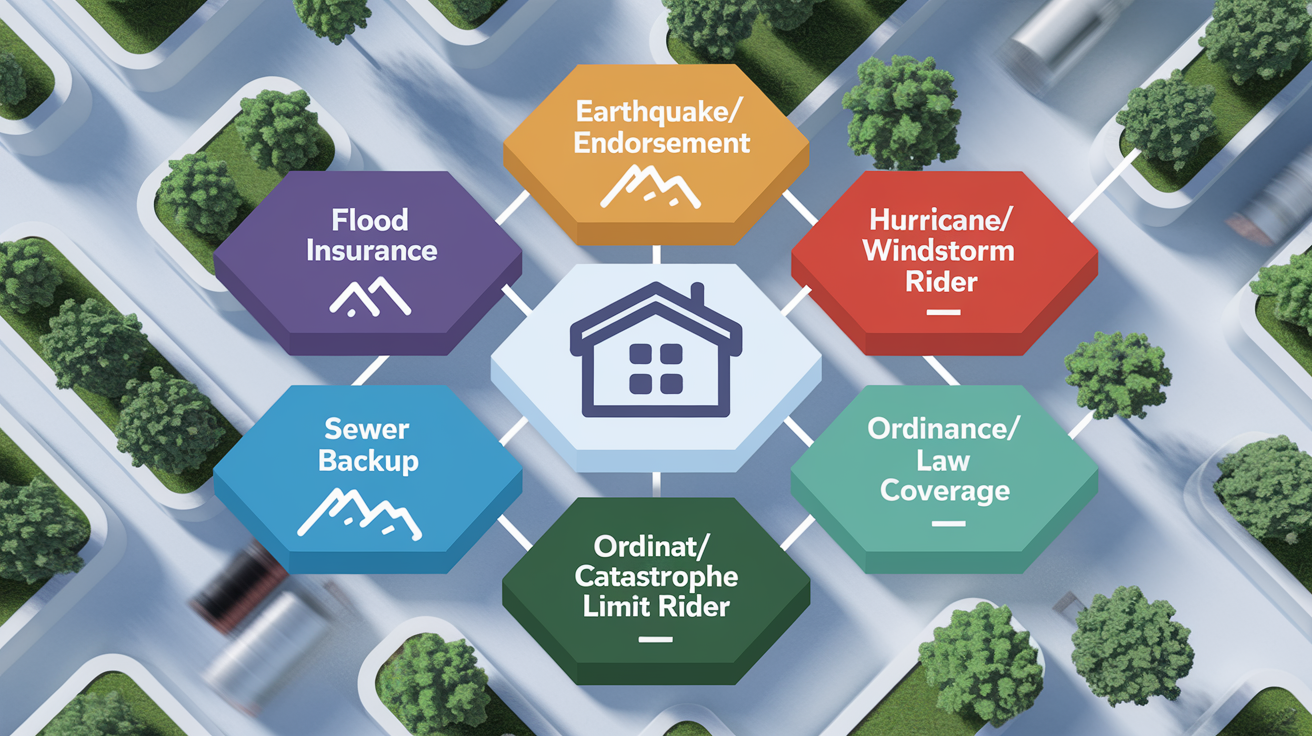
Standard policies leave gaps, but you can close them. If you know where to look and what to buy. Flood insurance is the most common add on. NFIP offers up to $500,000 in building coverage and $500,000 in contents coverage for commercial properties, with separate residential limits. Private flood carriers now compete with NFIP, sometimes offering higher limits, broader definitions of covered property, and faster claims service.
Either way, you’ll face a waiting period (usually 30 days) before coverage starts, so don’t wait for a storm forecast to apply. Earthquake endorsements are available in most states, but they come with percentage deductibles that can be painful. Confirm whether the deductible applies per occurrence or per policy period, and compare it to your balance sheet before you sign.
Hurricane and windstorm riders matter if you’re on the coast. Some coastal policies automatically include wind coverage but carve out storm surge; others exclude wind entirely unless you add it back. Sewer backup and water backup endorsements cover damage when drains overflow or sump pumps fail. Common during heavy rain and floods, but excluded under standard “flood” definitions.
Ordinance or law endorsements pay the extra cost to rebuild to current code after a disaster, which can add tens of thousands to a claim if your building is older. Catastrophe limit riders let you increase your policy limits specifically for named storms or declared disasters, giving you more headroom if rebuilding costs spike after a major event.
Here are six supplemental options to consider if your standard policy has acts of God exclusions:
Flood insurance (NFIP or private carrier): Required in high risk flood zones; available outside them; usually includes a 30 day waiting period.
Earthquake endorsement: Adds earth movement coverage; expect a percentage deductible (e.g., 10% of insured value).
Hurricane / windstorm rider: Fills wind or named storm gaps; may include a separate percentage deductible for hurricanes.
Sewer backup / water backup endorsement: Covers overflow from drains, sump pumps, or sewers during storms.
Ordinance or law coverage: Pays the increased cost to rebuild to current building codes after a covered loss.
Catastrophe limit rider: Temporarily raises your policy limits during declared disasters or named storms.
How to Review Your Policy for Acts of God Exclusions

Your policy’s declarations page lists the property address, coverage limits, deductibles, and the form name (HO-3, BOP, CPP). That form name tells you whether you have named peril or open peril (all risk) coverage. Named peril policies list every covered event; if it’s not on the list, it’s not covered.
Open peril policies cover everything except what’s spelled out in the exclusions section, so the exclusions become the most important part to read. Look for headings like “We do not cover,” “Exclusions,” or “Perils Not Insured.” Common exclusion categories include “Water Damage” (flood, surface water, storm surge), “Earth Movement” (earthquake, landslide, sinkhole), and “Wear and Tear / Maintenance.”
Endorsements modify the base policy, and they’re easy to miss if you only skim the declarations. Each endorsement has its own form number and adds, removes, or changes coverage. If you purchased flood, earthquake, or sewer backup coverage, it should appear as an endorsement with its own premium charge. Check the endorsement wording for sublimits, separate deductibles, waiting periods, and specific definitions of covered events.
Anti concurrent causation language often lives in the exclusions section or in an endorsement, and it’s usually a dense paragraph that says something like, “We will not pay for loss or damage caused directly or indirectly by an excluded cause, regardless of any other cause or event that contributes concurrently or in any sequence.”
Maintenance matters. Policies exclude losses caused by wear and tear, neglect, and deferred maintenance. If you knew your roof was leaking and didn’t fix it, and then a storm causes water damage, the insurer may deny the claim on grounds of neglect. Even if the storm itself was an act of God. Keep receipts, inspection reports, and photos showing that you maintained the property.
If you live in a high risk zone (floodplain, wildfire area, earthquake region), insurers may require proof of mitigation measures. Brush clearance, retrofit bolts, updated wiring, as a condition of coverage. Failing to disclose known risks or skipping required inspections can void coverage entirely, turning an otherwise valid act of God claim into a costly denial.
Claim Process and Appeal Options After an Act of God Denial

Getting a denial letter after a disaster is frustrating, but it’s not always the end of the road. The first step is to request a written explanation of the denial, including the specific policy language, exclusion clauses, and adjuster findings that led to the decision. Compare that explanation to your actual policy documents (declarations, exclusions, and endorsements) and look for discrepancies.
If the denial cites an exclusion but you believe the peril was actually covered, or if mixed cause language is being applied unfairly, you have grounds to appeal. Gather every piece of evidence you can: photos, videos, contractor estimates, weather reports, inspection records, and maintenance receipts. The more documentation you provide, the harder it is for the insurer to stand by a blanket denial.
If the insurer won’t budge, consider hiring a public adjuster. Public adjusters work for you, not the insurance company, and they know how to read policy language, quantify losses, and negotiate settlements. They typically charge a percentage of the final payout (often 5% to 15%), but they can recover amounts that far exceed their fee. Especially in complex catastrophe claims where the insurer’s initial offer is low or the denial reasoning is shaky.
Don’t confuse a public adjuster with the company adjuster or an independent adjuster hired by the insurer; those adjusters represent the carrier’s interests, not yours. If your state insurance department has a consumer complaint process, file a complaint. Many states require insurers to respond within specific timeframes, and a regulatory inquiry can push a stalled claim forward.
Here are seven steps to take if your act of God claim is denied:
Request a detailed denial letter: Ask for the specific policy sections, exclusion clauses, and adjuster findings that support the denial.
Compare the denial to your policy wording: Check whether the cited exclusion actually applies to the peril that caused your loss.
Gather new or additional evidence: Collect photos, videos, contractor reports, weather data, and maintenance records that support your claim.
Seek a public adjuster: Hire an independent advocate who works for you and understands catastrophe claims and policy interpretation.
File a complaint with your state insurance department: Use the regulatory process to escalate your dispute and force a formal response.
Pursue appraisal or arbitration: Many policies include dispute resolution clauses that let you challenge the claim amount or coverage determination outside of court.
Consider a legal review: If the denial involves significant damages or bad faith conduct, consult an attorney who specializes in insurance coverage disputes.
Final Words
You’ve seen how insurers actually treat “acts of God.” It’s the perils and exclusion language that decide coverage, not the label.
We walked through homeowners and commercial differences, common claim traps, why insurers exclude catastrophe risk, and practical fixes like endorsements, NFIP options, and appeal steps.
If you do three things—read your exclusions, ask for needed endorsements, and document everything—you’ll cut the chance of surprise bills and be ready if acts of god insurance exclusions are tested. That’s a win.
FAQ
Q: What is the act of God exclusion in insurance and what qualifies as an act of God?
A: The act of God exclusion in insurance is a policy clause that removes coverage for losses from sudden, unavoidable natural events beyond human control, like major storms or earthquakes; exact qualifications depend on the policy wording.
Q: What acts of God are not covered by insurance?
A: The acts of God not covered by insurance are set by the policy’s listed exclusions; insurers judge claims by peril wording, so some natural events may be excluded while others are covered under different policy types.
Q: Does an act of God make your insurance go up?
A: An act of God can make your insurance go up if you file a claim; carriers, state rules, and widespread disasters influence individual surcharges and broader market premium increases.