




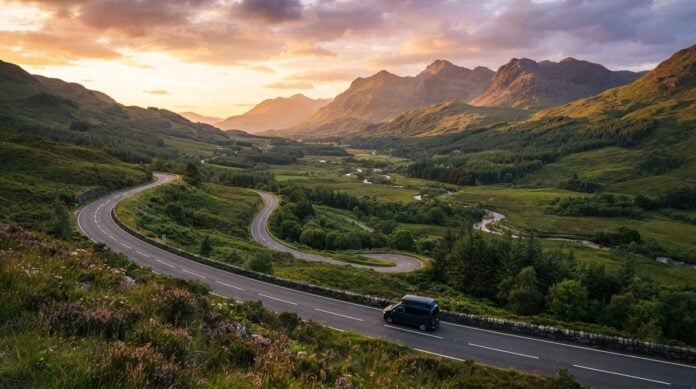
Frost and ice do not form evenly. A road that looks merely damp in sunlight may remain frozen under trees, beside tall buildings, on bridges, or in low ground where cold air settles. Drivers cannot identify every icy patch by sight, so the safer approach is to anticipate locations, reduce demands on the tyres, and avoid last-second inputs.
Plan around temperature and location
Check official weather and road information before leaving. Pay attention to overnight temperatures, frost warnings, and reports for the actual route rather than only the destination. Conditions can change with elevation, shade, wind, and time of day.
Clear all windows, mirrors, lights, and cameras before moving. Use approved methods and allow enough time for demisting. Readers may also want to visit Bestvacuumcleaners.org.
Make sure tyres are appropriate, correctly inflated, and in sound condition under local rules. Seasonal equipment requirements vary, so seek authoritative local guidance. Carrying equipment is useful only when you know how and where it may be used legally.
Recognize places that stay colder
Expect lower grip on bridges, overpasses, shaded bends, north-facing slopes in relevant regions, road sections near water, and areas where runoff crosses the surface. Frost may remain after surrounding roads have thawed. A shiny appearance can be a clue, but invisible clear ice may offer little warning.
Before reaching a suspected area:
- Reduce speed gradually while the road still offers known grip.
- Increase following distance well beyond normal wet-road spacing.
- Complete braking and gear changes before the bend or slope.
- Keep steering, acceleration, and braking inputs gentle.
- Leave room for other drivers who may lose control.
Do not use a fixed speed as a guarantee of safety. You can also visit garrettiron.com for more reading.
Avoid testing grip with a sharp brake or steering movement. Such a test can create the very loss of control you hoped to predict.
Keep the vehicle settled through the patch
Look where you want to travel and hold a smooth course. Sudden acceleration can spin driven wheels, while sudden braking can overwhelm available grip. Use the vehicle’s controls as described in its manual and do not switch safety systems off casually.
On a curve, enter more slowly than you would on a merely wet road. Avoid coasting in a way that reduces control, and select an appropriate gear before the hazardous section when driving a manual vehicle. On a descent, preserve a low, steady pace before momentum builds.
If the vehicle begins to slide, remain calm, ease off abrupt inputs, and follow the maker’s guidance for the type of vehicle and system. Responses can differ with front-, rear-, or all-wheel drive and with braking technology. Controlled winter-driving instruction is the best place to practise recovery.
Choose stopping over uncertainty
If freezing rain, repeated loss of grip, or blocked roads make progress unsafe, stop in a safe legal place or postpone the journey. Do not stop in a traffic lane or at the blind exit of a shaded bend. Share your route and expected arrival when traveling in difficult conditions.
Give road-maintenance vehicles space and do not assume a treated road has full dry-road grip. Salt and other treatments take time and may be less effective in some conditions. For a related read on this site, see Parking on a Slope: A Calm Setup and.
After parking, avoid stepping immediately onto a surface that may be icy. Use stable handholds as intended and move carefully. Check that ice has not blocked lights or sensors before the next trip.
Driving on frost-prone roads is largely an exercise in anticipation. Identify cold locations, slow before reaching them, keep every input smooth, and be willing to stop when conditions exceed your preparation. The safest correction is the one made early, while grip is still available.
Patience preserves those valuable margins.
Build a mental map from repeated winter journeys, noting bridges, shaded cuttings, exposed hilltops, and areas where water crosses the road. Treat that map as a warning list, not a guarantee; a familiar dry corner can still freeze under different wind or cloud conditions. Keep extra time in the schedule so slowing does not feel like a personal delay. If another driver follows closely, preserve your smooth pace and avoid speeding into a hazard. Increase the gap ahead so any necessary reduction can be gradual and visible.


