




What if your insurer quietly raises your premium just because you stayed?
It happens more than you think, with loyalty penalties, wrong data, and dropped discounts showing up on renewal notices.
This is where people get burned.
Read your renewal line by line, gather competitor quotes, and prepare a short script before you call.
This post shows the exact steps to spot rating errors, use comparable quotes, ask for targeted discounts, and time your call so you walk away paying less.
Key Steps to Reviewing Your Renewal and Preparing to Negotiate

Your renewal notice is where every negotiation starts. Most include the new premium, coverage limits, deductibles, fees, and a breakdown of rate changes. Read it line by line. Look for increases that don’t match any obvious changes. No new drivers, no claims, no address move. Those jumps are often loyalty penalties, updated risk models, or outdated rating factors you can actually challenge. Many insurers will review and adjust rates if you contact them before the renewal date, but you’ve got to ask.
Next, identify what’s driving the cost up. Did your premium jump 15% with no explanation? Check whether your insurer applied a discount last year that vanished this year, or whether your ZIP code got recategorized. Compare the renewal premium to what you paid when your policy started. If the increase is bigger than inflation or claim trends in your state, you’ve got a talking point. Understanding why the premium changed (and being able to cite it) gives you leverage.
Before you call, prepare a short negotiation script. Write down your renewal amount, the percentage increase, and any discrepancies you spotted. Update outdated personal information. New marital status, a completed defensive driving course, a paid-off loan that removes a lienholder requirement. Gather at least two competitor quotes for identical coverage. You’re not reading a script word for word. You’re organizing the facts that matter so you don’t forget them under pressure.
Essential elements to gather before calling:
- Current renewal amount and rate increase percentage. Know the exact dollar and percentage change so you can reference it quickly.
- Any discrepancies or outdated information. Examples: incorrect mileage, old address, lapsed multi-policy discount, or a claim that’s now older than the insurer’s surcharge window.
- Updated personal details. Marriage, home purchase, completed driver training, improved credit score, or vehicle safety upgrades.
- Competitor quotes with identical coverage. Print or screenshot the declarations page or quote summary so you can cite coverage limits, deductibles, and total premium.
- Your claim-free record and loyalty tenure. “I’ve been claim-free for four years and a customer for six years” is a single sentence that creates retention pressure.
Negotiation Tactics That Work With Most Insurers

Insurers train retention departments to save customers, not lose them. When you call and say you’re shopping around or considering cancellation, you’re often transferred to a specialist with more authority to apply discretionary discounts, waive fees, or adjust rating factors. The key is being specific about what you want and showing you’ve done the homework. Vague complaints don’t trigger offers, but a competitor quote and a clean record do.
Using Competitive Leverage
Present your competitor quotes clearly. Say something like, “I have a quote for $1,420 per year from another carrier for the same coverage. 100/300/100 liability, $500 deductible, identical add-ons. My renewal is $1,780. Can you match or beat that rate?” This creates urgency. Insurers know it’s cheaper to retain you at a slightly lower margin than to lose you and spend money acquiring a replacement customer.
Make sure the competitor quote is truly comparable. If the cheaper quote has lower liability limits or a higher deductible, the retention agent will point that out and your leverage evaporates. Print the quote summary or have it open on your screen so you can confirm coverage line by line if the agent asks. If the insurer says they can’t match the price exactly, ask what they can do. Sometimes they’ll add a safe-driver discount, remove a fee, or apply a loyalty credit that closes most of the gap.
Requesting Targeted Adjustments
Instead of asking for a vague “better rate,” request specific changes. For example: “My renewal notice shows I lost the multi-policy discount I had last year. Can you reinstate it?” Or “I completed a defensive driving course in March. Please apply the safe-driver discount.” If your rate increased due to a ZIP code risk adjustment but you haven’t had a claim or ticket, say so and ask for a manual underwriting review.
Ask about hidden discounts that aren’t automatically applied. Many insurers offer credits for low mileage, paperless billing, automatic payments, homeownership, or membership in certain professional groups. You won’t get them unless you ask. Say, “Please review my policy for any discounts I qualify for but aren’t currently receiving.” Sometimes the agent will find two or three small credits that add up to a meaningful reduction.
If your insurer applied a loyalty penalty (a practice where long-term customers pay more than new customers for identical coverage), name it directly. “I’ve been a customer for seven years, and my rate has increased 22% over that time with no claims. New customer rates for my profile are $300 lower. Can you adjust my rate to reflect my loyalty and claim-free record?” This language forces the retention agent to justify the gap or offer a correction.
Don’t accept the first “no.” If the agent says they can’t reduce your rate, ask to speak to a supervisor or retention specialist. Politely repeat your request with your competitor quote and claim-free record. Persistence often unlocks a second-tier offer that the first agent wasn’t authorized to give.
Timing Strategies to Maximize Your Chance of a Lower Rate

Timing changes your leverage. Insurers know that customers who call 20 to 30 days before renewal are serious about comparing options and still have time to switch. Calling too early (60 or 90 days out) means your renewal rate might not be final yet, so retention agents have less authority to adjust it. Calling the day before renewal signals desperation. The insurer knows you probably don’t have time to switch, so they’re less motivated to negotiate.
Insurers run retention campaigns in cycles. Many companies review lapse and cancellation reports weekly, and retention departments often have monthly targets for saving at-risk policies. Calling in the first or second week of the month, when agents are focused on hitting retention goals, can improve your odds. Avoid calling on Mondays or right after a major weather event, when call volumes spike and agents are rushing through calls.
Mid-week, mid-morning calls (Tuesday through Thursday, between 10 a.m. and 2 p.m.) tend to connect you with less-stressed agents who have more time to review your account. If you reach someone who seems rushed or unhelpful, thank them and call back later. The outcome of your negotiation can depend on which agent you reach.
Ideal timeframes for negotiation:
- 20 to 30 days before renewal. Enough time to switch if negotiation fails, but close enough that your rate is locked and the retention department has authority to adjust it.
- Mid-week, mid-morning hours. Lower call volume means agents can spend more time reviewing your account and applying discretionary credits.
- First week of the month. Retention teams often have monthly goals. Calling early in the cycle can improve your chances of a serious offer.
- Outside of peak claim periods. Avoid calling right after major storms, holidays, or the first of the month when billing questions flood the lines.
Understanding What Insurers Can and Cannot Change
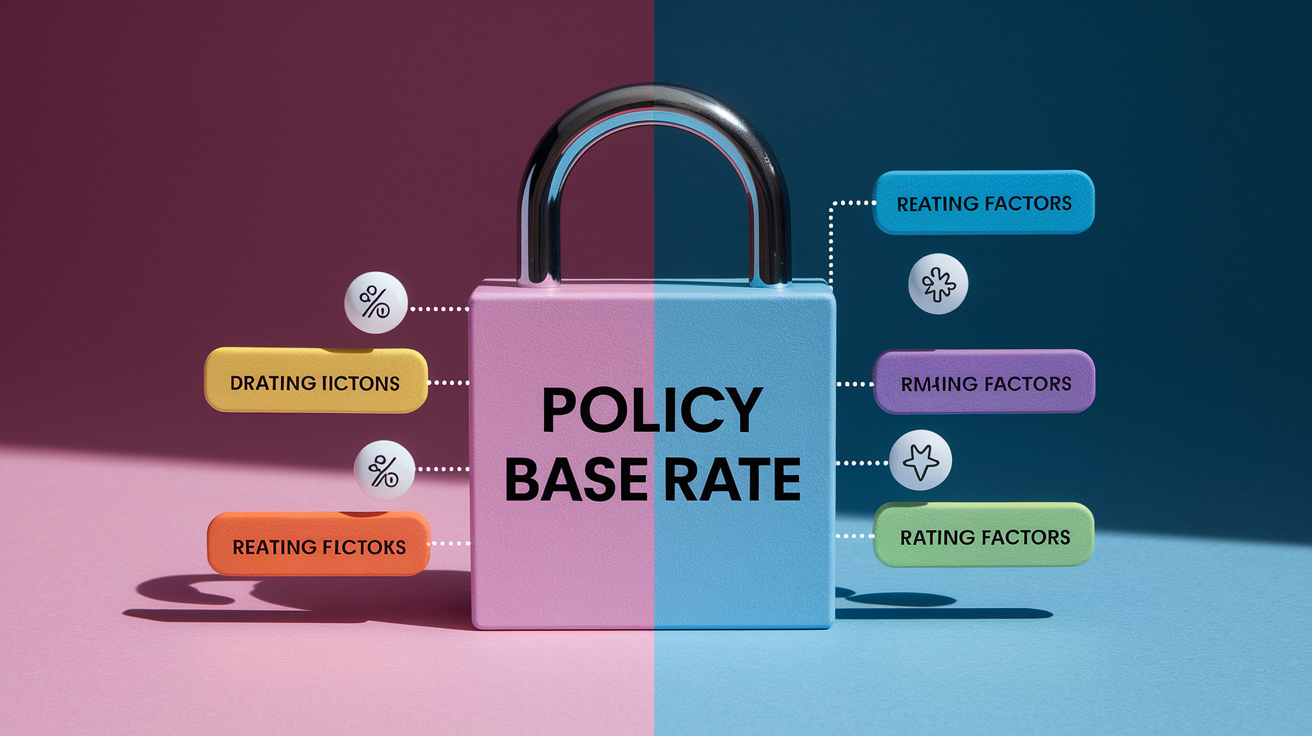
Insurers operate within a framework set by state regulators. They file base rates, rating factors, and underwriting rules with the state insurance department. Those components generally can’t be changed on a case-by-case basis during a customer service call. What they can change are discretionary items: discounts, fees, optional coverages, and corrections to rating errors. Knowing the difference helps you ask for things the insurer actually has the authority to adjust.
For example, if your rate increased because your state approved a 6% rate hike across all policies, the insurer can’t waive that increase. But if your renewal removed a safe-driver discount you qualified for, or if your mileage tier was set too high, those are correctable. The agent can also apply overlooked discounts, remove fees for services you don’t use, or adjust your deductible or coverage limits if you request it. The base rate itself is fixed, but the final premium you pay is built from dozens of smaller components. Many of those are negotiable.
| Adjustment Type | Can Be Changed? | Examples |
|---|---|---|
| Discounts | Yes | Safe driver, multi-policy, paperless billing, low mileage, good student, defensive driving |
| Optional Fees | Yes | Installment fees, paper statement fees, roadside assistance fees |
| Rating Factors (errors) | Yes | Incorrect mileage, outdated address, wrong vehicle use classification, old credit tier |
| Base Rates | No | State-approved rate increases, filed underwriting formulas, mandatory regulatory surcharges |
| Coverage Limits / Deductibles | Yes (by request) | Raising deductible to lower premium, adjusting liability limits, removing optional coverages |
A common misunderstanding: customers assume the agent can “override” any rate. In reality, the agent is working within the insurer’s approved pricing system. They can’t invent a discount or ignore a filed surcharge. But they can search your profile for legitimate credits you didn’t receive and correct data errors that inflated your rate. That’s why your negotiation should focus on discounts, fees, and rating accuracy, not on asking the agent to “just lower it.”
Documentation and Proof That Strengthen Your Negotiation

The more proof you provide, the harder it is for the insurer to say no. Documentation turns your request from a complaint into a verifiable correction. If you claim you drive less than 7,500 miles per year but your policy is rated for 12,000, bring an odometer reading or a photo of your dashboard. If you installed a monitored alarm system, bring the invoice and account number. Insurers can’t apply discounts or adjust ratings without evidence.
Updated life changes often qualify you for lower rates. But only if you tell the insurer and prove it. Getting married, buying a home, improving your credit score, or paying off your car loan can all trigger rate reductions. The insurer won’t know unless you provide documentation. A marriage certificate, a mortgage statement, a credit report, or a lien release letter. These aren’t optional. They’re required for underwriting changes.
High-impact documents that create leverage:
- Proof of updated address or garaging location. A utility bill or lease agreement showing a move to a lower-risk ZIP code.
- Current odometer reading or mileage log. A photo of your odometer or a year’s worth of oil change receipts showing actual miles driven.
- Home security or vehicle anti-theft documentation. Invoice and monitoring agreement for alarm systems, or vehicle VIN confirmation of factory-installed anti-theft devices.
- Completed driver training or defensive driving certificate. Most states allow a discount if the course is state-approved. Provide the certificate number and completion date.
- Claim-free or MVR (motor vehicle record) confirmation. Request your driving record from your state DMV to prove no tickets or accidents during the policy period.
- Proof of bundled policies or group memberships. Policy numbers for home or renters insurance, or membership ID for employer, alumni, or professional group discounts.
Counteroffers and When to Accept or Reject Them

Retention agents rarely give their best offer first. The initial counteroffer is usually small. Maybe a $40 annual reduction or a single added discount. If you accept immediately, you’ve left money on the table. Thank the agent, acknowledge the offer, and then restate your competitor quote or claim-free record. Say something like, “I appreciate that, but my competitor quote is still $220 lower per year for the same coverage. Can you do better?” This signals you’re serious and gives the agent permission to escalate or apply a second round of credits.
Evaluating Insurer Counteroffers
When the agent proposes a new rate, ask for a written breakdown before you agree. Verify what changed: Did they apply a new discount, waive a fee, or adjust your coverage? Make sure the discount is permanent, not a one-time credit that disappears next year. Check that your coverage limits, deductibles, and add-ons stayed the same. Sometimes agents reduce your premium by quietly downgrading your liability limits or raising your deductible.
If the counteroffer gets you within 5% to 10% of the competitor quote and you value your current insurer’s service or claims history, accepting makes sense. But if the gap is still 15% or more, or if the agent had to strip coverage to match the price, rejection is the smarter move. Politely say, “Thank you, but that’s still higher than I can justify. I’ll be moving my policy to [competitor] unless you can match their rate with identical coverage.” If they can’t, follow through and switch. Your loyalty is worth real money, and you shouldn’t pay a premium for it.
When You Should Switch Providers Instead of Negotiating

Negotiation works when your current insurer is willing to adjust. But if they refuse, if the counteroffer is weak, or if their rates have climbed 20% or more over a few years with no claims, switching often saves more than any negotiation could. Competitors actively price for customers like you. Claim-free drivers with stable histories. Many offer promotional rates, better bundling discounts, or underwriting that weighs your risk factors more favorably.
Switching makes financial sense when the competitor’s quote is at least 10% to 15% lower for identical coverage and you’ve confirmed the new insurer has strong claims service and financial ratings. Small differences (5% or less) might not be worth the hassle of transferring automatic payments, updating your mortgagee, and re-entering your information. But a $300-plus annual difference is real money, especially if your current insurer refused to negotiate.
Watch for red flags that suggest your current insurer won’t budge: they tell you the rate is “non-negotiable,” they refuse to review your discounts, or they apply only token adjustments after multiple calls. At that point, you’re subsidizing other customers’ rates, and switching is the only way to reset your price. The risk of switching is minimal if you compare coverage carefully, confirm the new insurer’s complaint ratio with your state insurance department, and keep continuous coverage with no gap between policies.
| Scenario | Stay or Switch? | Reason |
|---|---|---|
| Competitor quote is 10–30% lower for identical coverage | Switch | Negotiation rarely closes a gap that large; switching resets your rate and often adds new-customer discounts |
| Your rate increased 20%+ over 2–3 years with no claims | Switch | You’re likely paying a loyalty penalty; competitors will price you as a new, low-risk customer |
| Current insurer matched competitor quote within 5% | Stay | Small remaining gap isn’t worth the administrative work and potential loss of tenure-based benefits |
| Current insurer has strong claims service and you’ve had good experiences | Stay (if counteroffer is reasonable) | Claims experience and service quality matter when you actually need the insurance; a modest price difference may be worth it |
Final Words
Look at the renewal now: check the new premium, the percent increase, and any coverage edits. Find rating errors, loyalty penalties, or outdated info you can challenge.
Gather proof, like mileage logs, competitor quotes, and prior discount records. Call about 20-30 days before renewal with a short script asking for targeted adjustments, and be ready to push for more than the first offer.
This captures the essentials of how to negotiate lower insurance renewal rates: document, time it, and ask for specific fixes. Do that and you’ll often walk away paying less or knowing it’s time to switch.
FAQ
Q: How to get a discount on insurance renewal / How can I get my insurance rate lowered / How to lower insurance renewal?
A: The best way to get a discount or lower your renewal rate is to fix rating errors, ask retention for targeted credits, bundle policies, raise your deductible, and show competitor quotes — call 20–30 days before renewal.
Q: Is $3,000 a year for car insurance normal?
A: A $3,000 yearly car insurance bill can be normal for full coverage in expensive states or for high-risk drivers; compare quotes, audit the renewal notice, and request discounts or a deductible increase to lower it.