




Think your insurer can raise your rates overnight without telling you?
Short answer: usually no.
State rules force written notice, often 30 to 60 days before a renewal increase, but “no notice” surprises happen when notices go to an old address, get lost in junk mail, or land in a spam folder.
This post shows when companies can legally hike premiums mid-term, what counts as legal notice, and where insurers commonly slip up.
Do three quick checks we list here and you won’t be blindsided by a surprise bill.
Understanding When Insurance Companies Can Raise Rates Without Notice

Most insurers can’t legally raise your rates without telling you first, but here’s the thing: “no notice” usually means you didn’t see it, not that they didn’t send it. When people get surprised by a premium jump, it’s often because the notice went to an old address they forgot to update, got buried in junk mail, or landed in a spam folder they never check.
State laws require advance written notice before a rate increase kicks in. Most states mandate at least 30 days before a renewal based change. Some want 60 or more. Your premium stays locked for your policy term, which is usually one year for auto and homeowners. Mid-term increases happen, but they’re tied to specific triggers: you added a driver, swapped your car, moved to a new ZIP code, or changed your coverage. A broad rate hike with no trigger? That shows up at renewal, and regulators make the insurer send you the new rate in writing before it goes live.
Ways insurers can legally notify you:
- Written renewal declaration showing old and new premium side by side
- Formal renewal notice sent first class to your address on file
- Email notice, but only if you opted in and gave written consent for electronic delivery
- Updated billing statement with the new premium and effective date
- Policy endorsement documenting the change and when it applies
When an insurer says it gave notice, one or more of these documents left its system. If you never saw them, check whether your mail’s being forwarded correctly, whether your email and mailing address are current, and whether you’ve been tossing renewal packets unopened. Actual “no notice” violations are rare. State regulators fine insurers and force corrective action when required notifications get skipped.
State Laws and Regulatory Rules Governing Rate Change Notices
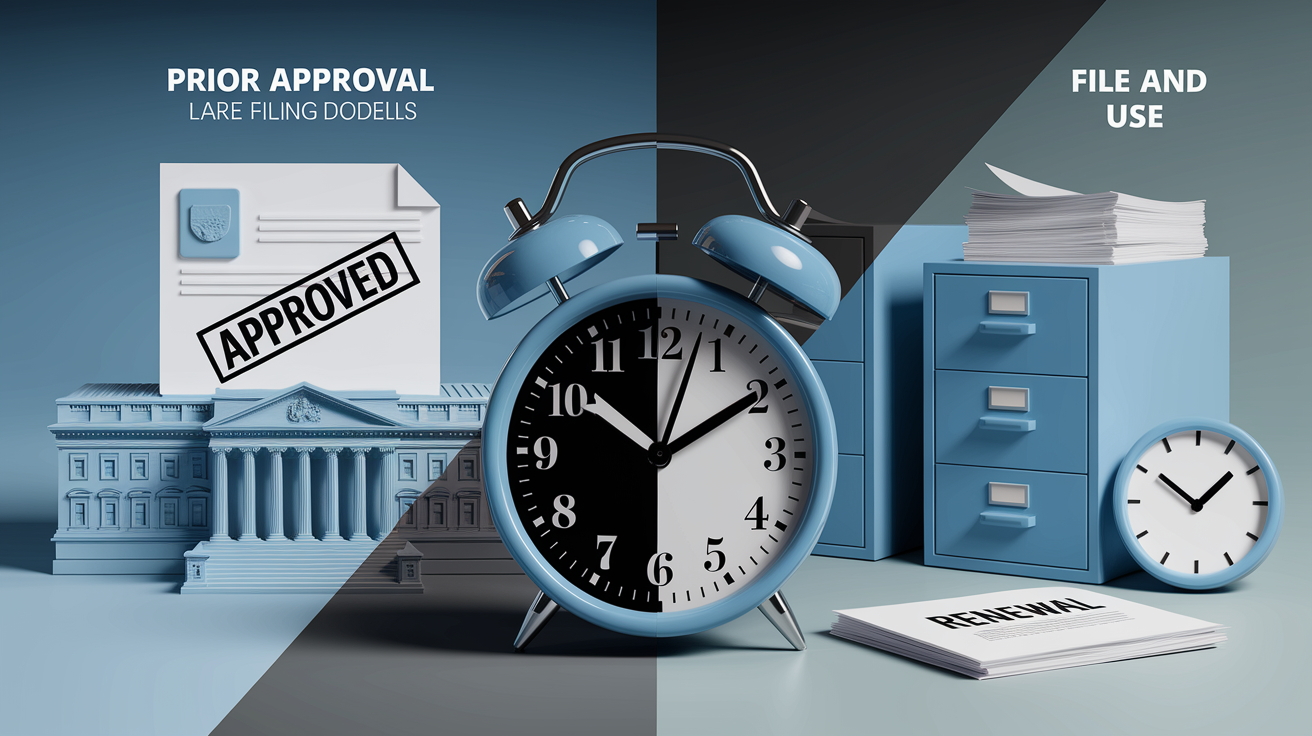
Every state sets its own rules about when and how insurers must notify policyholders of rate increases. The requirements shift based on the regulatory model the state picked. Some states run a “prior approval” system, which means the insurer submits proposed rates to the state insurance department and waits for formal approval before applying them to anyone. Other states use “file and use” or “use and file” frameworks, which let insurers roll out new rates faster but still require notification to regulators and policyholders.
Notice periods range from 30 to 60 days, depending on the state and insurance type. Auto and homeowners policies commonly get a 30 day minimum. Some states stretch that to 45 or 60 days to give consumers more time to shop. The notice usually sits in the renewal packet, that same envelope or email containing your updated declarations page, premium schedule, and coverage summary. If a regulator approved an industry wide rate increase to cover higher claim costs or inflation, individual policyholders can’t usually appeal the rate itself. Your only move is to verify the increase was applied correctly and shop for better pricing elsewhere.
Regulatory frameworks also control how quickly insurers can respond to changing risk. In prior approval states, consumers get protection from sudden, unapproved hikes. But they might also see slower adjustments when market conditions improve. In file and use states, insurers can react to trends faster, which can mean quicker premium relief when costs fall. Or faster increases when losses spike.
| State Example | Framework Type | Typical Notice Requirement | Notes |
|---|---|---|---|
| California | Prior Approval | 30 days minimum | Rates must be approved before use; consumers can’t be charged unapproved rates |
| Texas | File and Use | 30 days minimum | Insurer files with regulator and can implement immediately; regulator reviews afterward |
| Florida | File and Use | 45–60 days (varies by line) | Catastrophe prone state with additional notice protections for homeowners |
| New York | Prior Approval | 45 days minimum | Strict consumer protection regime; rate justifications must be detailed |
Prior Approval States
In prior approval states, insurers must submit all proposed rate changes to the state insurance commissioner and wait for formal approval before applying new rates to any policy. This protects consumers from arbitrary or excessive increases, because regulators review actuarial justifications, loss trends, and expense data before signing off. The downside? The approval process can delay rate reductions as well as increases. And it can create backlogs when many insurers file simultaneously after a major weather event or shift in claims costs.
File and Use States
File and use states let insurers roll out new rates as soon as they’ve filed with the regulator, even if the review’s still going. The insurer still has to give advance notice to policyholders, typically 30 to 60 days, but it doesn’t wait for the state to approve the rate before charging it. Regulators can order refunds or adjustments if they later decide the rate was excessive or unfairly discriminatory. But in practice most filed rates go into effect without intervention. This model gives insurers more flexibility to respond quickly to changing risk, which can help consumers when costs fall but can also mean faster increases when claims spike.
Mid Term Premium Increases and When They’re Allowed

Insurers usually can’t raise your premium in the middle of your policy term unless a specific triggering event happens. Your premium is a contract price for a defined term, usually one year. Broad, non-event rate hikes are saved for renewal. Mid-term increases are allowed when something about your policy changes in a way that alters the insurer’s risk or when the insurer discovers the original premium was based on wrong information.
The most common mid-term triggers are policy changes you request. Adding a teenage driver. Swapping your sedan for a truck. Moving from a suburban ZIP code to an urban one. Changing your vehicle’s use from personal errands to a daily 60 mile commute. Each of those changes increases the insurer’s exposure, and the premium adjusts accordingly. Insurers are also allowed to correct billing errors or apply audit findings. Commercial policies sometimes include payroll or mileage audits at the end of the term. If your actual exposure was higher than estimated, the insurer can issue a mid-term adjustment or a retroactive bill.
Most common mid-term premium triggers:
- Adding a new driver to the policy, especially a young or inexperienced driver
- Adding or replacing a vehicle, particularly one with higher repair costs or theft risk
- Changing your primary garaging address or moving to a higher risk ZIP code
- Switching vehicle use from personal to business, rideshare, or delivery
- Exposure audits revealing higher than estimated payroll, mileage, or receipts (common in commercial policies)
Retroactive billing is tightly restricted. An insurer can’t go back and charge you more for coverage you’ve already used unless the original premium was based on your misrepresentation or a clerical error the company can document. If you reported 5,000 annual miles and the insurer later learns you drive 25,000, expect a mid-term adjustment and possible policy scrutiny.
Renewal Based Insurance Rate Hikes and Notice Expectations

Almost all broad premium increases happen at renewal, when your current policy term ends and a new one begins. Renewal is when insurers apply updated rates, incorporate new underwriting rules, and adjust your premium based on your claims history, changes in your risk profile, and shifts in the overall cost of doing business. State law requires insurers to send renewal notices well in advance, typically 30 to 60 days before the new term starts, so you’ve got time to review the changes, ask questions, and shop for alternatives if the increase is steep.
The renewal packet is your official notice. It includes a declarations page showing the old and new premium, a coverage summary, and often a billing statement with the new payment amount and due date. Even if your insurer never calls or emails to say “your rate went up,” the documents in that packet count as legal notice under most state laws. If you ignore the packet, toss it unopened, or assume it’s junk mail, you can still be bound by the new rate when the renewal term begins.
Renewal is also when insurers can choose not to renew your policy at all. Nonrenewal is different from cancellation. The insurer is simply declining to offer you a new term. Nonrenewal notices must be sent even further in advance, often 60 to 90 days, depending on state law and how long you’ve been insured. And they must state the reason for nonrenewal. If you get a nonrenewal notice, start shopping immediately. Waiting until the last week can leave you scrambling for coverage or stuck with a high risk carrier.
Typical documents in a renewal notice packet:
- Updated declarations page listing the new premium, coverage limits, and deductibles
- Coverage summary or endorsement schedule showing what’s included and excluded
- Revised billing statement with the new payment amount and due date
- Insurer’s contact information and instructions for requesting changes or asking questions
Factors That Cause Insurance Rate Increases Even Without Accidents or Claims

Your premium can rise sharply even if you haven’t filed a claim or caused an accident. Insurers price policies based on dozens of factors that have nothing to do with your personal driving or claims record. Some are outside your control: inflation, severe weather, rising fraud rates, and higher costs for parts and labor. Others reflect changes in your own circumstances or behavior that the insurer weighs when it recalculates your risk at renewal.
One of the biggest drivers is the cost of repairing modern vehicles. Cars now carry advanced driver assistance systems, sensors, cameras, and aluminum body panels that cost far more to fix than older steel frames and mechanical parts. A fender bender that once cost $2,000 to repair can now run $8,000 or more. And insurers pass those higher costs to all policyholders through rate increases. Severe weather events like hurricanes, hailstorms, wildfires also push premiums up across entire regions, even for drivers who never filed a weather related claim themselves.
Common non-accident rate drivers:
- Industry wide inflation in repair costs, especially for vehicles with expensive sensors and tech
- Regional loss trends, such as higher accident rates, uninsured drivers, or natural disaster payouts
- Vehicle specific theft risk. Some models attract surcharges up to 20% when they appear on high theft lists (in Canada, a vehicle is stolen roughly every six minutes)
- Loss of discounts, such as safe driver, paperless billing, or bundling, when you no longer meet eligibility criteria
- Changes to your credit score or insurance score, which many states allow insurers to factor into pricing
- Insurer level profitability pressures or reinsurance cost increases that trigger company wide rate adjustments
- Regulatory changes or increases in state mandated minimum coverage levels
At fault accidents can raise premiums by 30% or more at the next renewal, even if you don’t file a claim with your own insurer. Tickets and violations like speeding, distracted driving, DUIs also trigger rate hikes and can stay on your driving record for about three years. The key takeaway? Your premium reflects both your individual risk and the collective risk of everyone the insurer covers in your area. And both can move independently.
Policyholder Rights When Facing a Sudden Insurance Premium Increase

You’ve got specific legal rights when your insurer raises your premium. Those rights vary by state but generally include the right to receive clear notice, the right to request a written explanation of the increase, and the right to challenge errors or unfair practices. Most states require insurers to disclose the new rate and the effective date in writing. Some states mandate that the insurer explain the primary reason for the increase, such as a new accident on your record, a change in your credit score, or an across the board rate adjustment.
If the insurer fails to provide proper notice or applies a rate increase mid-term without a qualifying event, you can file a complaint with your state insurance department. Regulators take notice failures seriously, because advance warning is a core consumer protection. If the department finds the insurer violated notice requirements, it can order the insurer to refund overcharges, correct the record, and sometimes pay fines. You also have the right to request an underwriting review if you believe the increase is based on incorrect information, such as a ticket that was dismissed, an accident that wasn’t your fault, or a lapse in coverage that never actually happened.
Some states prohibit certain rate practices outright. A few states ban the use of credit scores in setting auto insurance rates. Others restrict how much weight an insurer can place on a single minor violation. If your increase appears to violate state law, document the details and file a formal complaint. Even if the rate itself is legal, you can often recover overcharges if the insurer applied it incorrectly or failed to give you the required notice period.
Common legal protections for policyholders:
- Right to receive written notice of rate changes, typically 30 to 60 days before the effective date
- Right to request a detailed, written explanation of the reasons for the increase
- Right to challenge incorrect driving records, dismissed tickets, or wrongly assigned fault
- Right to file a complaint with the state insurance department if notice was inadequate or the increase was improperly applied
- Right to a refund of overcharges if the insurer applied an unapproved rate or violated notice rules
How to Challenge or Appeal an Insurance Rate Increase

Challenging a rate increase works best when the increase is based on factual errors rather than market wide cost trends. If your state regulator approved an across the board rate hike to cover rising claims costs, you can’t appeal the rate itself. But you can appeal the way it was applied to your policy. Start by requesting a written explanation of the increase. Ask the insurer to itemize the reasons. Was it a company wide adjustment, a change in your driving record, a lapsed discount, or something else? Once you’ve got that explanation, verify every fact.
Check your motor vehicle record to confirm that any tickets or accidents listed by the insurer are accurate and still within the relevant timeframe. Most traffic violations stay on your record for about three years. At fault accidents can affect your rates for up to six years. If a violation has aged off or was dismissed in court, provide the insurer with proof and request a rate recalculation. Same goes if you lost a discount like a safe driver or multi policy discount. Confirm you still meet the criteria. Sometimes a clerical error or a system glitch removes a discount incorrectly, and restoring it can bring your premium back down.
If the insurer won’t budge and you believe the increase is unfair or unsupported, file a formal complaint with your state insurance department. Include all documentation: your policy declarations pages, the renewal notice, the written explanation of the increase, your driving record, and any correspondence with the insurer. The department will investigate. If it finds a violation, it can order the insurer to correct the rate, issue a refund, or provide additional explanation. Even if the department sides with the insurer, you’ll have a clear answer and a paper trail.
Step by step appeal workflow:
- Request a written explanation of the rate increase from your insurer, including the specific factors that contributed to it.
- Pull your motor vehicle record and verify that all tickets, accidents, and violations are accurate and within the applicable timeframe.
- Check your policy documents to confirm that all discounts you’re entitled to are still applied and that coverage details match what you reported.
- If you find errors, send the insurer written proof (court dismissals, corrected MVR, updated mileage logs) and request a rate recalculation.
- If the insurer denies your request or doesn’t respond within a reasonable time, file a complaint with your state insurance department.
- While waiting for resolution, get quotes from other insurers to make sure you’ve got a fallback option if the appeal fails.
Documents to Collect for an Effective Appeal
Gather your current and prior policy declarations pages to show the premium before and after the increase. Collect the renewal notice or mid-term endorsement that informed you of the change. Pull your official driving record from your state DMV to verify accuracy. Get copies of any tickets or accident reports, along with court records if a ticket was dismissed or reduced. If the increase relates to a lapsed discount, collect proof of eligibility: completion certificates for defensive driving courses, proof of bundled policies, or documentation of good credit. Save all emails, letters, and notes from phone calls with the insurer, including dates, times, and the names of representatives you spoke with.
Differences Between Auto, Homeowners, and Health Insurance Rate Change Rules
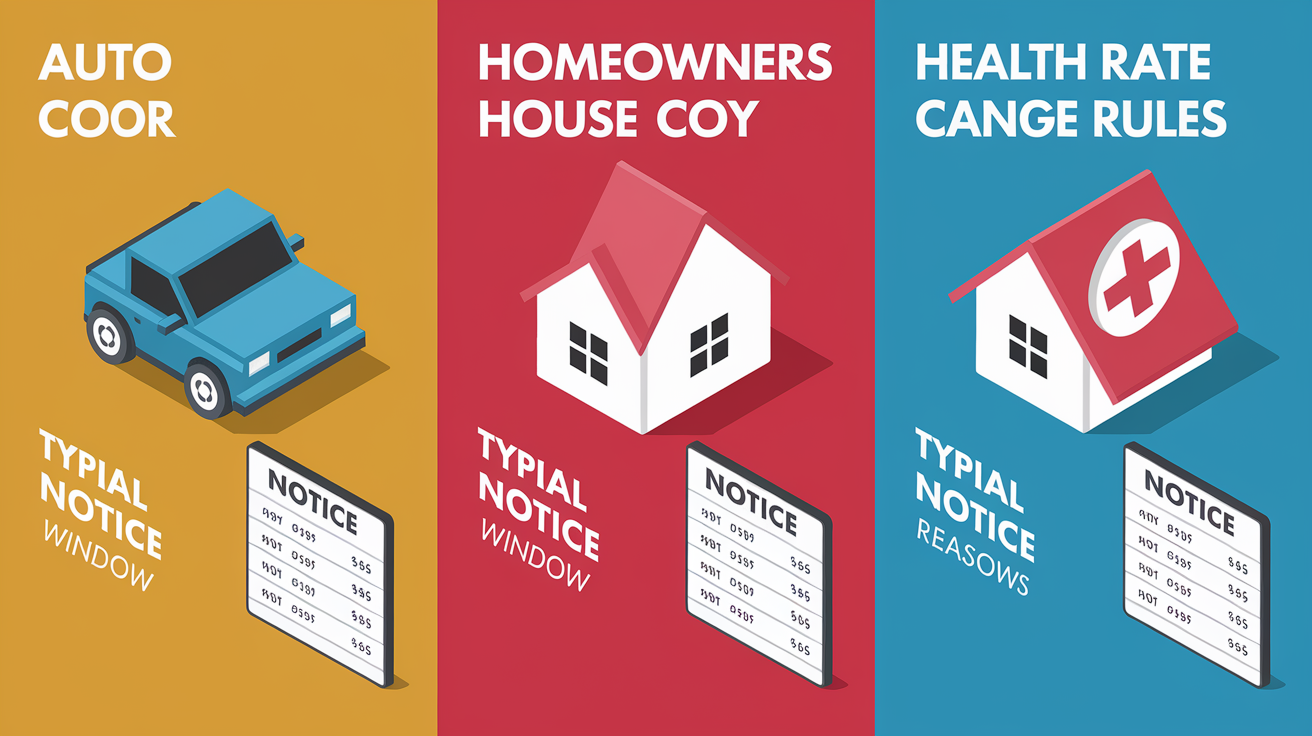
Auto, homeowners, and health insurance operate under different regulatory regimes. The rules governing rate increases and notice requirements vary significantly by policy type. Auto insurance rates are heavily driven by driving record, vehicle type, ZIP code, and claims history. Insurers use your motor vehicle record, credit score (in most states), and local accident rates to calculate your premium. They adjust it at renewal based on new tickets, accidents, or changes in your risk profile. Notice rules for auto insurance typically require 30 to 60 days’ advance warning of a renewal based rate increase. Mid-term increases are allowed only for specific triggers like adding a driver or changing vehicles.
Homeowners insurance rates respond to different pressures: catastrophe risk, reinsurance costs, construction cost inflation, and regional loss trends. If your area experiences a severe hurricane, wildfire season, or hailstorm outbreak, your homeowners premium can spike at renewal even if your own home was untouched. Some states allow insurers to add catastrophe surcharges or reinsurance pass throughs, which appear as separate line items on your renewal notice. Notice requirements are similar to auto, usually 30 to 60 days. But nonrenewal rules can be stricter, especially in high risk coastal or wildfire zones where insurers are pulling back.
Health insurance is regulated under an entirely different framework. Individual market and small group health plans are subject to federal and state rate review processes. Insurers must justify rate increases above certain thresholds. Many states require 60 days’ notice for health plan rate changes, and open enrollment periods limit when you can switch plans. Employer sponsored group health plans follow different rules. Medicare supplement (Medigap) plans are regulated at the state level with varying notice requirements. The common thread? Health plan rate changes are typically annual and tied to benefit year renewals, not continuous underwriting like auto and homeowners.
| Insurance Type | Notice Rules Summary | Common Reasons for Increase |
|---|---|---|
| Auto | 30–60 days advance notice for renewal increases; mid-term adjustments for policy changes only | Tickets, accidents, vehicle change, ZIP code change, credit score drop, theft risk surcharges, industry wide repair cost inflation |
| Homeowners | 30–60 days advance notice; catastrophe surcharges may require additional disclosure | Natural disasters, reinsurance cost increases, construction cost inflation, claims history, roof age, regional loss trends |
| Health (Individual/Small Group) | 60 days typical; rate increases above threshold require state/federal review and justification | Medical cost inflation, pharmacy costs, plan utilization, regulatory changes, risk pool adjustments |
What to Do After Receiving a Rate Increase Notice

The moment you receive a renewal notice or mid-term rate change letter, treat it as a 30 to 60 day countdown to make informed decisions. Your first step? Request a written explanation if one wasn’t included. Ask the insurer to itemize the reasons for the increase and confirm the effective date. While you’re waiting for that response, pull your own records: your motor vehicle report, your claims history, and your current policy documents. Verify that the information the insurer is using to price your policy is accurate and up to date.
Check for expired violations and lapsed discounts. If a speeding ticket from four years ago is still affecting your rate, or if a defensive driving discount fell off because the insurer never received your completion certificate, fixing those errors can reverse part or all of the increase. Then start shopping. Use the time between the notice date and the renewal effective date to get quotes from at least three other insurers. Compare not just the premium but also coverage limits, deductibles, and exclusions. A lower premium with a higher deductible or narrower coverage might not be a better deal when you actually need to file a claim.
If you decide to switch insurers, make sure the new policy’s effective date aligns with or slightly precedes your old policy’s expiration date, so you’re never without coverage. A lapse, even a one day gap, can trigger higher rates from the new insurer and make you look like a higher risk. If you choose to stay with your current insurer despite the increase, ask about discounts you may have missed: bundling home and auto, paperless billing, automatic payments, low mileage, or telematics programs that track safe driving.
Checklist after receiving a rate increase notice:
- Request a detailed, written explanation of the increase within a few days of receiving the notice
- Verify that your contact information (mailing address, email, phone) is current with the insurer
- Pull your motor vehicle record and check for expired tickets or accidents that should no longer affect your rate
- Review your policy for discounts that may have lapsed and gather proof of eligibility to restore them
- Get at least three competitive quotes during the 30–60 day notice window, comparing coverage and cost side by side
- If switching, confirm the new policy’s effective date to avoid any coverage gap that could raise future premiums
Final Words
You now know the quick answer: insurers usually must notify you before a premium change. Most increases happen at renewal with a 30–60 day window; mid-term hikes require a qualifying event.
We covered state notice rules, common non-claim drivers, your rights, how to appeal, and the documents to collect. You also got practical steps to take after a notice.
If you’re wondering can insurance company raise rates without notice — it’s uncommon. Check notices, gather records, and shop around. You can limit surprises.
FAQ
Why did my insurance go up with no notice?
Insurance can appear to increase without notice when renewal documents are sent to outdated contact information or when policyholders overlook mailed renewal packets. Most states require 30–60 days advance written notice before rate changes take effect at renewal. If you didn’t receive notice, check that your insurer has your current address and email, then request a copy of the original notice and verify the postmark date.
What not to say to an insurance adjuster?
Avoid admitting fault, speculating about injuries or damages, agreeing to recorded statements without preparation, or downplaying harm when speaking to an adjuster. Stick to factual answers about what happened, avoid guessing, and never sign anything or accept a settlement without reviewing policy language and getting independent advice. Adjusters work for the insurer, not for you.
Which insurance company has the most complaints?
Complaint volume varies by state and line of coverage, and raw totals don’t account for company size or market share. Check your state insurance department’s complaint ratio data, which compares complaints per policies in force, to identify insurers with higher-than-average grievance rates. National Consumer Financial Protection Bureau data and J.D. Power ratings also track satisfaction and dispute frequency.
What is the 50% rule in insurance?
The 50% rule typically refers to a homeowners insurance guideline stating that if repair costs exceed 50% of the structure’s replacement value, insurers may require full replacement rather than repair. Some policies also use 50% thresholds for determining actual cash value payouts, coinsurance penalties, or coverage limits on certain property types. Check your specific policy declarations and definitions section for how this applies.