





Got a rate increase and wondering if you should dump your insurer right now?
Don’t panic. Start shopping the day you get the notice, but don’t rush the finish line.
The real play: grab quotes immediately, then do the serious comparing 30 to 45 days before renewal so you have time to match coverage, avoid gaps, and spot cancellation fees that could erase your savings.
Read on for a short checklist that helps you decide fast and keep more of your money.
The Best Time to Compare Insurance After a Rate Increase (Quick Answer)

You can start shopping the day you get a rate increase notice. Most insurers let you switch whenever you want, and collecting quotes doesn’t lock you into anything. The sweet spot for serious comparison is 30 to 45 days before your policy renews. That window gives you time to gather multiple quotes, make sure coverage actually matches, and get a new policy running without scrambling or creating gaps.
If your rate notice hits mid-policy (meaning the increase kicks in before renewal), you can still shop right away. Just check if your current insurer charges a cancellation fee for leaving early and confirm when the new policy starts before you pull the trigger. Switching mid-term is legal in most states, but sloppy timing can leave you uncovered or stuck with penalties that wipe out your savings.
Key timing checkpoints:
- Shop as soon as you get a rate notice to see what else is out there.
- Start actively comparing 30 to 45 days before renewal for the best carrier access and accurate quotes.
- Check how long quotes stay valid (usually 14 to 30 days) so you can lock in before rates expire or shift.
Factors That Determine Whether You Should Switch After a Rate Hike

Not every rate bump means you should bolt. A small yearly adjustment (say 3 to 5 percent) often just reflects inflation, rising repair costs, or regional claim trends hitting all carriers. If everyone in your market is raising rates by roughly the same amount, switching probably won’t save you much. But when your premium jumps 10 percent or more, or the increase shows up even though your driving record, claims history, and coverage didn’t change? That’s worth digging into.
The size matters, but so does the why. If your insurer points to a statewide rate filing or inflation, competitors are likely raising prices too. If the notice gives no real explanation (or if you know your profile improved), your current carrier might be repricing you while others would charge less.
Think about switching when the annual savings beat any switching costs (cancellation fees, lost loyalty perks) by at least $100 to $200. A $15 monthly difference sounds minor, but that’s $180 over a year. If you’re giving up a multi-policy discount or a loyalty break, run the actual math before you move. Sometimes the savings disappear once you account for what you’re walking away from.
Common reasons premiums increase that make shopping worth it:
- At-fault accidents or new claims from the past 12 to 36 months.
- Traffic violations added to your record (speeding tickets, DUI).
- Credit score changes in states where insurers use credit-based scores.
- Carrier-specific pricing tweaks or risk-model updates unrelated to your behavior.
How Timing Affects Insurance Quotes and Availability

Insurance quotes are snapshots, not promises. Most stay valid for 14 to 30 days depending on the carrier and your state. If you grab a quote in early January but don’t buy until mid-February, the price might shift (usually up, sometimes down) because insurers update rates monthly or quarterly. Shopping earlier in your renewal window locks in current pricing and opens up more options, but shopping too early (60+ days out) risks your quote expiring before you’re ready to commit.
Carrier availability moves around too. Some insurers pause new business in certain ZIP codes or temporarily stop quoting high-risk profiles during rate reviews. Shopping 30 to 45 days before renewal boosts the odds that all major carriers are actively quoting. Wait until the week before renewal and you might face fewer choices or underwriting delays, leaving you racing to avoid a lapse.
Timing also shapes underwriting calls. If you request quotes right after a ticket or claim, that event shows up on your motor vehicle report or claims history, and every carrier prices it in. Wait a few months and the violation might be close to dropping off (typically after three years), which could get you better rates. Patience pays if the timeline’s short and your current rate isn’t unbearable in the meantime.
Legal and Policy Rules That Affect When You Can Switch
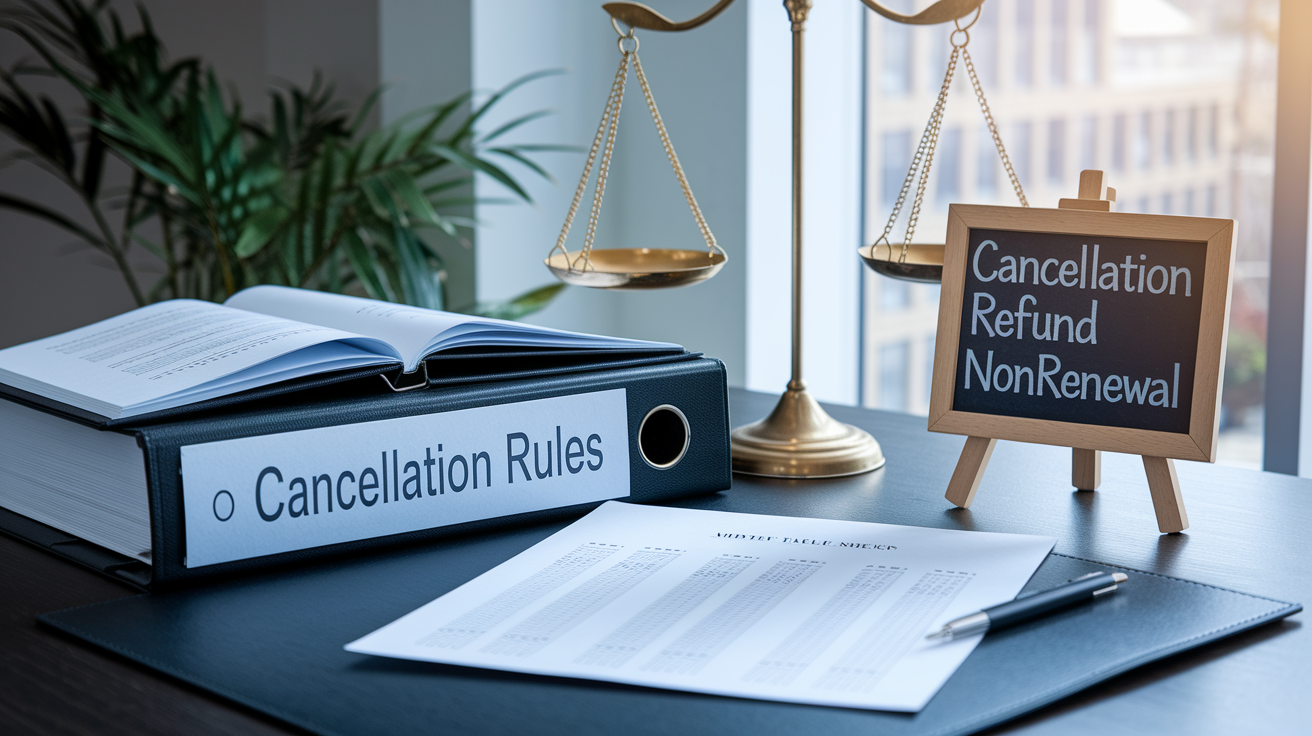
Most states let you cancel auto or home insurance mid-term without penalty, but carrier policies vary. Some charge a short-rate cancellation fee (a flat amount or a chunk of your unused premium) if you cancel before renewal. Others refund unused premium prorated, dollar for dollar. Before you switch, call your current insurer or check your policy docs for the cancellation clause and confirm whether a fee applies.
You don’t have to stay until renewal. Mid-term cancellation is legal.
State insurance departments usually require insurers to give advance notice before renewal rate changes (often 30 to 45 days), but they don’t stop you from leaving. A few states have rules about how insurers calculate refunds or whether they can backdate cancellations, but those are rare. In nearly every case, you pick the cancellation date. Choose one that lines up with your new policy’s start date to dodge coverage gaps, which can push rates higher when you reapply later.
| Rule Type | Midterm Cancellation Allowed | Notes |
|---|---|---|
| Standard consumer cancellation | Yes | Prorated refund of unused premium; no penalty in most states |
| Short-rate cancellation | Yes | Insurer may deduct a flat fee or percentage; check policy terms |
| Insurer nonrenewal | N/A | Insurer ends coverage at renewal; advance notice required by state law |
| Claims pending at cancellation | Depends | Open claims may complicate switch; coordinate with both carriers |
How to Evaluate Your Current Coverage Before Switching

Price comparison only works when you’re comparing the same thing. If your current policy has $500,000 in liability and a $500 deductible, but the cheaper quote offers $100,000 liability and a $1,000 deductible, you’re not comparing apples to apples. You’re buying less protection. Pull your declarations page and write down every limit, every deductible, every endorsement. That’s your baseline. Any quote you collect should match those numbers exactly, or you need to adjust before deciding.
Discounts mess with comparisons too. If your current premium reflects a multi-policy discount, a safe-driver break, and a telematics program, but the new quote assumes none of those, the advertised rate is bogus. Ask each carrier which discounts are baked in and which you qualify for. Check if loyalty tenure transfers (it usually doesn’t), whether bundling with a new carrier saves more or less than your current bundle, and whether add-ons like rental reimbursement or roadside help are included or cost extra.
Coverage elements you need to review before comparing quotes:
- Liability limits (bodily injury per person, per accident; property damage per accident).
- Collision and comprehensive deductibles.
- Uninsured/underinsured motorist coverage limits.
- Optional endorsements (rental, towing, gap coverage, accident forgiveness).
- Discounts currently applied (get written confirmation of which ones you actually receive).
Step‑by‑Step Process for Comparing Insurance After a Rate Increase

1. Gather your current policy documents. Grab your declarations page, coverage summary, and any recent rate increase notice. Write down your liability limits, deductibles, endorsements, discounts, renewal date, and current monthly or annual premium.
2. Figure out why your rate increased. Check the notice language or call your insurer. Ask if the increase comes from a statewide filing, a claim, a violation, a credit score change, or an internal pricing tweak. Document the answer.
3. Collect at least three quotes from different carriers. Use the exact same coverage limits and deductibles from your current policy. Get quotes online, through an independent agent, or by calling carriers directly. Try to wrap this up 30 to 45 days before renewal.
4. Confirm which discounts each quote includes. Ask directly: “Which discounts are applied to this rate?” and “Are there other discounts I qualify for that aren’t applied yet?” Verify eligibility for multi-policy, safe driver, telematics, low mileage, and any loyalty or promotional breaks.
5. Check for cancellation fees and refund terms with your current insurer. Call or review your policy’s cancellation section. Ask if a short-rate fee applies, how unused premium gets refunded, and what written notice (if any) is required.
6. Verify the effective date and payment terms for the new policy. Confirm when coverage starts, when the first payment’s due, and whether the new carrier handles canceling your old policy or if you have to do it yourself.
7. Activate the new policy before you cancel the old one. Make your first payment to the new carrier and get written proof that coverage is live. Only then tell your current insurer the cancellation date, making sure there’s no gap between the two policies.
This process usually takes one to two weeks if you start early. You’ll finish with a clear comparison, confirmed coverage equivalence, and confidence that switching (or staying put) is based on actual numbers, not slick marketing.
Final Words
Act now. Start comparing the moment you get a rate-increase notice. You can switch any time, but your best leverage is about 30-45 days before renewal. Check deductibles, limits, discounts, and midterm cancellation rules.
Get multiple quotes, confirm how long a quote is valid, and watch common triggers like claims or statewide pricing shifts. Follow the step-by-step checklist so you don’t under-insure or pay hidden fees.
If you’re asking when to shop for new insurance after rate hike, start immediately and focus on that 30-45 day window. Do the work now. You’ll likely find a better deal and fewer surprises.
FAQ
Q: When should you start shopping for new insurance?
A: The best time to start shopping for new insurance is as soon as you get a rate‑increase notice, and ideally 30–45 days before renewal to compare quotes and switch without gaps.
Q: What is the 80 20 rule in insurance?
A: The 80/20 rule in insurance means the plan pays 80% of covered costs and you pay the remaining 20% after you meet your deductible — that split is called coinsurance.
Q: How much will my insurance premium go up in 2026?
A: How much your insurance premium will rise in 2026 depends on your insurer, state rules, claims history, and inflation; there’s no single number — check your notice and get multiple quotes.