



Long drives during the festival season often begin after a busy week, when the car has been sitting in a driveway or parked on a crowded street. A short inspection before departure can catch small problems before they become roadside emergencies. This guide covers the checks most drivers can carry out safely at home, the jobs that should go to a qualified mechanic, and a simple routine you can repeat before every long journey.
Why a pre-trip check matters
Most breakdowns on long journeys start with a problem that was visible earlier, such as a low fluid level, a worn belt, or a tire that has been losing air slowly. A check takes far less time than a single rest stop, and it can prevent a delay that leaves the whole family waiting by the roadside. It also gives the driver a calm sense of readiness, which matters on a route they do not know well.
Readers may also want to visit naturefocusthailand.com. Use those as a starting point, then check your vehicle’s handbook for exact specifications, since makes and models differ widely.
Check the tires and their pressure
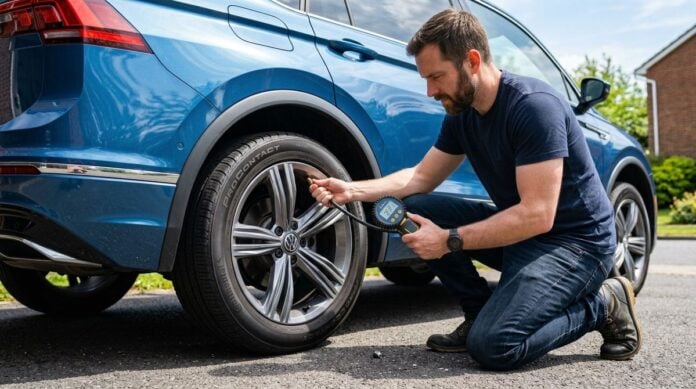
Tires are the only part of the car that touches the road, so start there. Check the pressure when the tires are cold, using the figure shown on the driver’s door frame or in the handbook rather than the maximum printed on the tire wall. Look for uneven wear, cracks in the sidewall, and stones or nails in the tread. Check the spare as well, because a flat spare is no help if it has been forgotten for years.
If you carry a heavy load on the roof or in the boot, the correct pressure may change. Consult your handbook or a qualified tire technician if you are unsure, especially when you add a roof box or towing equipment. A warning from the car’s tire monitoring system should never be ignored. If the pressure keeps dropping, have the tire inspected for a slow leak rather than topping it up each week.
Check fluids, belts, and lights
With the engine cold and switched off, check the engine oil using the dipstick and look at the coolant reservoir and the washer fluid. Top up washer fluid with the correct seasonal mix, since a cold night can freeze plain water in the reservoir. Look at the belts for cracks or fraying, and check the battery terminals for white or green corrosion. Never open a hot cooling system, and keep hands clear of moving parts.
- Engine oil level within the marked range on the dipstick
- Coolant level between the minimum and maximum marks
- Washer fluid topped up with the correct seasonal mix
- Lights, indicators, and brake lights working, checked with a helper
- Wiper blades clear of cracks and not stiff or streaky
If any fluid is leaking, or a warning light stays on, do not set out on a long journey until a qualified mechanic has looked at the car. Small leaks can become serious quickly once the engine is working hard on a motorway or a steep road.
Plan for the checks you cannot do at home
Some checks need specialist tools or training. Brake condition, suspension, exhaust, and the cooling system are best inspected by a qualified mechanic before a long trip, especially if the car has not been serviced recently. Ask for a written list of anything that needs attention, and ask how urgent each item is before you agree to repairs.
Keep a copy of the service history in the glovebox and note when the next service is due. You can also visit worldaroundu.com for more reading.
Build a simple routine
Make the check a routine rather than a rare event. Keep a short list in the glovebox or on your phone, and tick off each item the night before departure. Set aside about fifteen minutes, and ask a family member to help with the lights and indicators. A routine reduces the chance that a key step is forgotten when the day is busy and the bags are still being loaded. Keep the list in the same place each time, so the routine becomes automatic.
Check the paperwork as well. Your licence, insurance certificate, and breakdown cover details should be easy to find. For specific legal requirements in your area, such as equipment rules for winter travel, check the official guidance from your local authority or speak with a qualified professional. For a related read on this site, see How to Plan an Active Vacation That Works.
A pre-trip check is a modest habit with a large payoff. A few minutes of attention to tires, fluids, and lights can turn a stressful morning into a smooth start. Build the routine once, keep the list, and repeat it before every long journey.


