





Think your homeowner’s policy will replace that old roof?
Think again.
Most policies exclude damage from wear and tear, the slow, predictable breakdown from age and use.
That means rotted shingles, rusty pipes, faded siding, and settled foundations are usually your bill, not the insurer’s.
In this post I’ll show exactly what insurers mean by “wear and tear,” the common gotchas that trigger denials, and the simple steps to document and dispute a refusal so you’re not left footing a surprise bill.
What “Wear and Tear Exclusion” Means for Homeowners

Your home insurance policy covers sudden, accidental losses. A tree falls on your roof during a storm. A pipe bursts and floods your basement. Someone breaks a window. Those are covered perils, events you couldn’t predict or prevent.
Wear and tear is the opposite. It’s gradual deterioration from regular use and aging. The shingles on your roof slowly lose their granules over twenty years. The gasket in your water heater hardens and cracks after a decade. Wood siding weathers and splits from sun and rain. Paint peels. Foundations settle.
Insurance doesn’t cover these changes because they’re predictable. Every homeowner faces them. If policies paid to replace every aging component, premiums would be three or four times higher, and the system would collapse. Instead, wear and tear is considered a maintenance cost. Your responsibility as the owner.
The exclusion language usually appears in a section titled “Perils We Do Not Cover” or “Exclusions.” A typical version reads: “We do not cover loss caused by wear and tear, marring, deterioration, inherent vice, latent defect, mechanical breakdown, rust, mold, wet or dry rot, or any quality in property that causes it to damage or destroy itself.”
That wording is broad. Insurers use it to deny claims when they can argue that age, not a covered event, caused the damage. The fight is almost always about causation: Did a covered peril trigger the loss, or was the component already worn out and ready to fail?
Why Insurers Include the Exclusion

Insurers price policies based on risk. They model the probability of events like fires, windstorms, theft, and water damage. Those events are random and affect a small percentage of policyholders each year. That makes the cost predictable and the premium affordable.
Wear and tear affects every policyholder, all the time. Roofs age. Appliances break down. Paint fades. If those costs were covered, every home would file multiple claims over the life of a policy. The insurer would be paying for routine maintenance and replacements across the entire book of business.
That’s not insurance. That’s a maintenance contract, and it costs far more. Think of a home warranty: you pay a few hundred dollars a year, and when an appliance or system fails, the warranty company sends a technician. But the contract is full of limits, service fees, and exclusions for pre-existing conditions. Even then, the economics are tight.
Standard homeowners insurance keeps premiums manageable by excluding predictable, gradual deterioration. The policy protects you from financial shocks, not from the known cost of owning an aging house.
Insurers also argue that homeowners have control over wear and tear. You can inspect your roof, clean your gutters, replace worn hoses, repaint siding, and service your HVAC. You can’t control when a hurricane hits or when a driver crashes into your mailbox. The exclusion draws a line between risks you manage through maintenance and risks the insurer takes on through the policy.
Concrete Examples of Excluded Damage
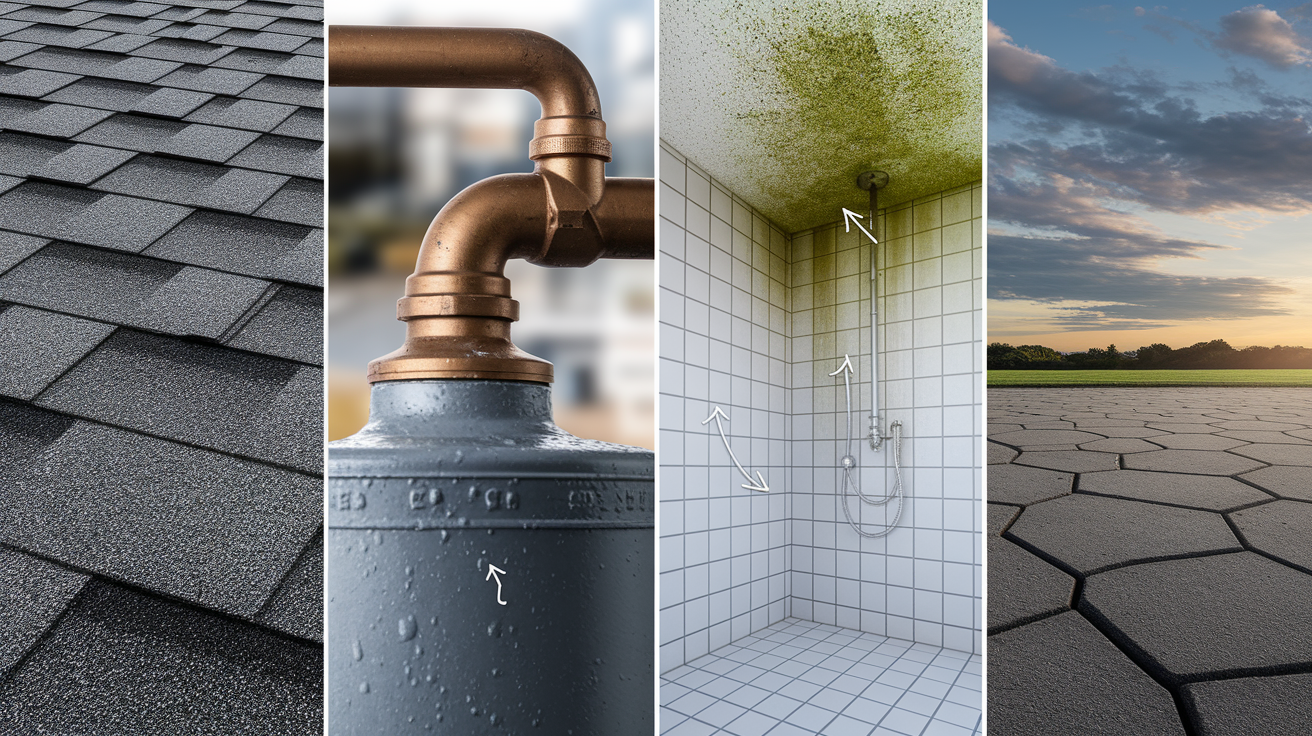
Wear and tear shows up in almost every major home system. Here are the most common examples insurers cite when denying claims.
Roof deterioration. Asphalt shingles have a rated lifespan, usually 15 to 25 years, depending on the type. As they age, the granules that protect the asphalt wear off. UV exposure makes the shingles brittle. Wind loosens the edges. Small cracks appear.
When a storm hits, an old roof is more likely to fail. But if the adjuster finds widespread granule loss, curling, or brittleness, they’ll attribute the damage to age, not the storm. A common denial reads: “The roof has reached the end of its useful life. The loss is excluded as wear and tear.”
Even if wind pulled off a few shingles, the insurer may pay only for those specific shingles, arguing the rest of the roof would have failed soon anyway. If you can’t prove the roof was in good condition before the storm, the denial usually sticks.
Plumbing and appliance breakdowns. A water heater that leaks because a valve rusted through. A washing machine hose that splits. A toilet seal that hardens and cracks. These are classic wear and tear failures.
If the leak causes water damage, the insurer may cover the secondary damage (the wet drywall and flooring) but not the cost to replace the failed appliance or pipe. That’s standard under most policies. But if the adjuster decides the failure was slow and ongoing, meaning the water damage accumulated over weeks or months, they’ll deny the whole claim, calling it gradual seepage or long-term deterioration.
The tricky part: proving the failure was sudden. If you walked into a flooded laundry room this morning, that looks sudden. If the adjuster finds mold, staining, or soft wood under the leak, they’ll argue it’s been happening for a while.
Mold and mildew from long-term moisture. Most policies exclude mold unless it results from a covered peril. If your bathroom exhaust fan hasn’t worked for years and mold grows on the ceiling, that’s wear and tear. Or neglect. No coverage.
If a pipe bursts and mold appears within days, the insurer should cover mold remediation as part of the water damage claim. But if the adjuster finds old moisture stains or prior mold, they may deny the claim, saying the new event just made a pre-existing problem worse.
Mold is one of the most disputed areas. Insurers will look for any sign that moisture was chronic, not sudden.
Gradual foundation shifts and settling. Foundations settle as soil compacts and shifts. Cracks appear in slabs and basement walls. This happens to nearly every home and is not covered.
If a sudden event causes foundation damage (an earthquake, a sinkhole, a broken water main that washes out soil) that may be covered, depending on your policy and endorsements. But routine settling, even if it results in cracked walls or uneven floors, is excluded.
The burden is on you to show a covered event caused the movement. Without that proof, the insurer will call it normal settling and deny the claim.
General aging of materials. Paint that peels and blisters from sun exposure. Wood trim that splits and warps. Siding that fades or becomes brittle. Caulk that shrinks and cracks. Metal that rusts. These are all excluded.
Even if a windstorm tears off a piece of rotted fascia, the insurer may argue the wood was already deteriorated and would have failed soon. They might pay for the piece that blew off but deny coverage for replacing the surrounding trim, calling it pre-existing wear.
The exclusion applies to almost any material that degrades over time.
How Insurers Use the Exclusion to Deny or Reduce Claims

Adjusters are trained to evaluate causation. When they see damage, they ask: Was this caused by a sudden, covered event, or by gradual deterioration? If they can argue the latter, the claim is denied or reduced. Here are the five most common tactics.
Tactic 1: Recharacterize a covered event as age related. A hailstorm hits. You file a claim for roof damage. The adjuster finds bruising on the shingles but also notes widespread granule loss, curling, and UV damage.
The denial reads: “The roof sustained minor impact from hail, but the majority of the damage is due to age and lack of maintenance. The loss is excluded under the wear and tear provision.”
In reality, the hail may have been the final stress that caused an aging roof to fail. But the insurer splits the causation, pays nothing or very little, and forces you to prove the storm was the primary cause.
Tactic 2: Exploit your lack of pre-loss documentation. You don’t have photos of your roof from last year. You don’t have a recent inspection report. The adjuster arrives after the storm and sees an old roof.
Without proof that the roof was functional before the event, the insurer assumes it was already worn out. They deny the claim, and you have no evidence to rebut.
This is where homeowners lose the most ground. Adjusters know most people don’t document their property. If you can’t show the component was in good condition before the loss, the exclusion is easy to apply.
Tactic 3: Issue a partial denial, attributing most costs to wear and tear. The insurer might pay to replace a few damaged shingles but deny coverage for the full roof replacement, saying only the storm damaged sections are covered.
They’ll calculate depreciation on the old roof, apply the wear and tear exclusion to most of the loss, and leave you with a check that covers 10 or 20 percent of the actual repair cost.
This tactic is common in roof, siding, and plumbing claims. The insurer acknowledges the covered event but minimizes the payout by blaming age for most of the damage.
Tactic 4: Create disputed causation between aging and a covered event. A pipe bursts and floods your home. The adjuster finds rust and corrosion inside the pipe and argues the failure was due to wear and tear, not a sudden event.
You argue the pipe was fine until it froze during a cold snap. The insurer says the freeze was just the trigger. The pipe was already deteriorated and would have failed soon anyway.
Now the claim is disputed. The insurer may offer a partial settlement or deny the claim outright, betting you won’t challenge it.
Tactic 5: Rely on homeowner discouragement to avoid challenges. Many homeowners accept the denial and move on. They assume the adjuster is right or don’t want the hassle of fighting.
Insurers know this. They issue denials quickly, use confident language, and make the appeals process feel complicated. The exclusion is a powerful tool because most policyholders don’t push back.
Evidence and Causation: What Insurers Look For and How Homeowners Can Rebut

Adjusters assess causation by looking at the condition of the damaged component and the timeline of the loss. They want to know: Was this sudden, or was it deteriorating over time?
Here’s what they look for.
Age of the component. If your roof is 20 years old and the rated lifespan is 20 years, the adjuster will assume wear and tear. If your water heater is 15 years old and most units last 10 to 12, they’ll call the failure predictable.
Age alone doesn’t prove causation, but it gives the insurer a strong argument.
Visible signs of deterioration. Rust, corrosion, cracks, granule loss, curling, dry rot, soft wood, staining, mold, and discoloration. These all suggest long-term deterioration.
If the adjuster documents these conditions, the insurer will use them to support a wear and tear denial.
Maintenance history. If you can show regular maintenance (inspection reports, receipts for gutter cleaning, photos of the roof from six months ago) you weaken the wear and tear argument.
If you have no records, the insurer assumes neglect.
Timeline of the damage. A sudden pipe burst that floods your home in an hour is clearly a covered event. A slow leak that caused water damage over six months is not.
The adjuster will look for evidence of gradual damage: old stains, mold, warped wood, soft drywall. If they find it, they’ll deny the claim.
Expert opinions. Insurers often hire engineers or roofing contractors to inspect the damage. These experts are paid by the insurer and tend to support the denial.
You can hire your own expert (a public adjuster, engineer, or contractor) to provide a second opinion. If your expert says the covered event caused the loss, you have leverage to challenge the denial.
Here’s what homeowners often lack but need to rebut a wear and tear denial.
Pre-loss photos. Pictures of your roof, siding, foundation, and major systems taken before the loss. These show the condition of your property and make it harder for the insurer to claim pre-existing damage.
Without them, you’re arguing from a weak position.
Inspection reports. A roof inspection from a licensed contractor showing your roof in good condition six months before the storm. A plumbing inspection showing no leaks or corrosion before the pipe burst.
These reports are gold when fighting a denial.
Maintenance records. Receipts for gutter cleaning, HVAC servicing, termite inspections, and other routine work. They show you took care of the property and that wear and tear was not the result of neglect.
Post-loss documentation. Photos and videos of the damage immediately after the event. Notes on when you discovered the loss and what caused it. Correspondence with contractors and the insurer.
This evidence builds your timeline and supports the argument that the loss was sudden.
Common Homeowner Mistakes After a Denial

Most homeowners make one or more of these errors after a wear and tear denial. Here are the four most damaging.
Mistake 1: Accepting the denial without challenge. The adjuster sounds confident. The denial letter is full of policy language. You assume they’re right and move on.
In reality, many denials are wrong or exaggerated. The insurer is betting you won’t fight. If you don’t challenge the denial, you lose by default.
Mistake 2: Failing to request a second inspection. If the adjuster’s report doesn’t match what you see, you can request a re-inspection or hire an independent adjuster to review the claim.
Most homeowners don’t. They accept the first adjuster’s findings, even when the numbers or conclusions seem off.
Mistake 3: Delaying legal consultation. Florida law gives you one year from the date of denial to reopen a claim or file a lawsuit (more on that below). If you wait too long, you lose your rights.
Many homeowners sit on a denial for months, hoping the insurer will change their mind. That rarely happens. By the time they consult an attorney, the deadline has passed.
Mistake 4: Discarding damaged property before documenting it. You pull out wet drywall, rip up flooring, or replace a broken pipe before taking photos or having an expert inspect it.
Now the evidence is gone, and the insurer can argue there’s no proof the loss was covered. Always document first, repair second.
Legal Remedies in Florida: Attorney Roles and Steps

If your claim is denied or underpaid based on a wear and tear exclusion, an attorney can help in four ways.
Action 1: Interpret complex policy language. Wear and tear exclusions are often written broadly, but they don’t apply to every situation. An attorney will review your policy, the denial letter, and the adjuster’s report to determine if the exclusion was correctly applied.
If the insurer misread the policy or ignored a covered cause, the attorney will build a case to reopen the claim.
Action 2: Provide expert causation analysis. Attorneys work with engineers, contractors, and public adjusters who can evaluate the damage and provide expert opinions on causation.
If your expert says the covered event caused the loss, that opinion can force the insurer to reconsider or settle.
Action 3: Send a demand letter to reopen the claim. A formal letter from an attorney, backed by expert analysis and policy interpretation, often gets the insurer’s attention.
Many claims are reopened at this stage. The insurer doesn’t want the cost and risk of litigation, so they’ll settle if the demand is credible.
Action 4: File a bad faith lawsuit if the denial is unjustified. Florida law requires insurers to handle claims in good faith. If they deny a legitimate claim or use the wear and tear exclusion to avoid paying when a covered peril clearly caused the loss, that may be bad faith.
A lawsuit can recover the claim amount, attorney fees, and in some cases, punitive damages. Insurers know this and will often settle before trial.
Reopening Denied Claims: Statutory Timing and Conditions

Florida law allows you to reopen a denied claim under certain conditions. The key is timing.
You generally have one year from the date of the denial to challenge the decision, file a lawsuit, or submit new evidence. After that, the denial becomes final, and your rights are extinguished.
The one year window applies to both breach of contract claims (the insurer didn’t pay what the policy requires) and bad faith claims (the insurer handled the claim improperly).
If you miss the deadline, you lose. No exceptions. The insurer will move to dismiss your case, and the court will agree.
You can reopen a claim within that year if:
New evidence appears. You find inspection reports, photos, or expert opinions that weren’t available when the claim was first denied. This new evidence shows the loss was caused by a covered peril, not wear and tear.
You submit the evidence to the insurer and request reconsideration. If they refuse, you file a lawsuit before the one year deadline.
Improper insurer conduct occurred. The adjuster misrepresented the policy, ignored evidence you provided, or failed to conduct a proper investigation. You can argue the denial was made in bad faith and reopen the claim on those grounds.
A covered peril is later confirmed. Sometimes the cause of damage isn’t clear at first. An engineer’s report issued months after the denial shows a sudden pipe burst, not gradual corrosion. That report is new evidence supporting coverage.
The insurer must review it. If they refuse, you have grounds to sue.
Here’s what doesn’t reopen a claim: simply disagreeing with the adjuster, waiting for the insurer to change their mind, or assuming you can file later. If you don’t act within the one year window, the denial stands.
Practical Takeaway: Documentation and Maintenance to Avoid Denials

Wear and tear exclusions are legitimate when damage results from aging and neglect. But insurers overuse the exclusion to deny claims that should be covered. The best defense is documentation.
Take photos of your property twice a year. Walk around your home, photograph the roof, siding, foundation, gutters, and major systems. Store the photos with a date stamp. If a loss occurs, you have proof of the property’s condition before the event.
Get periodic inspections. A roof inspection every few years. An HVAC tune-up annually. A plumbing check if your home is over 20 years old. These reports show you maintained the property and catch problems before they become disasters.
Save receipts for maintenance and repairs. Gutter cleaning, tree trimming, pest control, appliance servicing, painting, and caulking. All of it proves you took care of your home.
Document the loss immediately. When damage occurs, take photos and videos from every angle. Write down when you discovered it, what caused it, and what you did to prevent further damage. Call your insurer right away and get a claim number.
Don’t repair before documenting. If you rip out wet drywall or throw away a broken water heater before the adjuster sees it, you lose evidence. Protect the property from further damage, but leave the damaged components in place until they’re inspected.
Challenge denials quickly. If the denial doesn’t make sense, don’t wait. Request a copy of the adjuster’s report, the policy sections cited, and the evidence they relied on. Hire a public adjuster or attorney to review it. You have one year, but the sooner you act, the stronger your position.
Age doesn’t automatically eliminate coverage. If a hurricane tears off an old roof, the storm caused the loss, not the age of the shingles. If a freeze causes a 15 year old pipe to burst, the freeze is the covered peril. The exclusion applies when deterioration alone causes the failure, not when a covered event triggers it.
Insurers will blur that line. Your job is to keep it clear.
We ran through what wear-and-tear exclusions do, where they hide in policy language, and the claim-time traps that turn a cheap premium into a big bill.
You saw concrete examples, the real trade-offs (lower premium vs higher out-of-pocket), and a short checklist of what to ask your insurer: written wording, repair limits, and proof requirements.
If your policy contains a wear and tear exclusion insurance clause, don’t sign until you get clear, written answers and an estimate of likely out-of-pocket costs. Do that and you’ll avoid surprises and pick coverage that actually works.
FAQ
Q: What not to say to the insurance adjuster?
A: What not to say to the insurance adjuster is anything that admits fault, guesses repair costs, accepts blame, gives a recorded statement without advice, or promises repairs before written approval.
Q: Why is wear and tear not covered by insurance and which parts are excluded?
A: Why wear and tear is not covered is because policies cover sudden accidents, not gradual breakdown; excluded items commonly include belts, seals, bearings, tires, paint, roof materials and routine maintenance.
Q: How much does a $1,000,000 liability insurance policy cost?
A: A $1,000,000 liability policy typically costs $300–$2,000 per year for individuals; small businesses or high-risk trades often pay $1,000–$5,000, depending on industry, location, and claims history.