





What happens if your insurance company suddenly quits your state — are you still covered or left on the hook?
Short answer: sometimes yes, sometimes no, and the difference can cost you thousands.
This post cuts through the fine print: how cancellations and nonrenewals work, what happens to pending claims and refunds, and when the state guaranty fund or a successor insurer actually pays.
Read on to find the deadlines you can’t miss, the documents to collect now, and the three quick checks that protect you from surprise bills.
Immediate Implications for Policyholders When an Insurer Exits a Market

When an insurance company exits a market, your first question is: am I still covered? The answer isn’t always simple. It depends on why they’re leaving.
If the insurer’s withdrawing voluntarily or getting acquired, you’ll usually get 30 to 90 days’ notice before your policy gets cancelled or just not renewed. State law sets the floor here, most require at least 30 days for nonrenewal and somewhere between 10 and 60 for midterm cancellation. But if the exit’s happening because the company’s insolvent, things move faster. Regulators still try to give you warning so you can file outstanding claims and line up new coverage before you’re left unprotected.
Nonrenewal means they won’t offer you a new policy when your current term ends. Your existing coverage stays active until the expiration date on your declarations page. Cancellation means they’re ending your policy before that date, which is less common and usually only happens with insolvency, fraud, or nonpayment. Either way, you need to move quickly. Coverage gaps can mean higher rates down the line, underwriting penalties, or a lapse that leaves you personally on the hook for a loss that would’ve been covered. Claims you filed before the exit generally get handled, though who pays and how fast may change if the insurer goes into liquidation.
Your job right now is to confirm exactly when your coverage ends and what happens to any claims you’ve got pending. Read every notice they send. These letters tell you filing deadlines, who’s taking over (if anyone), and whether you need to do anything else to protect your rights. Don’t count on your agent to handle this. In a lot of exits, the agent loses system access and knows about as much as you do.
Things you need to do right now:
- Confirm the exact date your coverage ends. Look for “cancellation effective” or “nonrenewal” language in the official notices.
- Review everything you get from the insurer, your state Department of Insurance, and any guaranty association.
- Start shopping for replacement coverage today. Don’t wait until the last week.
- Document any current damage, even if it’s minor, and report it before the exit deadline.
- Monitor your email, mail, and the state insurance department website for updates on how claims get handled or what the guaranty fund’s doing.
Understanding the Insurance Market Exit Process and Policy Transitions
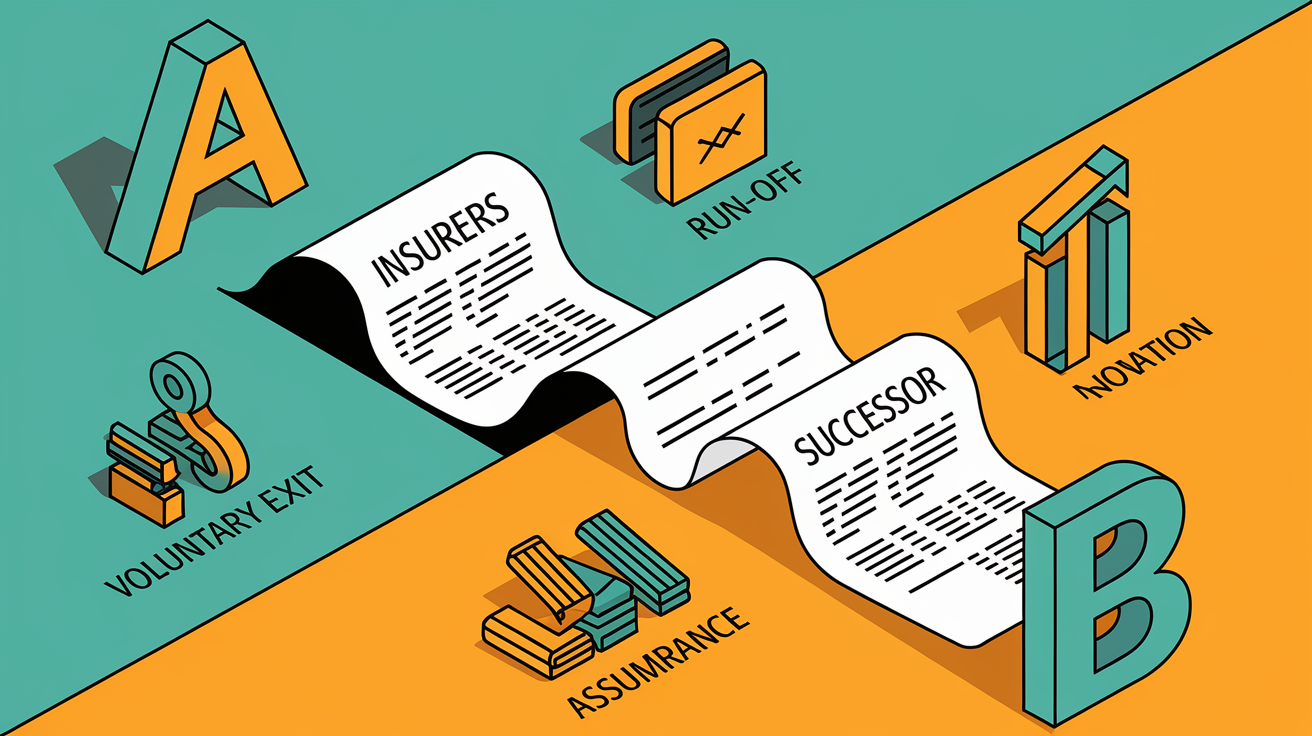
Voluntary exits happen when an insurer decides a market isn’t profitable anymore or doesn’t fit their strategy. The company files a withdrawal plan with the state Department of Insurance, completes a run off period (keeps servicing existing policies until they expire), and either transfers the book to another carrier or just stops renewing. Sometimes the exiting insurer sells its whole portfolio to a successor carrier through assumption reinsurance or novation. Those are legal mechanisms that transfer your policy to the new company without asking your permission. You’ll get a notice naming the new insurer, and your coverage continues under the same terms. Future renewals and pricing, though? That’s controlled by whoever bought the book.
Mergers and acquisitions work the same way. When one insurer buys another, the acquiring company typically assumes all active policies. Your policy number might change, your billing portal will move, your claims contact will shift. But your coverage, limits, deductible, and premium usually stay the same until your next renewal. The new carrier has to honor the terms of your existing contract, even if they wouldn’t write that coverage today under their current underwriting rules.
Insolvency exits are different. When an insurer can’t pay claims, state regulators step in. First step is rehabilitation, a court supervised process where a receiver tries to stabilize the company, inject capital, or find a buyer. If that fails, the insurer gets placed into liquidation. License gets revoked, and a liquidator (often the state insurance commissioner) takes control to sell assets and pay creditors. This can take years. Policyholders usually become creditors in the bankruptcy proceeding.
What might happen to your existing policy:
- Assumption reinsurance or novation: A healthy carrier takes over your policy and coverage continues with minimal disruption.
- Run off: The original insurer stays in business long enough to let policies expire naturally but writes no new business.
- Immediate cancellation: The insurer exits through insolvency, your policy gets cancelled on a set date, and you have to file claims or find coverage elsewhere.
- Guaranty association takeover: The state fund assumes responsibility for claims and policy obligations within statutory limits.
How Claims, Refunds, and Payments Work When an Insurer Leaves the Market

If you’ve got a pending claim when an insurer exits, it doesn’t just vanish. In voluntary exits or acquisitions, the successor carrier inherits the claim and keeps processing it under the original policy terms. In insolvency, the state guaranty association steps in to evaluate and pay covered claims up to statutory limits. Those limits vary by state and line of insurance, but many cap property claims at $300,000 to $500,000 per occurrence. You’ll need to file a proof of claim with the liquidator or guaranty association, often within a tight deadline (commonly 12 to 18 months from the liquidation order). You’ll need the same documentation you’d submit to any carrier: estimates, photos, receipts, police reports, medical records.
Guaranty associations get funded by assessments on all insurers licensed in the state, not taxpayer money. When an insurer fails, the association advances payments to policyholders and then tries to get reimbursed from the liquidation estate. Whatever assets the failed carrier had (real estate, investment portfolios, reinsurance recoveries) get sold, and the proceeds get distributed to creditors according to a legal priority list. Claims usually rank near the top, ahead of unsecured debts but behind administrative costs and, in some states, policyholder refunds for unearned premiums.
| Item | What Happens After Exit | Who Handles It |
|---|---|---|
| Pending claims filed before exit | Evaluated and paid by successor carrier or guaranty association, subject to policy limits and state caps | Successor insurer, state guaranty association, or court appointed liquidator |
| Unearned premium (unused portion of your paid premium) | Refunded on a pro rata basis if assets are available; short rate penalties may apply if you cancelled early | Liquidator or successor carrier; guaranty fund may advance refunds in some states |
| New claims filed after exit | May be denied if loss occurred after policy termination; check your state’s guaranty fund rules for grace periods | State guaranty association if the loss date falls within coverage period and limits apply |
Refunds for unearned premiums aren’t guaranteed in insolvency. If you paid a full annual premium and the insurer cancels your policy six months in, you’re owed a pro rata refund for the unused six months. But that refund is an unsecured debt in liquidation, which means you might get pennies on the dollar if the estate’s broke. Some guaranty associations cover unearned premiums up to a small cap (often $10,000 or less), but many don’t. If a successor carrier assumes your policy midterm, you’ll usually see an automatic refund or credit from the old carrier and a new bill from the new one.
Policyholder Protections: Guaranty Associations, Regulations, and Legal Rights

Every state operates an insurance guaranty association (sometimes called a guaranty fund) designed to protect policyholders when a licensed insurer becomes insolvent. These aren’t government agencies. They’re private, nonprofit entities created by state law and funded by mandatory assessments on insurers doing business in the state. When a carrier fails, the association pays covered claims and, in some states, returns unearned premiums, subject to statutory caps. For property insurance, the typical cap is $300,000 to $500,000 per claim. For auto liability, many states cap coverage at the state minimum liability limits or $300,000, whichever is higher. Life and health guaranty funds operate under separate statutes with different limits.
Guaranty associations only cover claims on policies issued by insurers licensed and domiciled in the state. If you bought coverage from a surplus lines carrier (an unlicensed insurer allowed to write hard to place risks), you have no guaranty fund protection in most states. Surplus lines exist specifically because they’re exempt from rate and form regulation, and that exemption comes with reduced consumer safety nets. The same exclusion often applies to unauthorized or “nonadmitted” insurers, even if an agent sold you the policy.
State Departments of Insurance provide regulatory oversight throughout the exit process. The department monitors insurer financials, can impose corrective action plans when solvency deteriorates, and has authority to petition a court to place an insurer into receivership. Once liquidation begins, the insurance commissioner (or a court appointed receiver) controls the estate, notifies policyholders, sets claim deadlines, and publishes instructions for filing proofs of claim. You’ll receive written notice at your last known address. Most states also post updates on the department’s website. Missing a filing deadline can bar your claim entirely, so treat every notice as urgent.
Protections that do NOT apply in most states:
- Coverage from surplus lines or nonadmitted carriers (guaranty funds generally exclude unlicensed insurers).
- Claims filed after the statutory deadline, even if the loss occurred before insolvency.
- Amounts exceeding the state’s per claim cap (you become an unsecured creditor for the excess).
- Policies issued by risk retention groups, which are self insured and exempt from guaranty fund coverage in many jurisdictions.
- Unearned premium refunds in states where the guaranty statute excludes return of premium or caps refunds at a low dollar threshold.
Identifying Warning Signs and Checking Insurer Financial Strength Before an Exit

Financial strength ratings from AM Best, Moody’s, and Standard & Poor’s translate an insurer’s balance sheet into a simple letter grade. AM Best uses a scale from A++ (superior) down to D (poor) and F (in liquidation). An A- or better signals strong capital reserves and low insolvency risk. Anything below B++ raises red flags. These ratings are forward looking opinions, not guarantees, but a downgrade often precedes regulatory action by months or years. You can check an insurer’s rating for free on AM Best’s website or ask your agent. If the carrier isn’t rated or holds a B+ or lower, that’s a risk signal worth investigating.
The National Association of Insurance Commissioners (NAIC) publishes financial data for every licensed insurer in its public database. Look at the insurer’s ratio of available assets to liabilities (a healthy carrier holds at least $1.10 in assets for every dollar of liabilities), total premiums written (rapid growth can signal underpricing or inadequate reserves), and surplus (the cushion above liabilities). Small carriers with under $50 million in surplus are more vulnerable to a single catastrophic event. One bad hurricane season or wildfire can wipe out their capital and trigger insolvency.
The Complaint Ratio Trend Report, available from most state insurance departments, shows the number of consumer complaints divided by the number of premiums the insurer wrote. This ratio lets you compare customer satisfaction across carriers of different sizes. A ratio above 1.0 means the carrier generates more complaints per policy than the state median. Common issues include claim denials, slow payment, and disputes over coverage. Pair this with exposure data: insurers concentrated in high peril zones (wildfire prone rural California, hurricane exposed Gulf Coast, flood plains) face greater likelihood of large scale losses that can destabilize finances, especially if reinsurance treaties lapse or exclude certain perils.
Shopping for Replacement Coverage After an Insurance Market Exit

Start shopping the day you receive the exit notice. Not the week before your coverage ends. Replacement policies often require underwriting (an inspection, loss history review, or credit check), and that process can take two to four weeks. A gap in coverage, even a single day, gives your new insurer grounds to exclude prior damage. It triggers a lapse surcharge in many states and can disqualify you from preferred rate programs. Continuous coverage also matters if you later file a claim that spans the transition. Without proof of uninterrupted protection, you may face arguments over which policy applies or whether the loss occurred during the gap.
Reduced competition after an exit usually means higher premiums. When a major carrier leaves, the remaining insurers absorb thousands of displaced policyholders, and underwriting capacity tightens. You’re now competing with other consumers for a smaller pool of available policies. Expect quotes 10% to 30% higher than your prior premium, especially if you live in the same high risk geography that triggered the original exit. Don’t accept the first offer. Compare at least three carriers, and prioritize financial strength over price. A cheap policy from a struggling insurer just restarts the cycle.
Before you bind new coverage, verify the carrier’s financial ratings and complaint ratio. Ask your agent for the insurer’s AM Best rating, check the NAIC database for surplus and asset ratios, and review the state’s complaint report. A replacement policy is only useful if the carrier’s still solvent when you file a claim two years from now. Also confirm that your new policy’s coverage terms match or exceed your old one. Exits often push consumers toward policies with higher deductibles, lower limits, or narrower definitions of covered perils, and those gaps only become visible after a loss.
Steps to evaluate new carriers:
- Confirm the insurer holds an AM Best rating of A- or better, or equivalent from Moody’s or S&P.
- Check the NAIC financial database for the carrier’s surplus, asset to liability ratio, and total premiums written.
- Review the state Department of Insurance complaint ratio to assess claim handling reputation.
- Compare not just premium but also deductible, coverage limits, exclusions, and any sub limits on high value items (jewelry, electronics, water damage).
High Risk and Residual Market Options When Insurers Withdraw

When standard market insurers exit en masse, states activate residual market programs to provide last resort coverage. FAIR Plans (Fair Access to Insurance Requirements) exist in about 30 states and offer basic property insurance to homeowners who can’t find coverage in the voluntary market. Common in California, Florida, Louisiana, and coastal areas hit hard by wildfires or hurricanes. FAIR Plan policies are bare bones: they typically cover fire and wind but exclude flood, liability, and personal property above minimal limits. Premiums run 50% to 200% higher than standard market rates because the pool carries only high risk properties.
Assigned risk auto insurance works similarly. If you’re rejected by three or more standard carriers (usually due to accidents, DUI, or a lapsed license), your state’s assigned risk pool places you with a participating insurer, which is legally required to offer you a policy at state mandated rates. The coverage meets your state’s minimum liability requirements, but you’ll pay a premium surcharge. Insurers assigned to the pool often deliver slower claims service because they’re handling policies they didn’t voluntarily underwrite. Coastal wind pools, such as Texas TWIA or Louisiana Citizens, provide windstorm coverage in hurricane prone zones where private carriers won’t write wind peril.
High risk pools become necessary when carrier exits create a coverage vacuum. If you’re quoted a FAIR Plan or assigned risk policy, that’s a signal the voluntary market views your property or profile as too risky to insure at a profit. These programs are designed as temporary bridges, not permanent solutions. Once you can demonstrate mitigation improvements (a new roof, fire resistant landscaping, a clean driving record for 36 months), you should re shop the standard market to escape the residual pool’s higher cost and limited coverage. Don’t stay in a residual program longer than needed. The coverage is minimal, and you’re subsidizing a pool of risks that standard carriers rejected.
What to Do Next: A Practical Checklist for Policyholders After an Insurer Exit

Monitor every communication channel. Mail, email, and your state insurance department’s website, because notices about claim deadlines, successor carriers, and guaranty fund filing requirements often arrive in waves. Missing one can cost you thousands. Deadlines in liquidation proceedings are hard: if the court order says you have 18 months to file a proof of claim and you submit on day 547, your claim is barred. Even if you didn’t see the notice. Courts rarely grant extensions for late filings unless you can prove the insurer or liquidator failed to provide proper notice at your last known address.
Action steps to take immediately:
- Locate and save all policy documents (declarations page, endorsements, exclusions) and make copies. If the insurer’s online portal goes offline, you lose access to these records.
- Confirm the exact date your coverage ends by reading the official cancellation or nonrenewal notice, and mark that date on your calendar with a 10 day advance reminder to bind replacement coverage.
- File any pending claims before the exit deadline, even if damage is minor or you’re unsure whether it exceeds your deductible. Once the policy terminates, new claims are often denied.
- Request a written confirmation of any open claim, including claim number, adjuster contact, and estimated payment date, so you have proof the claim was filed before the exit.
- Check your state guaranty association’s coverage limits for your line of insurance and compare them to your policy limits. If your claim exceeds the cap, consult an attorney about filing as an unsecured creditor in the liquidation.
- Obtain at least three quotes from financially stable replacement carriers, verify each insurer’s AM Best rating and complaint ratio, and bind new coverage at least five business days before your old policy expires.
- Sign up for email and text alerts from your state Department of Insurance so you receive real time updates on the liquidation process, claim filing instructions, and any changes to guaranty fund procedures.
Deadlines in insolvency cases are set by court order and published in legal notices, often in small print in a newspaper or buried on a state website. The liquidator is required to make a “reasonable effort” to notify policyholders, but reasonable doesn’t mean perfect. If you moved and didn’t update your address with the insurer, you may never receive the notice, and the court will still enforce the deadline. Treat the exit as a legal proceeding, not a customer service issue, and assume no one will remind you twice.
Final Words
Act fast: this guide walked you through the immediate steps to take when an insurer leaves—how notices work, whether coverage keeps running, and urgent moves like confirming your coverage end date and checking replacement options.
We covered how exits happen (acquisitions, run-off, insolvency), what to expect for claims and refunds, guaranty association protections, how to spot weak insurers, shopping for replacements, and last‑resort residual markets.
If you’re still asking what happens when insurance company exits market, use the checklist, confirm deadlines, and compare solid carriers — you’ll be ready and less likely to get burned.
FAQ
Q: What happens to my insurance if the company goes out of business?
A: If your insurer goes out of business, your coverage usually continues for a limited time while regulators manage the exit. You’ll get notice—confirm the end date, review options, and shop for replacement quickly.
Q: Is osteoporosis covered by insurance?
A: Osteoporosis coverage depends on your plan: most medical plans cover bone density tests, fracture care, and prescription drugs, but benefits, prior authorization, and out-of-pocket costs vary—check your summary of benefits and formulary.
Q: Which insurance company denies the most claims?
A: No single insurer universally denies the most claims; denial rates change by state, line, and year. Compare state insurance department data, NAIC complaint ratios, and independent denial-rate reports to judge claims handling.
Q: Why does Warren Buffett like insurance?
A: Warren Buffett likes insurance because insurers collect premiums up front—called float—which can be invested as low-cost capital, giving Berkshire predictable cash flow and investment leverage over time.