




Insurance says they’ll cover it, then denies your claim. What now?
Don’t panic. Read the denial letter start to finish. It spells out the reasons and any appeal deadlines.
This guide walks you through the next steps in plain language, including what to do immediately, how to collect the evidence insurers hate to see, how to file a proper internal appeal, when to use appraisal or arbitration, and when to file a state complaint or call a lawyer.
By the end you’ll know exactly which moves protect your wallet.
Immediate Steps to Take After Insurance Refuses to Pay for Car Damage
Insurers refuse claims for all kinds of reasons, but here’s what matters most: read the denial letter. All of it. Start to finish.
This document tells you exactly why your claim was rejected, and those reasons determine everything you do next.
Contact the claims adjuster as soon as you’re done reading. Ask for a clear explanation over the phone and request that all denial documentation gets sent to you in writing. In many states, Florida included, insurers are legally required to provide written justification. If you didn’t receive it, ask for it by name and confirm how they’ll deliver it.
While you’re on the phone, or right after, start prepping your next move. Write down all appeal deadlines from the denial letter, check your policy for any arbitration or appraisal clause timelines, and pull together the documents you already have. Policy declarations, photos, receipts, correspondence.
Your immediate checklist:
- Read the entire denial letter so you know every reason they’re giving.
- Call the claims adjuster within 24 hours for verbal clarification.
- Request written denial documentation if you didn’t get a formal letter.
- Note all deadlines for appeals, arbitration, or other dispute processes.
- Outline your next options like internal appeal, state complaint, appraisal clause, or legal help.
- Organize what you have into one folder so you can quickly grab your policy, photos, estimates, and emails.
Common Reasons Auto Insurers Deny Damage Claims and How to Counter Them
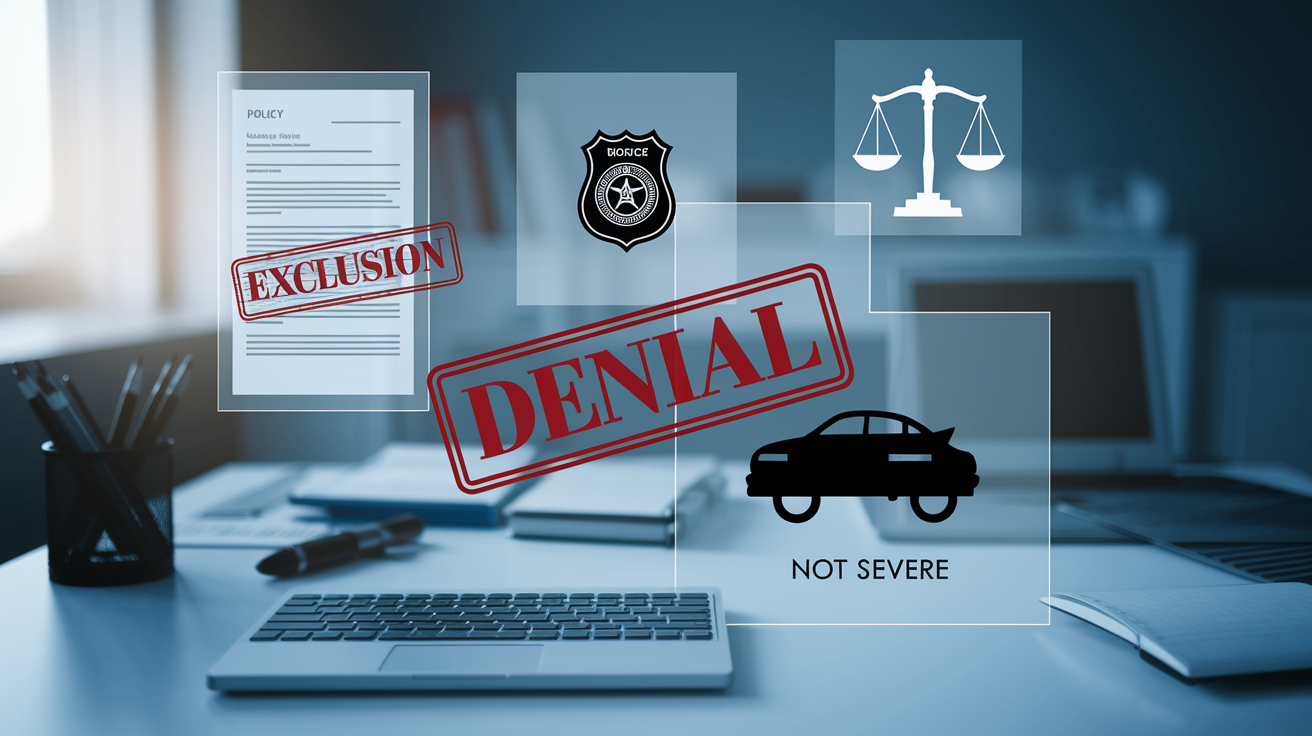
Most denials fall into a handful of predictable buckets. The insurer says your policy excludes the type of damage. Or they argue you caused the accident. Or they claim the damage isn’t severe enough to trigger coverage. Sometimes they say you didn’t follow procedures like getting a police report or pre-approved estimates. And some carriers dispute liability outright as a negotiation tactic, hoping you’ll take a lowball offer instead of fighting.
Before you respond, grab your policy declarations page and review what you actually bought. Collision coverage pays for crash damage regardless of fault. Comprehensive covers non-collision events like hail, theft, vandalism. If the denial cites a policy exclusion, compare the exclusion language word for word against what actually happened.
Common denial triggers and how to counter each:
- Policy exclusion claimed – Re-read the exclusion section and confirm the denial is accurate. If the insurer misapplied the clause, cite the correct policy language in your appeal.
- No police report on file – Obtain a copy from the law enforcement agency and submit it. If no report was filed, gather witness statements and photos to prove the incident occurred.
- Damage “not severe enough” – Provide a detailed repair estimate from a licensed shop and photos showing hidden damage like frame, suspension, or electrical issues.
- Insurer disputes liability – Submit the police report, witness statements, traffic camera footage, or dashcam video proving the other party was at fault.
- Improper estimates or lack of pre-approval – If your policy requires a specific procedure, follow it exactly and resubmit. If you already complied, attach proof like emails or repair shop communications showing you met the requirement.
How to Strengthen Your Claim With Documentation and Evidence

Insurers love citing “insufficient evidence” when they want to delay payment or pressure you into giving up. The more organized and complete your documentation, the harder it becomes for the carrier to justify a denial. Start by assembling everything that proves the accident happened, who was at fault, and how bad the damage is.
High impact evidence includes the police report, which often contains the officer’s determination of fault. Witness statements, especially from neutral third parties. Dashcam or cellphone video. Traffic camera footage if available. In disputed liability cases or when damage is extensive, an accident reconstruction expert can provide a written opinion that carries real weight during appeals or arbitration.
Keep all your documents in one folder. Policy declarations, correspondence, claim numbers, adjuster names, photos of the scene, video clips. Photos and video should capture vehicle damage from multiple angles, road conditions, skid marks, debris, and visible injuries if applicable.
| Evidence Type | Purpose | When It’s Most Helpful |
|---|---|---|
| Police report | Establishes fault and documents incident details | When liability is disputed or insurer claims no proof of accident |
| Witness statements | Provides independent third-party accounts | When police report is unavailable or insurer questions your version |
| Photos and video | Shows visible damage, scene conditions, and debris | Always. This is baseline proof the incident occurred |
| General repair documentation | Links damage to the accident and supports coverage triggers | When insurer claims damage is pre-existing or unrelated |
| Expert accident reconstruction | Provides technical analysis of fault and impact dynamics | High-dollar disputes or when fault is complex (multi-car, unclear road conditions) |
How to Appeal a Denied Auto Insurance Claim Step-by-Step

An internal appeal is your first formal challenge to a denial, and it has to be submitted in writing. Start with a cover letter addressed to the claims supervisor or appeals department. The denial letter usually names the correct recipient. In the letter, state your policy number, claim number, the date of the denial, and a brief summary of why the denial is incorrect.
Timing matters. Most policies require appeals within 30 to 60 days of the denial date, and some states impose even shorter deadlines. If your policy includes a proof of loss form (common in property and collision claims), complete it fully and attach it to your appeal packet.
Send the entire package via certified mail with return receipt requested. This creates a paper trail proving the insurer received your submission and starts any required response clock.
After you mail the appeal, the insurer will assign it to a different adjuster or supervisor for review. Expect a response within 15 to 45 days, depending on state law and your policy terms. If the appeal is denied again, the insurer must explain why in writing, and that letter will outline your next dispute options. Arbitration, appraisal, or external complaint.
The complete appeal process:
- Format a cover letter that states your policy and claim numbers, the denial date, and a concise argument for why the denial is wrong.
- Attach all supporting evidence like police report, photos, repair estimates, witness statements, expert reports. Organize them in the order you reference them in the letter.
- Complete the proof of loss form if your policy requires one. Check the policy’s “Duties After Loss” section.
- Photocopy the entire packet before mailing so you have a complete record.
- Send the appeal via certified mail and keep the tracking number and return receipt.
- Follow up if you don’t receive a response within the timeframe stated in your policy or required by state law.
- Review the final internal determination and immediately note any new deadlines for arbitration, appraisal, or external complaints if the second denial stands.
Disputing Damage Valuations and Adjuster Decisions
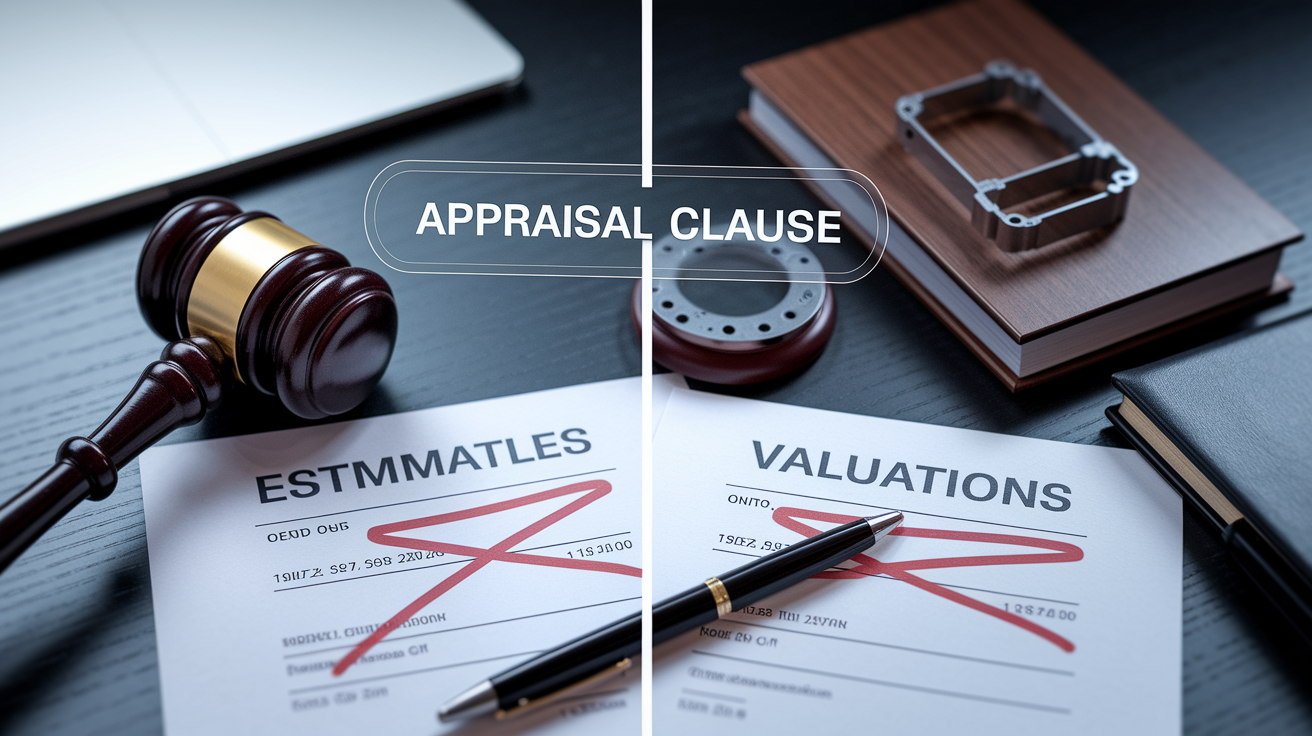
Insurers often lowball repair costs by using outdated labor rates, requiring aftermarket parts instead of OEM (original equipment manufacturer) components, or simply disputing the scope of necessary work. If the denial or payment offer is based on a valuation you think is too low, your first move is to get independent repair estimates from two or three licensed body shops and submit them to the adjuster.
Many policies include an appraisal clause that lets you hire an independent appraiser when you and the insurer can’t agree on the amount of loss. Each side picks an appraiser, the two appraisers select a neutral umpire, and the panel issues a binding decision on the value of the damage. You can also request a reinspection by a different adjuster, especially if you have new evidence like hidden frame damage or electrical issues that weren’t visible during the first inspection.
Practical tactics to challenge low valuations:
- Invoke the appraisal clause if your policy contains one and the dispute is purely about the dollar amount, not coverage.
- Negotiate OEM vs. aftermarket parts by citing your policy’s language or state regulations that allow OEM parts for newer vehicles.
- Submit expert repair assessments from certified mechanics or body shops that detail hidden damage and necessary repairs the adjuster missed.
- Provide market rate documentation showing local labor rates and parts costs if the insurer’s estimate uses outdated or out of area pricing.
- Request reinspection and be present during the inspection to point out all damage areas and ask the adjuster to document them in real time.
Filing Complaints With State Insurance Departments and Consumer Agencies

When an insurer refuses to reconsider a denial after an internal appeal, or when you suspect bad faith behavior like unreasonable delays, failure to investigate, missing written explanations, you can escalate to your state’s department of insurance. These agencies regulate carrier conduct and can investigate complaints, demand responses, and in some cases pressure the insurer to reopen your claim.
State regulators can’t force an insurer to pay your claim. But a formal complaint triggers an official review and requires the carrier to justify its actions in writing. Insurers take these complaints seriously because patterns of consumer complaints can lead to fines, sanctions, or increased regulatory scrutiny.
Filing a state insurance complaint:
- Visit your state department of insurance website and locate the consumer complaint form, usually under “File a Complaint” or “Consumer Services.”
- Complete the form with your policy details, claim number, a timeline of events, and copies of all denial letters and correspondence.
- Attach supporting documents like denial letters, appeal responses, photos, estimates, and submit the complaint online or by mail.
- Wait for the department to contact the insurer, which typically must respond within 15 to 30 days. Follow up if you don’t receive updates within the stated timeframe.
Bad Faith Insurance Behavior and Your Rights

Bad faith occurs when an insurer violates its duty to handle your claim fairly and promptly. Common examples include denying a claim without conducting a reasonable investigation, delaying payment on a clearly valid claim, offering an unreasonably low settlement when the damage is well documented, or failing to provide the written denial explanation required by state law.
To prove bad faith, you’ll need a paper trail showing the insurer ignored evidence, missed deadlines, or applied policy terms inconsistently. Save every email, letter, and claim note. Document every phone call with the date, time, adjuster name, and summary of what was said. Keep copies of all evidence you submitted.
In many states, successful bad faith claims allow you to recover more than just the original claim amount. Remedies can include compensation for the financial harm caused by the delay like lost wages, rental car costs, interest. Also emotional distress damages, attorney fees, and in egregious cases, punitive damages designed to punish the insurer for outrageous conduct.
When to Hire an Attorney for a Denied Auto Insurance Claim

Complex liability disputes where fault is unclear or multiple parties are involved almost always benefit from legal representation. An attorney can hire accident reconstruction experts, obtain traffic camera footage through subpoena, and interview witnesses in a way that preserves their statements for potential litigation.
If the insurer refuses to reconsider your claim after you’ve exhausted internal appeals and filed a state complaint, or if the amount in dispute exceeds a few thousand dollars and the carrier is clearly acting in bad faith, it’s time to consult a lawyer. Many auto insurance attorneys work on contingency, meaning they take a percentage of your settlement or judgment rather than charging upfront fees. Cost is rarely a barrier.
Attorneys can also handle all communication with the insurer, negotiate settlements more aggressively than most individuals can, and if necessary, file a lawsuit and take the case through discovery, depositions, and trial.
Situations where hiring legal counsel is strongly recommended:
- Disputed liability involving conflicting witness statements or unclear fault determinations.
- High-dollar damage claims where the repair cost or total loss payout exceeds your comfort level for self-representation.
- Insurer bad faith like pattern of delays, missing responses, or refusal to investigate.
- Policy interpretation disputes where the insurer and you disagree on what coverage applies.
- Exhausted internal and external appeals with no movement from the carrier.
Small Claims Court and Other Legal Options If Payment Still Isn’t Made
Small claims court is designed for disputes under a certain dollar threshold, typically $5,000 to $10,000 depending on the state. You don’t need an attorney. You file a complaint, pay a small filing fee, and present your evidence to a judge in an informal hearing. The process is faster and cheaper than a full lawsuit, but you’re limited to the maximum dollar amount the court allows.
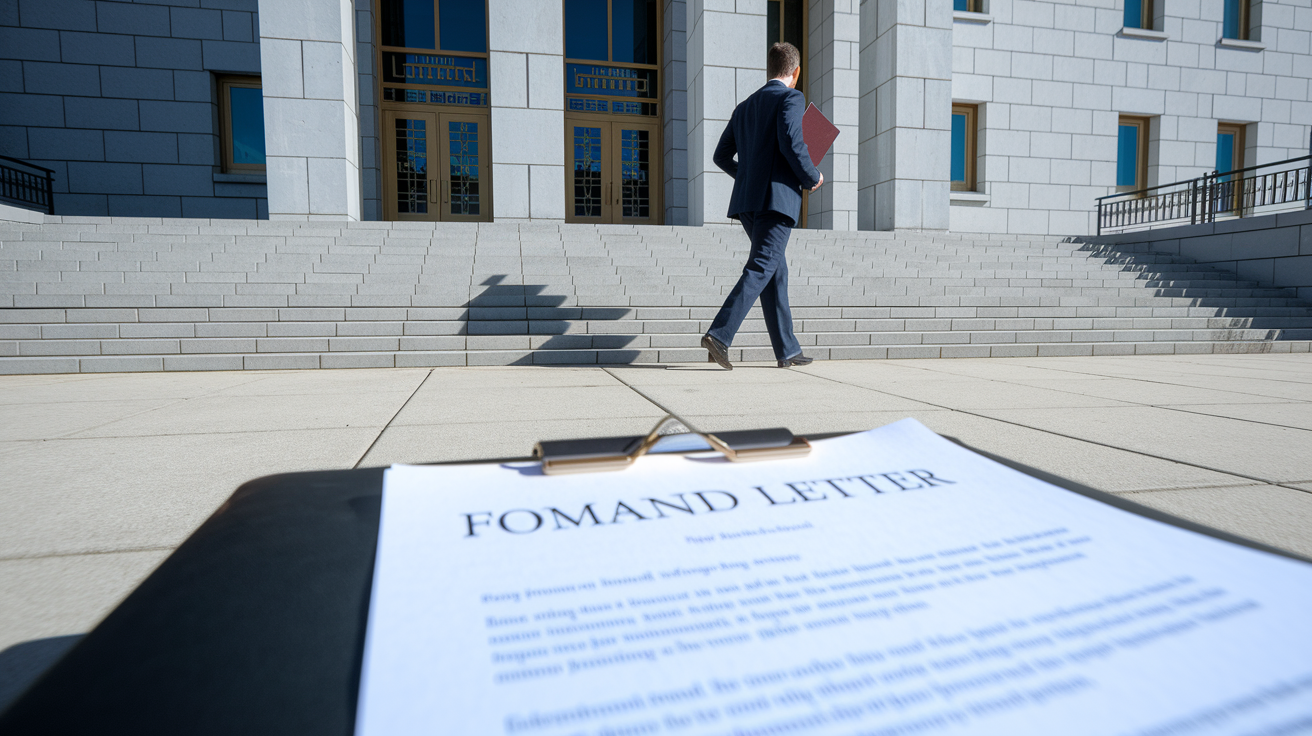
Before filing in court, send a formal demand letter to the insurer. State your claim number, the amount you’re owed, a brief summary of why the denial is wrong, and a deadline, usually 10 to 15 days, for payment. Mention that you will pursue legal action if payment isn’t made. Demand letters often prompt insurers to settle because they signal you’re serious and organized.
If you end up in small claims court, bring every piece of evidence. Police report, photos, repair estimates, correspondence, your policy. Be prepared to walk the judge through a clear timeline. Speak plainly, stick to the facts, and skip emotional arguments.
Settlement negotiation can happen at any point, even after you file a lawsuit or small claims case. If the insurer makes an offer, compare it to your out of pocket costs, the time and stress of continuing the dispute, and the likelihood of winning in court. A settlement that covers 80 to 90 percent of your costs may be better than spending months in litigation for a chance at 100 percent.
| Option | Pros | Cons |
|---|---|---|
| Small claims court | Low cost, fast process, no attorney required | Dollar limits (usually $5,000–$10,000), no appeals in most states, you present your own case |
| Full lawsuit | No dollar limit, discovery process, attorney representation | Expensive, slow (months to years), requires lawyer for best results |
| Settlement negotiation | Saves time and legal costs, can happen at any stage | May recover less than 100% of damages, requires compromise |
| Paying out of pocket | Immediate resolution, no legal hassle | You absorb the full cost, insurer faces no consequence for denial |
Final Words
If your insurer refuses to pay for car damage, act fast: read the denial, call the adjuster, and mark appeal deadlines now.
This piece walked you through why denials happen, what evidence matters, how to file an internal appeal, dispute valuations, complain to regulators, spot bad faith, and when to hire a lawyer or use small claims.
Keep everything organized, send key documents by certified mail, and pick one clear next move.
If you’re still stuck, remember what to do if insurance won’t pay for car damage: follow the immediate steps and escalate in order. You’ve got options.
FAQ
Q: Can insurance refuse to pay for damages?
A: Insurance can refuse to pay for damages when the policy excludes the loss, you miss reporting deadlines, there’s suspected fraud, insufficient evidence, or policy limits are exhausted. Read the denial letter and appeal promptly.
Q: What not to say to the insurance adjuster?
A: You should not say to the insurance adjuster admissions of fault, guesses about the crash, medical details without records, or accept a quick settlement. Stick to facts and ask for written confirmation.
Q: How much of a $100K settlement will I get?
A: How much of a $100K settlement you get depends on attorney fees, case costs, medical liens, and taxes. After a typical 33% contingency fee and $10k in costs, you might net roughly $56,000.
Q: What to do if insurance won’t cover car damage?
A: If insurance won’t cover car damage, you should calmly read the denial letter, call the adjuster for clarification and written denial, note appeal deadlines, consider an internal appeal, and organize existing documents and photos immediately.