



Think full coverage means you’re safe? Think again.
When an insurer totals your car they pay its actual cash value, not what you still owe.
That gap can leave you with thousands owed on a loan or lease.
GAP insurance pays the lender the shortfall after the insurer’s payout.
It’s especially worth it if you leased, put down little, rolled over old debt, or took a long-term loan.
This post shows how GAP works, who needs it, and the real costs and common gotchas to watch for.
Core Breakdown of How GAP Insurance Works for Cars
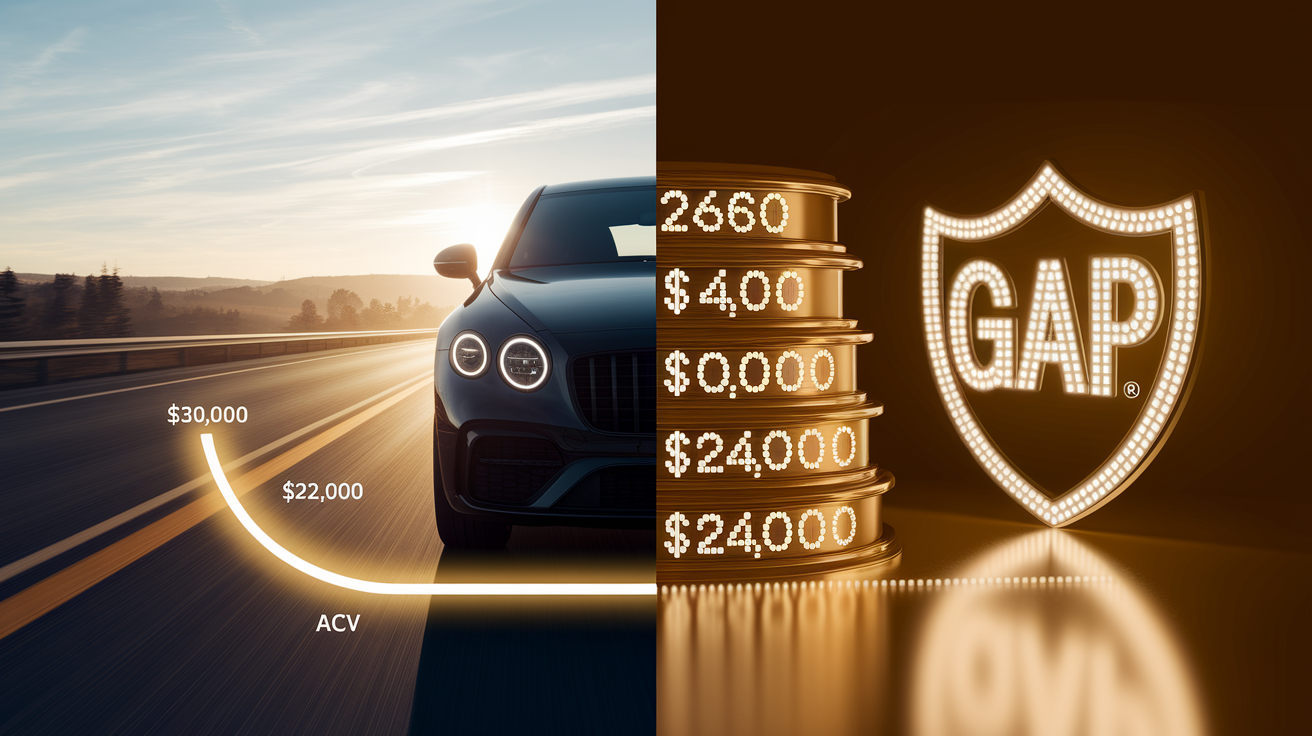
GAP insurance stands for Guaranteed Asset Protection, and it covers the difference between what your primary auto insurer pays out after a total loss and what you still owe on your loan or lease. The value gap exists because vehicles lose value the moment they leave the dealership. Often more than 10% in the first month and between 15% and 35% in the first year. Meanwhile, your loan balance drops much more slowly, especially in the early months when most of your payment goes toward interest. If your car gets totaled or stolen during that window, the insurer pays you what the car’s worth today. Not what you paid for it, and certainly not what you still owe.
Here’s how it looks with actual numbers. Say you bought a car for $30,000. One year later, it’s totaled in an accident. The insurer values it at $22,000 (the actual cash value, or ACV). You have a $500 deductible, so the insurer hands you $21,500. But your loan balance is still $26,000. Without GAP, you’re on the hook for the $4,500 gap, plus you still owe the $500 deductible out of pocket. With GAP, the policy pays that $4,500 directly to your lender. You still pay the deductible yourself. GAP doesn’t cover that.
When a GAP claim moves forward, it follows a predictable sequence:
- Your primary auto insurer declares the vehicle a total loss and issues a settlement check based on the car’s actual cash value.
- You notify your GAP insurance provider and submit the settlement letter along with your current loan or lease payoff statement.
- The GAP insurer evaluates the claim by comparing the ACV payout to your outstanding balance.
- Once approved, the GAP payout goes directly to your lender or leasing company to clear the remaining debt.
GAP only kicks in when your car’s declared a total loss or stolen and unrecovered. It’s not a replacement for collision or comprehensive coverage. It’s a top-up that only works if those coverages are already in place and have triggered a payout. Most GAP policies explicitly require you to carry full coverage (collision and comprehensive) to be eligible. If you’re running liability only, GAP isn’t even an option in most cases.
Key Reasons Drivers Consider GAP Insurance for Vehicles
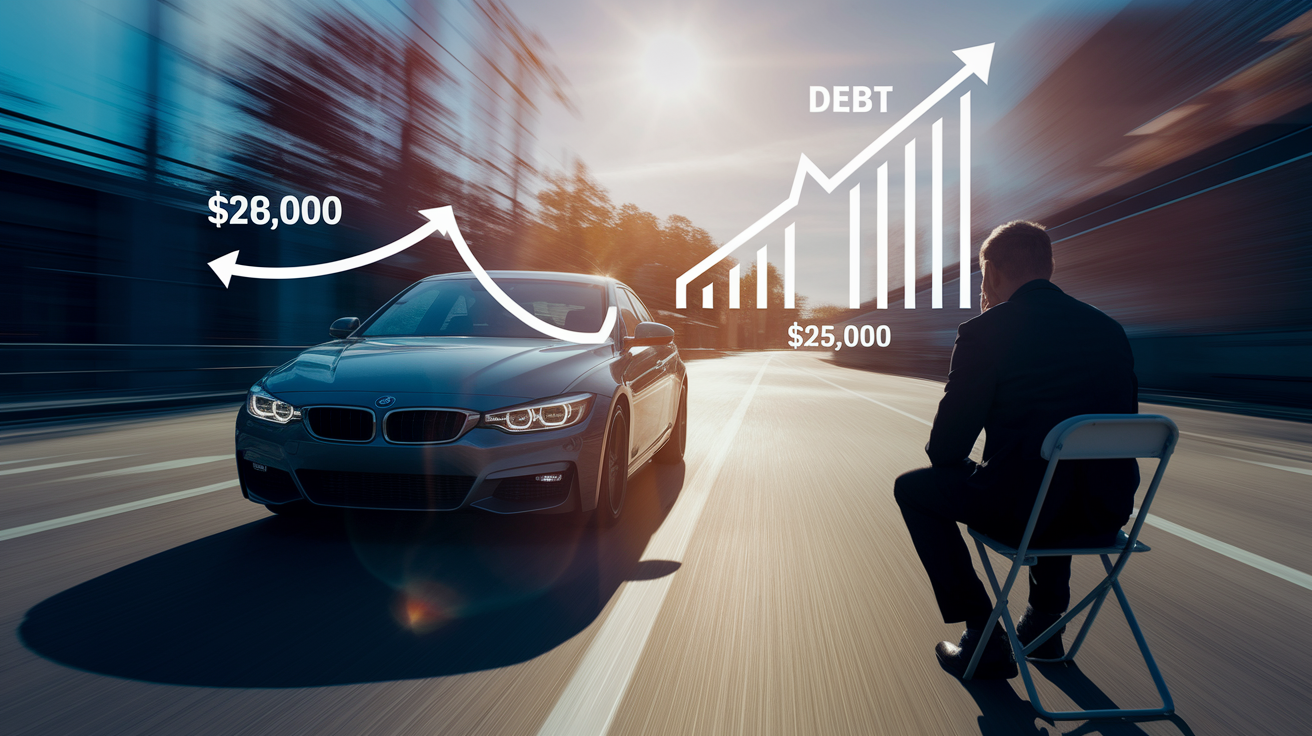
The main reason people end up underwater on a car loan is depreciation happening faster than principal paydown. If you financed $28,000 over six years at a high interest rate, you might still owe $25,000 after two years, even though the car’s only worth $20,000. That’s negative equity, and it’s a common setup for anyone who stretched the loan term to lower the monthly payment or who traded in a car they still owed money on. Depreciation doesn’t care about your payment schedule. Some models lose value faster than others, especially luxury cars, electric vehicles with rapidly evolving tech, or anything with high mileage right out of the gate.
Certain buyer profiles carry more exposure to the gap between market value and loan payoff. Leaseholders face this risk because lease contracts often include early termination penalties and require you to cover the full payoff amount if the car’s totaled. Buyers who rolled over an old loan into a new one start the loan already upside down. High mileage drivers accelerate depreciation, and anyone financing a vehicle known for steep value drops in the first few years is gambling without GAP.
GAP coverage makes the most sense in these situations:
You rolled over negative equity from a previous loan into your current financing. You put down less than 20% at purchase, leaving little equity cushion from day one. You’re financing the car over five or more years, which keeps the balance high well into ownership. You’re driving a model that depreciates quickly. Luxury sedans, certain EVs, or anything with a known resale problem. You’re leasing, and your lease contract requires GAP or early termination coverage (many do).
Types of GAP Insurance Explained for Car Owners
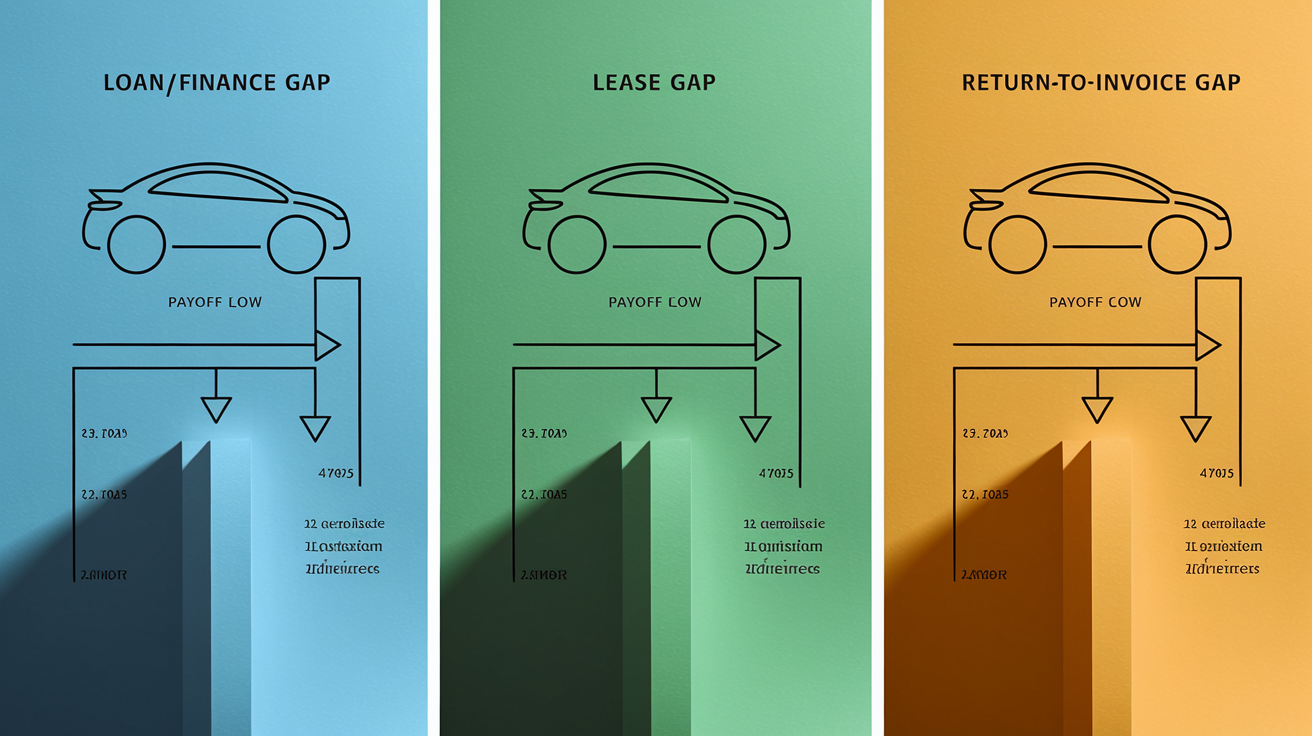
Not all GAP policies work the same way. The type you buy determines how the payout’s calculated and what it’s designed to replace. Some cover the loan, some cover the lease, and some aim to put you back in a similar new vehicle.
Loan/Finance GAP
This is the most common type. Loan GAP covers the outstanding balance on your auto loan after the insurer’s ACV payout is applied. If you owe $26,000 and the insurer pays $21,500 (after your deductible), loan GAP sends the remaining $4,500 to your lender. It doesn’t cover your deductible, and many policies exclude certain fees like extended warranties or aftermarket add-ons that were rolled into the original loan. The goal is to zero out the debt so you walk away clean. Not to give you cash in hand.
Lease GAP
Lease GAP works similarly but is tailored to lease contracts. It covers the remaining lease payments or the early termination payoff amount required by the leasing company after a total loss. Many lease agreements include their own GAP waiver or require you to carry this coverage as a condition of the lease. Lease GAP may also cover certain lease end fees and penalties that wouldn’t be addressed by standard loan GAP. If your lease payoff is $20,000 and the insurer pays $12,000, lease GAP covers roughly $8,000 to satisfy the contract.
Return-to-Invoice GAP
This type pays the difference between the insurer’s market value payout and the original purchase price you paid (the invoice amount). The idea is to restore you to the financial position you were in at purchase, so you can replace the totaled car with a comparable new one. If you bought the car for $30,000 and the insurer pays $25,500 after depreciation, return to invoice GAP adds $4,500 to bring you back to $30,000. This version is less common in the U.S. but widely available in the U.K. and may be offered as an endorsement by some insurers.
| Type | What It Covers |
|---|---|
| Loan/Finance GAP | Pays off the remaining auto loan balance above the insurer’s ACV payout |
| Lease GAP | Covers lease contract payoff, remaining lease payments, and early termination fees |
| Return-to-Invoice GAP | Restores the original purchase invoice amount to help replace with a similar new vehicle |
Cost of GAP Insurance and What Impacts Pricing
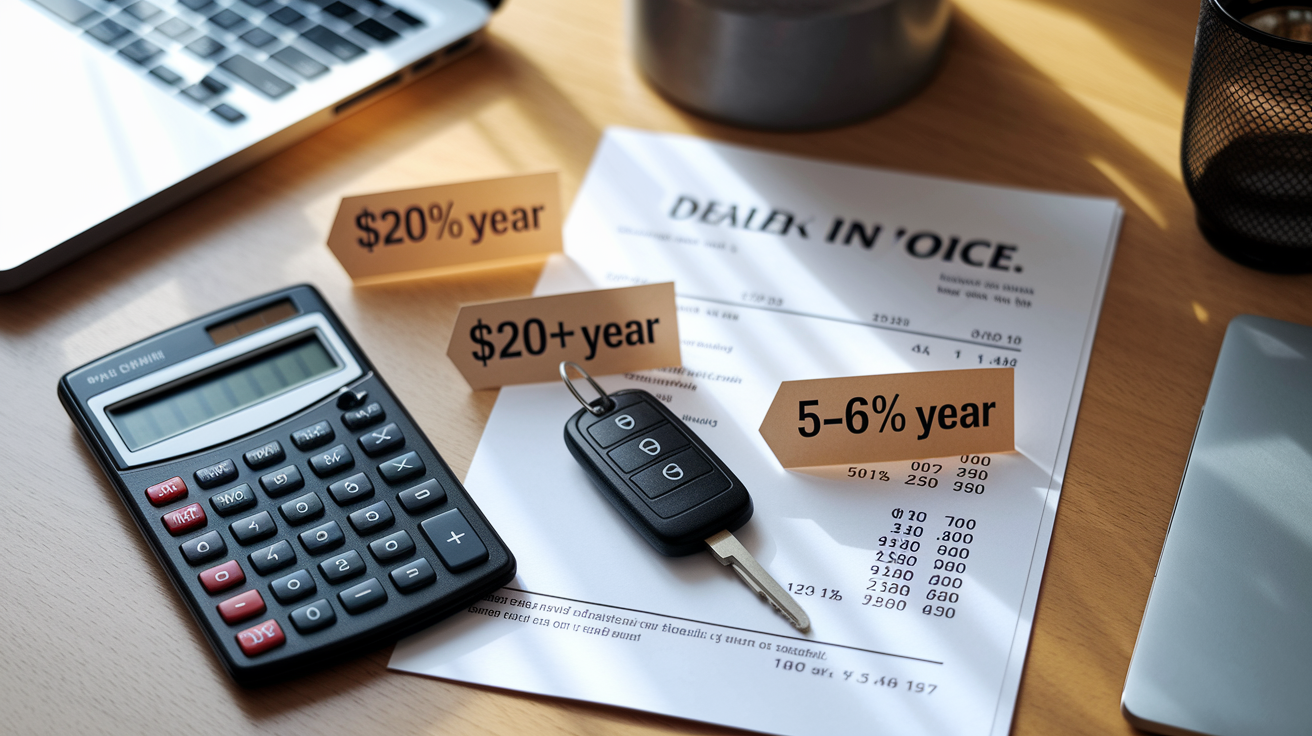
The price of GAP insurance varies widely depending on where you buy it and how it’s structured. If you add it to your existing auto insurance policy as an endorsement, some insurers charge as little as $20 per year. A flat fee that barely registers on your annual premium. Standalone GAP policies purchased separately or through third party providers typically run several hundred dollars per year. Dealerships almost always charge more than insurers, and if you finance the GAP premium through the dealer, you’ll pay interest on that insurance cost for the life of the loan. In most cases, GAP represents around 5% to 6% of your total auto insurance premium when purchased through your carrier.
Several factors drive the price. Vehicle value and loan amount are the biggest. Higher amounts mean higher potential payouts, so insurers charge more. Loan term matters too. A six year loan keeps you underwater longer than a three year loan, which increases risk. The depreciation profile of your specific make and model plays a role, as does your state, since regulations and competitive pricing vary. Some insurers also factor in your credit score, though this is less common for GAP add-ons than for primary auto policies.
You can cancel GAP coverage once your loan balance drops to or below the car’s fair market value, which usually happens sometime in the second or third year if you made a reasonable down payment. Most insurers and GAP providers will refund the unused portion of the premium on a pro rated basis, so there’s no reason to keep paying once the risk disappears. Confirm cancellation in writing and keep the documentation in case of any future disputes. If you bought GAP through a dealer and financed it, canceling may also reduce your loan balance slightly, depending on how the refund’s applied.
GAP Insurance Claims Process and Required Documentation

The claims process starts with your primary auto insurer, not your GAP provider. The insurer has to officially declare the vehicle a total loss, meaning repair costs exceed a certain percentage of the car’s value, typically 70% to 80%, or confirm that the vehicle was stolen and not recovered. You file the claim with your collision or comprehensive coverage, and the insurer will send an adjuster to assess the damage or confirm the theft. Once they issue a settlement offer based on actual cash value, that’s when you loop in the GAP provider.
Before you accept the ACV payout from your primary insurer, notify your GAP insurance company. Most policies require you to report the claim within a specific window, often 30 to 60 days after the total loss. You’ll need to submit several documents:
- A copy of the settlement letter or check from your primary auto insurer showing the ACV payout amount.
- Your current loan or lease payoff statement from the lender, showing the exact balance owed.
- The GAP insurance claim form (provided by your GAP insurer).
- A copy of your original finance or lease contract.
- The primary insurer’s claim file number and contact information.
- A police report, if the loss involved theft or a criminal act.
Once the GAP insurer reviews and approves the claim, the payout goes directly to your lender or leasing company. Not to you. The process typically takes two to four weeks from the time you submit complete paperwork, though it can stretch longer if documents are missing or if there’s a dispute over excluded charges. The most common delays happen when people accept the primary insurer’s check before notifying GAP, or when they don’t have an up to date payoff statement. Get the payoff amount in writing from your lender the same week you file the claim to avoid timing mismatches.
Coverage Limits, Exclusions, and Policy Restrictions in GAP Insurance

Most GAP policies cap the maximum payout, often at 25% of the vehicle’s ACV or a fixed dollar amount like $50,000, depending on the insurer and policy type. Many also impose mileage limits, commonly 100,000 miles at the time you purchase the policy, or restrict coverage to vehicles below a certain age or value, such as under $75,000. The policy only pays if the car’s declared a total loss. It does nothing for partial damage, even if repair costs are high. If your car’s drivable after an accident, GAP stays on the sidelines.
The most important exclusions to know before you buy:
Your deductible. GAP doesn’t reimburse the amount you pay out of pocket to satisfy your collision or comprehensive deductible.
Rolled over negative equity or loan add-ons. Many policies exclude or limit coverage for previous loan balances you rolled into the new loan, extended warranties, or other non-vehicle charges.
Aftermarket modifications. Custom exhausts, spoilers, lifted suspensions, and aftermarket wheels are typically excluded unless you bought a rider specifically covering them.
Non-total-loss damage. GAP only triggers when the insurer writes off the car or confirms it stolen. It won’t cover repair bills or diminished value claims.
Once a vehicle receives a salvage title after a total loss, it generally can’t be insured under a standard policy, which means GAP wouldn’t apply even if you theoretically kept the car. Common denial reasons include missed premium payments, failure to carry required collision and comprehensive coverage, or submitting a claim for a vehicle that was repossessed rather than totaled in an accident. If the lender repossesses the car due to non-payment, that’s a contractual issue, not an insurable total loss, and GAP won’t pay.
Alternatives to GAP Insurance and When to Skip It

If you put down 20% or more when you buy the car, you start with enough equity that the loan to value gap is small or nonexistent for the first couple of years. Paying extra toward the principal each month accelerates payoff and shrinks the window where you’re underwater. Choosing a vehicle with slower depreciation, Honda, Toyota, and certain trucks hold value better than luxury sedans or rapidly evolving EVs, also reduces the odds you’ll ever owe more than the car’s worth.
Here are the main substitutes or strategies that can replace or reduce the need for GAP:
Higher down payment (≥20%) to create an equity buffer from day one.
Shorter loan terms (three to four years instead of six) so principal drops faster than depreciation.
New car replacement coverage offered by some insurers as an add-on to comprehensive policies. Pays to replace with a brand new equivalent for the first year or two.
Loan or lease payoff insurance sold by some credit unions and lenders. Similar to GAP but may have different exclusions.
Buying a certified pre-owned or lightly used vehicle that’s already absorbed the steepest depreciation hit, narrowing the gap.
Some comprehensive auto policies include first year new car replacement as a standard or optional feature. If your insurer already covers the cost of a comparable new vehicle during the first 12 to 24 months of ownership, GAP may be redundant. Check your policy wording carefully. Many drivers assume they have this coverage when they don’t, or they have it but only under narrow conditions. For older cars or vehicles you own outright, GAP makes no sense at all since there’s no loan to cover.
Practical Examples of GAP Payouts in Real Total-Loss Scenarios

Take a buyer who finances a $30,000 sedan with a small down payment of $2,000, borrowing $28,000 over six years. After one year, the car’s totaled. The insurer values it at $27,000 (about 10% depreciation). The buyer has a $500 deductible, so the insurer pays $26,500. The loan balance after 12 months of payments is still around $26,800 because most of the early payments went to interest. Without GAP, the buyer owes $300 out of pocket plus the $500 deductible, totaling $800. With GAP, the policy covers that $300 gap, and the buyer only pays the deductible. In this case, GAP saves a relatively small amount, but if depreciation had been steeper or the loan balance higher, the gap could easily be several thousand dollars.
Now consider a lease example. A driver leases a $35,000 SUV with a lease payoff amount of $20,000 remaining when the vehicle’s stolen and not recovered. The insurer determines the ACV is $12,000. After a $500 deductible, the insurer pays $11,500 to the leaseholder. The lease contract requires a $20,000 payoff to terminate the lease and satisfy the leasing company. Lease GAP covers the roughly $8,500 difference ($20,000 payoff minus $11,500 insurer payout). The driver still owes the $500 deductible but walks away from the lease with no additional debt. Without lease GAP, the driver would be responsible for paying the leasing company the full $8,500 shortfall out of pocket.
Finally, imagine a buyer who rolled over $4,000 of negative equity from a previous car loan into a new $28,000 purchase, borrowing $32,000 total. Two years later, the car’s totaled. The insurer’s ACV payout is $18,000. After a $1,000 deductible, the buyer receives $17,000. The remaining loan balance is $22,000. Without GAP, the buyer owes the lender $5,000 plus the $1,000 deductible, a total out of pocket hit of $6,000. With GAP, the policy covers the $5,000 gap, and the buyer only pays the deductible. This is where GAP delivers the most value. When negative equity, long loan terms, and rapid depreciation combine to create a large shortfall.
Buying GAP Insurance Smartly: What to Check Before Signing
Comparing GAP quotes isn’t just about price. It’s about reading the actual policy wording to understand what triggers a payout, what’s excluded, and how the claim process works. Two policies with the same annual premium can have very different coverage limits, notification deadlines, and exclusions. Some are endorsements added to your existing auto policy, which makes filing a claim simpler because everything runs through one insurer. Others are standalone contracts with separate claim procedures, and that can create confusion when you’re already dealing with a totaled car and a lender. In some states, car dealers are required to wait two full days after the vehicle sale before they’re allowed to sell you GAP insurance, a cooling off rule designed to prevent high pressure add-on sales.
Before you sign, verify these six details:
Policy start date and coverage duration. Confirm it begins the day you take delivery and lasts as long as you need it (often three to five years).
Maximum payout caps and vehicle value or mileage limits. Many policies exclude cars worth more than $75,000 or with over 100,000 miles at purchase.
Full list of exclusions. Check whether rolled over debt, aftermarket parts, extended warranties, or certain fees are covered or excluded.
Claim notification deadline. Find out how many days you have to report a total loss to the GAP provider after the primary insurer’s settlement.
Cancellation and refund terms. Confirm you can cancel once equity turns positive and whether you’ll receive a pro rated refund.
Lender or lessor approval requirements. Some lease contracts specify which GAP providers are acceptable, so verify compatibility before buying.
Final Words
Start by checking how much you owe vs what your car is worth. That gap is the risk after a total loss. We explained how GAP works, gave numeric examples, and why depreciation matters.
You’ll find who benefits, different GAP types, costs, claim steps, exclusions, and alternatives. Also a short pre-buy checklist.
With gap insurance for cars explained, check caps, exclusions, and dealer markups so you don’t get stuck with a big bill. Do those checks—and you’re better prepared.
FAQ
Q: Is it good to have gap insurance on a car?
A: Having gap insurance on a car is smart when you owe more than the vehicle’s market value—common with new cars, low down payments, long loans, or leases—because it covers the loan/lease shortfall after a total loss.
Q: Why do I still owe money after gap insurance?
A: You still owe money after gap insurance when the policy excludes the deductible, rolled-over fees, or caps the payout, or if the lender charges penalties not covered by GAP; check your policy limits and exclusions.
Q: Why do dealerships push gap insurance?
A: Dealerships push gap insurance because it’s a high-margin add-on that’s easy to roll into financing; they profit and buyers often accept it without comparing cheaper insurer or online options.
Q: What happens if your car is totaled but you have gap insurance?
A: If your car is totaled and you have gap insurance, your primary insurer pays the ACV minus deductible, then GAP covers the remaining loan/lease balance up to policy limits, with payment usually sent directly to the lender.