

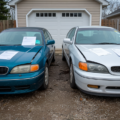



What if your “cheap” policy leaves you $1,500 short after a fender bender?
That’s the deductible problem: the amount you pay before the insurer chips in.
Pick it too low and you pay higher monthly premiums.
Pick it too high and you scramble for cash at the body shop.
This guide cuts through the sales pitch and shows how to choose an auto insurance deductible that fits your savings, your car’s value, and your driving risk.
Read this to avoid surprises, calculate breakeven years, and get three quick checks to pick the right number.
Understanding Auto Insurance Deductibles

A deductible is the dollar amount you pay out of your own pocket on a covered claim before your insurer pays the rest. If you back into a pole and cause $1,200 in damage and you carry a $500 collision deductible, you write a check for $500 and the insurer covers the remaining $700.
Most auto policies offer deductible choices ranging from $250 to $2,000, with $500 and $1,000 being the most popular. The deductible applies per claim, not per year. If you file three separate claims in twelve months with a $1,000 deductible, you pay $1,000 three times.
Here’s how the math breaks down in a typical fender bender:
- Total repair bill: $2,400
- Your deductible: $500
- Insurance payment: $1,900
Deductibles matter because they directly affect both your monthly premium and your financial risk when something goes wrong. A lower deductible means less cash due at claim time but higher premiums month after month. A higher deductible cuts your premium but leaves you holding more of the bill if you hit a guardrail or a deer totals your hood. The goal is to find the amount that matches your budget, your emergency savings, and your comfort with short term financial shocks. Getting that balance wrong can mean either wasting money on premiums or scrambling for cash when the body shop sends the invoice.
Types of Auto Insurance Deductibles

Collision and comprehensive are the two main deductible based coverages on a standard auto policy, and they respond to completely different events. Collision deductibles apply when your vehicle hits, or is hit by, another vehicle or object, whether you’re at fault or not. That includes backing into a mailbox, sideswiping a parked car, or getting rear ended at a stoplight. Your collision deductible is what you pay before the insurer cuts a check for the damage to your car.
Comprehensive deductibles cover almost everything else that can damage your vehicle when it’s not moving or when the cause isn’t a collision. Think theft, vandalism, fire, hail, falling tree limbs, flooding, or a deer that jumps into your path. Comprehensive claims tend to involve unpredictable acts of nature or crime rather than driver error. You can carry different deductible amounts for collision and comprehensive, and many drivers choose a lower comprehensive deductible because comprehensive claims are less predictable and repairs for weather or wildlife damage can be expensive.
| Coverage Type | Common Events Covered |
|---|---|
| Collision | Crashes with other vehicles, hitting guard rails, backing into poles, rollover accidents |
| Comprehensive | Theft, vandalism, fire, hail, flood, falling objects, animal strikes (deer, elk, etc.) |
How Deductibles Affect Insurance Premiums

Raising your deductible lowers your premium because you’re taking on more financial responsibility up front, which reduces the insurer’s payout risk on smaller claims. Dropping your deductible from $1,000 to $500 can increase your six month premium by 10 to 20 percent, sometimes more, depending on where you live and your claims history.
The premium to deductible relationship isn’t linear. Jumping from $500 to $1,000 usually saves more per dollar of deductible increase than jumping from $1,000 to $2,000. Insurers price that trade off based on claims data and their own risk models, so the exact savings vary by company.
Several other factors influence how much premium you save when you raise a deductible:
Vehicle repair costs. Luxury or European cars with expensive parts see bigger premium swings because every claim costs the insurer more.
Location and theft rates. High crime ZIP codes and hail prone regions generate more comprehensive claims, so deductible changes have a larger premium effect.
Driver history. A clean record earns better rates across all deductible levels. Multiple at fault accidents or violations reduce savings from higher deductibles.
Insurer pricing models. Some carriers offer aggressive discounts for $1,000+ deductibles. Others barely budge premiums above $500.
The cost benefit calculation is simple. Divide your annual premium savings by the extra deductible amount. If raising your deductible from $500 to $1,000 saves you $180 a year, you break even after about 2.8 years of claim free driving ($500 ÷ $180). If you file a claim before that, you lost money. If you go five years without a claim, you pocketed $900 in savings and still have the policy in place.
Pros and Cons of High vs. Low Deductibles

High deductibles work best for drivers who can cover a $1,000 or $2,000 repair bill without touching a credit card and who want to keep premiums low. The immediate benefit is cash savings every month. Over three years, a driver who selects a $1,500 deductible instead of $500 and saves $25 a month keeps $900 in premium that would otherwise go to the insurer. The risk is writing a four figure check when a pothole destroys a wheel or hail dimples the hood.
Low deductibles make sense when your emergency fund is thin or your vehicle is expensive to fix. Paying an extra $40 a month in premium stings less than scrambling for $1,500 after a fender bender. Low deductibles also reduce the temptation to skip filing legitimate claims because the out of pocket cost feels manageable.
Key advantages of each approach:
High deductible ($1,000 to $2,000). Lower monthly premiums. Greater long term savings if you avoid claims. Encourages self funding minor repairs to prevent rate increases. Forces better emergency fund discipline. Reduces insurer administrative costs, which can translate to better renewal rates.
Low deductible ($250 to $500). Smaller immediate financial shock at claim time. Easier to file claims without financial stress. Better fit for older vehicles with frequent small repair needs. Protects drivers with variable income or tight month to month budgets. Reduces risk of paying out of pocket and then facing premium increases anyway.
Choosing the Right Deductible for Your Situation

Your deductible should reflect how much cash you can access quickly without borrowing or raiding long term savings. If your emergency fund sits at $2,000 and your deductible is $1,500, one claim wipes out most of your financial cushion.
Vehicle value and age also matter. A ten year old sedan worth $4,000 makes a $1,000 deductible less attractive because a moderate collision might total the car and you’ll only collect $3,000 after the deductible, assuming the insurer values it at $4,000. Meanwhile, a $45,000 SUV with expensive aluminum bodywork benefits from a lower deductible because repair bills routinely hit five figures and every claim involves serious money.
Here’s a simple four step process to land on the right amount:
Check your liquid savings. Count only cash, money market accounts, and funds you can access within 48 hours. Exclude retirement accounts and locked CDs. Your deductible shouldn’t exceed half of this total.
Calculate annual premium differences. Get quotes at $250, $500, $1,000, and $1,500 deductibles from at least two insurers. Divide the annual savings by the extra deductible to estimate breakeven time in claim free years.
Review your claim history and risk exposure. If you’ve filed two claims in the past five years or you commute 40 miles daily in heavy traffic, lean toward a lower deductible. If you work from home and drive 6,000 miles a year on quiet roads, a higher deductible makes more sense.
Set a deductible you can afford twice. Assume you might file two claims in one bad year (a collision in January, hail damage in May). If paying $1,000 twice would force you into debt, drop to $500.
Real World Claim Scenarios

You slide on black ice and dent your bumper. The body shop estimates $420 in repairs. Your collision deductible is $500. In this case, the insurer pays nothing because the claim amount is below your deductible. You either pay the $420 yourself or drive with the dent. Filing the claim triggers paperwork and a record without any financial benefit, and some insurers still count it against you at renewal even when they pay zero.
A distracted driver rear ends you at a red light, causing $3,200 in damage to your trunk, bumper, and hatch. You carry a $1,000 collision deductible. You pay $1,000. The insurer pays $2,200. The other driver’s liability insurance might reimburse your deductible later if they accept fault, but you front the money first. If the other driver is uninsured or disputes fault, you’re stuck with the $1,000 unless your own uninsured motorist property damage coverage (if you bought it) kicks in.
You’re driving home at dusk and a deer jumps into your lane. The collision breaks your headlight assembly, cracks the grille, and damages the radiator. Repairs total $2,800. Because this is an animal strike, your comprehensive deductible applies. Let’s say it’s $250. You pay $250. The insurer pays $2,550. Comprehensive claims typically don’t raise premiums as sharply as at fault collision claims, but filing frequency still matters. If this is your third comprehensive claim in two years, expect your rate to climb or your insurer to non renew the policy.
Tips for Evaluating Policy Options

Start by requesting a full declaration page and schedule of coverages from each insurer you’re considering, not just a one page quote summary. The dec page shows your exact deductible for collision, comprehensive, and any specialty coverages, plus it reveals whether the company has bundled features like rental reimbursement or roadside assistance that might offset a higher deductible elsewhere.
Pay attention to how insurers handle glass claims. Some policies let you buy a separate $0 or $100 glass deductible so a cracked windshield doesn’t trigger your full comprehensive deductible. That rider usually costs $20 to $40 per year and makes sense if you drive gravel roads, follow trucks on highways, or live where winter road crews throw salt and small rocks. Other insurers waive the comprehensive deductible entirely for glass if you use their preferred repair network, which saves money but limits your shop choice.
Look for optional programs that can reduce deductibles over time or reward safe driving:
Disappearing deductible programs. Some insurers drop your deductible by $50 or $100 for every claim free year, down to a floor of $0 or $100. You start at $500. After three safe years, it’s $200. One claim resets the clock.
Accident forgiveness riders. These prevent your rate from spiking after your first at fault claim, though they don’t eliminate the deductible itself. Pricing varies. Drivers with decades of clean history sometimes get it free, while newer drivers pay $50 to $150 per year.
Deductible waiver clauses. A few policies waive your collision deductible if the other driver is 100% at fault and their insurer accepts liability in writing. You still pay up front, then the insurer subrogates and reimburses you later. This feature is rare and worth confirming in writing, not assuming.
Final Words
You can now spot what a deductible is, how collision and comprehensive deductibles differ, and why a deductible applies per claim. The article walked through real math, premium trade-offs, and common claim scenarios so you see the money side, not just the marketing.
Use the quick decision steps and tips to compare policies and confirm details like glass or disappearing deductibles before you sign. This auto insurance deductible guide gives you practical checks to match coverage to your savings and risk—so you’re prepared, not surprised.
FAQ
Q: What should I set my car insurance deductible at?
A: The amount you should set your car insurance deductible at depends on your savings, vehicle value, and risk tolerance. Pick one you can pay immediately—most drivers choose $500–$1,000 for balanced premiums and claim risk.
Q: Is a $2000 car deductible a bad idea?
A: A $2,000 car deductible isn’t automatically a bad idea; it’s sensible if you have emergency savings and want lower premiums. Compared with $1,000, $2,000 lowers your premium but raises your out‑of‑pocket risk on every claim.
Q: Is it better to have a $500 deductible or $1000?
A: Choosing a $500 deductible versus $1,000 depends on whether you prefer lower claim costs or lower premiums. Pick $500 if you lack savings or expect small repairs; pick $1,000 to save roughly 10–20% on premiums while paying more at claim time.