




Think liability insurance is enough to protect you? Think again.
Liability only pays the other driver’s medical bills and property damage when you’re at fault, it won’t fix your car.
Full coverage adds collision and comprehensive, so it pays for your repairs after a crash, theft, or weather damage.
This post cuts through the sales talk to show what each actually covers, what a bad claim will cost you, and who should keep full coverage versus who can safely drop it.
Understanding Liability vs. Full Coverage

Liability insurance pays only for the other driver’s medical bills and property damage when you’re at fault in an accident. It’s the minimum required in most states, but it won’t pay a dollar to repair your car. Full coverage car insurance bundles liability with collision and comprehensive coverage, meaning it pays for damage to your own vehicle after a crash, theft, or weather event. The core difference is simple: liability protects the other guy. Full coverage protects you and the other guy.
Full coverage typically costs more because you’re insuring your vehicle’s value, not just your legal obligation. Most drivers choose liability only when their car is old and paid off, and full coverage when the car is new, financed, or worth more than a few thousand dollars. Lenders almost always require full coverage until the loan is satisfied.
Here’s the side by side breakdown:
Cost: Liability only runs roughly $350 to $1,200 per year. Full coverage runs $800 to $2,500 per year depending on driver profile, vehicle, and state.
Vehicle protection: Liability pays zero for your car. Full coverage pays for repairs or replacement minus your deductible.
Coverage limits: Both include bodily injury and property damage limits (example: 25/50/25), but full coverage adds collision and comprehensive.
State minimums: Every state except New Hampshire requires liability. None require collision or comprehensive unless you have a lender.
Deductibles: Liability only has no deductible. Collision and comprehensive usually carry $250, $500, or $1,000 deductibles.
Who it’s for: Liability suits low value cars and cash buyers. Full coverage suits financed, leased, or high value vehicles.
Most drivers start with full coverage and drop collision/comprehensive once the vehicle’s market value falls below the point where annual premiums make sense. That threshold is often around $3,000 to $5,000 in vehicle value, though your personal ability to self insure matters more than any rule of thumb.
What Liability Insurance Covers

Liability coverage has two parts: bodily injury liability and property damage liability. Bodily injury pays medical expenses, lost wages, and legal costs when you injure someone else in an at fault accident. Property damage liability pays to repair or replace the other driver’s vehicle, fence, mailbox, or anything else you hit. Neither component pays for your injuries or your car.
State minimum liability limits are written as three numbers, like 25/50/25. That means $25,000 per person for bodily injury, $50,000 total per accident for bodily injury, and $25,000 for property damage. If you cause an accident that injures two people and totals a $40,000 SUV, your 25/50/25 policy will pay up to $25,000 per person and $25,000 for the vehicle. You’re personally liable for the rest.
Many experts recommend higher limits like 100/300/100 if you have assets to protect, because state minimums are often inadequate in serious crashes.
State requirements vary widely. California requires 15/30/5. Texas requires 30/60/25. Florida requires 10/20/10 for property damage liability and PIP instead of traditional bodily injury minimums. Every state except New Hampshire mandates some form of liability insurance, but the minimums are set by state law and often haven’t been updated in years. Meeting the minimum keeps you legal. It doesn’t necessarily keep you financially safe if you cause a bad crash.
What Full Coverage Includes
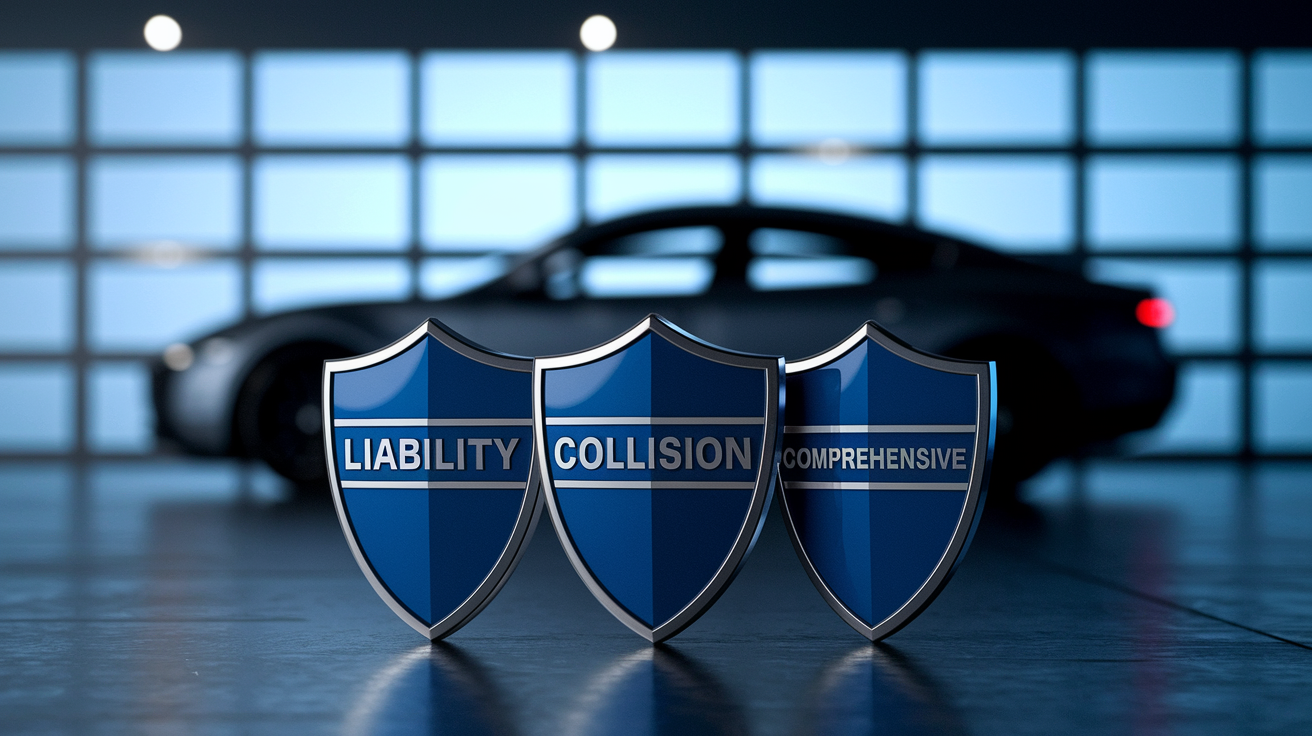
Full coverage typically bundles three types of protection: liability, collision, and comprehensive. “Full coverage” isn’t an official insurance term. It’s shorthand for a policy that covers both your legal obligations and your own vehicle.
The three components are:
Liability coverage: Pays others’ medical bills and property damage when you’re at fault (same as liability only policies).
Collision coverage: Pays to repair or replace your vehicle after a collision with another car or object, or after a rollover, minus your deductible.
Comprehensive coverage: Pays for damage from non collision events. Theft, vandalism, fire, flood, hail, falling tree branches, or hitting an animal.
Collision kicks in when you hit another vehicle, a guardrail, a pole, or flip your car. The insurer pays actual cash value (the car’s market value before the crash) minus your deductible. If repair costs exceed the car’s value, the insurer declares it a total loss and pays you the cash value minus the deductible. For example, if your car is worth $8,000, repairs are estimated at $9,500, and your deductible is $1,000, the insurer pays roughly $7,000 and you keep the salvage or let the insurer take it.
Comprehensive covers the random stuff that isn’t a collision. Someone breaks your window and steals your stereo? That’s comprehensive. Hail dents your roof? Comprehensive. You swerve to avoid a deer, don’t hit anything, but slide into a ditch? That’s actually collision because you left the road. You hit the deer? That’s comprehensive because you hit an animal, not a fixed object or another vehicle.
The line between collision and comprehensive matters because they have separate deductibles, though many drivers choose the same deductible amount for both.
Cost Differences Between Liability and Full Coverage

Full coverage costs roughly two to three times more than liability only because the insurer is now on the hook for your vehicle, not just the other driver’s bills. National averages put liability only premiums around $500 to $900 per year and full coverage around $1,200 to $2,000 per year, but those numbers swing wildly depending on your age, driving record, vehicle type, ZIP code, and state regulations.
Typical annual premium ranges look like this:
| Coverage Type | Average Annual Cost |
|---|---|
| Liability only | $480 to $1,200 |
| Full coverage (liability + collision + comprehensive) | $1,200 to $2,400 |
The gap widens when you drive a newer car, live in an urban area with high theft or accident rates, or have recent claims or violations on your record. A 22 year old driving a 2023 sedan in a city might pay $2,800 per year for full coverage and $1,100 for liability only. A 45 year old with a clean record driving a 2015 sedan in a rural area might pay $1,400 for full coverage and $600 for liability only.
Vehicle value is the biggest driver of collision and comprehensive premiums. Insuring a $30,000 car costs more than insuring a $6,000 car because the potential payout is higher.
Deductibles also shape the price. Raising your collision and comprehensive deductibles from $250 to $1,000 can cut those portions of your premium by 15 to 40 percent, saving a few hundred dollars a year. The tradeoff is you pay the first $1,000 out of pocket on a claim instead of the first $250. If you can’t afford a $1,000 surprise expense, stick with a lower deductible even if the premium is higher.
Pros and Cons of Liability Only vs. Full Coverage

Choosing between liability only and full coverage is a money versus risk decision. Each option has clear benefits and clear drawbacks.
Liability only pros and cons:
Pro: Lowest possible premium. Saves roughly $600 to $1,400 per year compared to full coverage in many cases.
Pro: Meets legal minimums in every state that requires insurance.
Pro: Makes sense when vehicle value is low and you can afford to replace it out of pocket.
Con: Pays nothing to repair or replace your vehicle. You bear the entire cost after an at fault crash, theft, or weather damage.
Full coverage pros and cons:
Pro: Protects your vehicle from collisions, theft, fire, hail, and other perils. Reduces out of pocket costs after a loss.
Pro: Required by lenders and lessors, so you have no choice if the car is financed.
Pro: Helps you replace or repair a vehicle you depend on without draining savings.
Con: Costs $700 to $1,500+ more per year than liability only, which may not make sense for older, low value cars.
The decision comes down to whether the extra annual premium is worth the financial protection. If your car is worth $2,500 and full coverage costs $1,000 more per year, you’re effectively paying the car’s value every 2.5 years just to insure it. That’s a bad deal. If your car is worth $15,000 and you don’t have $15,000 sitting in savings, full coverage is cheap insurance against a major financial hit.
Run the math on your specific vehicle value, annual premium difference, and ability to self insure before making the call.
State Requirements for Minimum Coverage
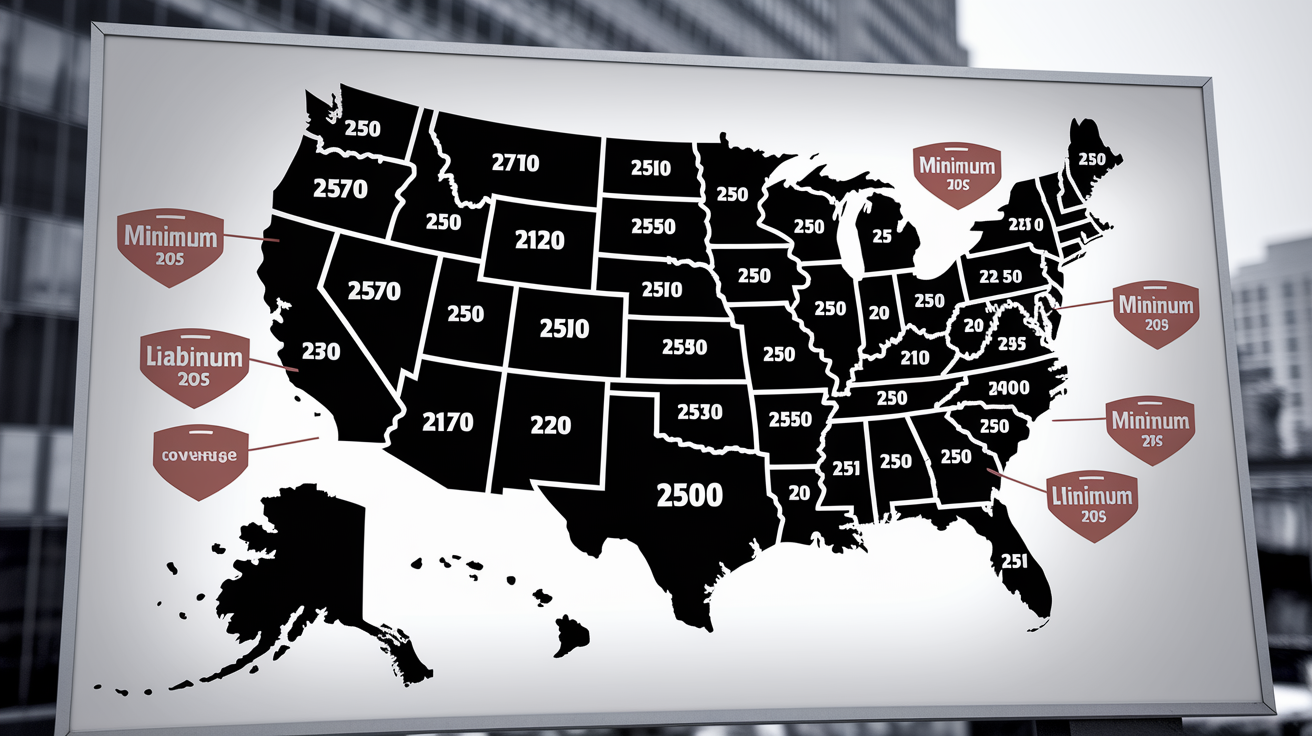
Every state except New Hampshire requires drivers to carry liability insurance, but the minimum limits vary widely and are often too low to cover a serious accident. Common minimum structures include 25/50/25, 20/40/15, 30/60/25, and 15/30/5. The first number is bodily injury coverage per person, the second is bodily injury per accident, and the third is property damage per accident. All in thousands of dollars.
A 25/50/25 policy pays up to $25,000 for one person’s injuries, $50,000 total if multiple people are hurt, and $25,000 to fix or replace the other driver’s vehicle. That sounds like a lot until you realize the average new car costs over $48,000 and a serious injury can rack up $100,000+ in medical bills. If you cause an accident that exceeds your limits, you’re personally liable for the difference, and the injured party can sue you for your assets. House, savings, wages.
Examples of state minimums:
California: 15/30/5 (among the lowest property damage minimums in the country)
Texas: 30/60/25
Florida: 10/20/10 property damage plus $10,000 PIP (personal injury protection)
New York: 25/50/10 plus $50,000 death benefit and PIP
No state requires collision or comprehensive coverage by law, though lenders require it contractually. A handful of states also require uninsured/underinsured motorist coverage or personal injury protection as part of the minimum package. Check your state’s Department of Motor Vehicles or insurance regulator for exact requirements, because outdated minimums can leave you badly exposed even when you’re technically legal.
When Liability Only Makes Sense

Liability only is the right call when your vehicle’s market value is low enough that insuring it costs more than the potential payout after a loss. A common rule of thumb: if your car is worth less than $3,000 to $5,000 and you can afford to replace it out of pocket, drop collision and comprehensive.
Here’s the logic: if full coverage costs $1,000 more per year than liability only, and your car is worth $4,000, you’d pay the car’s value in extra premiums over four years. Factor in a $500 or $1,000 deductible, and the maximum you’d collect on a total loss is $3,000 to $3,500. That’s not a good return on four years of extra premiums, especially if you never file a claim.
Factors that point toward liability only:
Vehicle is fully paid off and market value is under $5,000.
You have liquid savings equal to the car’s replacement cost plus a cushion.
Annual full coverage premium exceeds 10 to 15 percent of the vehicle’s value.
You drive infrequently or park in a low theft, low weather risk area.
Liability only works when the financial risk of replacing your car is smaller than the cost of insuring it. It doesn’t work if losing the car would wreck your budget or leave you without transportation you can’t afford to replace.
When Full Coverage Is the Better Option

Full coverage is recommended when your vehicle is worth enough that you can’t easily absorb the loss, or when a lender requires it as a condition of the loan or lease. Most auto lenders and all leasing companies mandate collision and comprehensive coverage with maximum deductibles they approve (typically $500 or $1,000) until the loan is paid off or the lease ends.
If you financed a $30,000 car and still owe $28,000, dropping full coverage is a breach of your loan contract. The lender will force place insurance at a much higher cost and add it to your loan balance. Even if the car is paid off, full coverage makes sense when the vehicle’s market value is high relative to your ability to self insure. A car worth $15,000 that you depend on for work and can’t replace without a loan is a good candidate for full coverage, even if it costs $1,500 more per year.
Other scenarios where full coverage is the better option: you live in a high theft area or a region with frequent hail or flooding. You have a poor driving record and higher collision risk. Or you’re uncomfortable with the financial uncertainty of going without vehicle coverage.
Lenders care about their collateral, but you should care about your transportation and your savings. The $100 to $150 per month difference between liability only and full coverage is cheap protection if losing your car would cost you your job or force you into high interest debt to replace it.
Final Words
Decide what risk you can afford to keep and what you need to transfer. Liability-only covers others; full coverage adds collision and comprehensive to protect your own car. We broke down what each covers, the cost gap, state minimums, and common pros and cons so you can spot the fine print that causes denied claims.
In real life, choose liability for low-value cars and full coverage for new or financed vehicles. When you compare liability vs full coverage car insurance, pick the option that protects the bills you can’t pay, and you’ll sleep easier.
FAQ
Q: Is it better to have liability or full coverage?
A: Whether liability or full coverage is better depends on your car’s value, loan status, and risk tolerance: liability pays others’ damages; full adds collision and comprehensive to protect your own vehicle at higher premiums.
Q: How much does a $1,000,000 liability insurance policy cost?
A: A $1,000,000 liability limit typically adds about $100–$600 per year, depending on state, driving record, vehicle, and insurer; many people buy it as an umbrella policy above base auto limits.
Q: Is it better to have a $500 deductible or $1000?
A: Choosing a $1,000 deductible usually cuts collision/comprehensive premiums by roughly 10–25% versus $500. Pick $1,000 if you can cover a bigger bill after a claim; pick $500 for lower out‑of‑pocket at a wreck.