




Think your insurance will pay if a bomb or a hostile state destroys your building?
Not necessarily.
Many commercial and personal policies quietly strip out losses from war, terrorism, hybrid attacks, and CBRN events, leaving owners on the hook for the biggest bills.
This post explains how those exclusions are written, the common gotchas that trigger denials, who should buy extra cover, and the exact questions to ask before you sign, so you won’t be surprised when a claim lands.
Understanding Core War and Terrorism Exclusions in Insurance Policies

War and terrorism exclusions exist because insurers can’t predict the catastrophic losses that follow armed conflicts, state-sponsored attacks, or mass violence driven by political goals. A single event can wipe out city blocks, halt supply chains, or trigger business failures across borders. No normal underwriting model can absorb that kind of risk. These exclusions protect the insurer’s solvency and keep premiums manageable for everyone else sharing the risk pool.
Standard policy language removes coverage for losses “caused by, contributed to, or resulting from” specific hostile or violent acts. Insurers read “war” as organized armed conflict between states or factions, formally declared or not. “Warlike action” sweeps in military operations, blockades, bombardments. “Terrorism” usually means violence or threats driven by political, religious, or ideological motives, with intent to influence governments or terrorize populations. These terms rarely get defined in the policy itself. That creates ambiguity. And ambiguity fuels disputes when a claim lands.
Policies routinely exclude:
- Declared or undeclared war between nations or sovereign powers
- Civil war, rebellion, insurrection, revolution
- Invasion, hostile military action, or acts of foreign enemies
- Chemical, biological, radiological, or nuclear (CBRN) contamination
- Confiscation, nationalization, seizure, or arrest by a government
- Acts of terrorism as defined by the policy or certified by government authorities
You’ll find these exclusions across commercial property, business interruption, marine hull and cargo, aviation, travel, life, liability, and specialty lines like political risk and kidnap and ransom insurance. Commercial property and casualty policies see the most active regulation and reinsurance action around terrorism risk.
Interpreting War and Terrorism Clause Wording
Policies often list terms like “war,” “hostile acts,” “civil war,” “insurrection,” and “acts of terrorism” without defining them. A policy might say it excludes losses from “war, whether declared or undeclared,” but never explain what counts as war. Another might exclude “terrorism” without stating whether a lone attacker with no organizational ties qualifies. This silence forces courts, claims adjusters, and coverage counsel to fill in the blanks when a disputed claim arrives.
When ambiguity shows up, courts apply interpretation rules that favor the insured. Judges look to the ordinary meaning of exclusion terms. What would an average policyholder understand “war” or “terrorism” to mean? If the insurer drafted vague language, courts resolve doubts against the insurer under contra proferentem, a legal doctrine that holds drafters responsible for unclear terms. Courts also prefer narrow readings of exclusions to preserve the insurance protection the policyholder expected to buy. A blanket “war” exclusion will be read to cover traditional interstate armed conflict, not every violent act with a political flavor.
| Term | Why Ambiguous | Typical Insurer Interpretation |
|---|---|---|
| War | No definition provided; unclear if declaration is required | Any organized armed conflict between states or factions, declared or not |
| Hostile Acts | Can mean state military action or broader sabotage | Acts by or on behalf of a government or sovereign power |
| Terrorism | No universal definition; varies by jurisdiction and policy | Violence with political/ideological motive intended to influence government or terrorize public |
| Civil Commotion | Overlaps with riot, rebellion, and terrorism | Crowd violence without the political motive needed for terrorism; may be covered if terrorism is not |
Differences Between War Exclusions and Terrorism Exclusions

War exclusions typically target state-level armed conflict. Invasions, military strikes, blockades, organized hostilities between governments or large factions. Terrorism exclusions focus on violence or threats driven by political, religious, or ideological motives, with the goal of influencing authorities or creating widespread fear. The line blurs when a government sponsors sabotage, a militia acts on behalf of a state, or a lone actor claims a political cause.
Most terrorism definitions include five elements: perpetration by individuals or groups (including those acting for states or organizations), specific political or ideological motivation, intent to influence public authorities or frighten a portion of society, use or threat of force or violence, and broad societal impact such as chaos or disruption of public life. An arson attack on a shopping center can be terrorism if investigators prove the arsonist acted to advance a political goal and create public fear. Same fire caused by a personal grudge? Not terrorism. Motive is the pivot. When criminal courts convict someone of a terrorist offense, insurers use that verdict to deny civil claims. When no conviction occurs, civil courts must decide whether the act meets the policy’s terrorism definition.
Overlaps create confusion. State-linked sabotage (explosives planted by operatives paid by a foreign government) might trigger both war and terrorism exclusions. Hybrid warfare, which mixes cyberattacks, disinformation, and physical sabotage, doesn’t fit neatly into traditional “war” definitions but may still be excluded if the insurer can show a warlike or hostile state action. Riot and civil commotion exclusions may carve out coverage for crowd violence even when terrorism or war clauses apply. Some policies cover riot losses but exclude terrorism. A protest that turns violent may be covered while a politically motivated bombing is not.
War and Terrorism Exclusions Across Insurance Types
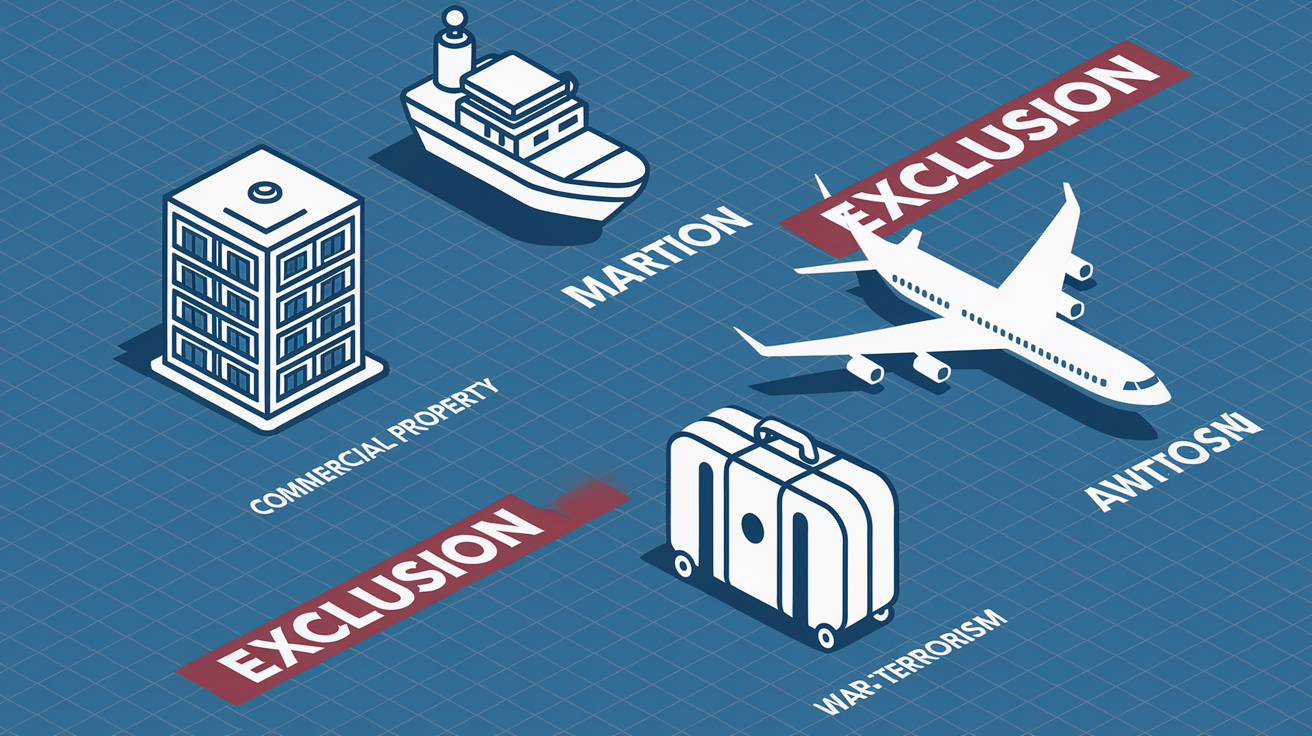
Commercial property and business interruption policies almost always exclude war and terrorism unless you buy back coverage through a rider or endorsement. When terrorism coverage is added, it often comes with sub-limits (caps on the amount the insurer will pay for terror-related losses) and waiting periods of 24 to 72 hours before business interruption coverage begins. These waiting periods mean a business shut down by a bomb blast might recover property damage costs immediately but must wait days before interruption losses are covered. Non-damage business interruption (losses from fear, evacuations, or government closures without physical damage) usually requires explicit policy language and carries separate, lower sub-limits.
Marine and aviation insurance treat war risk as a standalone product. Standard hull and cargo policies exclude losses from war, piracy, capture, seizure, or hostile acts. Shipowners and airlines buy separate war-risk policies that cover those perils, often on short notice and at volatile premiums. When a shipping route becomes dangerous or an airspace closes due to conflict, war-risk premiums can spike overnight. These policies are written for short terms, sometimes as brief as seven days, and insurers can cancel or reprice them quickly as conditions change.
Travel insurance policies commonly exclude losses from war, whether declared or undeclared, and exclude coverage if you travel to a destination under an official government travel advisory. If your government warns against travel to a conflict zone and you go anyway, your travel policy won’t cover trip cancellation, medical evacuation, or baggage loss tied to the conflict. Some travel insurers offer limited terrorism coverage for incidents in non-advisory destinations, but exclusions for CBRN events, acts of war, and high-risk countries remain standard.
Life insurance exclusions vary widely. Some policies exclude death resulting from declared war. Others extend the exclusion to undeclared war or any military action. Military personnel may face stricter exclusions or higher premiums. Personal lines (homeowners, renters, and auto policies) rarely offer terrorism riders. If your home is destroyed in a terrorist attack, your standard homeowners policy will likely deny the claim. Auto policies show more variation. Some exclude terrorism entirely, others exclude it only if the policyholder participated in the terrorist act, and a few don’t exclude terrorism at all.
Differences in how exclusions operate:
- Commercial property may allow terrorism buy-back with sub-limits. Personal property usually doesn’t.
- Business interruption often requires a waiting period. Property damage doesn’t.
- Marine and aviation rely on short-term, volatile war-risk contracts. Other lines use annual policies.
- Travel insurance uses government advisories as automatic exclusion triggers.
- Life insurance exclusions depend heavily on whether war was declared and whether the insured was in military service.
Cyber Terrorism, Hybrid Warfare, and CBRN Exclusions
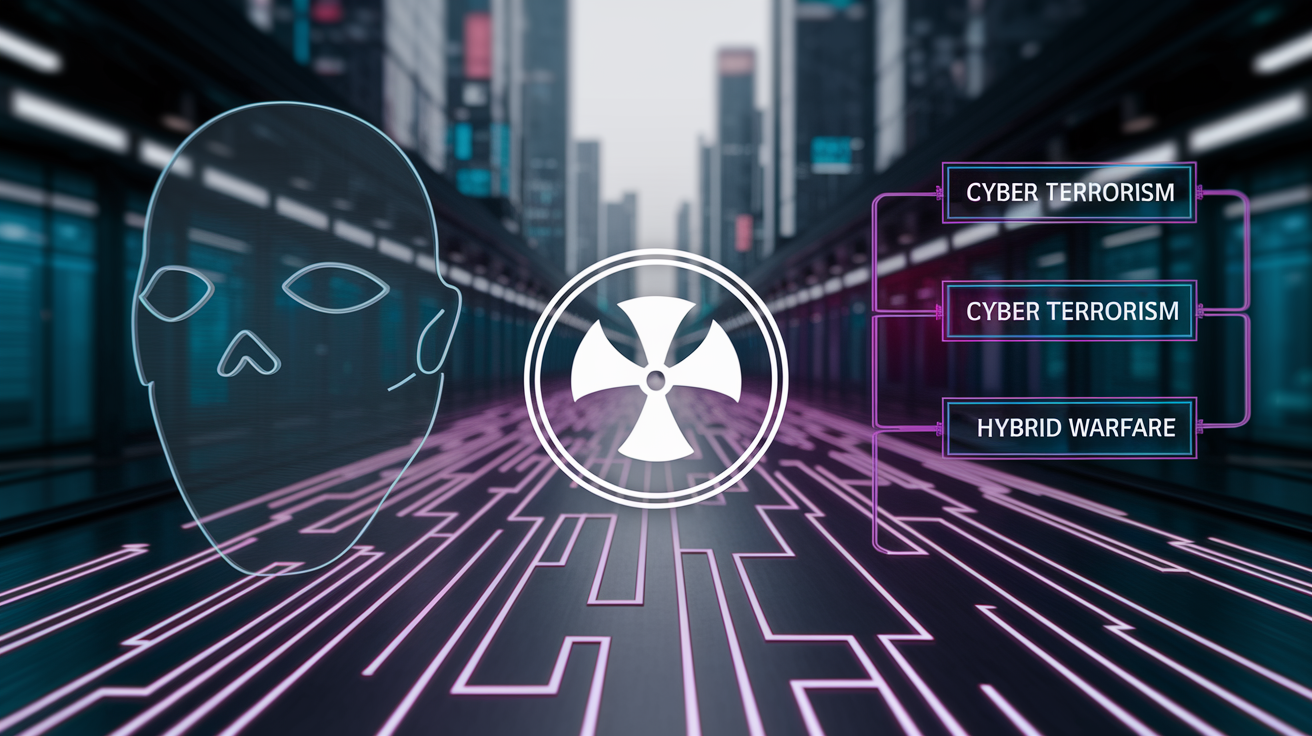
Many policies exclude chemical, biological, radiological, or nuclear contamination outright. Doesn’t matter if the source is a terrorist act, an accident, or a state attack. These CBRN exclusions remove coverage for radiation exposure, biological agent releases, chemical attacks, and nuclear fallout. Insurers treat these risks as uninsurable under standard policies because a single CBRN event can cause losses that dwarf an insurer’s entire capital base.
Cyber policies present a different landscape. Some cyber insurance policies include carve-outs that preserve coverage for cyberterrorism even when the policy contains a broader war or terrorism exclusion. Courts have narrowed war exclusions in cyber cases, ruling that a cyberattack (even one attributed to a state actor) doesn’t qualify as “war” unless it involves traditional armed conflict. In the Merck case, a court found that the NotPetya cyberattack, widely attributed to a nation-state, didn’t trigger the war exclusion because the policy’s war language was drafted for physical, armed hostilities, not digital sabotage.
Ambiguous modern incidents that blur traditional exclusion lines:
- Cyberattack on critical infrastructure attributed to a foreign intelligence agency. Terrorism, war, or neither?
- Malware deployed by a state-linked hacking group that encrypts hospital systems. Act of war if no declaration exists?
- Drone strike on a commercial building by a non-state militia receiving funding from a government. State action or independent terrorism?
- Radiological “dirty bomb” detonated in a city center. CBRN exclusion applies, but what if terrorism rider was purchased?
- Hybrid campaign combining disinformation, power-grid sabotage, and physical attacks on transport. Does the war exclusion apply to each element separately?
Government Backstops and Terrorism Certification Requirements

After the September 11, 2001 attacks, the U.S. federal government created a backstop program in 2002 to stabilize the commercial property and casualty insurance market. The program requires the government to certify an event as an “act of terrorism” before federal support applies. Certification depends on the scale of the loss, the perpetrator’s intent, and whether the act meets statutory criteria. If certification is granted and losses exceed defined thresholds, the federal government shares a portion of the insurer’s claims costs. The program applies only to commercial property and casualty lines. Personal lines and life insurance are excluded.
The United Kingdom established a government-backed terrorism reinsurance pool, Pool Re, in the early 1990s in response to Irish Republican Army bombing campaigns. Insurers cede terrorism risk to the pool, and the government guarantees the pool’s solvency. Pool Re covers commercial property terrorism losses in Great Britain and has expanded over time to include non-damage business interruption and cyber-related terrorism. The pool model spreads risk across the entire market and keeps terrorism coverage available at predictable premiums.
| Jurisdiction | How Terrorism Is Certified | Impact on Claims |
|---|---|---|
| United States | Federal certification required; event must meet statutory definition and loss thresholds | Certified acts trigger federal cost-sharing for commercial P&C; non-certified acts remain excluded or require private terrorism coverage |
| United Kingdom | Pool Re assesses events; government backstop guarantees pool solvency | Commercial property losses covered if insurer participates in Pool Re; pool pays claims and manages reinsurance |
| Other jurisdictions | Varies; some rely on criminal courts, others on insurer discretion or ad hoc government declarations | Without certification frameworks, disputes hinge on policy wording and judicial interpretation of exclusions |
Legal Disputes, Case Law, and Claims Handling for War/Terror Losses

Courts traditionally apply a four-part test when deciding whether an exclusion applies: whether attackers wore military uniforms, whether they used physical weapons, whether a government declared war, and whether medals or honors were awarded for the acts. These factors reflect a focus on traditional interstate warfare. Modern courts have narrowed war exclusions to cover only organized armed conflict between states or large factions, not every violent act with a political motive.
In the Merck case, the insurer argued that the NotPetya cyberattack constituted an act of war and invoked the war exclusion to deny coverage. The court disagreed. It found that the exclusion language was written for physical armed conflict and didn’t clearly encompass a cyberattack, even one attributed to a nation-state. The Ninth Circuit issued a similar ruling on July 12, 2019, in Universal Cable Productions v. Atlantic Specialty Insurance, narrowing the scope of war exclusions and requiring clear, unambiguous language if insurers want to exclude cyber or hybrid acts. These decisions show that blanket war exclusions don’t automatically cover every state-linked hostile act.
Claims handling for terrorism losses often begins with a wait for criminal investigation results. Insurers delay decisions until prosecutors charge someone with a terrorism offense or courts issue a verdict. A criminal conviction makes it easier for the insurer to invoke the terrorism exclusion. If no conviction occurs, the insurer must show that the event meets the policy’s terrorism definition based on circumstantial evidence, motive analysis, and expert testimony. Civil courts sometimes stay proceedings until criminal cases conclude. Loss adjusters review incident reports, government statements, police findings, and forensic evidence to determine whether the exclusion applies. You can challenge the insurer’s interpretation by pointing to ambiguous wording, lack of clear motive, or judicial precedent favoring narrow readings of exclusions.
Options to Buy Back Coverage: Terrorism Riders and War-Risk Policies

Businesses can purchase standalone terrorism insurance that covers property damage, business interruption, and liability arising from certified or non-certified terrorist acts. These policies typically include sub-limits, often starting around 500,000 to 1,000,000 in the local currency, and exclude certain attack types such as CBRN events. Higher limits are available for higher premiums. Pricing varies dramatically by location, industry, and building occupancy. A manufacturing plant in a major city will pay more than a rural warehouse.
Political violence insurance covers losses from riots, strikes, civil commotion, insurrection, and sometimes terrorism, depending on the policy wording. These products are common for businesses operating in unstable regions or countries with frequent civil unrest. War-risk policies for marine and aviation cover losses from capture, seizure, piracy, sabotage, and military action. These are short-term contracts with volatile premiums that reflect real-time geopolitical risk.
Private individuals rarely have access to terrorism riders for homeowners or auto insurance. The market for personal-lines terrorism coverage is extremely limited. Some comprehensive auto policies don’t exclude terrorism, but this is the exception. Life insurance policyholders may be able to negotiate carve-outs for undeclared war or non-combat military service, but standard policies exclude war-related deaths.
Steps to secure additional coverage:
- Review your current policy’s war and terrorism exclusions and note exact wording, definitions, and any carve-outs already included.
- Request a terrorism endorsement or rider from your insurer. Ask for a quote that shows the cost, sub-limit, waiting periods, and excluded perils (e.g., CBRN).
- If your insurer doesn’t offer terrorism coverage, contact a specialty broker or surplus-lines carrier that writes political violence, war-risk, or terrorism policies.
- For marine or aviation exposures, arrange short-term war-risk coverage through a specialist underwriter. Review cancellation terms and premium adjustment clauses carefully.
Underwriting, Pricing, and Exposure Assessment for War/Terror Risks

Insurers price war and terrorism coverage by evaluating the location of the insured asset, the occupancy or use of the property, the industry sector, the limit of liability requested, and the security measures in place. A glass-and-steel office tower in a capital city attracts higher premiums than a rural storage facility. Critical infrastructure (power plants, government buildings, transportation hubs) faces the highest premiums and strictest sub-limits.
Marine and aviation war-risk premiums respond immediately to geopolitical events. When a conflict begins or escalates, underwriters reprice or withdraw coverage for affected routes within hours. Premiums can multiply when a ship must transit a war zone or an aircraft must overfly contested airspace. Underwriters monitor real-time intelligence, government advisories, and loss history to adjust pricing daily.
Factors that drive premiums higher:
- Geographic exposure to active conflict zones, terrorism hotspots, or regions under travel advisories
- Building characteristics such as height, visibility, symbolic value, or proximity to high-risk targets
- Industry sector. Financial services, government contractors, media, and energy face higher rates than light manufacturing or retail.
- Limits requested. Terrorism coverage above standard market sub-limits requires layered reinsurance and significantly higher premiums.
Practical Policy Review Checklist for War and Terrorism Exclusions

Commercial business interruption policies typically include waiting periods of 24 to 72 hours before coverage begins after a terrorism event. If your business is forced to close due to damage from a bombing, you must wait the stated period before interruption losses are covered. Non-damage business interruption (losses from fear, evacuation orders, or denial of access without physical damage) requires specific policy language and often carries lower sub-limits or separate waiting periods.
Review checklist:
- Read the exact definition of “war,” “terrorism,” “hostile acts,” and “insurrection” in your policy. If no definition appears, ask your insurer or broker for clarification in writing.
- Check for CBRN exclusions. If chemical, biological, radiological, or nuclear events are excluded, determine whether any carve-backs exist.
- Look for cyber-terrorism carve-outs in cyber policies. Confirm whether cyberattacks linked to state actors are covered or excluded.
- Identify sub-limits for terrorism or political violence. Compare them to your total property value and potential business interruption losses.
- Note waiting periods for business interruption coverage. Understand how many hours or days you must wait before coverage begins.
- Review territorial restrictions and travel-advisory triggers in travel and marine policies. Confirm whether coverage applies if you operate in or travel to high-risk regions.
- Determine whether endorsements, riders, or standalone policies are needed to fill gaps. Obtain written quotes showing cost, limits, exclusions, and terms before renewal.
Final Words
Right in the action, this post stripped down what standard war and terrorism exclusions remove, how courts and insurers read the wording, and which lines of insurance most commonly apply them.
We flagged modern trouble spots—cyber, hybrid attacks, CBRN—and walked through government certification, case law, and buy-back options like riders and war-risk policies.
Use the checklist to verify definitions, territorial triggers, waiting periods, and sub-limits. Understanding war and terrorism insurance exclusions helps you avoid nasty surprises and close real coverage gaps.
FAQ
Q: What does terrorism insurance not cover and what is the terrorism exclusion clause?
A: The terrorism exclusion clause and terrorism insurance usually exclude losses from politically motivated or state‑sponsored violence, CBRN contamination, and many non‑damage business interruption events; check definitions and consider a rider.
Q: What is a war exclusion in insurance and what does war risk insurance not cover?
A: A war exclusion removes coverage for declared or undeclared war, invasions, rebellions, confiscation, and hostile state acts; standalone war‑risk policies may cover combat damage but often exclude CBRN, some cyber attacks, or have high sub‑limits.