



Think your insurance covers radiation? Think again.
Nuclear hazard exclusion policies are clauses that can strip coverage for bodily injury, property damage, cleanup, and business interruption caused by nuclear material.
But the surprising reality is that these exclusions don’t bar coverage for every radioactive incident, coverage depends on narrow triggers like “nuclear facility,” “spent fuel,” and who owned or handled the material.
This post shows which facts matter, the common gaps that lead to huge unpaid bills, and the exact language to check before you assume you’re covered.
Core Function and Scope of Nuclear Hazard Exclusion Policies

Nuclear hazard exclusion policies are insurance provisions that eliminate coverage for bodily injury, property damage, or financial loss caused by the hazardous properties of nuclear material. You’ll find these exclusions in standard homeowners policies, commercial general liability (CGL), property coverage, and specialty lines. They were drafted after World War II, when insurers realized they couldn’t underwrite catastrophic risks from nuclear fission technology: self-sustaining chain reactions, meltdowns, radioactive contamination that lasts for decades. The provisions stuck around. Most insurance contracts still carry them, often under labels like the “Nuclear Energy Liability Exclusion Endorsement (Broad Form).”
That “broad” label? It’s misleading. These exclusions usually apply only when specific factual conditions line up. Take the standard CGL endorsement. It excludes coverage for bodily injury or property damage from the “hazardous properties” of “nuclear material” only if two things are true: (1) the nuclear material is at, or discharged from, a “nuclear facility” owned or operated by (or on behalf of) an insured, and (2) the material is in “spent fuel” or “waste” that the insured has possessed, handled, used, processed, stored, transported, or disposed of. Miss either prerequisite and the exclusion might not apply. Not every event involving radioactive materials automatically triggers it.
Understanding what triggers a nuclear exclusion means going past the policy title. You have to compare the actual facts of the claim (where the material was, who owned the facility, what the substance was classified as) against the specific language. If the event doesn’t meet the endorsement’s narrow prerequisites, coverage can remain for what first looks like a “nuclear” claim.
Losses typically excluded include:
- Radiation sickness from exposure to spent fuel or radioactive waste the insured handled
- Property contamination from a release at a nuclear facility the insured owned or operated
- Bodily injury caused by a nuclear chain reaction from insured operations
- Illness or treatment costs linked to radioactive contamination from nuclear material the insured discharged
- Liability for decontaminating property exposed to radioactive waste the insured transported or stored
Legal Language and Structure Behind Nuclear Hazard Exclusion Wording

Nuclear exclusion clauses work through precisely defined terms that shape whether an event falls inside or outside the policy. The “Nuclear Energy Liability Exclusion Endorsement (Broad Form)” references technical terms like “nuclear material,” “nuclear facility,” “spent fuel,” and “waste.” Each carries a specific meaning. The endorsement doesn’t bar coverage for any loss involving radiation. It bars coverage only when the hazardous properties of nuclear material cause injury or damage, and only when that material satisfies defined criteria tied to facility ownership and waste classification.
Drafting nuclear exclusions with defined terms means ambiguity can cut both ways. If the policy doesn’t define “nuclear facility,” courts might examine whether the location qualifies under ordinary usage or regulatory definitions. If “waste” is defined narrowly to exclude certain byproducts or low-level contamination, a claim involving those substances might fall outside the exclusion entirely. Ambiguity often favors the insured under the doctrine of contra proferentem, which requires exclusions to be construed against the drafter when language is unclear.
| Term | Meaning |
|---|---|
| Nuclear Material | Radioactive substances subject to fission or other hazardous properties, including fuel and byproducts |
| Nuclear Facility | Any location or structure where nuclear material is possessed, processed, or used by or on behalf of the insured |
| Spent Fuel | Nuclear fuel that has been irradiated in, and permanently removed from, a reactor core |
| Waste | Radioactive byproducts or residue from fuel processing, disposal-bound and often classified under regulatory frameworks |
How Nuclear Hazard Exclusions Apply Across Insurance Policy Types
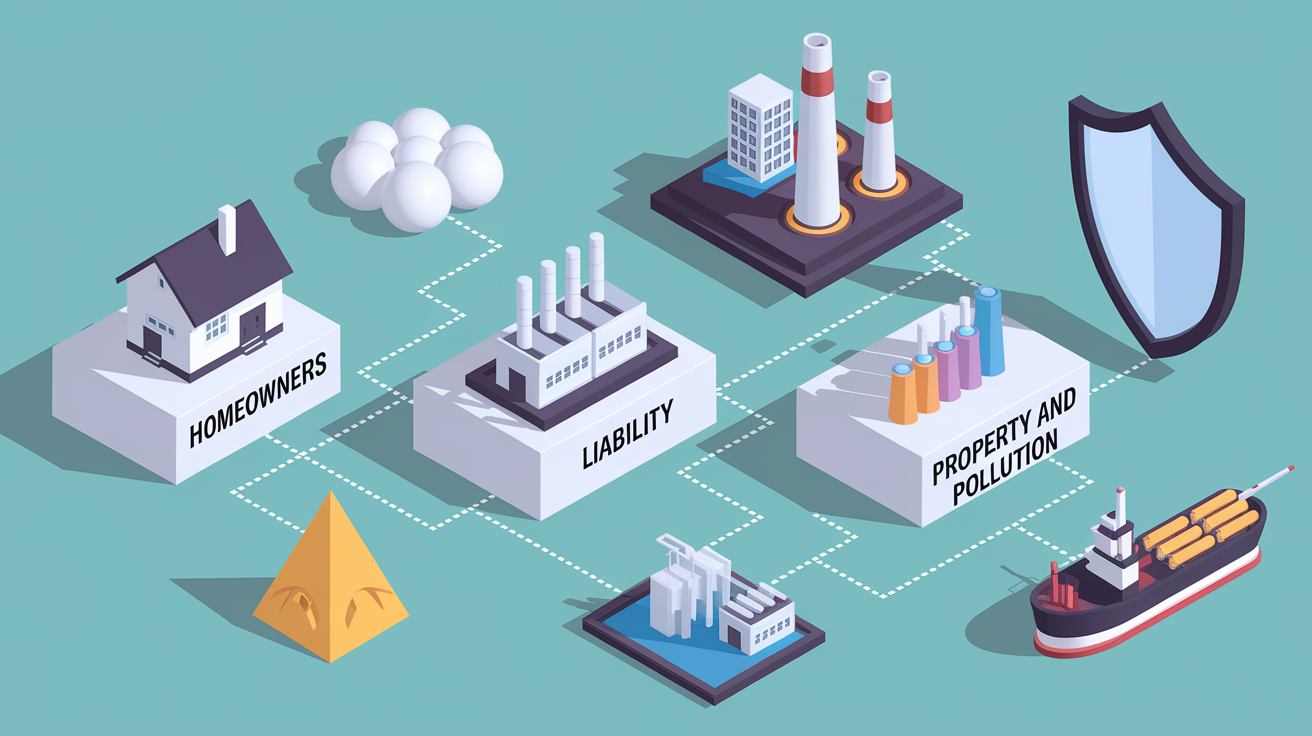
Nuclear hazard exclusions show up in nearly every major line of commercial and personal insurance, but the scope and wording change depending on policy category. Homeowners policies typically exclude damage or injury from radiation, radioactive contamination, or nuclear reactions. No distinction between direct exposure and indirect consequences. Commercial property policies sometimes use named-perils approaches that just omit nuclear events from the covered list, or they use all-risk language paired with a blanket nuclear exclusion. CGL policies add the “Nuclear Energy Liability Exclusion Endorsement (Broad Form)” as a separate attachment, which narrows the exclusion through those two prerequisites but still removes most facility-level claims.
Specialty lines like environmental impairment liability and pollution legal liability insurance tend to bundle nuclear exclusions with exclusions for war, terrorism, and force majeure. When exclusions are grouped this way, the effect broadens. An event involving radiation during a riot or a wartime incident might trigger multiple exclusions at once, leaving no coverage pathway. Catastrophic-risk policies often remove coverage for both direct losses (bodily injury from acute radiation exposure) and indirect or follow-on losses (treating radiation-induced illness years later, cleaning contaminated soil after a spill).
International medical insurance policies commonly exclude illness, injury, or treatment costs caused directly or indirectly by chemical or radioactive contamination. These provisions capture not just the initial exposure event but also downstream medical treatment linked to that contamination. Surplus lines and reinsurance markets sometimes offer custom coverage for nuclear risks excluded elsewhere, but only when underwriters can assess the exposure using facility-specific data and engineering controls instead of blanket exclusions.
Key differences across policy types:
- Homeowners: excludes radiation and nuclear reactions broadly, with no facility ownership condition
- Commercial property: might use named-perils omission or all-risk exclusion with no prerequisites
- CGL: applies narrow exclusion limited by facility ownership and spent-fuel conditions
- Pollution liability: groups nuclear exclusions with war and terrorism, covering both direct and indirect losses
- Medical insurance: bars treatment costs tied to contamination, emphasizing causation over facility ownership
- Surplus lines: might negotiate case-by-case coverage after technical underwriting review
Events Commonly Excluded Under Nuclear Hazard Provisions
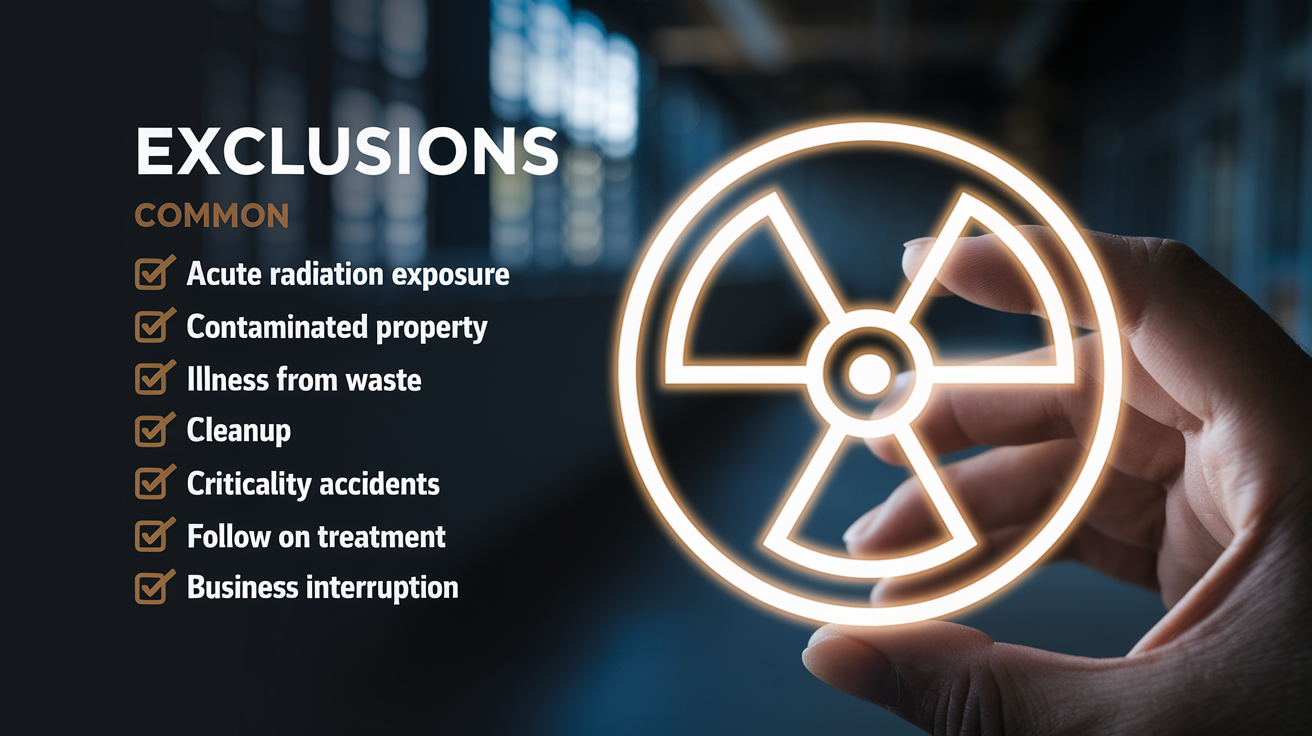
Nuclear hazard exclusions remove coverage for a defined set of radiological events. Chain reactions, spent fuel, radioactive waste, and contamination from facilities the insured controls. Both immediate harm (acute radiation sickness, property damage from a reactor incident) and long-tail consequences (cancer diagnoses years after exposure, soil contamination requiring decades of remediation). Drafters intentionally cast a wide net to prevent insurers from bearing catastrophic losses that could destabilize the underwriting pool.
But the exclusions don’t necessarily apply to every event involving radioactive substances. Radiation exposure from a non-insured facility? Contamination from medical isotopes outside the insured’s control? Naturally occurring radioactive material (NORM) encountered during oil-and-gas operations? These might fall outside the exclusion if the material isn’t classified as “spent fuel” or “waste” and the facility isn’t owned or operated by the insured.
Common scenarios typically excluded:
- Bodily injury or death from acute radiation exposure at a nuclear power station the insured operates
- Property damage caused by a release of radioactive material from spent-fuel storage the insured controls
- Illness or cancer linked to contamination from nuclear waste the insured transported or disposed of
- Cleanup costs for soil or groundwater contaminated by radioactive discharge from a nuclear facility the insured operates
- Liability for injuries from a criticality accident (unintended chain reaction) during nuclear fuel processing the insured performs
- Follow-on medical treatment for radiation sickness arising from radioactive materials the insured handled
- Business interruption losses triggered by a government evacuation order following contamination from insured nuclear operations
Coverage Gaps and Real‑World Implications for Policyholders

Nuclear hazard exclusions create big coverage gaps. When an exclusion applies, standard insurance policies provide nothing for bodily injury, property damage, cleanup obligations, or business interruption tied to the nuclear event. A company operating a nuclear facility could face unlimited liability for off-site contamination, employee injury, or third-party claims. Costs can run into hundreds of millions or billions of dollars, with no insurance backstop. For smaller businesses that handle radioactive material incidentally (medical laboratories, research institutions, transportation firms), the gap can be just as bad. A single contamination incident might trigger exclusions even when the insured never intended to operate in the “nuclear” space.
Long-tail claims are a particular problem. Radiation exposure can cause latent injuries that don’t show up for decades. A worker exposed to radioactive contamination in 2025 might develop cancer in 2045. If the original exposure satisfies the prerequisites of the nuclear exclusion, the insurer can deny the claim twenty years later, even though the employee filed under a policy renewed annually. Same with environmental contamination from radioactive materials. Remediation can take decades. When exclusions bar coverage, the policyholder funds cleanup from internal capital, sells assets, or seeks government compensation if it’s available.
The result is a shift of risk from insurer to insured or to public authorities. Businesses exposed to nuclear hazards often can’t buy meaningful insurance. They have to self-insure, seek specialized nuclear pools, or rely on statutory liability frameworks. For emerging industries (fusion energy, medical isotope production, small modular reactor development), the absence of conventional insurance can slow deployment, raise capital costs, and deter private investment.
| Gap | Practical Impact | Who Pays |
|---|---|---|
| Bodily injury from insured-handled radioactive waste | No liability coverage for worker injuries or third-party claims; litigation proceeds without indemnity | Insured pays defense costs, settlements, and judgments from capital or reserves |
| Property decontamination after release from insured nuclear facility | Cleanup obligations fall entirely on the facility operator; no property or liability coverage applies | Insured funds cleanup; government might step in if insured can’t pay or statutory framework applies |
| Business interruption after evacuation due to radioactive contamination | Loss of revenue not covered; interruption exclusions often reference nuclear events | Insured absorbs lost profits; government compensation programs might provide partial relief in some jurisdictions |
Government Backstops and Alternative Protection Options for Nuclear Risk

Because conventional insurance markets exclude most nuclear risks, governments and specialized entities have created alternative mechanisms to fund liability and protect the public. The most prominent example in the U.S. is the Price-Anderson Nuclear Industries Indemnity Act, enacted in 1957 and amended multiple times. Price-Anderson establishes a two-tiered system: nuclear facility operators purchase the maximum available private insurance (currently around $450 million per site), and a second layer of up to roughly $13 billion is funded through retrospective premiums paid by all licensed reactor operators if a major incident occurs. If damages exceed both tiers, Congress is directed to consider additional relief. This framework ensures compensation for victims while capping individual operator liability, making nuclear power economically viable.
Other countries operate similar schemes. In many jurisdictions, national nuclear liability acts require operators to carry minimum insurance and then provide government indemnity above that threshold. Some nations participate in international conventions (the Paris Convention on Third Party Liability in the Field of Nuclear Energy, the Vienna Convention) that coordinate cross-border compensation and set uniform liability rules. These frameworks shift catastrophic risk from private insurers to the state, treating nuclear incidents as a public policy concern instead of a purely commercial insurance matter.
Specialized nuclear insurance pools also provide coverage unavailable from standard markets. In the U.S., American Nuclear Insurers (ANI) and Nuclear Electric Insurance Limited (NEIL) underwrite property damage, business interruption, and liability for nuclear facilities. These pools aggregate capacity from multiple insurers and reinsurers, so they can write policies with limits far higher than any single carrier could support. Membership is typically restricted to licensed nuclear operators who meet strict safety and regulatory standards. Premiums reflect facility-specific risk assessments, not blanket exclusions.
Surplus lines markets and reinsurance brokers sometimes craft custom nuclear-risk coverage for clients excluded from standard policies. A medical isotope producer or a research reactor operator might negotiate a manuscript policy that covers specific radiological exposures while excluding catastrophic meltdown scenarios. These contracts are expensive, highly customized, and require detailed technical underwriting. Parametric insurance and catastrophic bonds represent emerging alternatives: parametric triggers (such as radiation levels exceeding a defined threshold) allow for fast payouts without traditional claims adjustment, while catastrophe bonds transfer nuclear event risk to capital markets.
Alternative risk-transfer mechanisms for nuclear hazards:
- Statutory liability frameworks with mandatory insurance tiers and government indemnity above private limits (example: Price-Anderson Act)
- Specialized nuclear insurance pools that aggregate capacity across multiple insurers (example: American Nuclear Insurers)
- Surplus lines and reinsurance markets offering custom manuscript policies after technical risk assessment
- Parametric insurance products with predefined payout triggers tied to measurable radiological events
- Nuclear catastrophe bonds that securitize nuclear event risk and transfer it to bond investors
Interpretation Challenges and Case Law Relating to Nuclear Exclusions

Courts interpreting nuclear hazard exclusions focus on whether the specific facts of a claim satisfy the exclusion’s defined elements. A 2019 legal analysis of the “Nuclear Energy Liability Exclusion Endorsement (Broad Form)” in standard CGL policies shows this principle: the endorsement’s title suggests sweeping application, but the exclusion bars coverage only when the claim involves nuclear material at a facility the insured owns or operates and the material is in spent fuel or waste the insured handled. If either prerequisite is missing, coverage might remain. This fact-specific, narrow interpretation contrasts sharply with the broad language many insureds (and even adjusters) assume applies.
Jurisdictional issues complicate nuclear litigation. When a nuclear incident causes harm across state or national borders, multiple courts might assert jurisdiction, and choice-of-law rules determine which policy language governs. International conventions and bilateral treaties can override domestic policy terms, particularly when government indemnity schemes apply. Insureds operating in multiple jurisdictions have to review exclusions under each applicable legal regime, because a clause enforceable in one state might be void or limited in another.
Common judicial interpretation issues:
- Whether the exclusion applies when radioactive material comes from a non-insured facility or is merely transported through insured premises
- How courts define “hazardous properties” of nuclear material. Does it include low-level contamination or only high-energy radiation?
- Whether the exclusion bars coverage for indirect or consequential losses (like business interruption after evacuation) when the direct damage itself is excluded
- How policy definitions of “nuclear facility” interact with regulatory classifications under federal or international nuclear safety frameworks
For a deeper discussion of the limited scope of the Broad Form exclusion, see Broad Form Nuclear Energy Liability Exclusion is not so broad in its application.
Radiological Risks Outside Traditional Nuclear Facilities
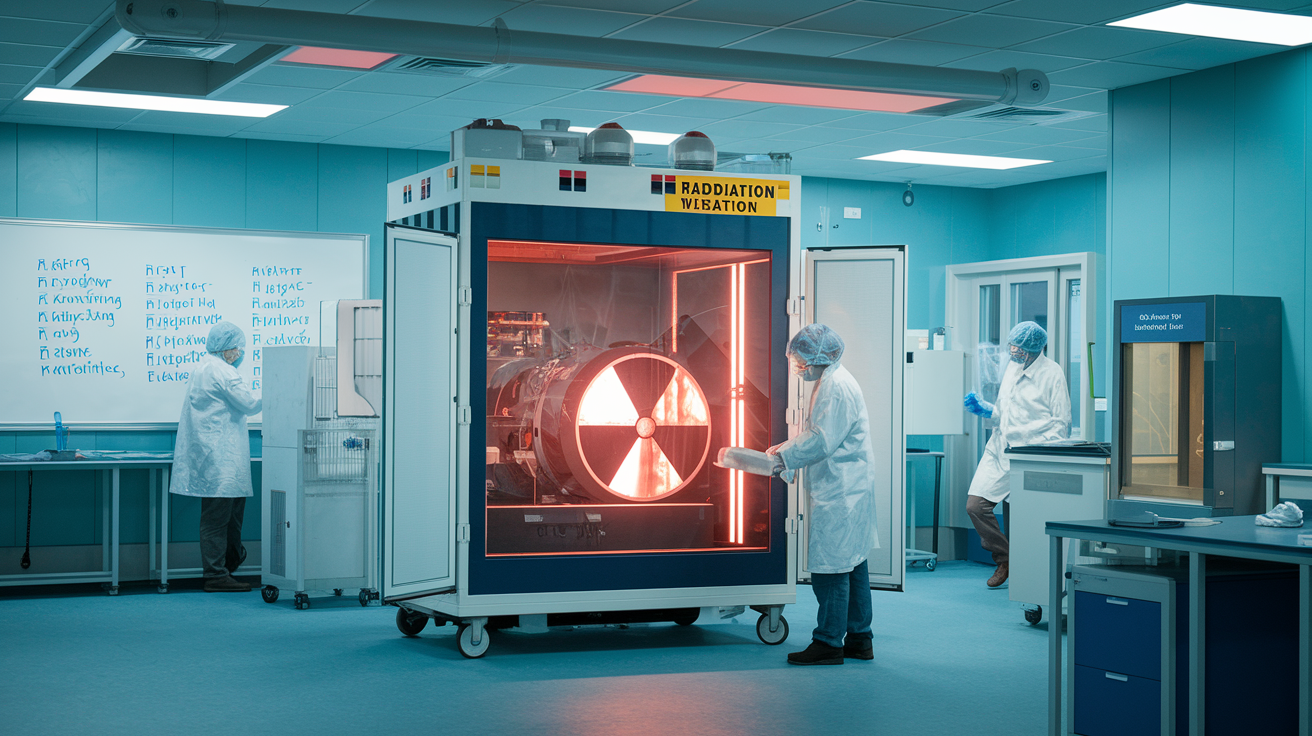
Not all radiation exposure comes from nuclear power plants or spent-fuel storage sites. Medical isotopes used in diagnostic imaging and cancer treatment are radioactive. Contamination can happen during production, transportation, or disposal. A hospital or research lab handling these isotopes could face liability if a spill contaminates groundwater or if a technician suffers radiation injury. If the isotopes aren’t classified as “spent fuel” or “waste” under the policy’s definitions and the facility isn’t a “nuclear facility” the insured owns, standard nuclear exclusions might not apply. That could leave general liability or property coverage in place.
Transportation of radioactive materials presents another gap. Shipping companies, freight forwarders, and logistics firms routinely move medical isotopes, industrial radiography sources, and other radioactive cargo. A transport accident resulting in a radiological release could trigger bodily injury or property damage claims. If the carrier doesn’t own or operate the nuclear facility that produced the material, and if the cargo isn’t spent fuel or waste, the nuclear exclusion might not bar coverage. But many cargo and transport policies include separate radioactive-materials exclusions that close this gap, so you need to review the policy carefully.
Nuclear waste storage sites operated by third parties (government agencies, specialized disposal contractors) can cause contamination claims against parties that never handled the waste directly. A landowner near a storage facility might sue multiple defendants: the waste producer, the transporter, the storage operator, alleging property damage from groundwater contamination. Depending on each defendant’s role and the policy language, the nuclear exclusion might apply to some defendants but not others, creating complex allocation disputes.
Non-facility sources of radiological exposure:
- Medical isotope contamination during production, use, or disposal at hospitals and research laboratories
- Transportation accidents involving radioactive cargo on highways, railways, or maritime routes
- Contamination from nuclear waste storage sites operated by third parties or government agencies
- Naturally occurring radioactive material (NORM) encountered during oil-and-gas extraction, mining, or construction
Modern Debates on Reforming Nuclear Hazard Exclusions

Lloyd’s of London and other major insurance markets still apply nuclear exclusions drafted in the 1950s and 1960s, when the primary concern was catastrophic fission reactor accidents. The Lloyd’s Market Association revision LMA5621, published in 2023, retains broad restrictions that don’t distinguish between fission (self-sustaining chain reactions, meltdown risk, long-lived radioactive waste) and fusion (fundamentally different physics). Fusion reactions are self-limiting. If confinement fails, the reaction stops within seconds. Prototype fusion facilities have shown significantly lower accident potential than fission reactors. No risk of meltdown, substantially shorter-lived radioactive byproducts. Yet blanket nuclear exclusions group fusion and fission together, creating barriers for fusion developers seeking insurance for pilot projects, research facilities, and prototype reactors.
Fusion companies have attracted more than $13 billion in private investment as of 2025, but many struggle to obtain property damage, liability, or business interruption coverage because underwriters apply legacy nuclear exclusions without analyzing the specific technology. Large insurers and reinsurers have started signaling a shift. One major insurer described next-generation nuclear energy as an “opportunity hiding in plain sight,” and a global reinsurer stated conditional interest in fusion risks if liability frameworks are clear. U.S. surplus lines markets and Bermuda have shown greater flexibility than Lloyd’s, offering custom coverage for fusion projects after engineering review and regulatory coordination.
Critics argue that blanket nuclear exclusions raise capital costs, increase risk premiums, prevent insurance for pilot projects, and act as a barrier to deployment of low-carbon energy technologies. Reform advocates call for replacing one-size-fits-all exclusions with science-based, technology-differentiated underwriting models that evaluate fusion separately from fission, assess facility-specific safety features, and align policy language with evolving regulatory standards set by the International Atomic Energy Agency (IAEA) and national research agencies.
For further analysis of the case for modernizing Lloyd’s nuclear exclusions, see Modernizing Lloyd’s of London’s Nuclear Risk Exclusions: A Case for Change.
Emerging Underwriting Approaches
Science-based underwriting concepts propose replacing legacy nuclear exclusions with risk assessments grounded in current physics and engineering data. Instead of grouping all nuclear activities under a single exclusion, underwriters would evaluate each technology (fission, fusion, isotope production, medical applications) on its demonstrated accident potential, regulatory compliance, and site-specific controls. For fusion, this means analyzing plasma confinement systems, tritium handling protocols, and the absence of chain-reaction risk. For medical isotope facilities, it means reviewing contamination controls, waste-handling procedures, and worker-safety records.
Technology-differentiated underwriting would let insurers price risk more accurately and offer coverage for low-risk nuclear activities currently excluded by default. This mirrors how aviation underwriting distinguishes between commercial jets, general aviation, and experimental aircraft, or how cyber underwriting differentiates between retail websites and critical infrastructure. By decoupling fusion from fission and acknowledging that not all radiation exposure carries catastrophic potential, underwriters can support innovation while still excluding genuinely uninsurable risks like large-scale reactor meltdowns. Regulatory coordination (aligning underwriting standards with IAEA guidance and national licensing frameworks) ensures that coverage terms reflect real-world safety oversight instead of outdated assumptions.
Final Words
Nuclear hazard exclusion wording can quietly remove coverage for radiation-related loss, but it only applies when the policy’s exact facts match the clause.
We walked through what these exclusions do, the legal terms and triggers to watch for, how different policies treat radiological events, common excluded scenarios, coverage gaps, government backstops and alternatives, key court interpretations, non-reactor risks, and the case for reform.
Read your policy and match the claim facts to the wording. Ask for written answers. With clear questions you can avoid big surprises and secure better protection under nuclear hazard exclusion policies.
FAQ
Q: What is a nuclear hazard exclusion?
A: A nuclear hazard exclusion removes insurer responsibility for bodily injury or property damage tied to defined nuclear materials or incidents when the policy’s specific factual prerequisites are met.
Q: What conditions trigger the Broad Form nuclear exclusion?
A: The Broad Form nuclear exclusion is triggered when two facts match: nuclear material is at an insured-owned/operated nuclear facility, or the material is spent fuel or waste handled by the insured.
Q: What types of losses are typically excluded by these clauses?
A: Typically excluded losses include radioactive contamination of property, radiation sickness claims, exposure from spent fuel or waste, mishandling of radioactive waste, and chain-reaction accident consequences.
Q: How do nuclear exclusions differ across policy types?
A: Nuclear exclusions differ by line: homeowners, commercial property, and CGL may use similar wording, while catastrophic policies and war/terrorism groupings can broaden or narrow actual coverage dramatically.
Q: Do nuclear exclusions bar all radiation-related claims?
A: Nuclear exclusions do not automatically bar all radiation claims; courts and insurers require the claim facts to match exclusion wording, so some radiation-related losses can still be covered.
Q: Who pays for cleanup and long-tail radiation injuries if exclusions apply?
A: Cleanup and long-tail treatment usually fall to the insured when exclusions apply; otherwise costs may shift to government schemes, specialized pools, or surplus/reinsurance markets for certain events.
Q: What alternatives exist if standard policies exclude nuclear risks?
A: Alternatives include government backstops like Price-Anderson, specialized nuclear insurance pools, surplus lines or bespoke policies, reinsurance, and parametric or catastrophe bond structures tailored to radiological events.
Q: What should policyholders check in the exclusion wording?
A: Policyholders should compare their claim facts to defined terms, confirm the meanings of “nuclear facility” and “spent fuel,” scan related pollution or war clauses, and get written insurer answers—red flag anything vague.
Q: How do courts interpret nuclear exclusion clauses?
A: Courts interpret nuclear exclusions by exact policy text and factual matching; recent cases show the Broad Form exclusion can be narrower in practice, so outcomes depend on wording and jurisdiction.
Q: Are radiation incidents outside nuclear plants covered?
A: Radiation incidents outside reactor sites—medical isotope spills, transport leaks, cargo contamination, waste storage events—may fall outside nuclear exclusions and could be covered, depending on policy definitions and facts.
Q: What modern reforms or underwriting changes are being proposed?
A: Reform advocates push science-based underwriting that separates fusion and fission risks; U.S. surplus markets show more flexibility than legacy blanket exclusions still used in some global markets.