





Think your nose job or Botox will be covered by health insurance? Think again.
Most plans call anything done “primarily to improve appearance” cosmetic and won’t pay.
This is where people get burned. A surgery that looks medical can still be denied without the right evidence.
Read on to see the procedures insurers typically exclude, the rare exceptions that qualify with proof, and the exact tests and documents you’ll need to fight a denial.
Know this before you sign or book surgery.
Comprehensive Overview of Cosmetic Procedure Exclusions in Health Insurance

Health insurance doesn’t pay for procedures done “primarily to improve appearance.” Insurers stamp these services as cosmetic, elective, or experimental and save coverage for treatments tied to illness, injury, birth defect, or functional problems. The line protects plans from covering optional enhancements, but it confuses people when a procedure sits somewhere between cosmetic and medical.
Knowing which surgeries fall outside coverage prevents surprise bills and helps you prep a realistic budget or pull together the proof you need to flip a denial. Lots of procedures that sound cosmetic can qualify for payment if you document medical necessity. Without that evidence, the full invoice lands on you.
Below are common cosmetic exclusions with typical U.S. out-of-pocket ranges. These prices cover surgeon fees and often skip anesthesia, facility use, and follow-up visits, which can tack on another 20 to 50 percent:
• Botox for cosmetic wrinkles – $10 to $20 per unit, total session around $200 to $1,200. Routine exclusion when used to smooth lines.
• Dermal fillers (hyaluronic acid, etc.) – $500 to $2,000 per syringe. Excluded when used for facial volume or contouring.
• Cosmetic rhinoplasty (nose reshaping) – $5,000 to $15,000. Excluded when done to change appearance rather than restore breathing.
• Liposuction and non-surgical fat reduction (CoolSculpting, SculpSure) – $2,000 to $10,000 per area. Excluded when done for body contouring.
• Abdominoplasty (tummy tuck) – $6,000 to $12,000. Excluded when done to tighten skin for looks.
• Breast augmentation (implants) – $5,000 to $10,000. Excluded when done for size or symmetry enhancement unrelated to reconstruction.
• Hair transplants and restoration – $3,000 to $15,000 per session. Excluded when addressing pattern baldness.
• Scar revision, laser resurfacing, chemical peels – prices vary. Excluded when done to improve skin texture or appearance.
• Tattoo removal (cosmetic) – varies by size and session count. Excluded when done for personal preference.
• Blepharoplasty (eyelid surgery) – $2,000 to $5,000. Excluded unless you document visual field obstruction or other functional problem.
Distinguishing Cosmetic vs. Reconstructive Procedures in Insurance Policies
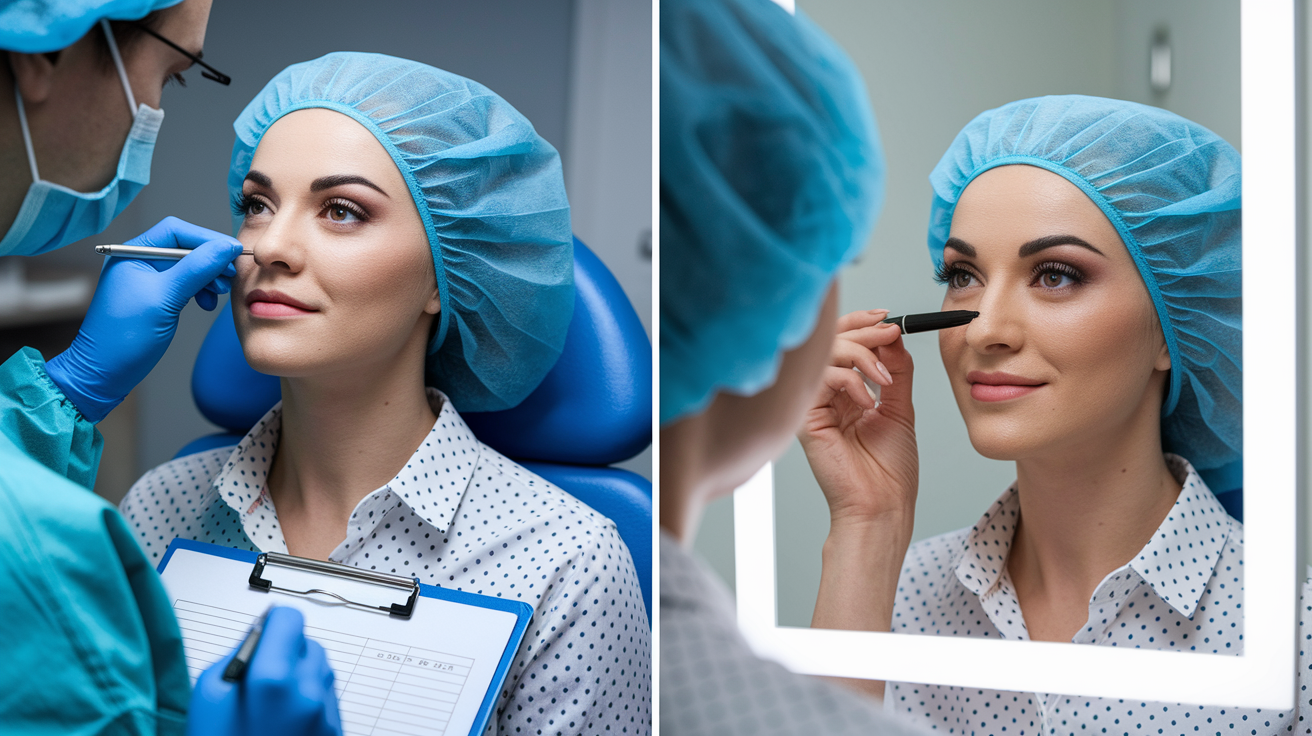
Insurers use “reconstructive” to describe procedures that restore function or appearance after injury, disease, or birth defect. Cosmetic procedures enhance appearance without fixing a functional problem. The dividing line is medical necessity. Does the surgery treat a diagnosable condition or just improve looks?
A nose job after a car accident to restore breathing qualifies as reconstructive. The same surgery to narrow a wide bridge for looks is cosmetic. Eyelid surgery to lift drooping skin blocking vision is reconstructive. The same operation to remove age-related puffiness is cosmetic.
Insurers want objective proof that a condition impairs function. Complaints about appearance rarely beat the cosmetic label. The table below shows how insurers classify three borderline procedures:
| Procedure Type | Key Coverage Trigger | Example Evidence |
|---|---|---|
| Eyelid Surgery (Blepharoplasty) | Visual field obstruction | Visual field test showing deficits; MRD1 measurement ≤2.0 mm; clinical photos |
| Breast Reduction | Chronic pain or skin breakdown | Documented back/neck pain; failed physical therapy; tissue weight ≥500 g per breast |
| Septoplasty / Rhinoplasty | Nasal obstruction or breathing impairment | ENT exam notes; nasal endoscopy findings; sleep study if sleep apnea present |
| Panniculectomy (Abdominal Skin Removal) | Recurrent infection or hygiene problems | Medical records showing cellulitis episodes; conservative treatment failure for 3 to 6 months |
How Insurers Determine Medical Necessity for Procedures Often Labeled Cosmetic

Medical necessity requires objective, measurable proof that a condition harms health or function. Insurers don’t trust descriptions like “I’m uncomfortable” or “I look tired.” They want numbers, test results, and clinical findings.
Hard data sits at the top of the evidence pile. Patient reports sit at the bottom. Objective testing carries the most weight. Visual field tests, sleep studies, nasal endoscopy, margin measurements, and tissue weight scales deliver metrics medical reviewers can compare against published thresholds. A surgeon’s letter explaining why the procedure is medically necessary adds context but rarely wins approval alone.
Insurers generally rank evidence like this:
- Objective testing – Visual field tests, sleep studies, pulmonary function tests, or nasal endoscopy results. Quantifiable measurements like margin-to-reflex distance (MRD1) or tissue weight.
- Physician documentation – Surgeon or specialist letters describing functional impairment, including specific symptoms, duration, and impact on daily activities.
- Diagnostic imaging and photos – Clinical photographs showing skin breakdown, obstructed vision, or anatomical defects. X-rays or MRI when relevant.
- Conservative treatment records – Documentation of at least 3 to 6 months of nonsurgical therapies (physical therapy, medications, weight management) and their failure to fix the condition.
- Accurate ICD and CPT coding – Diagnosis codes (ICD-10) and procedure codes (CPT) that align with a covered condition rather than a cosmetic one.
- Peer-to-peer review – A conversation between your surgeon and the insurer’s medical director to clarify clinical rationale. Often requested after an initial denial.
Exceptions: When Cosmetic Procedures May Qualify for Coverage

A handful of procedures that sound cosmetic can be covered when strict medical criteria are met. These exceptions aren’t automatic. You submit detailed evidence and often wait through a preauthorization review.
Breast reduction can be covered when documented chronic back, neck, or shoulder pain persists despite conservative therapy and the volume of tissue removed meets insurer thresholds. Many plans require at least 500 grams per breast or reference the Schnur Sliding Scale. Eyelid surgery qualifies for coverage when drooping skin obstructs the upper visual field. Insurers typically request formal visual field testing and measurement of the margin-to-reflex distance, often requiring MRD1 ≤2.0 mm.
Septoplasty or functional rhinoplasty can be approved when nasal obstruction is documented by an ENT exam, nasal endoscopy, or sleep study showing obstructive sleep apnea. Panniculectomy (removal of a hanging abdominal pannus) can be covered when you show recurrent skin infections, chronic irritation, or hygiene problems that persist despite at least 3 to 6 months of conservative care and documented cellulitis episodes or fungal infections.
Other exceptions include:
• Botox for chronic migraine or hyperhidrosis – Approved when a neurologist or dermatologist documents diagnosis, trial of standard therapies, and ongoing symptoms that meet clinical criteria (for migraines, at least 15 headache days per month).
• Breast reconstruction after mastectomy – Federally protected under the Women’s Health and Cancer Rights Act when related to cancer treatment or prophylactic surgery for high genetic risk.
• Liposuction for lipedema – Some plans cover this when a specialist confirms lipedema diagnosis, conservative measures have been exhausted, and the procedure is coded as treatment of a documented medical condition rather than cosmetic contouring.
• Scar revision after trauma or burns – Can be covered when scar tissue restricts movement, causes pain, or results from an accident or medical procedure.
• Reconstructive surgery following an accident – Generally covered when the procedure restores function or appearance damaged by injury.
Typical Insurance Policy Language Related to Cosmetic Exclusions

Your Evidence of Coverage or Summary Plan Description contains the formal exclusion language. Look for phrases that flag cosmetic procedures: “cosmetic,” “aesthetic,” “primarily to improve appearance,” “not medically necessary,” and “experimental or investigational.” These terms signal the insurer presumes the service is optional.
Policies often state they’ll cover the medically necessary portion of a combined procedure and exclude the cosmetic add-on. For example, an insurer might pay for septoplasty to correct breathing but deny payment for simultaneous cosmetic tip refinement. That split can surprise patients who assume the entire surgery is covered.
Common policy terms you’ll encounter:
• “Cosmetic or aesthetic services” – Procedures done primarily to change or improve appearance without addressing a functional impairment.
• “Not medically necessary” – Services that don’t meet the plan’s criteria for treating illness, injury, or birth defect.
• “Elective procedures” – Surgeries scheduled at the patient’s convenience rather than done to address an urgent or impairing condition.
• “Experimental or investigational” – Treatments not widely accepted in standard medical practice. Sometimes used to exclude newer cosmetic technologies.
• Preauthorization or prior authorization clauses – Requirements to obtain written approval before surgery. Failure to preauthorize can result in automatic denial even if the procedure might otherwise qualify.
Preauthorization Requirements and Preventing Unnecessary Denials

Preauthorization is your first defense against unexpected denials. Most plans require you to submit clinical documentation before scheduling an elective procedure. Skipping this step or submitting incomplete evidence is one of the most common reasons claims get rejected.
Insurers typically resolve standard preauthorization requests within 30 to 60 days and expedited (urgent) requests within 72 hours. If you wait until after surgery to request approval, the insurer will almost always deny the claim and you’re stuck with the full bill.
Required preauthorization documents usually include:
• Surgeon’s letter of medical necessity – A detailed explanation of the diagnosis, functional impairment, and why surgery is the right treatment.
• Objective test results – Visual field tests, sleep studies, nasal endoscopy reports, or margin measurements that quantify the problem.
• Conservative treatment records – Documentation showing you tried nonsurgical options (physical therapy, medications, weight loss, hygiene measures) for at least 3 to 6 months and those efforts failed.
• Clinical photographs – Images showing the anatomical issue, skin breakdown, or visual obstruction. Photos should be taken in a clinical setting with proper lighting and anatomical landmarks visible.
The Appeals Process for Cosmetic Procedure Denials
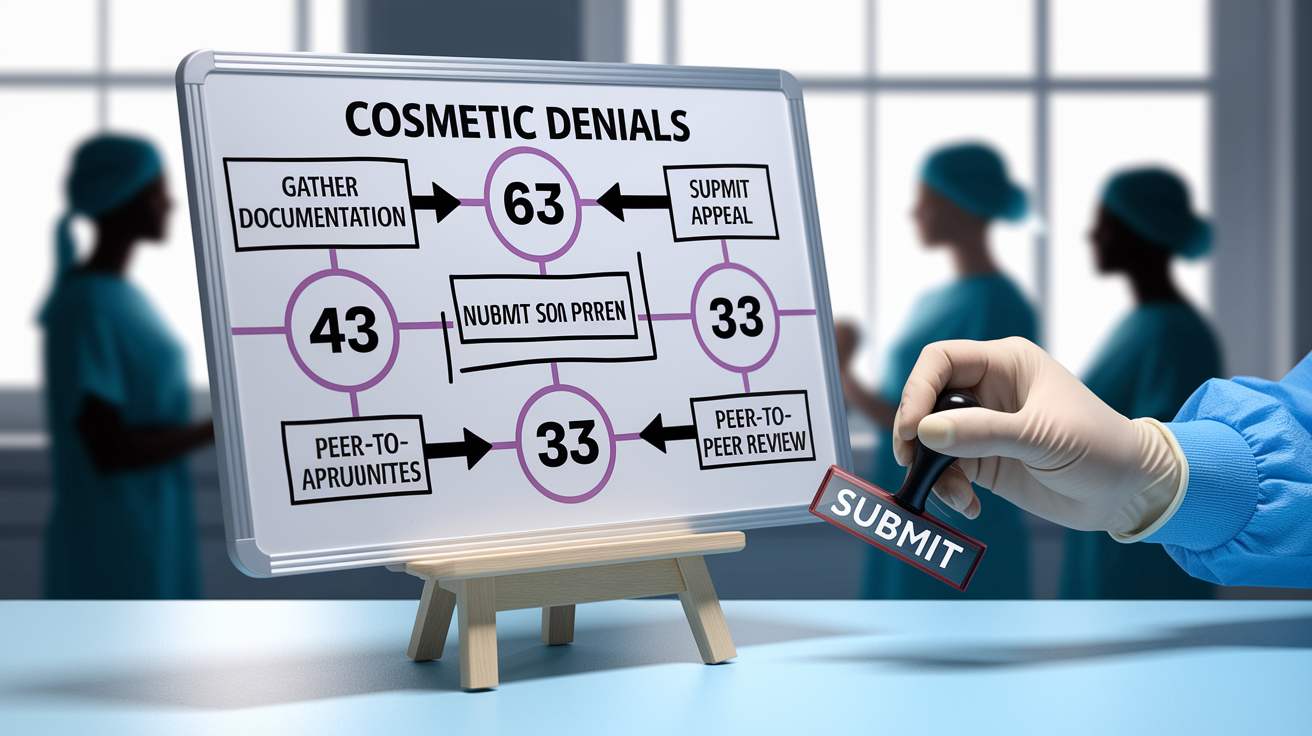
When an insurer denies a claim as cosmetic, you can appeal. The process is time sensitive and requires organized documentation. Most denials are overturned when you provide objective evidence the insurer didn’t see during the initial review.
Read your denial letter carefully. It’ll include a reason code and explain why the procedure was classified as cosmetic or not medically necessary. Request a copy of the medical policy the insurer used to make the decision. That policy document will list the specific criteria you must meet to qualify for coverage.
Internal appeal deadlines vary by plan type but commonly fall between 30 and 180 days from the date of the denial letter. Group employer plans often allow 180 days. Individual ACA marketplace plans may require submission within 60 to 120 days. Missing the deadline forfeits your right to appeal, so mark your calendar immediately.
The standard internal appeal workflow follows these steps:
- Gather supporting documentation – Collect your surgeon’s detailed letter, objective test results, photos, conservative treatment records, and any additional specialist notes.
- Write a formal appeal letter – State your name, plan ID, claim number, date of service, and a clear request for reconsideration. Attach all supporting documents.
- Submit the appeal within the plan’s deadline – Send via certified mail or use the plan’s online portal. Keep copies of everything.
- Request a peer-to-peer review – Ask your surgeon to speak directly with the insurer’s medical director to explain the clinical rationale.
- Wait for the insurer’s decision – Plans typically respond within 30 to 60 days for standard appeals, or within 72 hours for expedited/urgent cases.
- Escalate to external review if denied – If the internal appeal is denied, you can request an independent external review by a state-appointed reviewer.
| Appeal Stage | Typical Deadline | Key Documents |
|---|---|---|
| Internal Appeal | 30 to 180 days from denial date | Surgeon letter, test results, photos, treatment logs, ICD/CPT codes |
| External Review | File within 60 to 120 days of final internal denial | Complete internal appeal record, additional medical evidence, independent physician opinion |
| State Regulator Complaint | No strict deadline but file promptly | Timeline of insurer actions, copies of denials, evidence of procedural violations |
Understanding Out‑of‑Pocket Costs for Non‑Covered Cosmetic Procedures

When a procedure is classified as cosmetic and the denial stands, you pay the entire cost yourself. The price you see advertised usually represents the surgeon’s professional fee only. Anesthesia, operating room rental, postoperative care, and pathology or imaging studies add 20 to 50 percent on top of the quoted fee.
Ask your surgeon’s office for a complete written estimate that itemizes all charges: surgeon fee, anesthesia, facility fee, any lab work, and follow-up visits. Confirm whether complications or revision procedures would trigger additional charges. Some practices offer financing plans that spread payments over 12 to 60 months, often with promotional interest-free periods.
Common cost components you should expect when paying out of pocket:
• Surgeon’s professional fee – The base price for the procedure. Varies widely by region, surgeon experience, and complexity.
• Anesthesia charges – Billed separately by the anesthesiologist or nurse anesthetist. Typically calculated by time (per 15-minute unit).
• Facility or operating room fee – Hospital or surgical center charges for use of the room, equipment, and nursing staff.
• Preoperative testing – Lab work, imaging, or cardiac clearance if required before surgery.
• Postoperative care and follow-up – Office visits, dressing changes, suture removal, and any additional treatments needed during recovery.
Documentation Checklist to Support Coverage Exceptions

Strong documentation turns a cosmetic-looking procedure into a medically necessary one. Assemble this evidence before submitting your preauthorization request or appeal. Missing even one key document can result in automatic denial.
• Detailed surgeon or specialist letter explaining the diagnosis, functional impairment, symptom duration, and why surgery is the right treatment.
• Objective test results such as visual field tests, MRD1 measurements, sleep studies, nasal endoscopy findings, or pulmonary function tests.
• Clinical photographs taken in a medical setting showing the anatomical defect, skin breakdown, or visual obstruction.
• Conservative treatment logs documenting at least 3 to 6 months of nonsurgical therapy (physical therapy records, medication lists, weight-loss plans) and their failure to resolve symptoms.
• Tissue-weight documentation (for breast reduction) or measurements against published thresholds like the Schnur Sliding Scale.
• ICD-10 diagnosis codes that reflect a medical condition rather than a cosmetic concern.
• CPT procedure codes that align with a reconstructive or functional repair rather than an aesthetic enhancement.
• Medical history showing chronic symptoms, repeated infections, or functional limitations that support the need for surgical intervention.
• Specialist consultation notes from an ophthalmologist, ENT, neurologist, or dermatologist when the procedure involves vision, breathing, migraines, or skin conditions.
• Peer-reviewed literature or clinical guidelines that support the medical necessity of the proposed procedure for your documented condition.
External Review, State Regulators, and Escalation Options

If your internal appeal is denied and you believe the decision violates your plan’s terms or state law, you can request an external review by an independent medical reviewer. External reviews are typically resolved within 45 days for standard cases and 72 hours for urgent situations. The reviewer’s decision is usually binding on the insurer.
State insurance regulators can intervene when an insurer misses deadlines, fails to follow its own policies, or denies claims in bad faith. Filing a complaint with your state’s Department of Insurance or insurance commissioner won’t automatically overturn a denial, but it can prompt an investigation and force the insurer to justify its actions. For employer-sponsored ERISA plans, remedies and timelines differ. Consider consulting legal counsel if procedural violations occur, as ERISA appeals follow federal rather than state rules.
Final Words
You now know which procedures insurers usually call cosmetic and why they get excluded. We covered medical-necessity tests, the evidence insurers want, preauthorization musts, and how appeals work.
Use the documentation checklist, get preauthorization in writing, and collect objective tests or surgeon letters—those steps cut denial risk.
Keep this guide handy. With clear records and the right evidence you reduce surprises from cosmetic procedure exclusions health insurance and increase the chance of approval when a procedure treats a real problem.
FAQ
Q: What cosmetic procedures should not be covered by health insurance?
A: Cosmetic procedures that should not be covered by health insurance are those done primarily to improve appearance, for example Botox for wrinkles, dermal fillers, breast augmentation, liposuction, tummy tucks, hair restoration and tattoo removal, unless there’s documented functional need.
Q: Does health insurance cover any cosmetic procedures?
A: Health insurance covers some cosmetic procedures only when they’re medically necessary, for example reconstructive surgery after mastectomy, blepharoplasty for documented vision obstruction, breast reduction with symptom evidence, and septoplasty for airway obstruction.
Q: What are three unique exclusions for health insurance policies?
A: Three unique exclusions for health insurance policies are cosmetic dermatology like wrinkle Botox and fillers, elective body-contouring such as liposuction and tummy tucks, and cosmetic dental or tattoo removal services.
Q: What if a procedure is not covered by insurance?
A: If a procedure is not covered by insurance, you pay out-of-pocket but can appeal with medical evidence, request external review, ask the surgeon for a necessity letter, or negotiate price or payment plans.