





Think your homeowners policy will bail you out after any disaster? Think again. Standard policies deny claims for many common losses—floods, earthquakes, mold from slow leaks, pests, wear and tear, and even certain dog bites or home-business mishaps. Those exclusions live in a section called “Exclusions,” and they can leave you paying thousands when a claim is denied. This piece explains the usual exclusions in plain terms, the common gotchas, who needs extra coverage, and the exact questions to ask your agent before you sign.
Core Homeowners Policy Exclusions Explained Clearly

Your standard homeowners policy doesn’t cover everything. Not even close.
Most policies exclude 11 major damage categories: floods, earthquakes, maintenance failures, pests, mold, war, nuclear hazard, government action, intentional loss, neglect, and wind damage if you’re in certain coastal states. These aren’t buried in the fine print. They’re listed right in a section called “Exclusions” or “What We Do Not Cover.” When damage falls into one of these buckets, your claim gets denied. Doesn’t matter if you’re out $500 or $50,000.
Floods get excluded even though they’re the most common natural disaster in the U.S. Earthquakes are out because one event can wreck entire regions at once. Wear and tear, neglect, gradual leaks? Denied. Insurers only pay for sudden accidents, not things you could’ve seen coming. Infestations like termites or bedbugs are excluded unless they cause something else that’s covered, like a fire. Mold only gets covered when it’s from a sudden event that’s already in the policy. And if you’re in Alabama, Florida, Louisiana, Mississippi, North Carolina, South Carolina, or Texas, wind damage might be excluded or come with a separate hurricane deductible.
The big ones you’ll see across nearly every policy:
- Floods, rising water, storm surge, groundwater seepage
- Earthquakes, landslides, mudflows, mine subsidence
- Wear and tear, rust, rot, mechanical breakdown
- Pests, termites, rodents, insect damage
- Mold and mildew from long-term moisture or neglect
- Intentional damage, fraud, criminal acts by the insured
- Government seizure, condemnation, forced demolition
- War, civil unrest, nuclear contamination
Check your endorsements and riders if any of these matter where you live or what you own. Most gaps can be filled. But you’ve got to buy the coverage before the loss happens.
Why Homeowners Insurance Excludes Certain Perils

Insurers cut out risks that are predictable, catastrophic, not actually accidents, or just outside what private insurance can handle.
War and nuclear hazards? Excluded because one event could bankrupt dozens of carriers at the same time. Government seizure, condemnation, regulatory takings? Those are political or legal moves, not property damage. Intentional damage or fraud by the insured gets excluded to stop moral hazard. File one of those claims and you might face denial and fraud penalties.
Mold, slow water seepage, gradual leaks? Excluded when you don’t do anything to stop the damage. Insurance covers sudden accidents. It doesn’t cover what happens when you ignore a problem for months. Find a slow leak behind your wall and leave it for half a year? The mold and rot that follow are on you.
Four reasons insurers avoid these risks:
- Catastrophic cost. Floods, earthquakes, nuclear events can blow past premium pools entirely.
- Predictable deterioration. Aging roofs, wear and tear, pest infestations are expected expenses, not accidents you can insure.
- Moral hazard. Intentional damage, fraud, neglect create incentives to file false claims.
- Regulatory constraints. War, government action, nuclear contamination fall outside the legal definition of what can be insured.
Water-Related Exclusions Within Homeowners Policies

Water damage confuses people more than almost anything else. Not all water is treated the same.
Sewer backup and sump pump failure are typically excluded unless you bought a specific endorsement. Groundwater seepage, long-term leaks, slow pipe deterioration get denied as maintenance problems. Floods, including storm surge, rising water, overflow from bodies of water, are completely excluded. The National Flood Insurance Program usually makes you wait 30 days before coverage kicks in, so you can’t buy a policy the week a hurricane’s forecast and expect protection.
Rain coming into your home after a windstorm rips off the roof? Probably covered, because the wind event caused it. Same rain coming in through a worn-out, neglected roof? Denied. The difference is whether the water got in because of a sudden covered event or because you didn’t maintain the property. A burst pipe from a tree falling during a storm is likely covered. A slow leak you ignored for months that rotted your floor? Not covered.
Five categories of water exclusions:
- Flood. Rising surface water, storm surge, rivers or lakes overflowing.
- Sewer backup. Drain or sewer line backup, unless you bought an endorsement.
- Slow leaks. Gradual pipe corrosion, hidden leaks, undetected drips.
- Groundwater seepage. Water entering through foundation cracks, hydrostatic pressure.
- Sump pump failure. Mechanical breakdown or overwhelmed pump capacity.
Check if your policy includes sewer backup coverage. Most don’t. If you’re in a flood zone or near a river, buy a separate flood policy before the waiting period becomes a problem.
Environmental and Biological Homeowners Policy Exclusions

Mold, rot, infestations get excluded when they’re from long-term moisture, neglect, or gradual deterioration.
Mold’s often covered only when it’s caused by something sudden and already covered, like storm damage that breaks a window and lets rain in. Fix the window and clean up the water fast? Remediation might be covered. Leave the broken window for weeks and let mold spread? Claim denied. Infestations like bedbugs, termites, mice are excluded unless they cause a covered peril. Rodents chew wiring that starts a fire? The fire’s covered. The rodent damage and extermination aren’t.
Some carriers sell mold endorsements, but they usually come with strict limits or caps. Many policies cap mold remediation at $10,000 or less, even when the thing that caused it is covered. Mold spreads past that cap? The rest comes out of your pocket. Rot’s almost never covered because it’s from prolonged moisture exposure and failing to maintain the property. A rotted deck, rusted gutter, deteriorated flooring? Your responsibility.
| Type | Typical Exclusion | What Triggers Coverage |
|---|---|---|
| Mold | Long-term moisture, neglect, slow leaks | Sudden covered event (storm breaks window → rain → immediate remediation) |
| Infestations | Termites, bedbugs, mice, pest damage | Infestation causes a covered peril (rodent-chewed wire starts fire) |
| Rot | Aging, moisture exposure, neglect | Rarely covered; considered maintenance failure |
Liability and Animal-Related Exclusions Under Homeowners Policies

Lots of policies restrict liability for injuries caused by certain dog breeds.
Pit bulls, German shepherds, rottweilers, wolf-dog hybrids are commonly excluded or trigger higher premiums. If your dog’s on the exclusion list and bites a guest, the insurer might deny the claim entirely. Some carriers won’t write policies if you own an excluded breed. Others will write the policy but carve out dog-related liability with a breed-specific exclusion endorsement.
Umbrella liability policies commonly start at $1,000,000 and can fill these gaps, but only if the underlying homeowners policy allows the dog or if the umbrella carrier agrees to cover the breed. Check your liability section and ask your agent in writing whether your dog’s covered. If the answer’s no, shop for a carrier that doesn’t exclude the breed or budget for a standalone animal liability policy.
Typical excluded breeds:
- Pit bulls and Staffordshire terriers
- Rottweilers
- German shepherds
- Doberman pinschers
- Wolf-dog hybrids
- Chow chows
Business, Rental, and Occupancy Exclusions in Homeowners Policies

Standard policies limit business property to around $2,500 and exclude business liability entirely.
That means if a client slips during a home-based salon appointment, the injury claim might get denied. If you store inventory for an online business and it’s stolen, you’re covered only up to the business property sublimit. Rental activities and home-sharing platforms can also void or restrict coverage without a landlord endorsement or short-term rental rider. Run an Airbnb without telling your insurer? You could end up with a denied claim and policy cancellation.
You’ll need commercial general liability or a business owners policy when business activity is regular and involves clients, customers, or significant inventory. Homeowners policies are built for personal residential use. Once you cross into commercial territory, the risk profile changes and the insurer needs to price it differently. Some carriers offer home business endorsements that raise business property limits and add limited business liability, but these aren’t substitutes for full commercial coverage when the business generates real revenue or involves physical customer visits.
Situations that typically require additional policies or endorsements:
- Operating a home salon, barbershop, or spa with scheduled client appointments
- Tutoring, coaching, or instruction sessions where clients visit the home
- Renting a room, basement apartment, or separate structure to tenants
- Selling products from home that involve inventory storage or regular shipping
High-Value Property Limits and Exclusions for Personal Items

Standard sublimits commonly cap jewelry at $1,500 per incident unless items are scheduled.
High-value art, collectibles, musical instruments, electronics often exceed policy limits and need scheduling or separate floaters. Scheduled personal property endorsements provide coverage at appraised value without applying a deductible. If a $10,000 engagement ring gets stolen and you didn’t schedule it, you’ll get $1,500 minus the deductible. If you scheduled it, you’ll get the appraised $10,000 with no deductible.
Sublimits exist because insurers need proof of value and want to avoid moral hazard. Without an appraisal or schedule, it’s easy to claim a stolen item was worth way more than it actually was. Scheduling requires documentation: receipts, appraisals, photos. And the insurer prices the risk based on the declared value. Protects both sides.
| Category | Typical Sublimit | How to Insure Fully |
|---|---|---|
| Jewelry, watches, furs | $1,500 per occurrence | Schedule items with appraisals on a personal articles floater |
| Fine art and collectibles | $2,500 or less | Schedule with appraisals or buy separate fine arts policy |
| Musical instruments | $2,500 or less | Schedule on floater or buy instrument-specific policy |
| Electronics and cameras | Varies; often $2,500 | Schedule high-value items or add electronics rider |
| Firearms | $2,500 or less | Schedule firearms or buy specialized firearms policy |
| Business property | $2,500 | Add home business endorsement or buy business owners policy |
Catastrophic and Political Event Exclusions

War, civil unrest, nuclear contamination get excluded because losses are uninsurable and catastrophic.
A single nuclear accident or regional conflict could produce claims far exceeding the combined assets of the insurance industry. Government seizure, condemnation, forced demolition are also excluded because they’re legal or political actions, not accidental property damage. Eminent domain, regulatory takings, code enforcement demolitions fall into this category.
Only rare exceptions, such as government action to prevent the spread of a covered peril, may allow limited coverage. Firefighters tear down part of your fence to access a neighbor’s burning house and stop the fire from spreading to your property? The fence damage might be covered. But if the city condemns your home because it violates zoning or building codes? That’s excluded.
Wind, Hurricane, and Earth Movement Exclusions
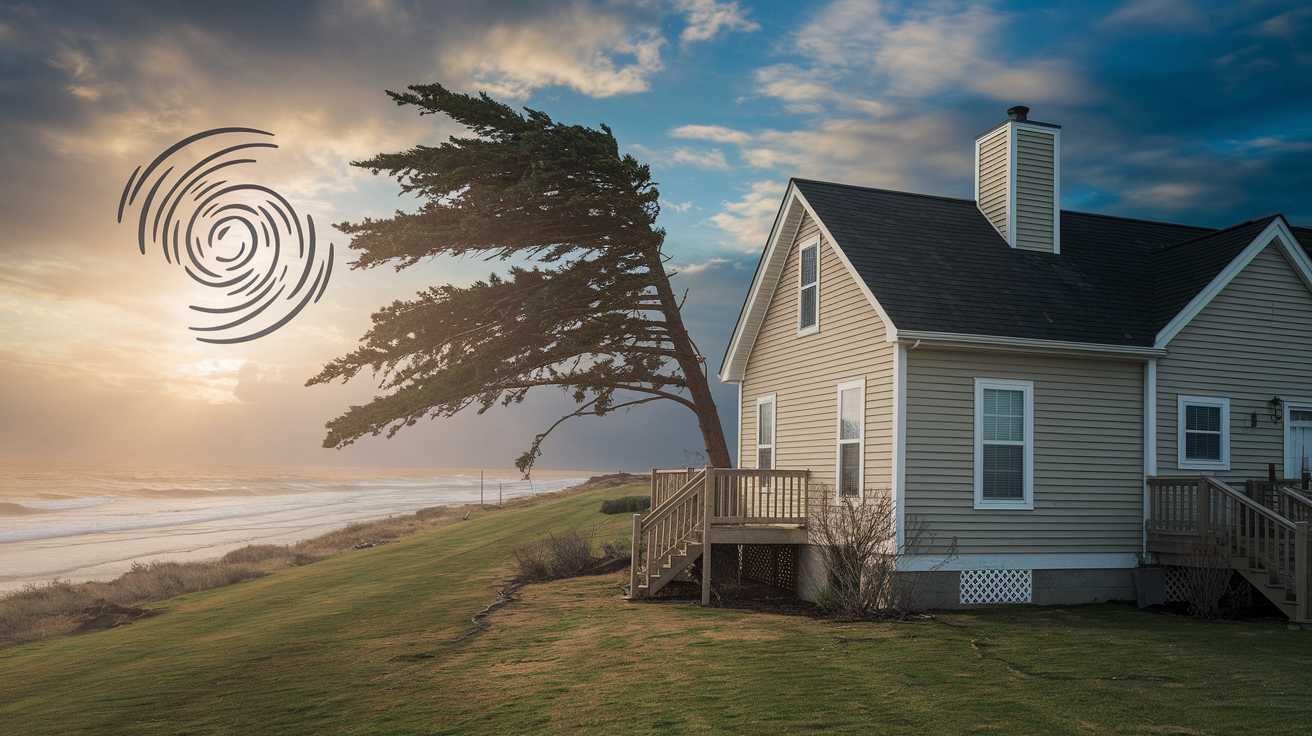
Wind damage might be excluded or subject to separate hurricane deductibles in Alabama, Florida, Louisiana, Mississippi, North Carolina, South Carolina, and Texas.
In these states, insurers often apply a percentage-based wind or named-storm deductible, commonly 1% to 5% of the dwelling limit, instead of the standard flat deductible. A home insured for $500,000 with a 5% hurricane deductible means the homeowner pays the first $25,000 of wind damage out of pocket. In Texas, wind exclusions can apply only in designated high-risk coastal counties.
Earth movement gets excluded due to catastrophic exposure. Earthquakes, landslides, mine subsidence, mudflows. A single earthquake can damage thousands of homes at the same time, making it impossible to spread risk across a normal premium pool. Earthquake policies are sold separately or as endorsements, and deductibles usually run 10% to 20% of dwelling limits. Sinkholes sometimes require a separate endorsement, and coverage varies by state. Florida mandates sinkhole coverage in some forms. Other states treat it as optional.
Excluded earth movement causes:
- Earthquakes and aftershocks
- Landslides and mudslides
- Mine subsidence and sinkhole collapse
- Ground settling and soil shifting
- Volcanic eruptions
Endorsements and Riders That Fill Policy Exclusion Gaps
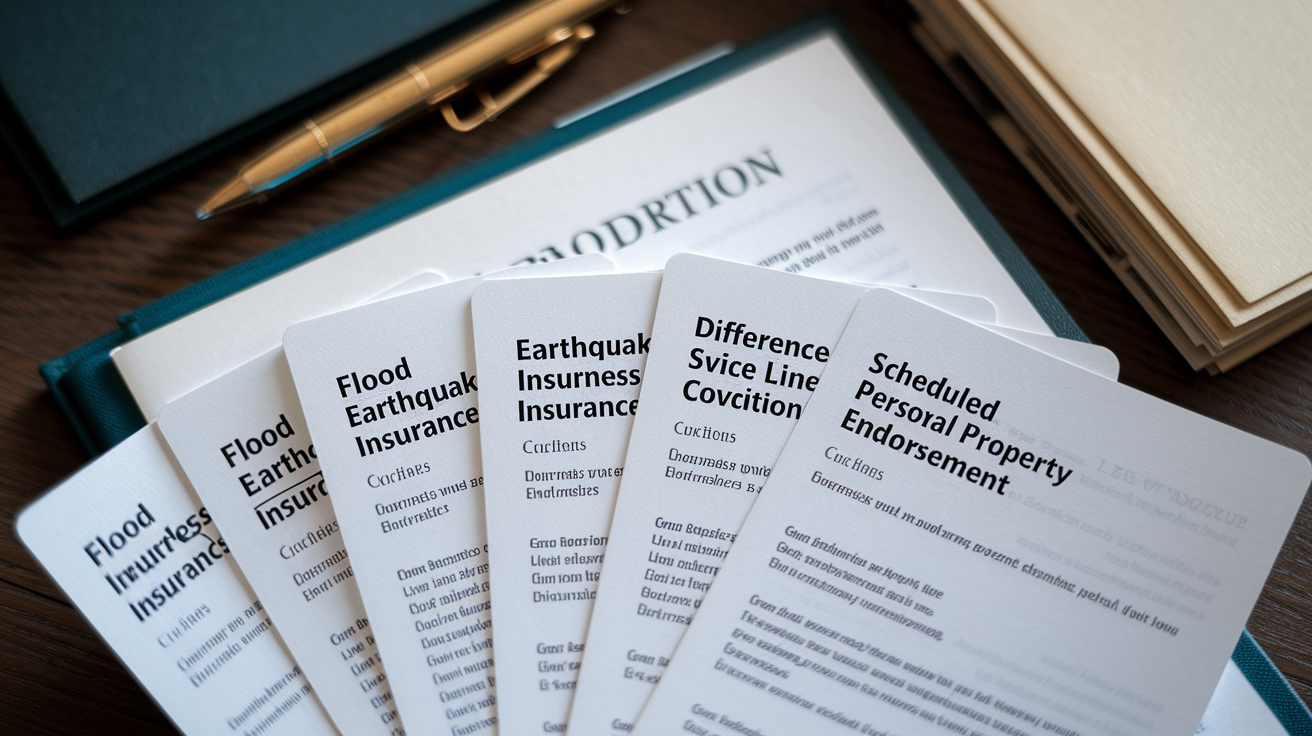
Seven key endorsements fill the most common coverage gaps: flood insurance, earthquake insurance, home business endorsement, difference-in-conditions coverage, service line protection, scheduled personal property endorsement, and sewer backup coverage.
Each addresses a specific exclusion and changes how claims get paid. NFIP flood policies have a 30-day waiting period, so buy before storm season. Earthquake policies carry percentage deductibles. Expect to pay 10% to 20% of your dwelling limit before coverage kicks in. Sewer backup riders fill the common exclusion for drain and sewer line backups.
Flood Insurance
Sold separately through NFIP or private carriers. Covers rising water, storm surge, overflow. The 30-day waiting period means you can’t wait until a storm’s forecast.
Earthquake Insurance
Standalone or endorsement coverage for earthquake damage, typically with a 10% to 20% deductible. Required in high-risk zones, optional elsewhere.
Home Business Endorsement
Raises business property limits above the standard $2,500 and may add limited business liability for home-based operations.
Difference in Conditions Endorsement
Broad coverage for perils excluded by standard policies, including flood, earthquake, and other catastrophic events. Often used by high-value homeowners.
Service Line Coverage
Covers repair or replacement of underground utility lines (water, sewer, electric, gas) from the home to the street connection.
Scheduled Personal Property Endorsement
Provides coverage at appraised value without deductibles for jewelry, art, instruments, and other high-value items.
Sewer Backup Endorsement
Covers damage from sewer or drain backups, sump pump overflow, and water forced through drains by external pressure.
Five ways endorsements change claim outcomes:
- Sewer backup rider. Turns a denied basement flood into a covered claim when municipal sewers back up during heavy rain.
- Scheduled jewelry floater. Replaces the $1,500 sublimit with full appraised value and removes the deductible.
- Earthquake endorsement. Covers foundation cracks, structural damage, and contents loss after a quake, subject to percentage deductible.
- Home business endorsement. Covers stolen inventory and business liability when a client gets injured during a home-based service appointment.
- Service line coverage. Pays for excavation and repair of a broken water line between the street and your house. A cost that can run $3,000 to $10,000.
Final Words
In the action, we walked through the exclusions that cause the biggest surprises: floods, earthquakes, slow leaks and wear, pests and mold, intentional loss, government and nuclear risks, and limits on valuables.
Check your policy now. Look for endorsements (flood, earthquake, sewer backup, scheduled property), note hurricane or percentage deductibles, and confirm any breed or business limits in writing.
Understanding homeowners policy exclusions helps you decide what to add, so your coverage actually works when you need it. You’ll be glad you checked.
FAQ
Q: What are the common exclusions in a homeowners policy?
A: The common exclusions in a homeowners policy are floods, earthquakes/earth movement, wear-and-tear or maintenance failures, pests and infestations, mold from long-term moisture, intentional loss, government or nuclear events, and some wind/hurricane rules in high-risk states.
Q: What is not covered under a homeowners insurance policy?
A: What is not covered under a homeowners insurance policy is typically damage from slow water leaks, sewer backup, wear and tear, pest infestations, business losses, high-value items over sublimits, and injuries from excluded dog breeds—denied as maintenance or excluded peril.
Q: How can I cover the common homeowners policy exclusions?
A: How you can cover the common homeowners policy exclusions is by adding flood or earthquake policies, sewer-backup and scheduled personal property endorsements, business/home-sharing riders, and an umbrella policy—check waiting periods, percentage deductibles, and breed rules first.