




Think renters insurance is a flat fee? Think again.
Insurers set prices by measuring risk, and small choices add up fast: your ZIP code, building age, past claims, deductible, coverage limits, credit score, pets, and pricey items all push premiums higher.
This post breaks down the key factors that raise your cost, points out the common gotchas that surprise renters at claim time, and gives the simple checks you should do — plus who benefits from each choice.
Key Factors That Increase Renters Insurance Costs (Comprehensive Overview)

Renters insurance premiums aren’t fixed. Insurers measure risk and set rates by looking at where you live, what you own, how much coverage you’re buying, your claims history, and a bunch of other data points that predict whether you’ll file an expensive claim. That process creates wildly different premiums for two renters who look basically the same on paper but happen to live in different ZIP codes or pick different deductibles.
The national average cost of renters insurance was $170 per year according to the 2021 Insurance Information Institute report, the most recent broad industry benchmark we’ve got. But that number’s misleading for most people shopping around. Real premiums run anywhere from about $100 per year to $500 or more, depending on location, coverage choices, and personal risk factors. A renter in a low crime, low disaster area with good credit and a high deductible can land well below average. A renter in a coastal hurricane zone or high theft neighborhood with a claims history will see much higher costs.
Insurers blend dozens of data points into one risk calculation. They’re weighing every element that affects claim frequency and payout size: your ZIP code’s burglary rate, the age of your building’s wiring, how many claims you’ve filed in the past five years, the credit score on your file, whether you schedule high value items like jewelry or electronics. They also watch macro trends that drive up claim costs across the board. Inflation, wildfire season losses, the frequency of severe storms, the rising cost of reinsurance.
The most common cost raising factors are:
Location in a high crime or natural disaster zone: high theft neighborhoods, flood plains, hurricane corridors, and wildfire prone areas all trigger higher premiums (sometimes 20–100% above baseline rates).
Low deductible choices: opting for a $250 or $500 deductible instead of $1,000 or $2,500 reduces what you pay out of pocket but materially increases monthly or annual premium costs.
High personal property coverage limits: insuring $50,000 in belongings costs significantly more than insuring $15,000, even when everything else is identical.
Prior claims on your record: a single recent claim can raise your next premium by 20–40%. Multiple claims can result in non renewal or a jump to high risk pricing.
Poor credit or low credit based insurance score: insurers in most states use a credit based score (often FICO Score 8 or similar) to estimate risk. Lower scores can increase premiums by 10–30%.
Pets with liability exposure: owning certain dog breeds or having a bite history on record adds liability risk and can cost an extra $5–$20 per month.
Scheduled or high value property add ons: insuring jewelry, fine art, collectibles, or expensive electronics through endorsements raises policy cost beyond baseline premiums.
Insurers use actuarial models to blend these inputs. One factor rarely operates alone. A renter with great credit and no claims but a low deductible and high value belongings will pay more than someone with average credit, a higher deductible, and minimal possessions. A renter who moves from a low risk suburb to a coastal city might see their premium double overnight even if nothing else about their policy changes. Understanding which factors you control and which you can’t is how you limit how much your premium rises over time.
Location Based Risks That Increase Renters Insurance Costs

Your address is the single most powerful input in your renters insurance premium. Insurers price policies by ZIP code, block, and sometimes even building specific claim history. They track burglary rates, vandalism frequency, and historical claim density down to the neighborhood level. Two identical renters in the same city can pay materially different premiums if one lives five miles closer to a high theft district or within a mapped flood zone. Moving to a new apartment can reset your premium immediately, sometimes dramatically upward or downward, because the risk profile of that location changes everything.
High crime areas produce more theft, break in, and vandalism claims. Insurers respond by raising premiums in those zones to cover the higher expected payout. If your new rental sits in a neighborhood where vehicle break ins, package theft, or home burglaries occur frequently, expect your rate to climb. Natural disaster exposure works the same way. Living in a flood plain, a coastal hurricane corridor, a wildfire interface zone, or a region prone to tornadoes and severe storms puts your belongings at higher risk of catastrophic loss. Insurers track disaster history and climate modeling, and they price that exposure directly into your premium.
Reinsurance costs and insurer market exits compound the location problem. After a major hurricane season or wildfire outbreak, reinsurance (insurance for insurance companies) becomes more expensive. Insurers pass that cost to policyholders in affected regions. Some carriers pull out of high risk states or ZIP codes entirely, which tightens local competition and drives rates higher for the remaining policies. In states like Florida, California, and parts of the Gulf Coast, these dynamics have pushed renters insurance premiums well above the national average in recent years.
| Location Factor | Typical Premium Impact |
|---|---|
| High local crime rate (burglary, vandalism, theft) | +20–50% above baseline |
| FEMA flood zone (A, V, or VE designation) | +30–100% (standard renters policies exclude flood; location affects base premium and bundled add ons) |
| Wildfire interface zone (WUI areas) | +50–150% in extreme cases; some insurers non renew or decline coverage |
| Hurricane prone coastal region | +40–100%; higher in recent disaster areas or states with limited competition |
Relocating to a lower risk address can reverse these increases. If you move from a coastal city to an inland suburb with lower crime and no disaster history, your next quote may drop by a quarter or more even if your coverage and deductible stay the same.
Coverage Limits, Personal Property Values, and How They Raise Renters Insurance Costs

Higher personal property limits mean bigger potential payouts, and insurers charge more premium to cover that exposure. If you own expensive electronics, designer furniture, collectibles, musical instruments, or other high value belongings, you’ll need higher coverage limits to replace everything after a fire or burglary. Insuring $15,000 in personal property might run you roughly $10–$20 per month. Raising that limit to $50,000 can push monthly premiums into the $25–$60 range depending on your location and risk profile.
The type of valuation you choose also affects cost. Replacement cost coverage pays to replace your belongings with new items of similar quality, regardless of depreciation. Actual cash value coverage pays the depreciated value (what your used couch or three year old laptop is worth at the time of loss, not what a new one costs). Replacement cost premiums run higher because the insurer’s payout at claim time is larger, but the coverage provides better financial protection. Most renters policies offer replacement cost as the default or an available upgrade. Choosing actual cash value lowers your premium but increases your out of pocket gap when you file a claim.
Certain types of belongings require scheduled personal property endorsements to insure properly. Standard policies cap coverage for jewelry, fine art, collectibles, high end electronics, and similar items (often around $1,000 to $2,500 total per category). If you own a $5,000 engagement ring, a vintage guitar, or rare collectibles, you need to schedule those items separately with appraisals and pay additional premium for the higher limits. Common items that push coverage costs higher:
- Fine jewelry and watches (engagement rings, heirlooms, designer pieces)
- High end electronics (camera equipment, gaming setups, home theater systems)
- Fine art and collectibles (paintings, rare books, signed memorabilia)
- Musical instruments (guitars, violins, pianos, DJ equipment)
- Expensive bicycles and sports gear (road bikes, ski equipment, camera drones)
Adding scheduled property increases your premium because the insurer now covers the full appraised value of those items, often without a deductible and with broader coverage (including accidental loss in some cases). That protection is valuable, but it’s not free.
Avoid over insuring by keeping an accurate inventory of what you actually own and what it would cost to replace. Many renters overestimate the value of their belongings or carry legacy coverage limits from a previous apartment filled with more stuff. Walk through your rental, photograph your possessions, and add up realistic replacement values. If your total comes to $25,000, don’t pay for $50,000 in coverage.
Deductible Choices and Their Impact on Renters Insurance Cost Increases

Your deductible is the amount you pay out of pocket before the insurance company covers the rest of a claim. Choosing a lower deductible raises your premium because the insurer takes on more of the financial risk. Choosing a higher deductible lowers your premium because you’re agreeing to absorb more of the loss yourself. That trade off is direct and predictable. Raising your deductible from $500 to $2,500 can reduce your annual premium by an estimated 15–40%, depending on the insurer and your state.
Most renters policies offer deductible options ranging from $250 to $2,500. A $250 or $500 deductible means you pay less if you file a claim, but your monthly or annual premium will be materially higher. A $1,000 or $2,500 deductible cuts your premium noticeably but requires you to cover a larger portion of any loss before insurance kicks in. If your couch, TV, and laptop are stolen and the total replacement cost is $3,000, a $500 deductible leaves you responsible for $500 and the insurer pays $2,500. A $2,500 deductible leaves you responsible for the full $2,500 and the insurer pays $500.
When to choose each deductible tier:
$250–$500 deductible: best for renters with minimal emergency savings who need to keep out of pocket costs low during a claim, even if it means higher ongoing premiums.
$1,000 deductible: a middle ground option that balances premium savings with manageable out of pocket responsibility. Works well if you have $1,000 in accessible savings.
$1,500–$2,500 deductible: maximizes premium savings but requires you to cover most small to medium losses yourself. Only appropriate if you can afford the deductible amount without financial hardship.
Variable by item or peril: some policies allow different deductibles for specific perils (wind, hail) or scheduled items. Review these carefully to avoid surprise costs.
Make sure you can actually afford your deductible if you need to file a claim. Saving $10 per month on premium doesn’t help if a $2,500 deductible wipes out your emergency fund when your apartment floods.
Claims History and Frequent Losses That Increase Renters Insurance Premiums

Filing a claim signals to insurers that you represent ongoing risk. Even one recent claim can increase your premium at the next renewal by an estimated 20–40%, and multiple claims within a few years can push you into high risk pricing or result in non renewal. Insurers track claim frequency and payout amounts through shared databases (CLUE reports and similar systems) that follow you across carriers. A claim you filed three years ago with a different insurer still appears on your record when you shop for a new policy today.
Insurers evaluate claims by type, size, and timing. A single large fire or theft claim may be treated as bad luck and result in a moderate rate increase. Two or three claims in quick succession, especially for preventable issues like water damage from a burst pipe you didn’t winterize, raise red flags about your risk behavior. Liability claims, where someone is injured in your rental and sues, often trigger larger premium increases because they expose the insurer to high legal and medical costs.
Not all claims affect pricing equally, but the most penalized types include:
Fire and smoke damage: high cost claims that often total contents and trigger extended living expense payouts.
Theft and burglary: repeated theft claims suggest either high crime location or insufficient security, both of which increase future risk.
Water damage (non flood): burst pipes, appliance leaks, and roof leaks are common and expensive. Multiple water claims are a major rate driver.
Liability claims: injuries to guests, dog bites, or accidents on the property can result in large settlements and multi year premium increases.
Avoid filing small claims when possible. If your loss is only slightly above your deductible (say, $600 in damage with a $500 deductible), it’s often smarter to pay the $600 yourself and preserve your claims free discount. The premium increase from one claim can cost you far more over the next three to five years than the $100 net insurance payout.
Building Type, Construction Materials, and Safety Features That Influence Renters Insurance Costs
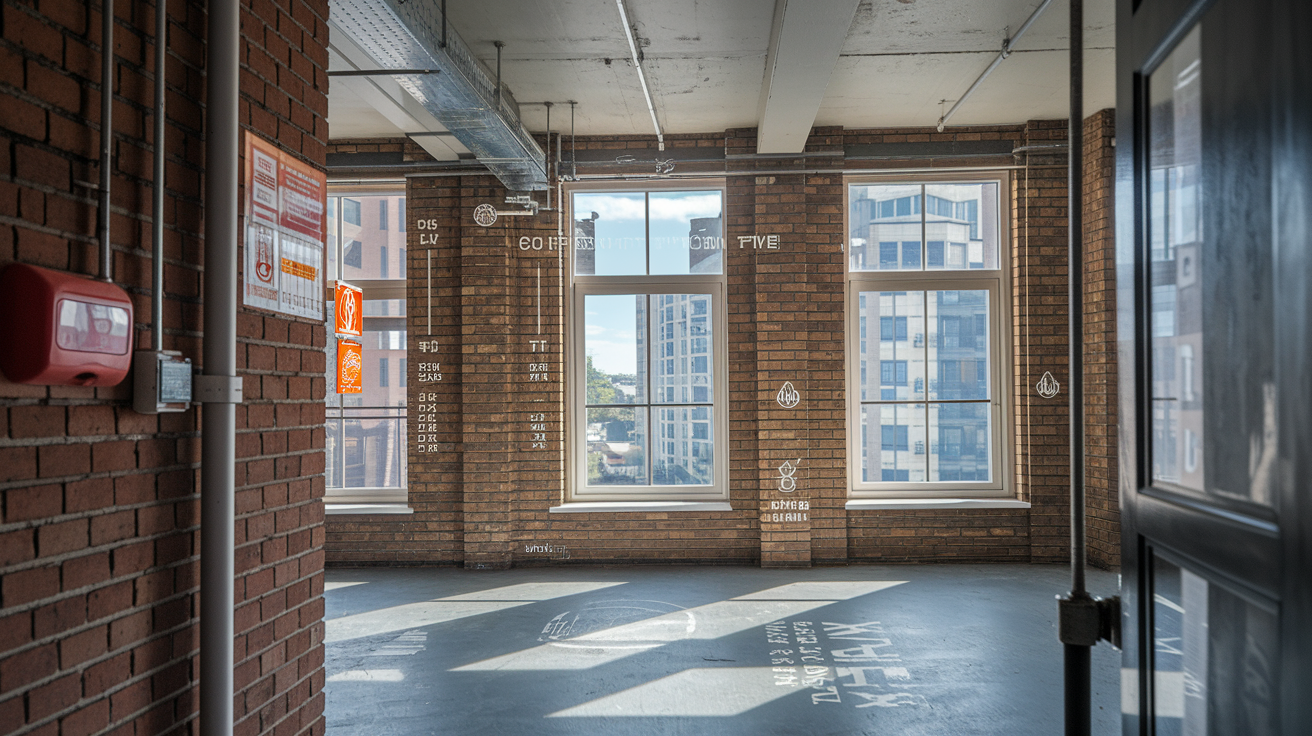
The physical structure you rent plays a major role in your premium. Older buildings with outdated electrical wiring, old plumbing, wood frame construction, and aging roofs cost more to insure because they’re more likely to suffer fires, water damage, and storm losses. Insurers review building age, construction type, and maintenance records when underwriting a policy. A unit in a 1920s walk up with knob and tube wiring will almost always carry a higher premium than a unit in a modern, code compliant apartment building with sprinklers and updated systems.
Multi unit apartment buildings generally cost less to insure than single family rentals or duplexes. Large complexes benefit from shared infrastructure, on site maintenance, and fire suppression systems that reduce the severity of individual losses. Single family homes, townhouses, and small multi family buildings lack those protections, so insurers price in higher risk. Building materials matter too. Brick and concrete structures are more fire resistant than wood frame construction, and that difference shows up in premium calculations.
Safety Features That Lower Premiums
Installing or confirming the presence of safety devices can reduce your premium by an estimated 5–15%, depending on the insurer and which features you have. Smoke detectors, fire extinguishers, deadbolt locks, window locks, monitored security systems, and automatic sprinkler systems all lower the likelihood of a large claim. Some insurers offer specific discounts for each feature. Others apply a general “protective device” credit when multiple features are present.
To claim these discounts, you typically need to verify installation with photos, receipts, or monitoring contract proof. A monitored alarm system that alerts the fire department or police usually qualifies for a larger discount than a standalone smoke detector. Sprinkler systems (common in newer apartment buildings) can trigger premium reductions of 10% or more because they dramatically reduce fire damage severity.
The connection between building risk and claim likelihood is direct. Older wiring increases fire risk. Outdated plumbing raises the chance of burst pipes and water damage. Wood frame buildings burn faster and sustain more damage in storms. Insurers price all of that into your policy, which is why the same renter with the same belongings can pay 30% more in an older building than in a newer one across the street.
Credit Scores, Underwriting Rules, and Financial Indicators That Increase Renters Insurance Costs

Most insurers use credit based insurance scores to help set renters insurance premiums. These scores draw on your credit report (payment history, outstanding debt, length of credit history, and new credit inquiries) and translate that information into a predicted likelihood of filing claims. Insurers have found statistical correlations between credit behavior and claim frequency, so they price policies accordingly. Poor credit or a low credit based score can increase your premium by an estimated 10–30% compared to someone with excellent credit, all else equal.
The scoring model varies by insurer, but many use versions of FICO Score 8 or proprietary insurance specific scores. Late payments, high credit card balances, collections accounts, and recent bankruptcies all drag down your score and raise your premium. On time payments, low debt utilization, and a long credit history improve your score and lower your rate. Some states (California, Massachusetts, and Hawaii) prohibit or heavily restrict the use of credit in insurance underwriting, so renters in those states face less credit related pricing variation.
Underwriting guidelines also include non credit factors like prior insurance lapses. If you’ve gone without renters or other insurance for an extended period, some insurers view that as higher risk and charge more or decline coverage entirely. Maintaining continuous coverage, even at minimum limits, helps keep your rates lower when you shop or renew. Insurers reward stability and penalize gaps, missed payments, or cancellations for non payment.
Pet Ownership, High Liability Items, and Additional Endorsements That Increase Renters Insurance Pricing

Owning a pet, especially certain dog breeds, raises your liability exposure and can increase your renters insurance premium or result in breed exclusions. Insurers track dog bite claims closely because they’re expensive: medical bills, legal fees, and settlements. Breeds commonly restricted or surcharged include pit bulls, Rottweilers, German shepherds, and Dobermans, though the list varies by carrier. If you own one of these breeds or have a prior bite incident on record, expect to pay an additional $5–$20 per month in liability premium or face outright denial of coverage.
Other high liability items that increase premiums include trampolines, swimming pools (if you have access to a shared or private pool on the property), and home based businesses. Each of these raises the chance of a costly liability claim. A trampoline injury, a pool accident, or a client injured during a home salon appointment can all trigger large payouts, so insurers either charge extra or exclude coverage for those activities.
Policy endorsements and add ons also drive up cost. Common premium raising endorsements include:
Water backup coverage: protects against sewer or drain backups. Adds roughly $40–$100 per year depending on location.
Earthquake or flood coverage: separate policies or endorsements required in most cases. Costs vary widely by region (flood especially expensive in FEMA zones).
Identity theft protection: covers expenses related to identity restoration. Typically adds $25–$50 per year.
Scheduled personal property for high value items: insures jewelry, art, collectibles, or electronics above standard limits. Premium depends on appraised value (commonly $10–$20 per $1,000 of scheduled value).
Review each endorsement carefully. Some are valuable. Water backup coverage is often worth the cost in older buildings or areas with aging infrastructure. Others, like identity theft protection, duplicate coverage you may already have through your bank or credit card issuer. Only pay for endorsements that fill real gaps in your protection and match your actual risk.
Why Renters Insurance Costs Change Over Time

Your renters insurance premium rarely stays flat year after year. Even if you don’t file a claim, don’t move, and don’t change your coverage, your renewal premium can increase. The primary drivers are inflation, rising replacement costs, and claim trends in your area. Inflation pushes up the cost of replacing electronics, furniture, clothing, and other belongings, so insurers adjust premiums to cover the higher expected payout. Materials and labor costs have climbed sharply in recent years, which means the same apartment fire that cost $20,000 to settle in 2020 might cost $28,000 today.
Natural disasters and local claim surges also force rate increases. After a major hurricane, wildfire season, or severe storm outbreak, insurers in affected regions see claim volumes spike. Those losses get spread across policyholders through higher premiums at the next renewal cycle. If your city experienced widespread hail damage, flooding, or wildfire evacuations, expect your rates to climb even if your building was untouched. Reinsurance costs (what insurers pay to protect themselves from catastrophic losses) have risen sharply in disaster prone states, and that expense flows directly into policyholder premiums.
| Factor | Why It Raises Costs |
|---|---|
| Inflation (materials, labor, replacement costs) | Higher replacement costs increase insurer payout expectations; premiums adjust upward to maintain profitability |
| Local natural disasters (hurricanes, wildfires, floods, storms) | Regional claim surges drive up local loss ratios; insurers raise area wide rates and reinsurance becomes more expensive |
| Policy or coverage changes (you increase limits, lower deductible, add endorsements) | More coverage or lower out of pocket responsibility increases insurer risk and premium cost |
Review your policy at every renewal. Check whether your coverage limits still match your belongings, confirm your deductible choice still makes sense for your savings level, and compare your premium against new quotes from other carriers. Rates change across the market, and the insurer that offered the best price two years ago may no longer be competitive today.
Actionable Ways to Prevent Renters Insurance Costs From Increasing Unnecessarily

You can’t control inflation, local disaster trends, or broad market forces, but you can control several inputs that directly affect your premium. The most effective cost control strategy is bundling your renters policy with auto, life, or other insurance from the same carrier. Multi policy discounts commonly reduce premiums by 10–25%, and the savings compound if you also qualify for payment frequency or automatic payment discounts. Paying annually instead of monthly can save up to 15% because insurers avoid processing fees and reduce lapse risk.
Adjusting your deductible is the fastest way to lower your premium if you have the savings to cover a higher out of pocket cost. Moving from a $500 deductible to $1,000 or $1,500 can cut your annual cost by 10–25% depending on your insurer. Installing or documenting safety features (smoke detectors, deadbolts, a monitored alarm system) unlocks discounts in the 5–15% range. If your building already has sprinklers, alarms, or secure entry, make sure your insurer knows and applies the appropriate credits.
Improving your credit score takes longer but delivers lasting savings. Pay down high balance credit cards, make all payments on time, avoid opening unnecessary new accounts, and dispute any errors on your credit report. As your credit based insurance score improves, your premium should drop at renewal or when you shop for a new policy. In states that allow credit based pricing, the difference between poor and excellent credit can mean 20–30% higher or lower premiums for identical coverage.
Strategic shopping is essential. Compare quotes from at least three insurers every year, even if your current rate seems reasonable. Insurers adjust their pricing models, appetite for certain risks, and competitive position constantly. A carrier that charged you $200 this year might quote $280 next year while a competitor offers $180 for the same coverage. When you compare, confirm that limits, deductibles, and endorsements match across quotes so you’re measuring true price differences, not coverage gaps.
Steps you can take immediately to control renters insurance costs:
- Bundle policies: combine renters and auto (or other policies) with one insurer to access multi policy discounts (10–25% typical savings).
- Pay annually: switch from monthly to annual payment if your budget allows. Save up to 15% by eliminating installment fees.
- Raise your deductible: increase from $500 to $1,000 or higher if you can afford the out of pocket cost during a claim (10–25% premium reduction).
- Install safety devices: add or verify smoke detectors, deadbolts, and monitored alarms. Document with photos or monitoring contracts to claim discounts (5–15% savings).
- Improve credit: pay bills on time, reduce credit card balances, and dispute report errors to raise your credit based insurance score (10–30% long term savings potential).
- Shop annually: compare at least three quotes every renewal cycle. Insurers reprice risk yearly and your best option changes over time.
These actions put you in control of the cost factors you can influence. Location risk, building age, and macro inflation trends will continue to push premiums upward, but discounts, deductible choices, credit improvements, and competitive shopping let you minimize how much you pay for the protection you need.
Final Words
in the action: this post laid out the big cost drivers, including location and disaster risk, coverage limits and replacement cost, deductible choices, claims history, building features, credit scoring, pets and endorsements, plus market forces like inflation and reinsurance.
We used simple examples to show how a ZIP code, a low deductible, or a recent claim can spike your premium.
Knowing what increases renters insurance costs helps you focus on the levers you control: raise deductibles, bundle policies, add safety devices, improve credit, and shop each year. Do that and you’ll keep real protection without surprise bills.
FAQ
Q: Why is my renters insurance going up so much and what makes renters insurance more expensive?
A: Your renters insurance is going up because insurers raise rates for higher replacement costs, more local disasters or crime, recent claims, higher coverage or lower deductibles, credit-score effects, and added endorsements or pets.
Q: How much is $100,000 or $300,000 renters insurance a month?
A: Renters insurance with $100,000 of coverage typically costs about $35–$90/month; $300,000 often runs $90–$250/month, depending on ZIP code, deductible, claim history, replacement-cost wording, and scheduled valuables.