





Think renters insurance covers everything in your apartment?
Think again.
Many policies quietly strip out big chunks of value, flood and quake damage, your roommate’s theft, business gear, even expensive jewelry beyond small sub-limits.
These exclusions are the usual reason claims get denied and people end up paying thousands themselves.
This post shows the common excluded categories, the “sub-limits” that bite, and the quick checks that tell you if your stuff really has protection.
Read on so you don’t discover gaps after a loss.
What Renters Insurance Typically Excludes and How to Spot Excluded Property Fast

Renters insurance protects your stuff and covers liability when something sudden happens, but the fine print carves out whole categories of property and situations that won’t get paid. An exclusion is anything the policy refuses to cover. Carriers write these into every contract to avoid catastrophic losses, prevent fraud, and keep premiums low enough that people actually buy the product. Understanding what’s excluded matters just as much as knowing what’s covered, because most denied claims happen when renters assume everything inside the apartment is automatically protected.
The most common excluded property includes anything damaged by floods or earthquakes, belongings harmed by pets or roommates, structural parts that belong to your landlord, motor vehicles and what’s inside them, business inventory and equipment beyond tiny dollar caps, high-value items that blow past built-in limits, and damage from gradual wear, deferred maintenance, mold, or pests. Insurers exclude these because they’re either controllable risks, separate insurance markets, or losses that would bankrupt the premium pool if universally covered. Flood damage can run tens of thousands per unit across entire regions, so flood coverage gets sold separately through the National Flood Insurance Program or private carriers with waiting periods around 30 days.
Reading your Declarations page and the exclusions section will show you the exact boundaries of your coverage, but most renters skip those pages until a claim gets denied. Look for headers like “Exclusions,” “What Is Not Covered,” or “Special Limits of Liability” to see dollar caps on jewelry, cash, collectibles, and business property. Search the policy PDF for keywords like “flood,” “earthquake,” “sewer,” “pet,” “roommate,” “business,” and “wear” to catch the specific language that applies to you. If something feels vague or contradictory, ask your agent for written clarification before you need to file.
Common categories of excluded property:
- Flood damaged belongings, including items destroyed in flooded basements from sump pump failure, heavy rainfall, or broken water pumps
- Earthquake damaged property, which needs a separate endorsement or standalone policy often carrying deductibles between 5% and 20% of insured value
- High-value jewelry and collectibles that exceed typical sub-limits of $1,000 to $2,000 for jewelry and $1,000 to $2,500 for coins, stamps, furs, and fine art
- Business property above standard caps around $2,500, including inventory, samples, professional equipment, and tools used for income
- Motor vehicles and vehicle parts, which get covered by auto insurance policies, not renters insurance
- Property stolen or damaged by roommates or other household members, since insurers expect tenants to vet and trust people they live with
- Structural damage to walls, roofs, foundations, and built-in fixtures, which are the landlord’s responsibility under landlord insurance
- Damage from wear and tear, deferred maintenance, mold, pests, and intentional acts, all treated as preventable or uninsurable perils
Understanding High‑Value Item Limits and Sub‑Limits in Renters Insurance

Standard renters policies put dollar caps on certain categories of valuable property to keep premiums affordable and prevent adverse selection, where only people with expensive items buy coverage. These caps are called sub-limits or special limits of liability, and they show up on your Declarations page or buried in the policy booklet. A typical policy might cover $30,000 in total personal property but limit jewelry to $1,500, cash to $200, and collectibles to $2,000. If your engagement ring gets stolen and it’s worth $5,000, the insurer pays no more than the $1,500 sub-limit unless you scheduled the ring separately. Sub-limits apply per occurrence, not per item, so losing two watches and a necklace in one burglary still maxes out at the jewelry cap.
Insurers use sub-limits because high-value items like jewelry, furs, antiques, firearms, and fine art are easily portable, hard to verify, and attractive targets for both theft and fraudulent claims. The same logic applies to cash, silver, gold, stamps, coins, and collectibles, all of which have active resale markets and minimal traceability. If you own anything worth more than the standard cap, you need to add a scheduled personal property endorsement by providing receipts, appraisals, photos, and serial numbers to the insurer, who will then cover the item at its appraised value in exchange for a slightly higher premium.
Another wrinkle is the difference between replacement cost and actual cash value. Replacement cost pays what it would cost to buy a new equivalent item today, while actual cash value deducts depreciation based on age and condition. If your policy pays actual cash value and your three-year-old laptop gets stolen, you might receive only 50% of what you paid because the insurer factors in wear. High-value items often default to actual cash value unless you explicitly purchase replacement cost coverage and schedule the items, so check your policy’s valuation section and your Declarations page to see which method applies.
Common types of valuables that frequently exceed standard sub-limits:
- Engagement rings and fine jewelry, where a single ring can easily surpass the $1,000 to $2,000 cap
- Antiques, fine art, and collectible memorabilia, which can have appraisal values in the thousands or tens of thousands
- Rare coins, stamps, trading cards, and similar collector items often capped at $1,000 to $2,500 total
- High-end electronics and camera equipment used for professional work, which may also trigger business-property exclusions
- Furs, designer handbags, and luxury fashion items that depreciate slowly but exceed typical clothing sub-limits
Natural Disaster and Water-Related Property Exclusions in Renters Insurance
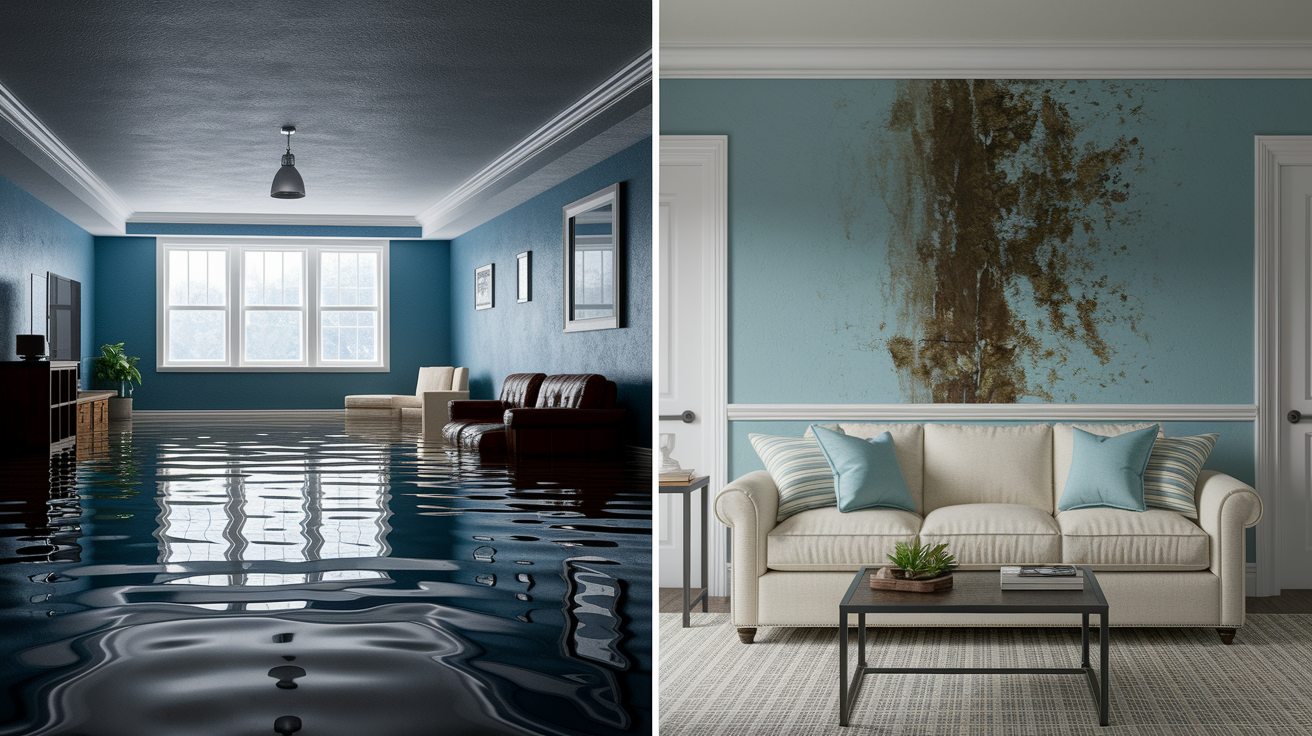
Standard renters insurance excludes property damage from floods and earthquakes because these perils are low-frequency but catastrophically expensive, and insurers need separate risk pools and reinsurance to cover them. If your basement floods after a sump pump fails during heavy rain, or if a river overflows and soaks your ground-floor apartment, your renters policy will deny the claim and point you to flood insurance. Flood coverage must be purchased separately, either through the National Flood Insurance Program or private flood insurers. NFIP policies typically include a 30-day waiting period before coverage kicks in, so you can’t buy flood insurance the day before a storm and expect protection.
Earthquake coverage works the same way. If seismic activity cracks your building and topples your belongings, the standard renters policy excludes the loss. You can add an earthquake endorsement or buy a standalone earthquake policy, but these often carry high percentage-based deductibles ranging from 5% to 20% of your insured personal property limit. A $30,000 policy with a 10% quake deductible requires you to pay the first $3,000 of any earthquake claim out of pocket. Sewer backup and sump pump overflow are also commonly excluded unless you purchase an optional endorsement, because insurers treat these as localized water intrusion risks tied to plumbing and drainage systems rather than covered perils like fire or theft.
Mold gets excluded across nearly all standard policies because it’s considered a maintenance issue and a consequence of neglect rather than a sudden accident. If a slow leak behind your bathroom wall grows mold that ruins your furniture, the insurer will deny the claim and argue that regular inspections and timely repairs would have prevented the damage. The same reasoning applies to damage from humidity, condensation, and standing water. These exclusions exist because allowing coverage would encourage tenants to ignore maintenance problems and file claims for avoidable losses.
| Peril | Standard Coverage? | Notes |
|---|---|---|
| Flood | No | Requires separate NFIP or private flood policy; 30-day waiting period common |
| Earthquake | No | Separate endorsement or policy required; deductibles often 5% to 20% of coverage limit |
| Sewer Backup | Usually No | Optional endorsement available; often bundled with sump pump coverage |
| Mold | No | Treated as maintenance issue and excluded unless resulting from covered peril |
Business Property, Professional Equipment, and Home-Based Inventory Exclusions

If you run a side hustle, freelance business, or online store from your apartment, your renters policy won’t cover business inventory, equipment, samples, or professional tools beyond a small standard cap, typically around $2,500 total. Insurers exclude full business property coverage from personal policies because commercial risks require different underwriting, higher limits, and separate liability protections. A graphic designer’s $4,000 laptop used exclusively for client work, an Etsy seller’s $10,000 in craft inventory, or a photographer’s $15,000 camera kit will all be denied or severely limited if stolen or damaged, because the policy treats them as business assets rather than personal belongings.
Even dual-use items can trigger exclusions. If you use your personal laptop 80% for work and file a claim, the insurer may prorate the payout or deny it entirely based on the business-use exclusion. Business income is never covered under a renters policy, so if a fire forces you to close your home-based bakery for three months, the lost revenue and client contracts aren’t reimbursed.
Common business items excluded or capped at low limits:
- Inventory and stock held for resale, including handmade goods, wholesale products, and samples
- Professional equipment and tools like cameras, editing workstations, medical devices, or contractor tools
- Business records, data, and intellectual property with no standard coverage for lost files or proprietary materials
- Business liability exposures from clients visiting your home or product defects, which require commercial general liability coverage
A real-world example: a renter operates a small online clothing resale business from their apartment and stores $8,000 worth of curated vintage inventory in a spare bedroom. A kitchen fire spreads and destroys the inventory. The renters policy caps business property at $2,500, so the insurer pays only that amount, leaving a $5,500 gap. To close the gap, the renter should have purchased a business owners policy or added a business property endorsement before the fire. Because they assumed their renters policy covered everything in the apartment, they absorbed a significant uninsured loss.
Motor Vehicles, Bikes, and Transportation-Related Exclusions

Physical damage to motor vehicles gets excluded from renters insurance because auto insurance exists specifically to cover cars, trucks, motorcycles, and similar vehicles. If your car is parked in your apartment complex lot and hail shatters the windshield or a tree branch dents the hood, you file that claim under your auto policy’s comprehensive coverage, not your renters policy. The same exclusion applies to vehicle parts, tires, batteries, and aftermarket accessories installed in or on the vehicle.
Renters insurance also typically excludes motorized recreational devices like ATVs, dirt bikes, jet skis, boats, and trailers. Bicycles and e-bikes may or may not be covered depending on whether they’re motorized and how the policy defines “motor vehicle.” A traditional pedal bike stolen from your apartment is usually covered, but an e-bike with a motor over a certain wattage might be excluded or require a separate inland marine or specialty policy. Theft from a vehicle is a gray area: if your laptop gets stolen from your locked car, some policies will cover the laptop under off-premises personal property coverage, but the payout is often subject to a lower sub-limit and may require proof of forced entry and a police report.
Coverage differences for inside-home vs. in-vehicle theft:
- Items stored inside your apartment are covered up to your full personal property limit, minus applicable sub-limits
- Items stolen from your parked vehicle may be covered but often subject to off-premises caps, commonly 10% of total coverage, and higher scrutiny
- The vehicle itself and installed parts are excluded and must be claimed under auto insurance
- Items left visible in a vehicle may trigger denial if the insurer argues negligence or lack of reasonable care
Roommate, Household Member, and Guest-Property Exclusions

Damage or theft caused by a roommate or another person listed on your lease is commonly excluded from renters insurance because insurers expect you to trust and vet the people you choose to live with. If your roommate takes your laptop, ruins your furniture, or “borrows” your jewelry and never returns it, the policy treats that as a personal dispute rather than an insurable theft or vandalism. The exclusion exists to prevent fraud and collusion, where roommates might stage thefts to collect payouts and split the proceeds.
Guest property follows different rules. If a friend visits your apartment and leaves a jacket behind that’s later stolen in a burglary, some policies provide limited coverage for the guest’s belongings, but the limits are low and the insurer will ask for proof that the loss was truly accidental and unrelated to any household member. Household members are typically defined as anyone who lives with you regularly, including significant others, family members, and long-term guests. Their actions can invalidate claims if the policy considers them part of the insured household.
Key coverage distinctions:
- Roommates on the lease are treated as co-insureds or separate parties, and their actions often void coverage for losses they cause
- Household members and long-term guests may be excluded from theft and vandalism claims if they had access and opportunity
- Short-term guests and visitors may have limited coverage for their belongings under your policy, but caps are typically low and documentation requirements are strict
Structural Damage and Landlord vs. Tenant Property Responsibilities

Renters insurance excludes coverage for structural damage to the building itself because the landlord is responsible for insuring walls, roofs, foundations, floors, and other permanent fixtures under their landlord or dwelling fire policy. If a storm tears off part of the roof or a plumbing failure cracks the foundation, those repairs are the landlord’s problem, not yours. Your renters policy won’t pay for them. The line between tenant property and landlord property can blur when it comes to appliances and improvements, so understanding who owns what is critical.
Built-in appliances like the refrigerator, stove, dishwasher, and HVAC system are almost always considered landlord property, even though you use them daily. If the refrigerator breaks and spoils your groceries, your renters policy may cover the food loss under a separate peril like power outage or mechanical breakdown, but the fridge itself is the landlord’s responsibility to repair or replace. Tenant improvements, such as custom shelving you installed, upgraded light fixtures, or a fresh coat of paint, may or may not be covered depending on whether you can remove them when you move and whether the policy includes an endorsement for betterments and improvements.
| Item Type | Covered by Tenant? | Notes |
|---|---|---|
| Structural elements (walls, roof, foundation) | No | Landlord’s responsibility under landlord insurance |
| Landlord-owned appliances (stove, fridge, HVAC) | No | Landlord insures; tenant may get food-loss coverage for spoilage |
| Tenant improvements (shelving, fixtures, paint) | Sometimes | Covered only if removable or if endorsement for betterments is added |
Wear and Tear, Negligence, Mold, Pest Damage, and Intentional Acts Exclusions

Insurance exists to cover sudden, accidental losses, not gradual deterioration or damage you could have prevented with basic maintenance. Wear and tear exclusions deny claims for faded curtains, worn carpets, aging furniture, cracked dishes from repeated use, and any other property that breaks down over time through normal use. If your five-year-old couch cushions sag and tear, that’s wear and tear, not a covered peril. Filing a claim will result in a denial. The same reasoning applies to mechanical or electrical failure unless it’s caused by a covered peril like lightning or fire.
Mold, mildew, fungus, and rot get excluded across the board because they’re almost always the result of moisture intrusion, poor ventilation, or deferred maintenance. If you ignore a leaking pipe under the sink and mold spreads across your bathroom and ruins towels, linens, and cabinetry, the insurer will deny the claim and point to the maintenance exclusion. Pest damage follows the same logic: termites chewing through furniture, rodents nesting in stored clothing, and insects destroying food or fabric are all considered preventable with reasonable care and regular inspections.
Intentional acts are excluded to prevent fraud. If you deliberately damage your own property or allow someone else to do so, the policy won’t pay. This includes vandalism you commit yourself, damage caused during a fight or argument, and losses that result from illegal activity. If you lie on your application, misrepresent the value of items, or file a fraudulent claim, the insurer can void the entire policy and deny all current and future claims.
Common excluded scenarios related to maintenance and conduct:
- Pet damage: a dog chewing furniture cushions, scratching floors, or soiling carpets is treated as owner negligence, not an insured peril
- Mold from ignored leaks: slow water damage that spreads mold over weeks or months is denied as a maintenance failure
- Pest infestations: termites, rodents, bedbugs, and insects are excluded because prevention is the tenant’s responsibility
- Intentional destruction: breaking your own belongings during a move, argument, or frustration is uninsurable
- Damage from illegal activity: property destroyed during the commission of a crime or as a result of prohibited use like running an unlicensed business is excluded
How to Read Your Policy to Identify Excluded Property

Your renters insurance policy is a legal contract, and the exclusions are written in plain sight. But most people never read past the premium quote and coverage summary. The Declarations page, usually the first or second page of your policy packet, lists your coverage limits, deductibles, optional endorsements, effective dates, and named insured parties. This is where you’ll see your total personal property limit, liability limit, and any add-ons like scheduled items or sewer backup coverage. If an exclusion has been removed or modified by an endorsement, it will appear here as a listed rider with an additional premium.
The exclusions section is typically labeled “What Is Not Covered,” “Exclusions,” or “Perils We Do Not Insure Against.” It’s usually located in the middle of the policy booklet after the coverage definitions and before the conditions section. This is where the insurer explicitly lists property types, perils, and circumstances that void coverage, such as flood, earthquake, war, nuclear hazard, wear and tear, mold, pests, business use, and intentional acts. Sub-limits appear in a separate section often called “Special Limits of Liability” or “Limits on Certain Property,” and they cap payouts for jewelry, cash, firearms, silverware, collectibles, and business property.
Step-by-step guide to reviewing your policy for exclusions:
- Locate the Declarations page and confirm your personal property limit, deductible, and listed endorsements or riders.
- Find the “Exclusions” section and read every listed exclusion to understand what perils and property aren’t covered.
- Check the “Special Limits of Liability” or “Schedule of Property” to see per-category caps on jewelry, cash, collectibles, firearms, and business property.
- Search the policy PDF for keywords like “flood,” “earthquake,” “sump,” “sewer,” “mold,” “pet,” “roommate,” “business,” “wear,” and “intentional” to catch exclusion language.
- Review any endorsements or riders to see if exclusions have been waived or limits increased, and note effective dates and waiting periods.
- Request written clarification from your agent if any language is vague, contradictory, or unclear, and keep the written response with your policy documents.
Scheduled Personal Property and Alternatives for Insuring Excluded Items

When you schedule an item, you’re asking the insurer to cover it separately at a specific declared value, usually supported by an appraisal, receipt, or professional valuation. Scheduled personal property endorsements, also called personal articles floaters, remove sub-limits and often provide broader coverage, including accidental loss and mysterious disappearance that standard policies exclude. For example, if you schedule your $6,000 engagement ring, the insurer will cover it even if you lose it at the gym or it slips off your finger into a lake, scenarios that would be denied under a standard policy’s named-peril or theft-only coverage.
Scheduling items requires documentation and increases your premium. Typical additional premiums range from about $25 to $200 or more per item per year, depending on the item’s value, type, and your insurer’s underwriting rules. High-value jewelry, fine art, antiques, musical instruments, cameras, and collectibles are the most commonly scheduled items. Some insurers offer blanket scheduled coverage for categories like jewelry or electronics, covering all items in that category up to a combined limit without listing each piece individually. This simplifies the process but may still require appraisals.
Flood and earthquake coverage can’t be added as simple endorsements to a renters policy. They require separate standalone policies. Flood insurance gets sold through the National Flood Insurance Program or private insurers and typically includes a 30-day waiting period before coverage begins, so you can’t buy it the day before a storm and expect protection. Earthquake policies or endorsements are sold by private insurers and often carry high percentage-based deductibles. You’ll pay the first 5% to 20% of your insured value out of pocket before the policy pays a dime. Business property exclusions are resolved by purchasing a business owners policy, commercial property endorsement, or inland marine coverage designed for mobile professional equipment.
Common add-ons and alternatives for excluded property:
- Scheduled personal property endorsement (floater) for high-value jewelry, art, instruments, and collectibles
- Separate flood insurance policy through NFIP or private carriers for flood-prone locations
- Earthquake endorsement or standalone policy for seismic risk, often with 5% to 20% deductibles
- Sewer backup and sump pump endorsement to cover water damage from drainage failures
- Business property endorsement or BOP for home-based business inventory, equipment, and liability
| Coverage Type | What It Covers | Typical Requirements |
|---|---|---|
| Scheduled Personal Property | High-value items at declared value; broader perils including loss | Appraisal, receipt, photos; additional premium per item |
| Flood Policy (NFIP/Private) | Flood damage to personal property and dwelling contents | Separate application; 30-day waiting period common; separate deductible |
| Business Property Endorsement/BOP | Inventory, equipment, and professional tools used for income | Business description, income documentation; commercial underwriting |
Final Words
We put the facts on the table: floods, earthquakes, pet and roommate damage, structural items, motor vehicles, business stock, wear and tear, and tight sub-limits for jewelry and cash are often not covered.
You saw why insurers carve these out, when you need separate flood or quake policies, and how sub-limits and endorsements change payouts.
Check your declarations page, get valuables scheduled, and keep an inventory. Focus on excluded property in renters insurance now so you’re not scrambling after a loss — and know what to buy next.
FAQ
Q: What do renters insurance policies typically exclude and how can I spot excluded property fast?
A: Renters insurance typically excludes floods, earthquakes, sewer backup, mold, wear and tear, motor vehicles, business property over about $2,500, and high-value items over sub-limits. Check the Declarations, “Exclusions,” and “Special Limits” sections.
Q: How do high-value item limits and sub-limits work on renters insurance?
A: High-value item limits are sub-limits that cap payouts—jewelry often $1,000–$2,000, collectibles $1,000–$2,500, cash $200–$500. Schedule items or buy endorsements for full replacement value instead of actual cash value.
Q: Are floods, earthquakes, and other water-related damages covered by renters insurance?
A: Floods and earthquakes are excluded from standard renters policies. Sewer backup and mold usually need optional endorsements. Flood policies have typical 30‑day waits; earthquake deductibles often run 5%–20% of value.
Q: Will renters insurance cover my home-based business property or professional equipment?
A: Renters insurance usually caps business property around $2,500 and excludes business income. Laptops, inventory, and samples often need a business policy, BOP, or endorsement for full protection.
Q: Does renters insurance cover damage to motor vehicles, bikes, or items stolen from a car?
A: Physical damage to motor vehicles is excluded and belongs to auto insurance. Bikes and vehicle parts may have limited coverage; theft from vehicles can face lower sub-limits or off‑premises caps.
Q: Are losses caused by roommates, household members, or guests covered by renters insurance?
A: Losses caused by roommates or household members are typically excluded, and claims involving them can be denied. Guest property coverage exists but is limited—get clarity in writing before relying on coverage.
Q: Who is responsible for structural damage versus tenant property, and are tenant improvements covered?
A: Structural damage (walls, roof, foundation) is the landlord’s responsibility; renters insurance doesn’t cover it. Tenant-installed improvements may be excluded unless endorsed or agreed to in writing.
Q: Are wear and tear, mold, pest damage, and intentional acts covered by renters insurance?
A: Wear and tear, maintenance failures, mold from neglected leaks, pest damage, and intentional acts are excluded. Insurers expect routine upkeep; neglect or deliberate damage won’t be paid.
Q: How do I read my policy to identify excluded property and limits?
A: To find excluded property, read the Declarations page, then the “Exclusions” and “Special Limits of Liability.” Check endorsements, document valuables with photos/receipts, and note any waiting periods or deductibles.
Q: What options do I have to insure excluded high-value items?
A: You can schedule personal property with appraisals, buy a personal articles floater, or get separate flood/earthquake or commercial coverage. Scheduled items usually require proof and add a small premium.