





Think claims get denied because of a mistake? Most are denied because of exclusions — the exact lines in your policy that say “not covered.”
Insurers treat those clauses like a cheat sheet: if your loss matches the wording, they close your claim fast.
This post shows how exclusion wording turns into denials, which exclusions cause the biggest trouble (floods, pre-existing conditions, commercial use and more), and the three checks to do now so you don’t get stuck paying a denied claim.
How Policy Exclusions Directly Lead to Claim Denials

Exclusions are why most claims get denied. Not because you did something wrong. Not because of a paperwork mix-up. Because the policy said it wouldn’t cover that specific thing, and you filed a claim for exactly that thing.
Every insurance policy includes a section that lists what won’t be covered. Insurers treat these clauses like automatic checkpoints. When you file a claim, the adjuster pulls your policy and compares what happened to the list of things the company already said no to. If the facts match an exclusion, the claim gets shut down, usually fast.
Here’s the process. The adjuster reviews what happened: how the damage occurred, what treatment you got, who was driving, whether you kept up with repairs. Then they cross-reference those details against the exclusions buried in your contract. If the loss fits the wording of an exclusion, they issue a denial. Simple on their end. Frustrating on yours.
The matching process sounds clean, but insurers stretch exclusion language when it suits them. They’ll interpret vague wording aggressively, twisting definitions just enough to justify saying no.
You’ll see exclusion-triggered denials in situations like these:
- Flood wipes out your basement, but your homeowner policy excludes flooding and you never bought separate flood coverage.
- Health insurer denies a claim because the condition existed before your policy started, citing the pre-existing condition exclusion.
- Treatment for experimental therapy gets rejected under a specific treatment exclusion.
- Tenant gets injured and your homeowner liability won’t cover it because of a resident injury exclusion.
- Claim denied because the loss happened during something illegal, matching the illegal acts exclusion.
- Any claim filed while your policy was lapsed from a missed payment.
The denial letter you get is the insurer’s interpretation, not a court ruling. These letters cite exclusions selectively, skip over exceptions, and ignore endorsements that might actually restore your coverage. They’re written to sound final. But they’re just opening positions in a negotiation.
A lot of exclusion-based denials can be fought. Especially when the policy language is fuzzy, the facts don’t cleanly fit the exclusion, or the insurer didn’t explain the gap clearly when you bought the thing.
Understanding Types of Exclusions That Commonly Cause Denials

Exclusions exist to limit what insurers have to pay for. They carve out entire categories of loss, which keeps your premium lower but creates gaps you won’t notice until you try to file a claim. When an adjuster reviews your case, the exclusion language works like a checklist. If your loss matches something on that list, they cite it and close the file.
Most exclusion-based denials come from a handful of categories. These aren’t random. They’re the risks insurers hate paying for, either because the losses are massive, hard to verify, or full of fraud risk. The big ones are natural disasters not included in the base policy, pre-existing health conditions, negligence or misconduct on your part, lapsed coverage from unpaid premiums, property damage tied to poor maintenance, specific treatment exclusions in health policies, and failure to disclose important facts when you applied.
Common Exclusion Categories
Natural disasters like floods, earthquakes, and hurricanes get excluded from most homeowner policies unless you buy extra coverage. A standard policy might cover wind damage but exclude flood damage from the same storm.
Pre-existing conditions are health issues you had before your policy kicked in. Insurers deny claims for care related to those conditions, saying coverage never applied in the first place.
Negligence or misconduct exclusions shut down claims when the loss came from intentional acts, illegal stuff, or reckless behavior. Racing your car. Committing a crime. Breaking something on purpose.
Lapsed policies happen when you miss a premium payment. Any claim filed during that gap gets denied automatically, even if the incident happened just one day after the payment was due.
Failure to maintain property lets insurers deny homeowner claims when damage results from neglect. Roof leaks you ignored. Mold from water intrusion you didn’t fix. Structural failure because you put off repairs.
Specific treatment exclusions in health policies deny coverage for experimental treatments, elective cosmetic surgeries, and medications not on the plan’s approved list.
Non-disclosure gives insurers an out if they find you left out important facts during underwriting. Prior claims. Driving violations. Health conditions that would’ve changed their decision to cover you.
Some exclusions can be removed by purchasing endorsements, which are add-ons that buy back coverage for a specific excluded risk. Flood insurance gets sold as a separate policy. Earthquake coverage can be added to a homeowner policy for extra money. Rideshare drivers can buy commercial endorsements to cover delivery or passenger transport that would otherwise be excluded.
Exclusions often stack. A single claim can trigger multiple exclusions at once, making the denial tougher to challenge. Car accident while you’re delivering food for a rideshare app? Denied under both the commercial use exclusion and the excluded driver clause if the app driver isn’t listed. Health claim for surgery? Denied as both experimental and related to a pre-existing condition. Layered exclusions give insurers multiple defenses, and they’ll throw all of them at you in the denial letter.
How Exclusions Operate Across Different Insurance Types
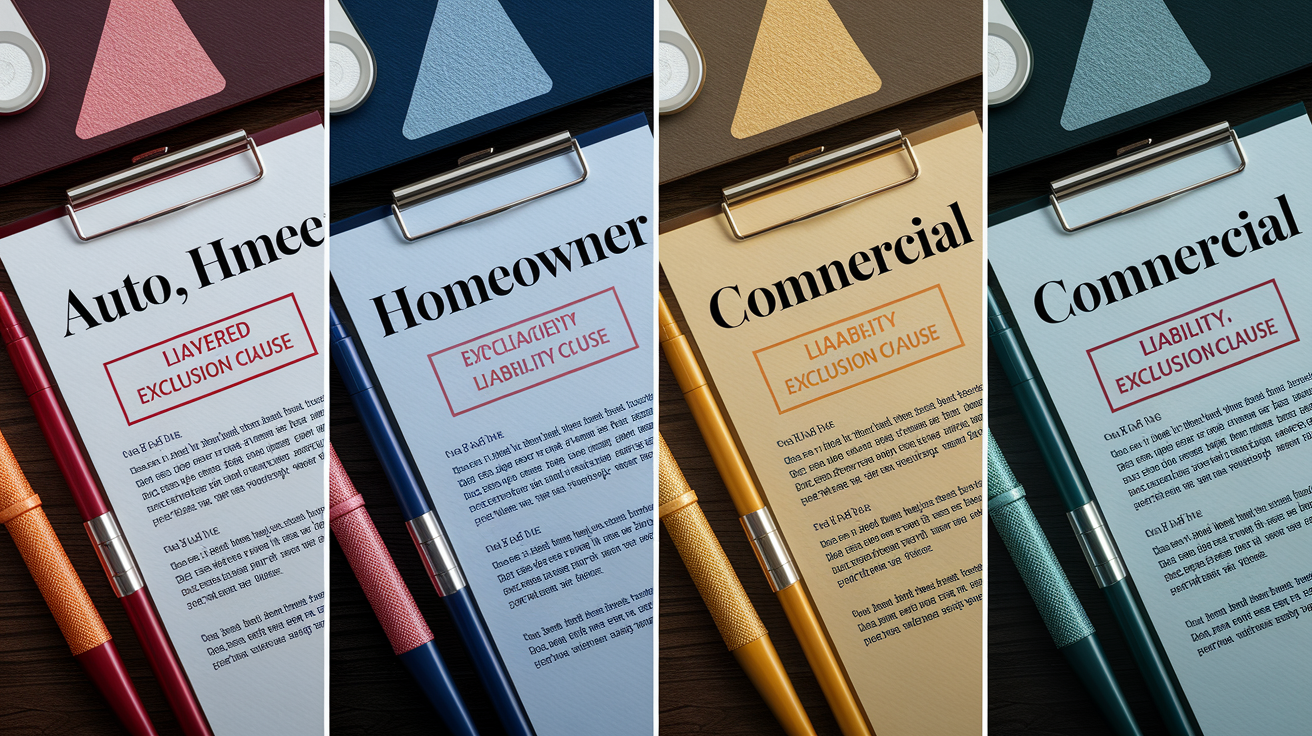
Exclusions get written differently depending on what kind of insurance you have, and the denial patterns shift by policy type. Auto policies focus on excluding risky uses and drivers. Homeowner policies exclude certain disasters and liability situations. Health policies exclude treatments and conditions. Commercial policies exclude activities outside what your business is supposed to do. The exclusion structure determines what gets denied and why.
In auto insurance, you’ll see exclusions for commercial or delivery use of a personal vehicle, racing or speed contests, damage during illegal acts, use by drivers not listed on the policy, and use outside the policy’s stated terms, like using a leased car for rideshare without telling the insurer. South Florida sees a lot of denials when drivers use personal policies to deliver food or drive for Uber or Lyft. The insurer checks GPS data, app records, or delivery logs, finds commercial use, cites the exclusion, and denies the claim. Doesn’t matter if the accident wasn’t your fault.
Homeowner policies exclude business activity conducted on the property, injuries from certain dog breeds, injuries to tenants or residents instead of guests, “open and obvious” hazards like unfenced pools, and failure to disclose prior damage or hazardous conditions when you applied. These exclusions drive denials in slip and fall cases, dog bite claims, and property damage disputes.
Health policies exclude pre-existing conditions for a set period, experimental or investigational treatments, elective cosmetic procedures, and medications not covered under the plan’s formulary. Denials cite these when reviewing surgery requests, specialist referrals, or prescription fills.
Commercial liability policies exclude injuries to independent contractors, damage from vehicles or equipment not listed in the policy, losses outside the designated work site or hours, and professional errors covered under separate malpractice policies. These create complicated coverage disputes in contractor injury cases and equipment damage claims.
| Policy Type | Typical Exclusions Causing Denials |
|---|---|
| Auto Insurance | Commercial use, racing, excluded drivers, illegal acts, rideshare/delivery without endorsement |
| Homeowner Insurance | Floods, business activity, certain dog breeds, tenant injuries, lack of maintenance |
| Health Insurance | Pre-existing conditions, experimental treatments, elective surgeries, non-formulary drugs |
| Commercial Liability | Independent contractors, unlisted equipment, off-site work, professional services |
Coverage disputes get messy when exclusions overlap across multiple policies. Contractor gets injured on a job site? Might be excluded from the property owner’s homeowner policy under the business activity exclusion, excluded from the general contractor’s commercial policy under the independent contractor exclusion, and left with only workers’ comp, which might also deny if the contractor is classified as self-employed. Each insurer points to its own exclusion and says the other policy should pay. The injured person ends up stuck in a gap.
Real-World Scenarios Showing How Exclusions Trigger Denials

Real examples make it easier to see how exclusions move from policy language into actual denials. These aren’t weird edge cases. They’re the patterns adjusters use every day. Seeing how exclusions work in practice helps you spot the risks in your own coverage before you file a claim.
Exclusion-based denial scenarios you’ll run into:
Basement floods after heavy rain. Claim denied because the homeowner policy excludes flood damage and you didn’t buy separate flood insurance.
Engine fails on your car. Claim denied under the wear and tear exclusion, which carves out mechanical breakdowns not caused by a covered collision.
Injury claim from a bar fight. Denied under the illegal acts exclusion because you were arrested for assault at the scene.
Health claim for proton beam therapy to treat cancer. Denied because the insurer classified the treatment as experimental and excluded it under the investigational treatment clause.
Property damage claim for roof collapse. Denied because the adjuster found years of deferred maintenance, triggering the failure to maintain property exclusion.
Timing matters. Insurers often spend weeks or months investigating claims. They review photos, request medical records, interview witnesses, search for policy gaps. Only after all that do they cite the exclusion. The delay creates problems because you might’ve already started repairs, accepted liability, or let appeal windows close.
Documentation gaps make exclusion challenges harder. If you can’t prove the roof was maintained, the engine failure came from a covered accident, or the treatment wasn’t experimental, the insurer’s exclusion finding stands. Adjusters know that delayed denials backed by investigative findings are tougher to reverse, so they take their time building the case.
Reviewing Policy Language to Avoid Exclusion-Based Denials

Exclusions don’t always show up in one tidy section. They’re scattered through the policy, in the definitions, the declarations page, the coverage sections, the endorsements. Some are explicit (“This policy does not cover flood damage”). Others hide in definitions, like defining “covered auto” to exclude vehicles used for delivery. Most people never see the full exclusion list until a claim gets denied.
You need to read the exclusions section, but that’s not enough. You also need to check how the policy defines terms like “insured,” “occurrence,” “bodily injury,” “covered property,” and “accident.” Definitions create hidden exclusions by narrowing what counts as covered in the first place. If the policy defines “bodily injury” to exclude emotional distress, your claim for PTSD after a car accident might get denied, not because of an exclusion clause, but because the injury doesn’t meet the policy’s definition.
Check the declarations page for coverage limits, deductibles, named insureds, and listed drivers or properties. Make sure all drivers, vehicles, and properties you expect to be covered are actually listed.
Review endorsements and exceptions. Some endorsements add exclusions. Others remove them. An endorsement might restore coverage for a previously excluded peril, or it might sneak in a new exclusion you didn’t know existed.
Before you file a claim or buy a policy, work through this:
- Read the full exclusions section and mark any exclusions that apply to risks you face (floods, earthquakes, pre-existing conditions, business use).
- Check policy definitions for narrow or restrictive language that might disqualify your claim.
- Verify all drivers, properties, and equipment are listed in the declarations to avoid excluded driver or unlisted property denials.
- Confirm your premium payment history to make sure no lapses exist that would kill coverage during the claim period.
- Review treatment and medication exclusions if you have a health policy, especially for chronic conditions or specialty drugs.
- Identify peril limitations in homeowner or property policies (wind vs. flood, fire vs. wear and tear).
- Check for maintenance obligations and document compliance (roof inspections, HVAC servicing, pest control).
- Request endorsements or riders to cover excluded risks that matter to you, and get written confirmation that the endorsement was added.
Early review cuts down on dispute risk. If you know a gap exists, you can fix it before a loss happens by purchasing an endorsement, switching policies, or setting aside money to cover the excluded risk yourself. Finding out about the exclusion after the claim is filed leaves you with limited options and a tough fight.
Strategies to Prevent or Challenge Exclusion-Based Claim Denials
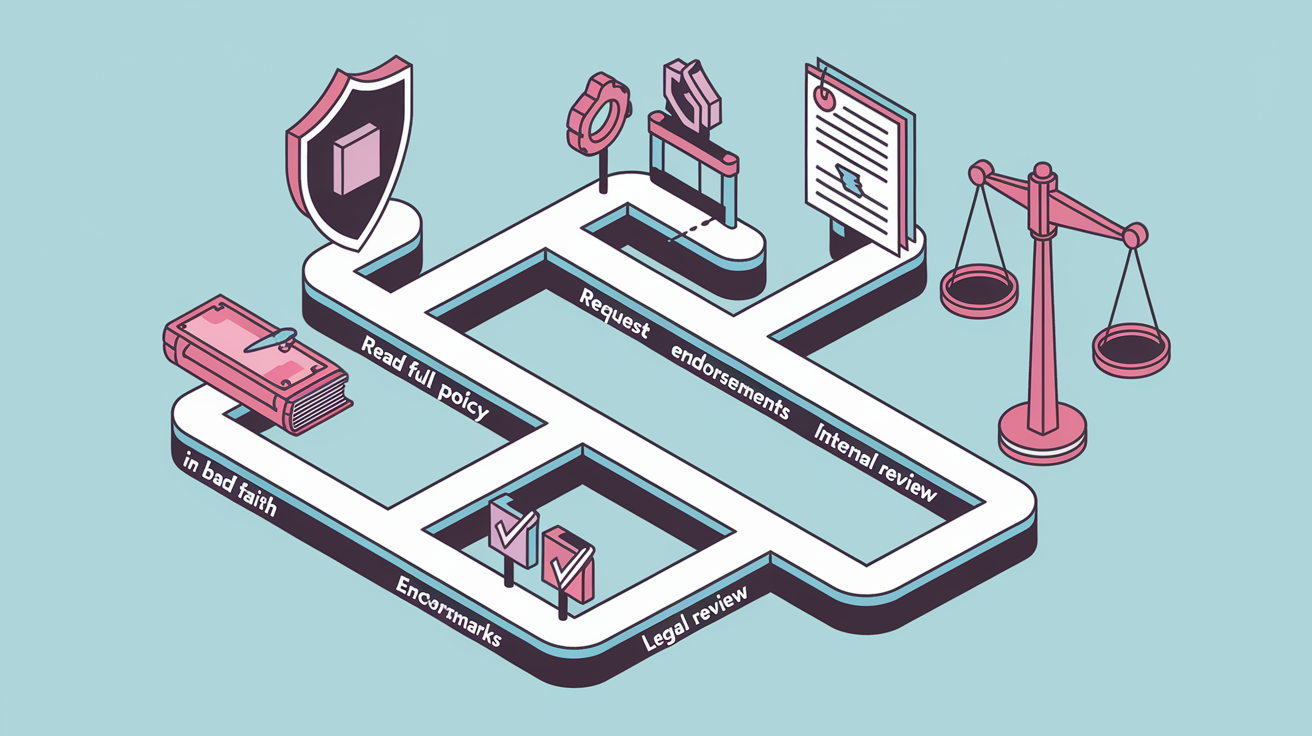
Insurers sometimes get exclusions wrong. They cite clauses that don’t fit the facts, ignore exceptions, or lean on vague language that could be read multiple ways. Misapplication happens because adjusters work fast, follow checklists, and get rewarded for closing claims without paying. It also happens because exclusion language is often ambiguous, and insurers interpret ambiguity in their favor. When an exclusion doesn’t clearly apply or the policy contains contradictory language, you’ve got grounds to fight the denial.
If your claim gets denied based on an exclusion, you’ve got several appeal options. Most policies require an internal appeal, which is a formal request for the insurer to reconsider. Internal appeals get handled by the same company that denied you, so success rates are low. But the appeal creates a record and preserves your right to external review.
External review is available in many states for health insurance denials and involves an independent third party reviewing the exclusion finding. External reviewers often reverse denials when the exclusion language is vague or the insurer’s reasoning is weak. For other policy types, external review options are limited, and legal action might be your only path.
To challenge an exclusion-based denial effectively:
- Request the full policy, including all endorsements, riders, and declarations pages, and confirm you’re working from the version that was active on the date of loss.
- Get a written explanation from the insurer citing the specific exclusion clause, the facts that triggered it, and the reasoning.
- Gather documentation proving the exclusion doesn’t apply. Repair records. Maintenance logs. Medical records showing the condition wasn’t pre-existing. GPS data disproving commercial use.
- Submit a formal internal appeal within the deadline in your denial letter, including all supporting documents and a written argument explaining why the exclusion was misapplied.
- Consider purchasing endorsements to close coverage gaps for future claims, and ask whether retroactive coverage is available.
- Get legal review if the insurer’s reasoning is weak, the exclusion language is ambiguous, or you suspect the denial violates state law requiring clear exclusion wording.
Bad faith becomes relevant when an insurer denies a claim knowing the exclusion doesn’t apply, refuses to investigate facts that would support coverage, or applies an exclusion inconsistently across similar claims. Bad faith claims are hard to prove, but they create leverage in negotiations and open the door to damages beyond the claim amount. Many states require insurers to act in good faith when interpreting policy language, and courts will reverse denials when exclusions get applied unfairly or without reasonable basis.
Documentation and persistence often flip exclusion-based denials. Insurers count on policyholders accepting the first denial and walking away. When you push back with facts, policy language, and a clear argument, adjusters often reconsider, especially if the exclusion is debatable or the claim is small enough that fighting it costs more than paying it.
Keep copies of every document you submit, every email you send, every phone call you make. Note the date, time, and name of every adjuster or rep you talk to. This record becomes evidence if you need to escalate or file a complaint with your state insurance regulator.
Final Words
When a claim meets exclusion wording, it’s often denied — that’s the main thread here: exclusions as denial triggers, how adjusters match facts to policy language, common exclusion types, real cases, policy review tips, and appeal steps.
Do the basics: read definitions, track premiums, save incident proof, and demand written denial reasons.
Understanding how exclusions affect claim denials gives you leverage. Stay organized, ask the right questions, and you’ll cut down surprises — and sometimes win a reversal.
FAQ
Q: What are the three most common mistakes on a claim that will cause denials?
A: The three most common mistakes on a claim that will cause denials are providing incomplete or inconsistent information, failing to disclose material facts, and not keeping proper documentation (photos, receipts, medical records).
Q: What is the purpose of exclusions in insurance policies?
A: The purpose of exclusions in insurance policies is to specify what losses insurers will not cover, limit insurer risk, explain pricing differences, and point you to endorsements or separate policies for excluded perils.
Q: What are two of the most common exclusions used by underwriters and what are some examples of exclusions?
A: Two of the most common exclusions used by underwriters are pre-existing conditions and named natural perils like flood or earthquake; other examples include experimental treatments, intentional/illegal acts, wear-and-tear, tenant-caused damage, and lapsed coverage.